
 Home
Home North(
 Chiang Mai(


Rating: 2.8/5 (26 votes)
 |
|  Map
Map 
 Have Map
  No Map
Chiang Mai attractions
Attractions in Thailand
Open Days: Every day (only during periods when there is no royal residence, according to the Royal Household Bureau's announcement)
Opening Hours: 08:30–16:30 (ticketing hours generally 08:30–11:30 and 13:00–15:30; visitors should check the latest updates before visiting)
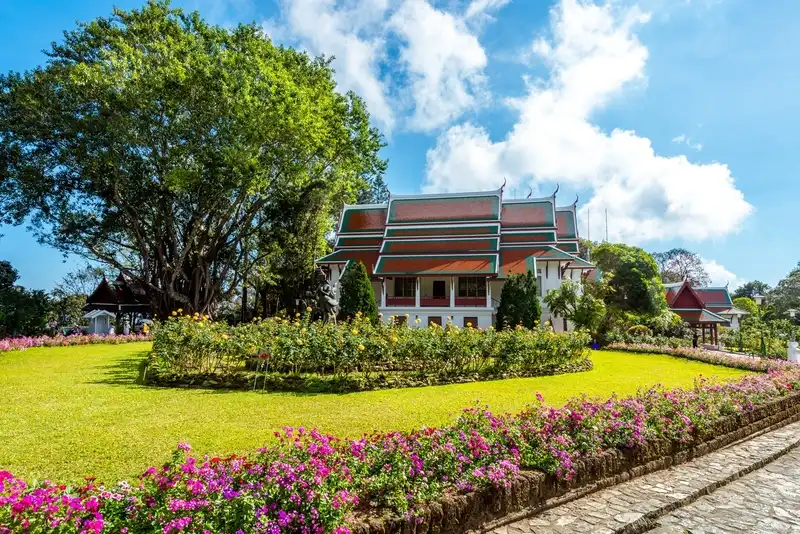
Bhuping Rajanives Palace is one of Chiang Mai’s most iconic cultural and historical landmarks, deeply connected with the identity of Doi Suthep and Northern Thailand. Almost everyone who has visited Doi Suthep has heard of the palace, as it sits further up the same mountain road, just about 4 kilometers beyond the famous Wat Phra That Doi Suthep. Nestled atop Doi Buak Ha and surrounded by cool mountain air, tall pines, and winter blossoms, the palace overlooks the city of Chiang Mai from above—an image that immediately reveals why this site was chosen as the royal winter residence for members of the Thai monarchy.
The palace was built in 1961, during a time when Chiang Mai was far more tranquil than it is today. The Doi Suthep–Doi Pui mountain area still carried the serene charm of an untouched Northern landscape. His Majesty King Bhumibol Adulyadej (King Rama IX) wished to establish a highland residence that would serve as a base during royal duties in the North and as a place to receive state guests visiting Thailand. Traditionally, visiting dignitaries were received only in Bangkok; thus, a royal residence in the North symbolized both His Majesty’s vision for regional development and diplomatic goodwill.
The main building was bestowed the name “Bhuping Rajanives”—a name personally chosen by King Bhumibol from two names suggested by Somdet Phra Nyanasamvara, the Supreme Patriarch. The chosen name beautifully echoes “Wiang Ping,” an ancient name for Chiang Mai, creating a link between the residence and the identity of the region. The palace is therefore not only a royal dwelling but also a “residence of the Ping Kingdom,” symbolically connected to the cultural roots of Chiang Mai.
Architecturally, Bhuping Rajanives Palace follows a “cluster-house” layout inspired by central Thai traditional homes, adapted for mountain climate and modern functionality. The structures feature Thai traditional applied style—raised floors, masonry walls, and Thai-style gabled roofs. Inside are reception halls, dining areas, royal bedrooms, bathing chambers, and guest quarters designed to host foreign dignitaries. The overall architectural plan was by Mom Chao Samaichalerm Kridakorn, with exterior and interior design by Mom Rajawongse Mitrarun Kasemsri, ensuring a harmonious blend of Thai heritage and contemporary comfort suitable for global guests.
The construction of the main residence was completed remarkably quickly—around five months—under close supervision of architects and specialists from the Fine Arts Department. After completion, the interior decoration continued to create a fully functional royal residence. Since then, the palace has served as both a working space for the monarchy and a site for receiving state visitors, as well as one of the key highlights on the Doi Suthep tourist route.
Walking through the palace grounds reveals several buildings positioned across various elevations of the mountain. These include the main residence, wooden wing houses used by members of the royal family, and two-storey guest houses for royal visitors and senior attendants. A particularly noteworthy structure is the Phra Tamnak Phueksa Wisutthikhun, a two-storey building combining central Thai and Lanna architectural elements, which served as the residence for the Princess Mother and Princess Galyani Vadhana.
The Eucalyptus House 1 and 2 are especially interesting, as they were built under royal initiative to experiment with fast-growing eucalyptus timber as a substitute for teak—a symbolic gesture toward conservation and sustainable forestry. Built in log-cabin style, these structures represent innovation in royal architectural practice and resource-efficient design.
One of the most beloved features of Bhuping Palace is its lush flower gardens. The famous Suan Suwaree, named after Lady Suwaree Thepakham, showcases rose varieties from both tropical and temperate climates. During the cool season—typically December to February—the gardens burst into vibrant color, with meticulously cultivated rose beds forming a dreamlike landscape. Other winter flowers such as begonias, fuchsias, and seasonal blossoms also decorate the grounds, making the palace a favorite location for photography and leisurely strolls.
The palace’s scenic reservoir is another highlight. Surrounded by pines and mountain vegetation, the water surface reflects the soft sunlight on clear days. A simple, elegant pavilion sits along the shore, offering a peaceful place for visitors to rest and take in the cool mountain breeze. Many visitors enjoy spending quiet moments here, appreciating both the landscape and the gentle atmosphere unique to the mountain-top residence.
Because this is a royal site, proper attire and behavior are essential. Visitors must dress modestly—no sleeveless tops, crop tops, tight clothing, shorts above the knee, or distressed jeans. Men should avoid short shorts and sleeveless shirts. Closed shoes are recommended. Inappropriate attire may require renting or borrowing wrap skirts or cover garments. Visitors are expected to move respectfully, avoid loud noises, and comply with marked restricted areas.
Part of the charm of visiting Bhuping Rajanives Palace lies in the journey itself. As visitors drive up the winding Doi Suthep road—passing Chiang Mai University, scenic viewpoints, Wat Phra That Doi Suthep, and hill villages—the city gradually fades away and gives way to misty forests, cool air, and crisp mountain scents. Every bend of the road feels like a transition into a different world, and by the time you reach the palace gates, the mountaintop serenity is already part of the experience.
Bhuping Palace also plays a role in Chiang Mai’s tourism heritage, becoming a classic element of the Doi Suthep–Doi Pui travel route. Many itineraries include a visit to the temple, the palace gardens, and the Hmong village in one trip. When the palace temporarily closed for renovations in recent years, many felt that the iconic “mountain trio” experience was incomplete. With the reopening of outdoor areas, the route has regained its full charm.
Seasonally, the palace grounds transform throughout the year. Cool-season mornings are crisp and bright, perfect for photography and leisurely walks. During late rainy season, greenery becomes especially lush, and mountain mist sometimes drifts across the paths. In the hotter months, the palace remains cooler than the city, though morning or late-afternoon visits are more comfortable.
Ultimately, Bhuping Rajanives Palace is not merely a scenic garden or royal residence—it embodies layers of modern royal history, architectural heritage, sustainable design ideas, diplomatic tradition, and the cultural identity of Chiang Mai. Standing on its upper terraces, overlooking the city below, visitors often feel a quiet sense of reflection on the relationship between nature, the monarchy, and the people. It is, in many ways, a place where history, beauty, and contemplation meet.
Getting There From Chiang Mai city, take Huay Kaew Road past Chiang Mai University toward the foothills of Doi Suthep. Follow the winding mountain road to Wat Phra That Doi Suthep. From the temple, continue driving approximately 4 kilometers upward to reach Bhuping Palace. The road is paved but steep and winding. During the rainy season, extra caution is advised. Visitors without private vehicles can hire a red songthaew from the base of Doi Suthep or Chiang Mai University. Most songthaews offer combined trips including Wat Phra That Doi Suthep, Bhuping Palace, and Doi Pui Hmong Village.
| Name | Bhuping Rajanives Palace |
| Location | Doi Buak Ha, following the same road as Wat Phra That Doi Suthep, then continuing about 4 km beyond the temple; Suthep Subdistrict, Mueang Chiang Mai District, Chiang Mai Province |
| Highlights | A royal winter residence used by the Thai monarchy. Features Thai traditional applied architecture, winter flower gardens, rose garden “Suan Suwaree,” a reservoir, and multiple royal buildings including guest houses and log-cabin eucalyptus structures. |
| Historical Background | Constructed in 1961 as a royal residence for His Majesty King Bhumibol Adulyadej, also used to receive state guests and serve as a base during royal visits to the North. Additional buildings were constructed over time, including Phueksa Wisutthikhun Residence and the Eucalyptus Houses based on sustainable forestry concepts. |
| Key Features | Main Thai traditional applied residence, Wing House, Phueksa Wisutthikhun Residence, Eucalyptus Houses 1 and 2, Pah Mon Pavilion, reservoir, rose garden, seasonal flower beds, scenic walking paths. |
| Name Origin | Named by King Bhumibol Adulyadej based on names suggested by the Supreme Patriarch, choosing “Bhuping Rajanives,” referencing “Wiang Ping,” an ancient name of Chiang Mai. |
| Open Days | Open daily when there is no royal residence. Typically closed from January to early March during royal stays. Visitors should check official announcements. |
| Opening Hours | Approximately 08:30–16:30 (ticketing hours generally 08:30–11:30 and 13:00–15:30; subject to change without notice) |
| Entrance Fees | Thai adults 20 THB, Thai students/children 10 THB, foreign visitors 50 THB (fees may change; visitors should verify the latest information) |
| Getting There | From Chiang Mai city, drive up Huay Kaew Road past Chiang Mai University to the Doi Suthep road. Continue 4 km beyond Wat Phra That Doi Suthep to reach the palace entrance. Visitors may use private vehicles, rental cars, or hire a red songthaew service that offers stopovers at the temple, the palace, and Doi Pui Hmong Village. |
| Nearby Attractions (Approx. Distance) | - Wat Phra That Doi Suthep (approx. 4 km below) - Doi Pui Hmong Village (approx. 5–7 km above) - Viewpoints within Doi Suthep–Pui National Park (within 3–10 km) - Chiang Mai University foothill area (approx. 12 km) - Nimmanhemin Road / Huay Kaew area (approx. 15 km) |
| Recommended Restaurants (Distance & Contact) | - Krua Nakhon Sawan (near palace entrance, approx. 0.2 km) Tel. 081-021-5044 - Food stalls and cafés along Doi Suthep road (1–4 km) - Restaurants and cafés near CMU/Nimman area (10–15 km; options vary by preference) |
| Recommended Accommodations (Distance & Contact) | - Chiangmai Hill 2000 Hotel, Huay Kaew Road (approx. 12–15 km) Tel. 053-218-960 - Chiangmai Orchid Hotel, Huay Kaew area (approx. 12–15 km; verify contact via hotel website) - Various hotels/guesthouses in Nimman and downtown Chiang Mai for day-trip visitors |
| Facilities | Parking area, visitor restrooms, garden pathways, scenic viewpoints, resting pavilions, and seasonal shuttle services within the grounds; staff assistance is available for safety and visitor coordination. |
| Contact | For the latest visitor announcements and closure schedules, contact the Royal Household Bureau, Tourism Authority of Thailand (TAT), or the 1672 Travel Buddy call center. |
Frequently Asked Questions (FAQ)
Q: Is Bhuping Rajanives Palace currently open to visitors?
A: The palace gardens and outdoor areas are open to visitors during periods when no members of the Royal Family are in residence. It is typically closed from January to early March each year. Visitors should check official announcements before planning a trip.
Q: What are the opening hours and ticketing times?
A: The palace generally opens from 08:30–16:30. Ticketing hours are usually 08:30–11:30 and 13:00–15:30. Hours may change without notice, so it is recommended to verify current information before visiting.
Q: What is the appropriate dress code for visiting the palace?
A: Visitors must dress modestly. Women should wear knee-length or longer skirts or trousers and avoid sleeveless tops, tight clothing, crop tops, or low-cut shirts. Men should avoid short shorts and sleeveless shirts. Closed shoes are recommended. Improper attire may require renting or borrowing appropriate garments.
Q: Are the entrance fees expensive?
A: Entrance fees are modest: 20 THB for Thai adults, 10 THB for Thai children/students, and 50 THB for foreign visitors. Fees may change, so checking updated information is advised.
Q: Can I visit the palace without a private vehicle?
A: Yes. The most convenient option is hiring a red songthaew from the base of Doi Suthep or Chiang Mai University. These vehicles often provide combined trips to Wat Phra That Doi Suthep, Bhuping Palace, and Doi Pui Hmong Village.
Q: When is the best time to see the flower gardens?
A: The most beautiful season is late rainy season through winter and early year (around November–February), when roses and winter flowers bloom in full color. Weather is cool and pleasant, but visitors should also check annual closing periods during royal residence.
Q: How much time should I plan for a visit?
A: A general visit with garden walks and photo stops takes about 1–2 hours. Visitors who enjoy photography or exploring multiple viewpoints may prefer to spend 2–3 hours. The palace is often included in a classic half-day or full-day Doi Suthep–Doi Pui itinerary.
 Bhuping Rajanives Palace Map
 Category:
  Group:
  Last Update: 3 MonthAgo
Comment
 Nearby Attractions
| Keyword (Advance) |
 Facebook Fanpage
 Region
 Historical Sites and Monuments(
 Landmarks and Memorials(
 Art, Craft Centres, Tradition(
 Museums(
 Educational Places
 Museum for Study(
 Educational Gardens, Farm(
 Training Center(
 University
 Places of Worship
 Temple(
 Mosque(
 Other religious and spiritural sites(
 Research and Development
 Royal Project(
 Suburban Living
 Village, Community(
 Local Market(
 Nature and Wildlife
 National Parks and Marine Reserves(
 Mountain (Doi)(
 Dam, Reservoir, Lake(
 Waterfalls(
 Hot Springs(
 Caves(
 River, Canal(
 Other natural attractions(
 Entertainment and Agricultural
 Zoos and Aquariums(
 Animal camps and shows(
 Stadium(
 Farm, Parks, Gardens and Ecotourism(
 Waterpark(
 Theater(
 Outdoor and Adventure Activities(
 Shopping
 Shopping and Night Market(
 Restaurant
 Michelin Star(
 Michelin Guide(
 Call Customer Service in Tourism
 Call Customer Service in Tourism(
 Travel Articles, Recipes
 Travel Review, Food Review(
 Food Menu, North Recipes(
 Thai Desserts, North Recipes(