
 Home
Home North(
 Chiang Mai(


Rating: 3.9/5 (7 votes)
 |
|  Map
Map 
 Have Map
  No Map
Chiang Mai attractions
Attractions in Thailand
Open Days: Daily
Opening Hours: 09:00–17:00
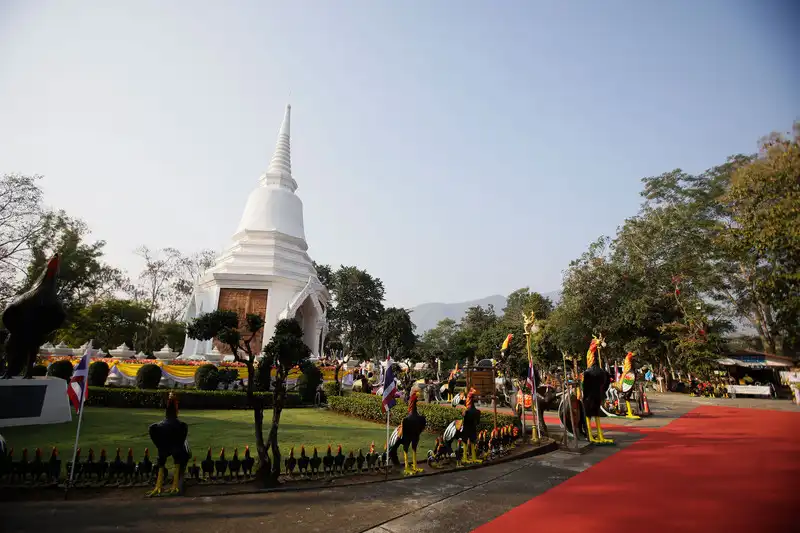
Phra Chedi Memorial of King Naresuan the Great, located in Ban Mueang Ngai, Mueang Ngai Subdistrict, Chiang Dao District, Chiang Mai Province, is a significant historical monument built to honor King Naresuan the Great, the warrior king who liberated the Ayutthaya Kingdom. This site stands as a tangible reminder of the northern military route once taken by the royal army and serves as an “open-air historical classroom” where visitors can explore the story of King Naresuan amid the majestic backdrop of Doi Luang Chiang Dao.
Local chronicles and oral traditions recount that King Naresuan once led his army through this northern route and encamped at Mueang Ngai before marching onward to Ava, the ancient Burmese capital. This makes the area a historically meaningful “military waypoint” closely tied to the geographical strategy of the Ayutthaya era. Because of this historic connection, the people of Mueang Ngai have long held deep reverence for King Naresuan, believing their land bears the footprints of the king during a crucial moment in Thai history.
The initiative to build this memorial took shape in the late 1950s, when Chiang Mai Province, together with local communities, sought to establish a place to commemorate King Naresuan’s presence in the region. The Fine Arts Department was commissioned to design the monument, ensuring historical accuracy, architectural coherence, and artistic value. Through donations and collective effort, the chedi and statue were built as a landmark of remembrance for future generations.
The main structure is an eight-sided chedi, approximately 10.30 meters wide and 25.12 meters tall. Painted in a pristine white finish, the chedi stands prominently on a raised platform surrounded by an open courtyard. Its octagonal base allows visitors to view the monument from all angles, reflecting a blend of traditional Buddhist architectural concepts with the aesthetics of a modern memorial.
One side of the chedi houses a bronze-blackened statue of King Naresuan the Great, standing about 2 meters high. The statue depicts the king in full royal battle attire, embodying both authority and determination. His right hand holds a ceremonial vessel (Suwannaphingkhan), pouring consecrated water onto the ground—a powerful symbol of sovereignty and the declaration of independence. In his left hand, he holds a sword, representing military prowess and the protection of the kingdom. The facial expression and posture convey calm resolve, dignity, and readiness for battle.
Around the base of the statue are carved stone panels narrating key events in the life and military achievements of King Naresuan. These alternate with marble inscriptions describing his biography and the history of the memorial’s construction. Walking around the chedi is akin to reading a historical chronicle engraved in stone, presented in a sequence that guides visitors through major milestones of the king’s life.
Behind the chedi lies a reconstructed “Royal Military Camp,” designed to evoke the atmosphere of the king’s wartime encampment. Inside are bronze statues of King Naresuan the Great, King Ekathotsarot, and Princess Suphankanlaya, arranged in a spatial layout that reflects their historical roles as royal siblings who greatly influenced Ayutthaya’s military and political landscape. The camp includes display elements resembling artifacts and settings from historical military life, helping visitors visualize the environment of the wartime era.
Ceremonies held annually at the memorial highlight its role as a “living historical site” for both Mueang Ngai and Chiang Dao communities. Events include the Royal Elephant Battle Day commemoration in January, water-pouring rituals during Songkran, and the memorial service on the anniversary of King Naresuan’s passing. These ceremonies attract local residents, government officials, military units, and visitors who come to pay homage through offerings, floral garlands, and a blend of Brahman and Buddhist rites.
Beyond ceremonies, the front area of the memorial often serves as a venue for local cultural events, weekend markets, and community programs. This dynamic usage underscores that the monument is not only a marker of the past but also a functional cultural space woven into daily life. Its significance continues to grow as it becomes a cultural anchor for Chiang Dao’s local identity.
One distinctive feature that many visitors notice is the large number of rooster statues placed around the chedi and the King Naresuan statue. These offerings pay homage to the legendary cockfight the young Prince Naresuan engaged in at Hongsawadi, symbolizing bravery, intelligence, and strategic prowess. The rooster motif has become a popular symbol representing the king’s spirit of victory and resilience.
From the memorial grounds, visitors are treated to panoramic views of Doi Luang Chiang Dao’s towering silhouette. Many travelers weave this site into their Chiang Dao itinerary, pairing it with visits to Chiang Dao Cave, local hot springs, scenic cafés, or nature-view accommodations. The memorial is often chosen as the final stop of the day, especially at dusk, when soft evening light illuminates the chedi and surrounding hillsides.
Getting There From Chiang Mai City, take Highway 107 (Chiang Mai – Fang Road) heading north toward Chiang Dao, a distance of roughly 70–80 kilometers. Upon entering Mueang Ngai Subdistrict, look for signage near the local market area. The entrance road leads directly to the memorial’s parking area. For those traveling without a private vehicle, van and songthaew services from Chiang Mai to Chiang Dao are available. From Chiang Dao town or Mueang Ngai village, visitors can hire a local taxi or motorcycle taxi to reach the site.
Travelers staying overnight in Chiang Dao can easily include the memorial in their itinerary. Many nature-view resorts and homestays lie within a short distance of Mueang Ngai, making it convenient to visit the site during early morning or late afternoon for the best lighting and cooler temperatures.
| Name | Phra Chedi Memorial of King Naresuan the Great, Mueang Ngai, Chiang Dao, Chiang Mai |
| Location | Moo 2, Ban Mueang Ngai, Mueang Ngai Subdistrict, Chiang Dao District, Chiang Mai Province, Thailand |
| Main Features | Octagonal chedi measuring approx. 10.30 m wide and 25.12 m tall; bronze statue of King Naresuan holding a ceremonial water vessel and sword; carved stone panels narrating royal deeds; marble inscriptions detailing his biography and the construction of the memorial; reconstructed royal military camp with statues of King Naresuan, King Ekathotsarot, and Princess Suphankanlaya. |
| Period | Constructed between 1959–1971 (B.E. 2502–2514) through collaboration between Chiang Mai Province, government agencies, and local communities to honor King Naresuan on the former northern military route. |
| Historical Evidence | Carved narrative stone panels, marble inscriptions of King Naresuan’s biography, a reconstructed royal camp, and official documentation from local authorities and the Fine Arts Department regarding ceremonies and construction history. |
| Name Origin | The name reflects the site’s purpose as both a chedi and a memorial built to honor King Naresuan on land believed to have served as a royal encampment and strategic route prior to campaigns against Burma. |
| Travel | About 70–80 km from Chiang Mai via Highway 107; from Chiang Dao or Mueang Ngai village, taxis or motorcycle taxis provide access to the site; vans and songthaews serve the Chiang Mai–Chiang Dao route regularly. |
| Nearby Attractions | Doi Luang Chiang Dao (20–25 km), Chiang Dao Cave (~22 km), Chiang Dao Hot Springs (~30 km), local temples, nature-view cafés, and scenic viewpoints. |
| Popular Restaurants Nearby | Cafe' My Day Off (~2 km, Tel. 083-159-3445), 419.Homecafe (~3–4 km, Tel. 098-909-0397), along with local food stalls and cafés within Chiang Dao town. |
| Popular Accommodations Nearby | Chiang Dao In Love (~1–1.5 km, Tel. 084-042-2400), Marisa Resort & Spa Chiang Dao (~2–3 km, Tel. 086-431-6898), Chiang Dao Privacy Resort (~2–3 km, Tel. 091-705-0909), Rimdoi Resort Chiang Dao (~3 km, Tel. 081-883-2782) |
| Facilities | Parking area, open courtyard, walking paths, seating areas, restrooms, and small local stalls selling offerings and souvenirs. |
| Current Status | Open daily 09:00–17:00; serves as a historical landmark, cultural ceremony venue, and community gathering site for annual events commemorating King Naresuan. |
Frequently Asked Questions (FAQ)
Q: What are the opening hours of the Phra Chedi Memorial of King Naresuan?
A: The memorial is generally open daily from 09:00 to 17:00. During special state ceremonies or festivals, operating hours may be extended or adjusted. Visitors are encouraged to check local announcements before traveling.
Q: Is there an entrance fee?
A: No entrance fee is required. Visitors may make voluntary donations to support the maintenance of the site. During large community events, some areas may host small stalls or fundraising activities.
Q: When is the best time of year to visit?
A: January (Elephant Battle Day), Songkran (for water-pouring ceremonies), and late April (King Naresuan’s memorial day) are the most meaningful times to visit. For a quieter experience, the cool season between October and December offers pleasant weather and beautiful mountain views.
Q: Are facilities and shops available nearby?
A: The memorial offers parking, restrooms, seating areas, and small local stalls selling offerings. Additional cafés and restaurants—such as Cafe' My Day Off and 419.Homecafe—can be found within a few kilometers in Mueang Ngai and Chiang Dao town.
Q: Can the memorial be included in a one-day Chiang Dao itinerary?
A: Yes. Many visitors combine it with stops at Chiang Dao Cave, Doi Luang Chiang Dao viewpoints, nature cafés, and hot springs. The memorial is especially scenic during early morning or late afternoon when the light is soft and the surrounding mountains look particularly striking.
 Phra Chedi Memorial of King Naresuan the Great Map
 Category:
  Group:
  Last Update: 4 MonthAgo
Comment
 Nearby Attractions
| Keyword (Advance) |
 Region
|
 Muang Chiang Mai(