
 Home
Home North(
 Chiang Mai(


Rating: 3.8/5 (4 votes)
 |
|  Map
Map 
 Have Map
  No Map
Chiang Mai attractions
Attractions in Thailand
Open Days: The museum is no longer open to the public in any museum format.
Opening Hours: The Bank of Thailand Northern Region Office operates Monday–Friday, 08:30–15:30, for official banking activities only. These hours do not apply to public museum visits.
The Bank of Thailand Museum, Northern Region Office was once an important learning space dedicated to the history of currency and cultural heritage in northern Thailand. Located inside the multipurpose building of the Bank of Thailand’s Northern Region Office on Chotana Road, Chang Phueak, Mueang Chiang Mai, the museum served as a quiet doorway into the worlds of money, textiles, and the evolving identity of local communities. Although the museum is no longer open to the public, its legacy still marks a period when this governmental institution functioned as a public classroom for understanding the story of currency and cultural knowledge.
The museum was founded on the idea of helping visitors understand the “life journey of money.” From early periods when humans first valued precious metals and shaped them into simple exchange tools, to the development of official minting systems that produced coins and banknotes, the exhibitions allowed visitors to trace how money evolved alongside society. Displays once showcased ancient Thai coins, bullet money, early minted coins, banknotes from different eras, and even foreign currencies that influenced regional trade. Walking through the galleries offered not just a look at old coins and paper notes, but a deeper understanding of how Thailand’s economic system grew through time.
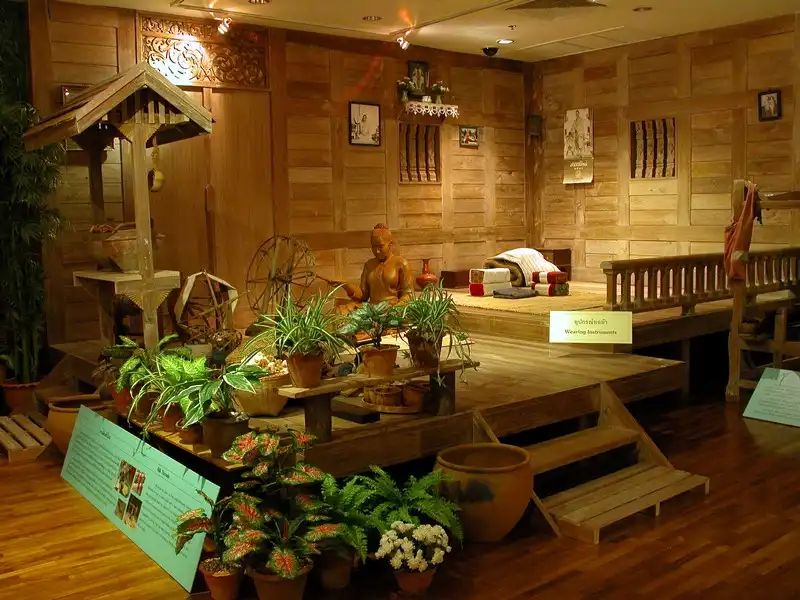
Another meaningful part of the museum was its exhibition of traditional textiles. Although textiles and monetary history might appear unrelated, cloth has always been a cultural and economic record of the people who made and used it. Fibers, natural dyes, weaving techniques, and patterns reveal identity, social status, belief systems, and the environment of each community. Presenting textiles alongside currency helped visitors see that economics and culture are deeply intertwined, each shaping the other across generations.
When the museum was still open, the multipurpose building felt like a quiet learning space. Students, researchers, and the general public could examine authentic artifacts—coins, banknotes, woven cloths—supported by explanatory panels and historical illustrations. Seeing these objects up close transformed abstract knowledge into something tangible and memorable.
Today, however, the Bank of Thailand Museum, Northern Region Office is no longer open for public visits. The permanent exhibitions that once served the community have been discontinued, and the building is now used solely for banking-related duties, meetings, and administrative functions. Those seeking academic information on currency or textile history should contact the institution directly, as walk-in visits are not available.
Although the public exhibitions have come to an end, the intellectual legacy of the museum lives on. Its collected knowledge continues to appear in academic publications, research, and exhibitions at other cultural institutions that carry forward the study of Thailand’s monetary evolution and textile heritage. The museum’s physical space may be quiet now, but its value persists through the records it helped preserve and the many visitors it once inspired.
Getting There is still straightforward, as the Bank of Thailand Northern Region Office remains active on Chotana Road along the Chiang Mai–Mae Rim route. From Chiang Mai’s Old City, you can head toward Chang Phueak and follow Chotana Road until the Bank of Thailand complex appears on the left side of the road. Red songthaews and local buses also travel along this route. However, visitors should be aware that the museum area is no longer accessible for tourism, and arrival at the building does not grant access to any exhibitions.
In retrospect, even though the museum no longer operates, its story remains a reminder of the time when Thailand’s central bank opened its doors to share knowledge about money, textiles, and the nation’s economic past. The closing of the museum does not diminish its value—rather, it underscores the importance of the knowledge that was created, preserved, and passed on. While the exhibition rooms may be silent today, the questions they once inspired about history, identity, and the meaning of money continue to resonate.
| Name | Bank of Thailand Museum, Northern Region Office (Former Museum) |
| Location | Bank of Thailand Northern Region Office, 68/3 Chotana Road, Chang Phueak, Mueang Chiang Mai, Chiang Mai 50300, Thailand |
| Key Features | Former specialized museum focusing on Thai and international currency, as well as traditional textiles representing economic, social, religious, and cultural identity across northern ethnic communities. |
| Period | Developed during the late 20th to early 21st century as part of the Bank of Thailand’s cultural educational efforts before discontinuation. |
| Significant Artifacts | Ancient Thai currency, bullet money, early minted coins, historical banknotes, foreign currencies, and traditional textiles reflecting identity and craftsmanship of northern ethnic groups. |
| Name Origin | Named after the Bank of Thailand Museum established within the Northern Region Office to share monetary and cultural knowledge with the public at the time. |
| Getting There | Accessible via Chotana Road from Chiang Mai Old City or Chang Phueak area. Red songthaews and local buses pass through this route. Note that the museum is no longer open for visits. |
| Current Status | Permanently closed as a museum. The building is now used for official duties of the Bank of Thailand Northern Region Office. |
| Open Days & Hours | No public opening hours for museum visits. Office operates Monday–Friday for administrative work only. |
| Entrance Fee | Not applicable, as the museum no longer accepts visitors. |
| Facilities | Standard office facilities of the Bank of Thailand Northern Region Office. No museum visitor facilities are available. |
| Nearby Tourist Attractions | Lanna King Rama IX Park (0.5–1 km), Chiang Mai Rajabhat University (1 km), Chiang Mai National Museum & Wat Jed Yod (2–3 km), Nimmanhaemin District (3–4 km). |
| Nearby Restaurants | Krua Phayom (Chotana Road) – Tel. 062-665-6266. Additional local eateries and cafés can be found throughout Chotana and Chang Phueak areas within 1–3 km. |
| Nearby Accommodations | Chiangmai SP Hotel, Sirithorn Road (1–2 km) – Tel. 053-406-396, 095-680-4422. Chotana Bed, Chotana Road (approx. 1 km) – Tel. 095-440-0448. |
| Contact Number | Bank of Thailand Northern Region Office: 0 5393 1000 (general administrative contact; not for museum visits). |
Frequently Asked Questions (FAQ)
Q: Can visitors still tour the Bank of Thailand Museum, Northern Region Office?
A: No. The museum has permanently closed and no longer offers public entry. The building is used solely for official functions.
Q: Where can I learn about the history of Thai and world currency now?
A: You may refer to publications by the Bank of Thailand, official websites, historical archives, and other museums such as the Treasury Museum in Chiang Mai or the Bank of Thailand Museum in Bangkok.
Q: Are there restaurants or cafés near the Bank of Thailand Northern Region Office?
A: Yes, the Chotana Road and Chang Phueak areas have many local eateries and cafés. Krua Phayom is the closest well-known restaurant near the office complex.
Q: What accommodation options are available near Chotana Road?
A: Nearby options include Chiangmai SP Hotel and Chotana Bed, both located within a short driving distance and suitable for travelers with business in the area.
Q: Should I visit the Bank of Thailand Northern Region Office as a tourist attraction?
A: The location is no longer accessible as a tourist site, since the museum has closed. Visitors without official business generally do not need to visit, but Chiang Mai offers many other open museums and cultural attractions.
 Bank of Thailand Museum Map
 Category:
  Group:
  Last Update: 3 MonthAgo
Comment
 Nearby Attractions
| Keyword (Advance) |
 Region
|
 Muang Chiang Mai(