
 Home
Home North(
 Chiang Mai(


Rating: 4.2/5 (5 votes)
 |
|  Map
Map 
 Have Map
  No Map
Nakhon Pathom attractions
Attractions in Thailand
Open Days: Daily
Opening Hours: 05:00–09:00 and 16:00–20:00 for the outer grounds / 09:00–16:00 for interior areas open to visitors
Sanam Chandra Palace is one of the most important landmarks in Nakhon Pathom and a royal palace with a very distinctive character. It is not only a historic site closely connected to King Vajiravudh, Rama VI, but also a place where royal heritage, architectural beauty, landscaped greenery, and cultural stories still blend harmoniously in the present day. From a traveler’s perspective, it is a pleasant place to walk, relax, and take beautiful photographs, with an atmosphere that clearly differs from other well-known landmarks in Nakhon Pathom. From a historical perspective, Sanam Chandra Palace reflects the royal vision, artistic taste, and broader intentions of Rama VI with remarkable clarity, making it one of the country’s most significant royal sites.
The palace stands to the west of Phra Pathom Chedi. The area was formerly known as “Noen Prasat,” or “Palace Hill,” and it is believed that this site may once have been the location of an ancient royal residence. This gives the area historical significance that predates the modern palace itself. Another important feature of the site is the large body of water once known as “Sa Nam Chan,” later commonly called “Sa Bua” or the lotus pond. This historic pond forms an important part of the landscape and became the inspiration for the royal name “Sanam Chandra,” which Rama VI bestowed upon the palace.
King Vajiravudh had long been familiar with Nakhon Pathom since the time when he was still Crown Prince, as he frequently traveled to pay homage to Phra Pathom Chedi. He saw that the Noen Prasat area possessed a landscape well suited for the construction of a royal residence to serve as a seasonal retreat and a place of rest. Once he had made his decision, he purchased land from local residents in the surrounding area, totaling approximately 888 rai, 3 ngan, and 24 square wah. Construction began in 1907 under the supervision and design of Luang Phithak Manop, who was later promoted to Phraya Wisukam Silpprasit. The various buildings within the palace complex took about 4 years to complete and were finished in 1911.
What makes Sanam Chandra Palace even more interesting is that it was never intended to serve only as a royal residence. It also reflected Rama VI’s strategic thinking. The king regarded Nakhon Pathom as a location with a favorable geographical position, suitable for use as a support base in the event of a national crisis. For this reason, Sanam Chandra Palace was used as a venue for activities related to the Wild Tiger Corps and certain military training exercises. The significance of this palace therefore goes beyond architectural beauty, as it is also tied to ideas of national security, preparedness, and modern discipline during the reign of Rama VI.
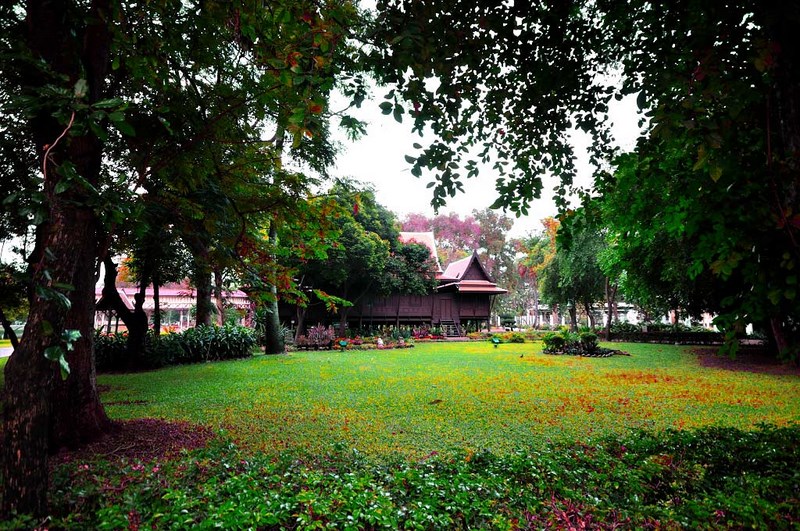
When visitors enter the palace grounds, one of the first things they notice is the sense of openness. Wide lawns, mature trees, and carefully placed buildings create a rhythm in the landscape that makes the experience feel very different from visiting royal compounds in the capital. Sanam Chandra Palace has an airy, peaceful atmosphere that invites slow walking rather than hurried sightseeing. It is therefore not surprising that the outer grounds are now used by local residents and visitors alike for leisure, exercise, evening walks, and photography.
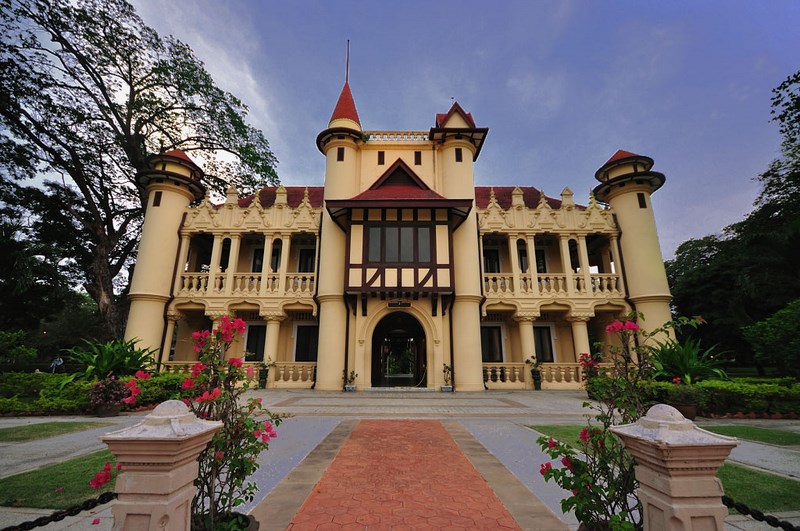
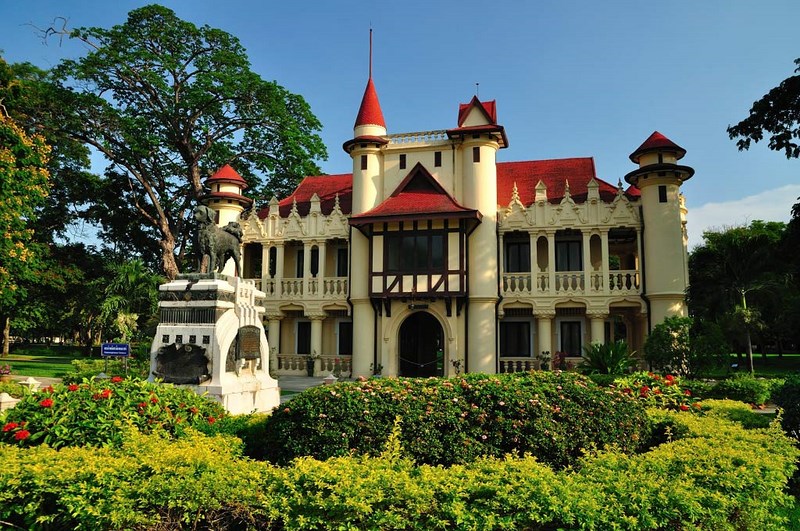
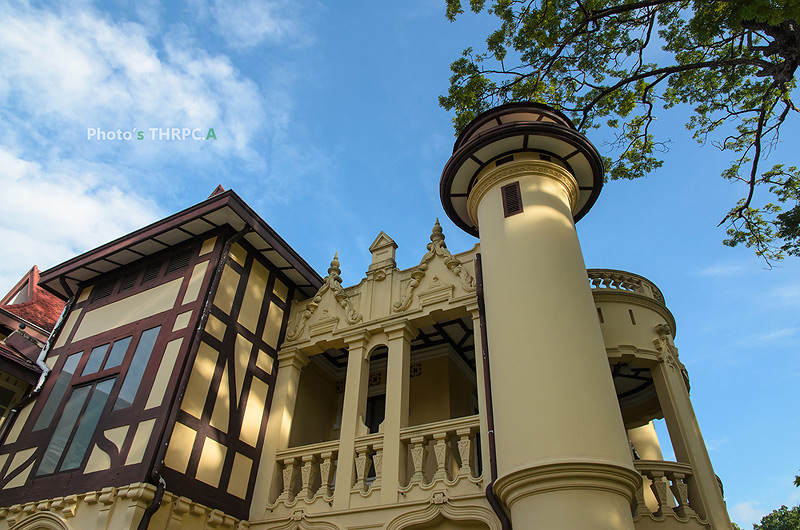
The building most widely recognized by visitors is Chali Mongkol Asน์ Hall, which has become one of the visual icons of Sanam Chandra Palace. The structure stands out for its Western-style design, resembling a small fairytale castle. Its pale yellow exterior walls, red-tiled roof, towers, projecting sections, and rhythmically arranged windows give it a romantic architectural character. This residence was built for activities connected with the Wild Tiger Corps and for royal use on certain occasions. Even today, it remains one of the most photogenic structures in the palace and one of the reasons many people feel that Sanam Chandra Palace offers a very different atmosphere from that of more conventional Thai royal compounds.
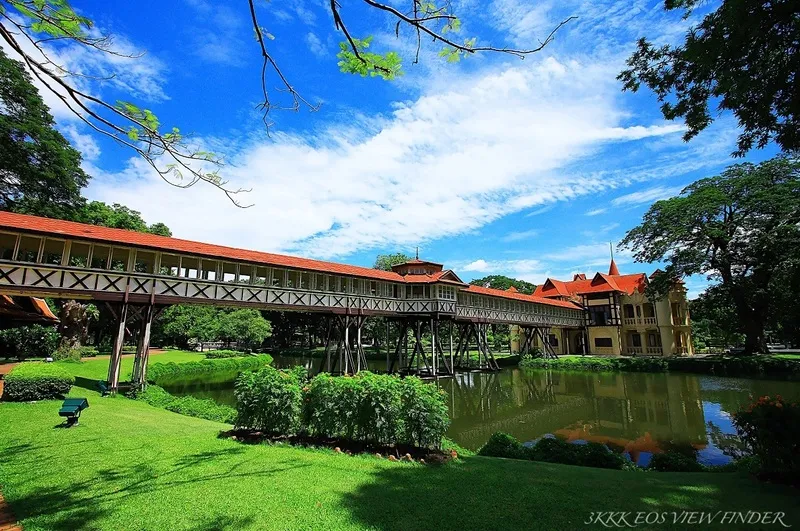
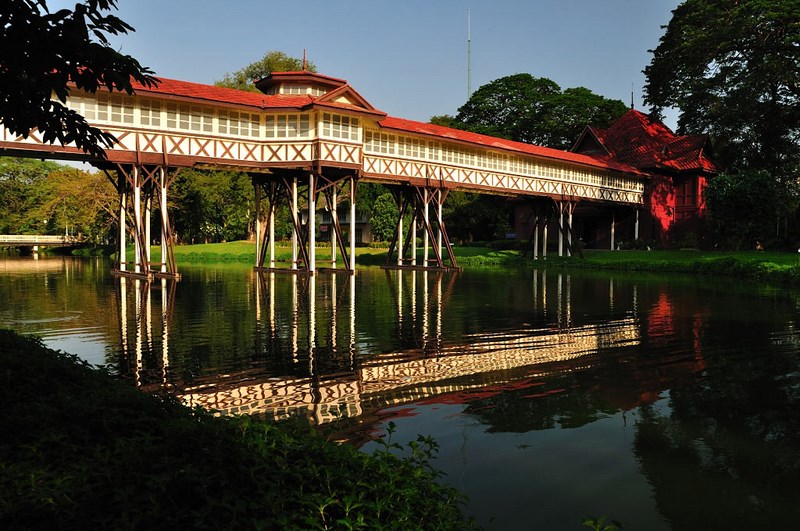
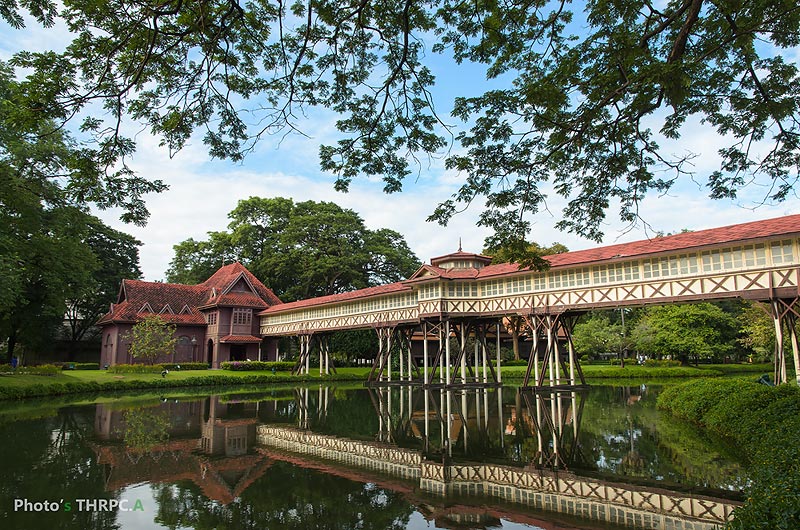
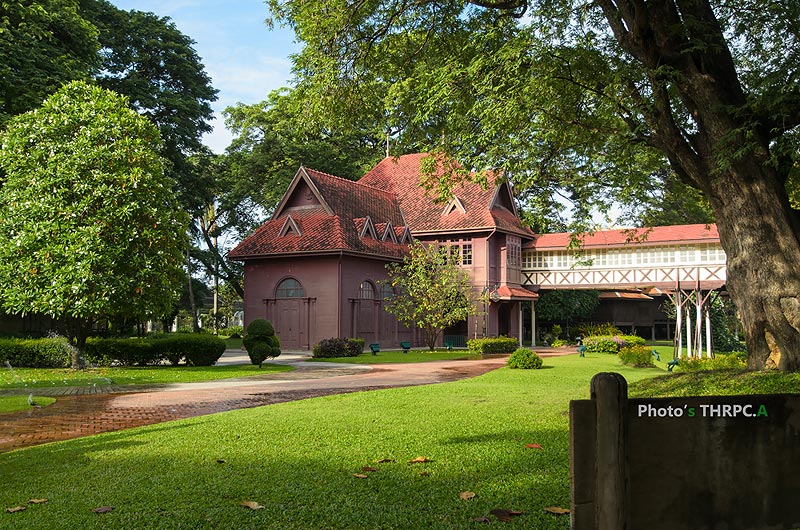
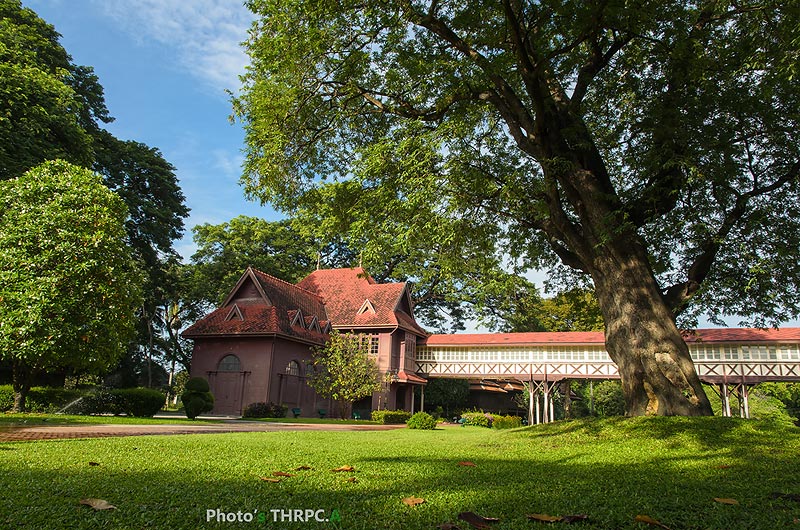
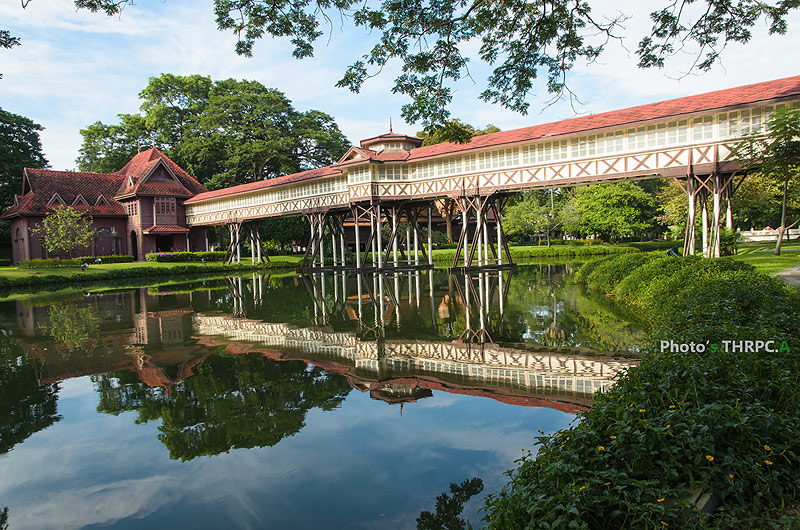
Behind Chali Mongkol Asน์ Hall stands Mareerat Bunnang Residence, a 2-storey red wooden building distinguished by its covered bridge crossing over the water to connect with the adjacent structure. This long bridge stretching above the pond is another memorable feature of Sanam Chandra Palace and especially appealing to those who enjoy architectural photography. The residence once served as a place where the king could grant private audiences to members of the public. In later years, it also became associated with displays related to the royal life and duties of Rama VI. Its beauty is therefore not simply visual; it also carries a historical layer tied to the relationship between the monarch and his people.
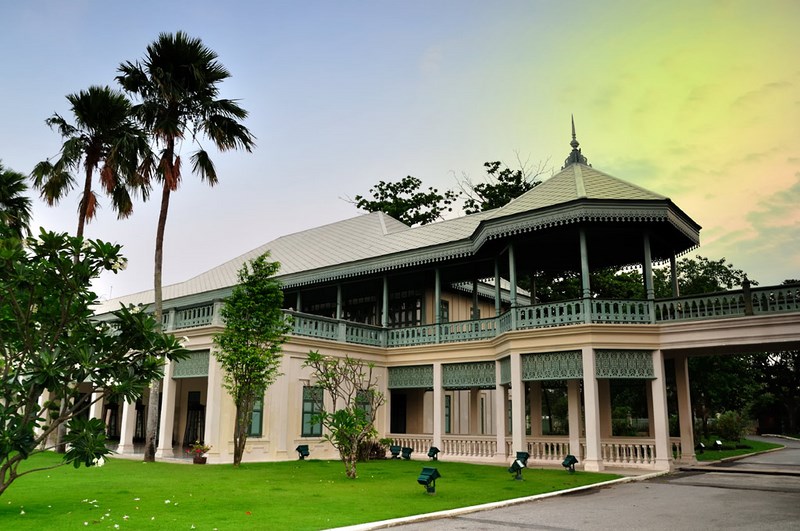
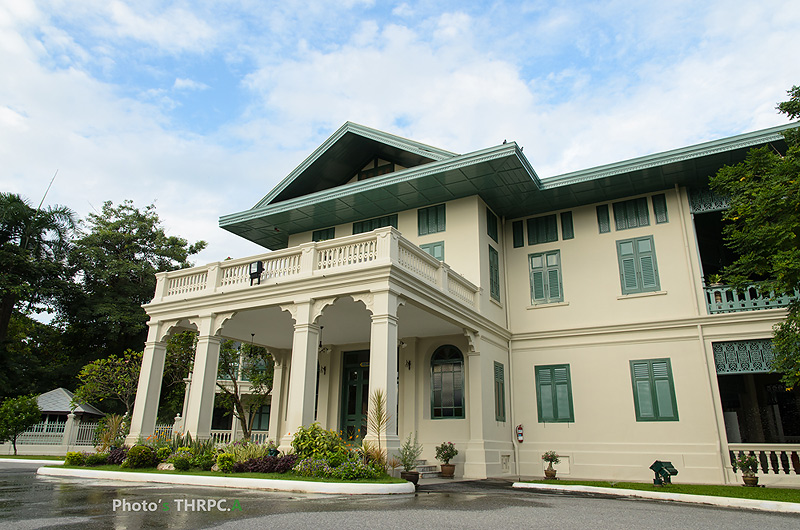
Another highly important building is Phiman Pathom Hall, one of the earliest halls constructed as part of the palace complex. It belongs to the group of buildings that clearly reflects the initial phase of Sanam Chandra Palace’s development. This hall is important not only in practical terms but also as a visual and symbolic center within the surrounding architectural composition. Sightlines from the hall connect with Ganesh Shrine and Phra Pathom Chedi, creating a meaningful symbolic relationship among royal authority, the arts, and Buddhism.
Aphirom Ruedi Hall is another early structure in the palace complex. It is a 2-storey building located to the south of Phiman Pathom Hall. Its name evokes a sense of delight and refinement, fitting its role as part of the royal residential zone. Nearby, Watchariromya Hall expresses Thai architectural aesthetics more clearly through its layered rooflines, chofas, bargeboards, and other refined elements of traditional Thai craftsmanship. This hall demonstrates that Sanam Chandra Palace does not lean exclusively toward Western architecture. Rather, it is a place where Rama VI deliberately employed a range of architectural languages to reflect both modernity and Thai heritage.
Samakkhi Mukhamat Hall is a large Thai-style audience hall raised slightly above the ground. Its spacious interior was suitable for royal ceremonies, official gatherings, and various administrative uses. In the past, it served as a throne hall when the king granted audiences to officials, as a meeting venue for civil servants and members of the Wild Tiger Corps, and even as a performance space for khon masked dance drama. Its importance lies in showing that Sanam Chandra Palace was not merely a place of leisure, but also a functioning royal complex with practical governmental and ceremonial roles.
Thap Khwan Residence is another part of the palace that should not be overlooked. This beautifully preserved group of teakwood Thai houses is one of the finest examples of a complete traditional Thai residential compound. The 8 houses are carefully arranged, with 4 larger houses and smaller connecting structures at the corners, all centered around a shared terrace and raised platform. The area was used for royal residence, merit-making, traditional dramatic performances, and at times as the command post of the Wild Tiger Corps. Today, it has great value as a place for studying Thai cultural heritage and the artistry of traditional Thai house design.
Thap Kaeo Residence is smaller in scale and takes the form of a Western-style house. Inside, it contains a fireplace and chimney, showing that it was designed for cooler weather and for specific forms of royal use. This building was also once used as a command post for the Wild Tiger Corps, further reinforcing the dual role of Sanam Chandra Palace as both a site of aesthetic beauty and a place with practical administrative and strategic functions.
At the center of the palace grounds stands Ganesh Shrine, which Rama VI ordered to be built as a place to enshrine Lord Ganesha, the deity of arts, knowledge, and wisdom. The shrine is important not only spiritually but also in terms of the layout of the palace, as it occupies a central position in the open ground before the royal buildings. Today, it remains a place of reverence for local people and visitors, especially those who come to pray for success in education, art, and professional achievement.
One of the stories that adds emotional depth to Sanam Chandra Palace is that of “Ya Le,” the beloved royal dog of Rama VI, whose monument stands in front of Chali Mongkol Asน์ Hall. Ya Le was a mixed-breed dog with long white-and-brown fur whom the king encountered and admired for its intelligence. He then brought the dog into the royal household. The bond between the king and Ya Le is often remembered because it reveals the gentle side of Rama VI and his affection for animals. After Ya Le died, the king was deeply saddened and ordered a monument to be built in memory of that love and companionship. This story gives a more personal dimension to a visit to Sanam Chandra Palace, adding a touching human element to the site’s architectural and historical significance.
After the death of Rama VI, parts of Sanam Chandra Palace were used by various government offices in Nakhon Pathom. Later, some sections became part of Silpakorn University, Sanam Chandra Palace Campus. As a result, the palace did not remain frozen in time as a silent historic relic. Instead, it continued to live on as a public educational space. A major turning point came in 2003, when the royal halls, residences, and former servant quarters were returned to the Bureau of the Royal Household, leading to clearer preservation policies and more structured public access.
For visitors today, the charm of Sanam Chandra Palace does not lie in rushing to see every point as quickly as possible. Instead, it lies in slowly absorbing the atmosphere of the grounds. In the morning, the palace offers cool air, quiet surroundings, and soft light ideal for walking and photography. In the late afternoon and evening, the mood changes; the grounds become more lively with people exercising, while the slanting sunlight enhances the colors of the buildings beautifully. For those interested in photography, the bridge over the water, Chali Mongkol Asน์ Hall, the open court around Ganesh Shrine, and the Thai wooden structures of Thap Khwan Residence are among the most attractive viewpoints.
Beyond its visual appeal, Sanam Chandra Palace also has educational value for the general public. A visit here allows people to encounter many layers of Thai history and culture in one place, including Rattanakosin-era history, Thai and Western architectural styles, ideas about the modern royal court, beliefs related to Lord Ganesha, and local stories connected with Nakhon Pathom. Anyone who walks through the palace thoughtfully will quickly realize that this is not simply a beautiful place, but one with many overlapping layers of meaning.
Getting There from Bangkok to Sanam Chandra Palace is most convenient by private car. Travelers can drive along Phetkasem Road or other main routes leading into Nakhon Pathom, then continue toward the city center and follow Ratchamankha Nai Road / Tonson Road according to the signs for the palace. If starting from Phra Pathom Chedi, simply continue toward the western side of the city, as the distance is quite short. Those traveling by public transport can first arrive in central Nakhon Pathom and then continue by local taxi or hired vehicle, as the palace is a major landmark well known to local residents.
Overall, Sanam Chandra Palace is a destination well suited both to day-trippers visiting Nakhon Pathom and to travelers who prefer to spend more time slowly exploring the city. If you are looking for a place that combines history, greenery, elegant architecture, and stories that still feel alive, Sanam Chandra Palace is one of the clearest and most rewarding choices. Whether you come to admire the palace, take photographs, study history, or simply enjoy a peaceful evening walk, this royal complex continues to offer an experience worthy of its status as one of Nakhon Pathom’s most important landmarks.
| Name | Sanam Chandra Palace |
| Place Summary | A royal palace from the reign of Rama VI, built as a seasonal royal residence and also associated with the activities of the Wild Tiger Corps. Today, it is an important historical attraction and a major leisure area in Nakhon Pathom. |
| Highlights | Chali Mongkol Asน์ Hall in Western style, the covered bridge over the pond, the traditional Thai houses of Thap Khwan Residence, Ganesh Shrine, Ya Le Monument, and expansive green grounds in the heart of the city |
| History / Period | Construction began in 1907 and was completed in 1911 during the reign of Rama VI, on land formerly known as “Noen Prasat” |
| Address | Ratchamankha Nai Road, Phra Pathom Chedi Subdistrict, Mueang Nakhon Pathom District, Nakhon Pathom 73000, Thailand |
| Getting There | Drive from Bangkok to Nakhon Pathom via Phetkasem Road or other main routes into the city, then follow Ratchamankha Nai Road / Tonson Road toward the palace. If starting from Phra Pathom Chedi, the palace is a short distance away on the western side of the city. |
| Open Days / Opening Hours | Daily / 05:00–09:00 and 16:00–20:00 for the outer grounds / 09:00–16:00 for interior areas open to visitors |
| Fees | Thai adults 30 baht, children 10 baht, foreign visitors 50 baht |
| Facilities | Walking and exercise areas, large lawns, photography spots, parking, worship area at Ganesh Shrine, and selected exhibition buildings open on designated days |
| Zones | Royal hall and residence zone, Ganesh Shrine zone, pond and covered bridge zone, lawn and walking paths around the palace, and the Thai house zone of Thap Khwan Residence |
| Nearby Tourist Attractions with Distance | 1. Phra Pathom Chedi Ratchaworamahawihan – 1.54 km 2. Wat Sisa Thong – 12.41 km 3. Jesada Technik Museum – 16.42 km 4. Khlong Mahasawat Boat Tour – 23.36 km 5. Thai Film Museum – 27.83 km |
| Popular Restaurants Nearby with Distance and Phone Number | 1. M Salad Cafe & Food for Life, city branch – about 0.5 km – 062-195-4924 2. TAMA Japanese Restaurant Nakhon Pathom – about 0.8 km – 080-456-7775 3. Krua Ban Ngan Din – about 0.8 km – 099-105-8946 4. Lumpini 51 Khao Tom รอบดึก – about 1.0 km – 098-385-7472 5. Thai-Denmark Milk Land, Silpakorn University branch – about 1.0 km – 084-224-6164 |
| Popular Accommodations Nearby with Distance and Phone Number | 1. Ratchaphruek Pavilion – 0.8 km – 034-280-299, 084-768-1188 2. Diary Suite Hotel – 0.6 km – 081-849-9650 3. The Proud Exclusive Hotel – 0.7 km – 034-255-555, 034-255-553 4. Xen Hotel Nakhon Pathom – about 2.0 km – 034-900-500 5. Mida Grande Hotel Dhavaravati Nakhon Pathom – about 3.5 km – 093-383-5515, 034-966-700 |
| Main Contact Number | 034-310-431 or 034-310-431-2 |
Frequently Asked Questions (FAQ)
Q: Where is Sanam Chandra Palace located?
A: Sanam Chandra Palace is located in Mueang Nakhon Pathom District, Nakhon Pathom Province, to the west of Phra Pathom Chedi, and it is very easy to reach from the city center.
Q: During which period was Sanam Chandra Palace built?
A: Construction of Sanam Chandra Palace began in 1907 and was completed in 1911 during the reign of King Vajiravudh, Rama VI.
Q: What are the must-see highlights inside Sanam Chandra Palace?
A: The main highlights include Chali Mongkol Asน์ Hall, the covered bridge over the pond, Mareerat Bunnang Residence, Thap Khwan Residence, Ganesh Shrine, and the Ya Le Monument.
Q: What time of day is best for visiting Sanam Chandra Palace?
A: Morning is ideal for a peaceful walk and soft photography light, while late afternoon and evening are excellent for relaxing walks, exercise, and enjoying the green atmosphere of the palace grounds.
Q: Why is Sanam Chandra Palace historically important?
A: The palace was not only a seasonal royal residence of Rama VI, but also connected with the Wild Tiger Corps, strategic training activities, and the development of the modern Thai royal court during the early 20th century.
Q: Who was Ya Le, and why is the story important?
A: Ya Le was the beloved royal dog of Rama VI. A monument to Ya Le stands in front of Chali Mongkol Asน์ Hall as a memorial to the bond between the king and his loyal companion.
Q: Can Sanam Chandra Palace be visited together with other attractions in Nakhon Pathom?
A: Yes. The palace is close to Phra Pathom Chedi and can easily be included in a wider Nakhon Pathom itinerary together with places such as Jesada Technik Museum, the Thai Film Museum, and other local attractions.
Q: What kind of clothing is appropriate for visiting Sanam Chandra Palace?
A: Visitors should dress politely, especially if they plan to enter historical buildings or areas associated with worship and royal heritage.
 Sanam Chandra Palace Map
 Category:
  Group:
  Last Update: 9 HourAgo
Comment

Photo Gellery(12) 
 Thank you photo(6) from: Thampapon
|
|
|
|
|
|

|
● Photographer: Thampapon ● Link: pixpros.net/forums/showthread.php?t=5746 ● Ref: pixpros.net |
Thank you photo(6) from: Etam15
|
|
|
|
|
|
|
● Photographer: THRPC.C ● Link: pixpros.net/forums/showthread.php?t=7422 ● Ref: pixpros.net |
● Copyright Photography. (800*500)
● View full size images from the photographer.
● View full size images from the photographer.
 Nearby Attractions
| Keyword (Advance) |
 Region
|
 Muang Nakhon Pathom(