

 Home
Home Chiang Mai(










Rating: 4.4/5 (5 votes)
 |
|  Map
Map 
 Have Map
  No Map
Chiang Mai attractions
Attractions in Thailand
Open Days: Daily (it’s best to contact your accommodation or the community in advance if you plan to stay overnight, join a forest walk, or visit during peak holidays)
Opening Hours: Visit anytime (recommended 07.00–17.30 to explore the village and head out before dark)
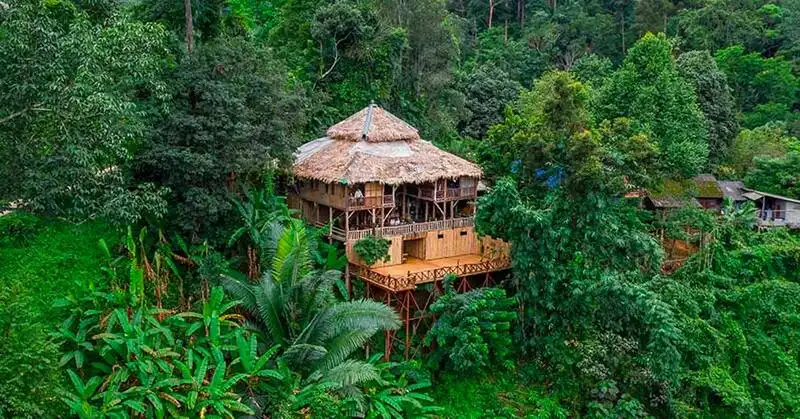
Ban Mae Mae is a small mountain village in Chiang Mai Province with a charm that feels like “living with the forest for real.” It’s not just a pretty backdrop for photos, but a community with its own rhythm of work, seasons, and everyday life. The village has around 105 households, and local income is closely tied to harvesting miang, traditional handicrafts such as weaving vegetable baskets, and using local herbs alongside careful stewardship of natural resources. Here, “forest–water–people” function as one system; if one part collapses, the others struggle to survive as well.
The landscape of Ban Mae Mae lies in a valley, embraced by forested ridgelines that keep the air cooler than the lowlands for much of the year. A clear stream runs through the village, so the sound of flowing water becomes the day’s natural soundtrack, and there are also small waterfalls or swimming spots along the community forest that locals know well. What makes it special is that these natural highlights aren’t tucked away “outside the village”—they flow through daily life. You don’t really have to hunt for a “location.” Walk slowly, notice homes, miang gardens, waterways, and people at work, and you’ll see how the community depends on nature with real care.
If you want to understand Ban Mae Mae more deeply, the word “miang” is the key. In the Lanna context, miang often refers to tea leaves (or miang leaves) that are fermented or processed in local ways. It’s food, a snack, a culture of sharing, and a source of income. Many villagers work with miang from managing harvest areas to picking and sorting leaves, and then processing them in forms the community is skilled at. So visiting here doesn’t end at scenery—you can observe real work, see the hands that do it, and understand the time and precision hidden inside something that can look very ordinary.
Ban Mae Mae has been developed as a community-based destination rooted in nature. Visitors often enjoy strolling through the village to see daily life, learning about miang and local herbs, taking gentle forest walks along routes villagers use, and visiting small waterfalls or stream areas to unwind. The most important thing is that this place is best enjoyed when you’re willing to “slow down” to match the community—no rushing, no loud noise, no leaving traces, and always respecting local farmland and living spaces.
Another side of Ban Mae Mae that appeals to people who want to rest both body and mind is traditional wellness based on local knowledge, such as Thai traditional massage and herbal steam/sauna treatments. Some villagers offer these services depending on availability and timing. Nothing here is over-styled or overly commercial; it reflects a sufficiency mindset and a careful use of local resources. If you like travel that gives you both nature and living wisdom, that’s why Ban Mae Mae is often mentioned among those who love slow, meaningful trips in the North.
Getting There Ban Mae Mae is about 60 kilometers from Chiang Mai city. When you reach the Huai Jo intersection, turn left, then continue on a reinforced concrete road for around 6 kilometers. The final stretch is a narrow community road with curves, so it’s best to drive a well-maintained vehicle and take extra care, especially during the rainy season when roads can be slippery and visibility lower. If you plan to stay overnight, aim to arrive before dark for safety and so you can settle in and speak with your host without rushing.
The best time to visit Ban Mae Mae is usually from the end of the rainy season into early winter, when the forest is lush, the stream feels alive, and the weather is comfortable. If you prefer quiet, weekdays or non-holiday periods give you a more genuine “real village” atmosphere. In the rainy season, bring non-slip shoes and a rain jacket, and allow more travel time because mountain roads require extra caution.
To make your visit smoother, carry some cash (mobile signal and digital payments may not be convenient everywhere). Dress respectfully and comfortably for walking in a community setting. Do not collect plants or herbs without permission. Keep noise down near residential areas. And help keep the village clean by taking your trash with you—especially plastic and food waste—because it can directly affect the water system and local wildlife.
| Place Name | Ban Mae Mae (Mae Na Subdistrict, Chiang Dao District, Chiang Mai) |
| Key Characteristics | A valley village with a stream running through it, small waterfalls/community forest routes, miang culture, local herbs, basket weaving, and sufficiency-minded community-based tourism |
| Recommended Activities | Experience village life and miang harvesting, learn about local herbs, stroll along streams/waterfalls, gentle forest walks, Thai traditional massage, herbal steam (depending on community availability) |
| Best Time to Visit | Late rainy season–early winter (lush forest, beautiful water, pleasant weather) / weekdays are best for a quieter, more authentic village feel |
| Nearby Attractions (approx.) | Chiang Dao Cave (Wat Tham Chiang Dao) – approx. 10–15 km – Tel. 053-456-630 Chiang Dao Wildlife Sanctuary – approx. 10–20 km – Tel. 053-456-623 Doi Luang Chiang Dao (access rules vary by season) – approx. 20–35 km – Tel. 02-561-0777 (TAT Information Center) Stream walk and community forest routes in Ban Mae Mae – starting point within the village – (coordinate via accommodation/community) Mae Na Subdistrict Municipality (for general area coordination) – approx. 0–20 km (depends on meeting point) – Tel. 053-046-994-5, 093-329-9480 |
| Nearby Restaurants (approx.) | Chiang Dao Nest 1 (Nest 1 restaurant) – approx. 12–18 km – Tel. 053-456-612 Malee’s Restaurant (Chiang Dao area) – approx. 12–18 km – Tel. 081-961-8387 Krua Chiang Dao (Khao Kha Moo & Mantou) – approx. 15–22 km – Tel. 053-455-133, 081-883-4790 Chiang Dao Khao Kha Moo (classic shop) – approx. 15–22 km – Tel. 053-455-093 Homhom Coffee & Pizza at Chiang Dao – approx. 15–25 km – Tel. 063-582-2788 |
| Nearby Accommodations (approx.) | Ban Ton Mai Mae Mae (Tree House Hideaway / treehousehomestay) – in/near the village – Tel. 081-958-5601 Mae Mae Home – in/near the village – Tel. 081-967-8974 MayamYay Homestay (Mae Mae Village) – in/near the village – Tel. 086-342-7669 Chiang Dao Nest 1 & 2 (resort) – approx. 12–18 km – Tel. 053-456-612 Malee’s Nature Lovers Resort (Chiang Dao area) – approx. 12–18 km – Tel. 081-961-8387 |
| Facilities | Depends on the accommodation/activity point (generally bring personal essentials, insect repellent, non-slip shoes, and a small flashlight if you plan to walk in the late afternoon) |
Frequently Asked Questions (FAQ)
Q: Which district is Ban Mae Mae in?
A: Ban Mae Mae is in Mae Na Subdistrict, Chiang Dao District, Chiang Mai Province.
Q: What kind of vehicle is suitable for getting to Ban Mae Mae?
A: A regular car can work if it’s in good condition, but the final access road is curvy and narrow in parts. Take extra care in the rainy season as the road can be slippery.
Q: What can you do in Ban Mae Mae besides taking photos?
A: Highlights include learning about village life such as miang and local herbs, handicrafts like basket weaving, gentle forest walks along streams/waterfalls, and traditional wellness activities depending on community availability.
Q: If I want to stay overnight, how should I book?
A: Many visitors stay in village homestays or nearby accommodations. It’s best to contact and reserve in advance, especially in the cool season and during long holidays.
Q: What time of year is best to visit Ban Mae Mae?
A: Late rainy season to early winter is excellent, with lush greenery, beautiful water, and comfortable weather. For a quieter visit, go on weekdays.
Q: Are there any etiquette or nature-friendly tips to keep in mind?
A: Respect local farmland and residential areas, don’t litter, don’t collect plants or herbs without permission, keep noise down, and take your trash out with you to help protect the stream and forest.
 Mobile: 0857081086
 Ban Mae Ma Map
 Category:
  Group:
  Last Update: 1 DayAgo
Comment
 Nearby Attractions
| Keyword (Advance) |
 Region
|
 Muang Chiang Mai(