
 Home
Home North(
 Chiang Mai(


Rating: 2.6/5 (20 votes)
 |
|  Map
Map 
 Have Map
  No Map
Chachoengsao attractions
Attractions in Thailand
Open Days: Daily
Opening Hours: 07:00 – 17:00
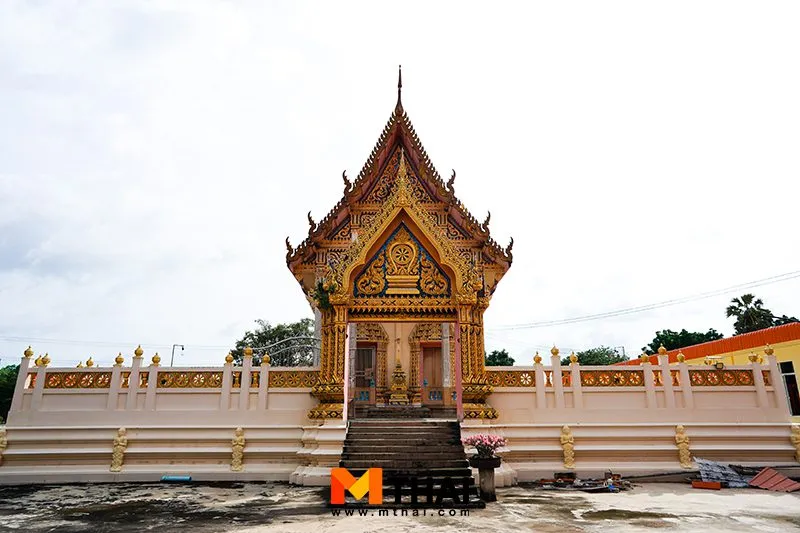
Wat Kon Kaew in Kon Kaew Subdistrict, Khlong Khuean District is a community temple where local history feels easy to follow through the story of “Wang Kon Kaew Phikun Thong” and the later name change to “Kon Kaew.” It suits visitors who want a quiet temple visit, and you can comfortably explore the grounds in about 1–2 hours. If you have extra time, you can extend your day to riverside spots along the Bang Pakong River or nearby places around Khlong Khuean in the same trip.
Wat Kon Kaew in Kon Kaew Subdistrict, Khlong Khuean District, Chachoengsao is a local (Mahanikaya) temple with a clearly grounded “community temple” character, both in religious ceremonies and in the way it connects people in the area. The highlight here is not a grand, landmark-like spectacle, but the calm that makes you slow down, listen to the breeze, look across the courtyard, observe the temple buildings, and gradually read the meaning of the place through the story embedded in the former local name “Wang Kon Kaew Phikun Thong,” a shared memory of the community before the temple developed into the form seen today.
If you are looking for an unhurried temple trip in Chachoengsao, Wat Kon Kaew is better experienced by “staying with the place” rather than checking in and moving on. What you take back is not only photos, but a clearer sense of how a community builds a temple, why a name changes, and how the temple becomes a shared center for people from past to present. A visit like this lets you see the relationship between “faith” and “local development” in a natural way, without relying on loud, overstated selling points.
In terms of setting, Wat Kon Kaew sits in Kon Kaew Subdistrict, Khlong Khuean District, an area where local life relates closely to waterways and the network of local roads. As you enter the area, you will likely feel the pace slow down, traffic thin out compared with the city zone, and the community atmosphere become progressively clearer. In this context, the temple functions as a natural focal point of the area: a place where people come to make merit, hold events, meet, and reaffirm their shared local identity through rituals and annual community activities.
The temple’s timeline is relatively clear. Wat Kon Kaew was founded in 1911 and received its royal boundary (Wisungkhamsima) in 1961, reflecting continuous development of religious space until the temple was fully established for formal Sangha acts under Buddhist discipline and ecclesiastical regulation. These dates matter because they show the temple did not appear overnight; it grew alongside the community, and the Wisungkhamsima further strengthened the temple’s role as a stable center for religious ceremonies.
Another layer that makes this temple memorable is the story of the area’s earlier setting, said to have been a shrimp pond belonging to the landholder, shaped as a large, round basin known locally as “Wang Kon Kaew Phikun Thong.” This story is compelling because it feels like a shared memory that people can picture: the word “wang” often evokes a deeper water basin with a distinctive character. When the community gathered to build a temple, the earlier name “Kon Kaew” (literally “bottom of glass”) was considered less auspicious, so it was adjusted to “Kon Kaew” (literally “lump of glass”), which sounded more auspicious while remaining close in pronunciation. Over time, this helped unify the naming of the temple, the village, and the subdistrict in a consistent way that people could remember and use with ease.
From a local cultural perspective, changing a place name from “Kon Kaew” to “Kon Kaew” reflects a long-standing Thai preference for auspicious wording. For many communities, a name is not just a signpost; it is something people repeat daily and carry as a shared reference. When a name feels auspicious, attachment to the place often strengthens, and shared faith around the temple tends to flow more smoothly.
When you walk around Wat Kon Kaew today, the most rewarding approach is to notice it as a “working community temple.” Pay attention to everyday details such as the courtyard used for merit-making gatherings, halls or functional spaces that accommodate local activities, and the practical layout that prioritizes real religious use over spectacle. To enjoy a temple like this, do not rush. Observe how people use the space, where the main worship points are, which corners feel like quiet resting spots, and which areas the community shares during ceremonies.
Wat Kon Kaew is also spoken of in connection with a revered monk, “Phra Khru Suwan Silacharn (Luang Pho Thong),” whose devotees often remember strict practice, compassion, and contributions to temple development. In a cultural travel context, it is best understood through two principles: respect local belief and focus on community value. Faith in respected teachers can be a real force that brings people together, leads to the creation of permanent structures, improves access routes to the temple, and supports development that helps people connect with Buddhism more easily—results that are clearly visible at the community level.
For visitors who want a “meaningful, informative” visit, it helps to keep two simple intentions. First, make merit and pay respects with calm focus. Second, read the area’s story through the older name and the community’s evolution. You do not need every detail, but if you remember the key points—founded in 1911, Wisungkhamsima in 1961, and the former local name “Wang Kon Kaew Phikun Thong” before the change to “Kon Kaew”—you will instantly see the temple differently. It becomes more than a stop to pay respects; it becomes a living record of the community.
On major Buddhist holy days, a community temple like Wat Kon Kaew often feels more lively because it is the time when people gather to make merit, listen to sermons, join temple activities, and help the merit-making events run smoothly. If you want to see community energy, consider visiting around Makha Bucha Day, Visakha Bucha Day, Asalha Bucha Day, or during the Buddhist Lent season. You will likely see the temple’s role more clearly than on ordinary days. If you prefer maximum quiet, weekday mornings are usually best, with lighter weather and an unhurried atmosphere that community temples naturally offer.
Temple etiquette is straightforward: dress modestly, avoid overly tight or short clothing, speak softly, and be mindful when taking photos during ceremonies or when people are meditating. If you want photos of architecture or ambience, take them respectfully, avoid walking in front of monks or worshippers, and do not disrupt religious areas. The simplest rule is to preserve the calm of the temple; then your visit is more likely to feel welcomed rather than merely passing through.
Getting There If you are driving, you can start from Chachoengsao city and head toward Khlong Khuean District, then continue into Kon Kaew Subdistrict and follow the main community roads to the temple. Using a navigation app together with local signage is recommended. Once you enter village zones, reduce speed because there are smaller intersections and steady local movement. If you plan a half-day trip, you can visit Wat Kon Kaew and then continue to nearby attractions or cafes in Khlong Khuean, or extend along the Bang Pakong River corridor within the same route.
In summary, Wat Kon Kaew is ideal for visitors who appreciate calm spaces and want a local story to take home. Its strength lies in a clear historical timeline and a name-change story that is easy to remember. A visit here is not only about paying respects; it is also about understanding how a community grows and chooses to build a shared center of faith. If you give yourself 1–2 hours to walk slowly, you can leave with both the comfort of merit-making and a deeper sense of the area’s past.
| Place Name | Wat Kon Kaew |
| Summary | A local (Mahanikaya) temple in Kon Kaew Subdistrict, Khlong Khuean District, whose community history is easy to follow through the story of “Wang Kon Kaew Phikun Thong” and the later name change to “Kon Kaew.” Ideal for a calm temple visit and a culture-focused day near the Bang Pakong River. |
| Highlights | Peaceful community-temple atmosphere, clear historical timeline (founded 1911 / Wisungkhamsima 1961), memorable local story behind the name change, suitable for a cultural temple trip in Khlong Khuean |
| Address | Kon Kaew Subdistrict, Khlong Khuean District, Chachoengsao |
| Type | Local Temple (Mahanikaya) |
| History / Period | Founded 1911; Wisungkhamsima granted 1961; local story of the former area name “Wang Kon Kaew Phikun Thong” and the adjustment of the name to “Kon Kaew” |
| Open Days | Daily |
| Opening Hours | 07:00 – 17:00 |
| Abbot / Temple Lead (Latest) | Phra Khru Asok Thammakhun |
| Temple Phone (Verified) | 08-9831-6878 |
| Getting There | Drive to Khlong Khuean District, then continue into Kon Kaew Subdistrict. Use navigation plus local signs; slow down in village areas due to smaller intersections and local traffic. |
| Current Status | Open for worship and visits |
| Facilities | Temple courtyard, areas for merit-making and ceremonies, on-site parking (subject to actual site conditions) |
| Nearby Attractions (Approx. Distance) | 1) Ganesha Park (Standing Ganesha), Khlong Khuean (approx. 12 km) 2) Khlong Khuean Market (approx. 8 km) 3) Wat Sao Cha-ngok (approx. 10 km) 4) Wat Sothon Wararam Worawihan (approx. 30 km) 5) Ban Mai 100-Year Market (approx. 28 km) |
| Nearby Restaurants (Approx. Distance + Phone) | 1) Kon Kaew Steak 888 (approx. 1 km) Tel. 090-654-2709 2) Jimmy Farm (approx. 9 km) Tel. 081-816-1330 3) Windmill Cafe&Garden (approx. 12 km) Tel. 081-504-6029 4) Pa Mon Made-to-Order Dishes (approx. 10 km) Tel. 087-681-9434 5) Baan Suan Daranee (Standing Ganesha Area) (approx. 12 km) Tel. 064-596-4699 |
| Nearby Accommodations (Approx. Distance + Phone) | 1) Sum Saran Fishing & Homestay (approx. 7 km) Tel. 081-847-6874 2) VAA Chachoengsao (approx. 22 km) Tel. 096-916-3289 3) Baan Suan View Dee Homestay, Khlong Khuean (approx. 10 km) Tel. 081-371-1518 4) Suan Rim Nam Bang Pakong Resort (approx. 24 km) Tel. 081-921-7057 5) Deva Travel & Stay (approx. 25 km) Tel. 090-652-2319 |
Frequently Asked Questions (FAQ)
Q: Where is Wat Kon Kaew located?
A: The temple is in Kon Kaew Subdistrict, Khlong Khuean District, Chachoengsao. It is well suited for a calm temple visit and culture-focused stops around Khlong Khuean.
Q: What is the key historical background of Wat Kon Kaew?
A: Wat Kon Kaew was founded in 1911 and received its Wisungkhamsima in 1961. The area is also remembered through the local story of the former name “Wang Kon Kaew Phikun Thong” before the name shifted to “Kon Kaew.”
Q: What are the highlights for visitors?
A: The highlights are the peaceful community-temple atmosphere and the memorable local name-change story, making it ideal for an unhurried visit where you can read the community’s history through the temple.
Q: Which phone number should I use to contact the temple?
A: You can contact Wat Kon Kaew at 08-9831-6878.
Q: How much time should I plan for a visit?
A: Plan about 1–2 hours for worship and a relaxed walk around the temple. If you want to extend to markets, cafes, or riverside spots in Khlong Khuean, a half-day plan works well.
Q: What etiquette should I follow when visiting?
A: Dress modestly, keep your voice low, respect religious areas, be mindful of photography during ceremonies, and avoid disturbing worshippers or those practicing meditation.
 Wat Kon Kaeo Map
 Category:
  Group:
  Last Update: 4 WeekAgo
Comment
 Nearby Attractions
| Keyword (Advance) |
 Facebook Fanpage
 Region
 Art, Culture and Heritage
 Historical Sites and Monuments(
 Landmarks and Memorials(
 Royal Palace(
 Art, Craft Centres, Tradition(
 Museums(
 Historical Houses and The Ancient City(
 Educational Places
 Museum for Study(
 Library(
 Educational Gardens, Farm(
 University
 Mosque(
 Other religious and spiritural sites(
 Research and Development
 Royal Project(
 Suburban Living
 Village, Community(
 Local Market(
 Floating Market(
 Nature and Wildlife
 National Parks and Marine Reserves(
 Mountain (Doi)(
 Dam, Reservoir, Lake(
 Waterfalls(
 Caves(
 River, Canal(
 Bays and Beaches(
 Islands(
 Other natural attractions(
 Entertainment and Agricultural
 Zoos and Aquariums(
 Animal camps and shows(
 Farm, Parks, Gardens and Ecotourism(
 Spas and Wellness
 Spas and Wellness(
 Travel Articles, Recipes
 Travel Review, Food Review(