
 Home
Home North(
 Chiang Mai(


Rating: 3.8/5 (4 votes)
 |
|  Map
Map 
 Have Map
  No Map
Nakhon Nayok attractions
Attractions in Thailand
Open Days: Daily
Opening Hours: 08:00 - 17:00
Wang Muang Reservoir in Nakhon Nayok Province is a small-scale water resource development project under a royal initiative. It plays a significant role in supporting foothill agricultural areas in Pak Phli District. The project was developed to address water shortages and enhance agricultural productivity for local communities. Although it is not a large reservoir, it holds considerable importance in both irrigation management and as a peaceful natural retreat ideal for relaxation.
The reservoir is an earthen dam constructed by the Royal Irrigation Department under the Ministry of Agriculture and Cooperatives. Its primary purpose is to store water during the rainy season and supply it during the dry season for farming and domestic use. This type of project reflects a sustainable water management approach aligned with royal development principles, emphasizing harmony with the natural landscape.
The surrounding terrain consists of foothill plains, making it suitable for natural water collection. Water flows from nearby mountains and streams into the reservoir, allowing continuous accumulation during the rainy season. This stored water becomes a crucial resource during periods of high demand, ensuring greater stability for agricultural activities.
The atmosphere around Wang Muang Reservoir is notably quiet and natural. The area retains a strong rural character, free from large constructions or heavy tourist crowds. This makes it an excellent destination for visitors seeking tranquility and an authentic connection with nature.
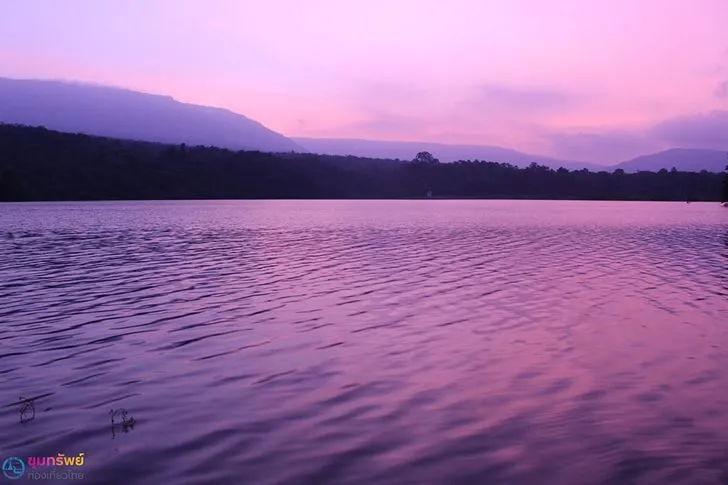
One of the key highlights of this location is its simplicity combined with natural balance. The calm water surface reflects the surrounding mountains and sky, creating visually soothing scenery. The early morning and late afternoon light further enhances the beauty, making these times particularly suitable for visits.
Although the reservoir does not offer extensive tourist facilities, it possesses its own charm. Visitors can enjoy leisurely walks, relax by the water, or take nature photographs without the pressure of crowded environments. The appeal lies in its quiet and unhurried experience.
Today, Wang Muang Reservoir continues to serve as an important water source for agriculture in nearby areas. Its storage and distribution system enables farmers to maintain consistent crop production, reduces drought risks, and contributes directly to the local economy.
For travelers interested in more than just sightseeing, this reservoir stands as a clear example of a successful royal initiative project at the local level. It demonstrates how small-scale infrastructure can effectively address real-world challenges and support sustainable community development.
The best time to visit is during the early morning or late afternoon, especially in the rainy season and early winter when the surrounding landscape is lush and the reservoir is full. The scenery during these periods is particularly vibrant and visually appealing.
Visitors should prepare as they would for any outdoor nature trip. Comfortable footwear, drinking water, and sun protection are recommended, as some areas are exposed to direct sunlight with limited shade.
Travel to Wang Muang Reservoir begins from Nakhon Nayok town, heading toward Pak Phli District along the main road. The site is most conveniently accessed by private car, allowing flexibility to explore nearby attractions within the same region.
Overall, Wang Muang Reservoir represents a destination with multi-dimensional value. It contributes to water resource development, supports local communities, and offers a peaceful natural environment. While it may not be widely known, it is an ideal destination for those seeking quiet scenery and meaningful travel experiences. :contentReference[oaicite:0]{index=0}
| Place Summary | A small royal initiative reservoir in Nakhon Nayok used for agriculture and peaceful nature tourism |
| Highlights | Quiet atmosphere, scenic water and mountain views, royal initiative project |
| History / Era | Developed by the Royal Irrigation Department under a royal initiative to solve agricultural water issues |
| Address | Pak Phli District, Nakhon Nayok, Thailand |
| Travel | Accessible by private car from Nakhon Nayok town to Pak Phli District |
| Facilities | Access road and natural viewing areas |
| Nearby Attractions | 1. Khun Dan Prakan Chon Dam – 20 km 2. Nang Rong Waterfall – 22 km 3. Sarika Waterfall – 24 km 4. Wang Bon Reservoir – 26 km 5. Huai Prue Reservoir – 28 km |
| Nearby Restaurants | 1. Krua Khun Maem – 18 km Tel. 037-385-234 2. Kai Yang Khao Suan Kwang Pak Phli – 15 km Tel. 037-399-112 3. Krua Lung Kang – 20 km Tel. 081-802-3456 4. Dam-side Restaurant Khun Dan – 21 km Tel. 081-912-7788 5. Sarika Kitchen – 23 km Tel. 037-385-678 |
| Nearby Accommodations | 1. Phumontra Resort Nakhon Nayok – 22 km Tel. 037-349-999 2. The Forest Home Resort – 24 km Tel. 037-384-444 3. At Rice Resort – 23 km Tel. 037-385-555 4. Greenview Resort – 25 km Tel. 081-734-2222 5. Baan Suan Khun Yai – 21 km Tel. 081-812-1111 |
Frequently Asked Questions (FAQ)
Q: Where is Wang Muang Reservoir located?
A: It is located in Pak Phli District, Nakhon Nayok Province, Thailand.
Q: What type of project is this reservoir?
A: It is a royal initiative project designed to support agricultural water management.
Q: What activities can visitors do here?
A: Visitors can relax, enjoy nature, take photos, and walk around the reservoir.
Q: When is the best time to visit?
A: Early morning and late afternoon are the best times due to pleasant weather and lighting.
Q: Why is this reservoir important?
A: It provides essential water for agriculture and supports local communities.
Q: What should visitors prepare?
A: Bring drinking water, sun protection, and comfortable walking shoes.
 Wang Muang Reservoir Map
 Category:
  Group:
  Last Update: 7 HourAgo
Comment
 Nearby Attractions
| Keyword (Advance) |
 Facebook Fanpage
 Region
 Art, Culture and Heritage
 Historical Sites and Monuments(
 Landmarks and Memorials(
 Art, Craft Centres, Tradition(
 Museums(
 Educational Places
 Educational Gardens, Farm(
 University
 Places of Worship
 Temple(
 Church(
 Mosque(
 Other religious and spiritural sites(
 Suburban Living
 Village, Community(
 Local Market(
 Waterfalls(
 Other natural attractions(
 Entertainment and Agricultural
 Farm, Parks, Gardens and Ecotourism(
 Outdoor and Adventure Activities(