
 Home
Home North(
 Chiang Mai(


Rating: 3.8/5 (4 votes)
 |
|  Map
Map 
 Have Map
  No Map
Bangkok attractions
Attractions in Thailand
Open Days: Daily
Opening Hours: Generally around 06:00 – 18:00 (please recheck before visiting)
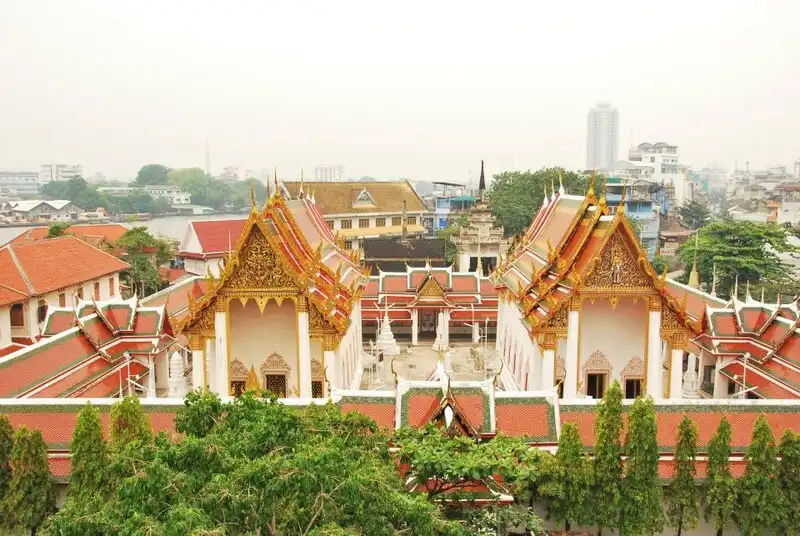
Wat Pathum Khongkha Ratchaworawihan is an old riverside temple on the Phra Nakhon side of the Chao Phraya River, located on Song Wat Road in a neighborhood people love because every walk comes with a story—Song Wat, Sampheng, Talat Noi, and Yaowarat all flow together. The temple is a second-class royal monastery (Ratchaworawihan). It was formerly known as “Wat Sampheng,” named after the road and trading quarter where it stands, before King Rama I graciously bestowed the new name “Wat Pathum Khongkha.” The name evokes water, calmness, and a sense of gentle well-being. Once you step inside, the lively rhythm of the commercial district softens into a quieter atmosphere, ideal for worship and for taking your time to notice the craftsmanship without rushing.
The charm of Wat Pathum Khongkha lies in being a “historic temple in a historic trade quarter,” which means the temple’s story can’t really be separated from Bangkok’s story. This is an ancient temple dating back to the Ayutthaya period. When the Rattanakosin era began, city planning on the Phra Nakhon side—including the relocation and settlement of Chinese communities in and around Sampheng—became a major backdrop that made this temple even more meaningful. It was already here, and it was restored and revived to serve as a religious center for a fast-growing community in a newly structured capital.
To picture it clearly: in the early Rattanakosin period, King Rama I considered the strategic geography for establishing the new capital and found the eastern bank (Phra Nakhon side) more suitable for defense and urban organization. As new city boundaries were set and key sites such as the Grand Palace area and the city pillar were planned, parts of the existing population—especially Chinese residents—were reorganized and relocated to more appropriate areas. Historical accounts often mention a key corridor stretching from the canal near Wat Sam Pluem to the canal near Wat Sampheng. In that context, Wat Pathum Khongkha was not merely a riverside temple; it was a religious marker in a zone transforming into one of the capital’s major trading and residential districts.
As the community resettled, the old Wat Sampheng was already in poor condition. Somdet Phra Anuchathirat Chao, Krom Phra Ratchawang Bowon Surasinghanat (the Front Palace), therefore ordered a full restoration and renovation of the temple. After the restoration was completed, it was dedicated in honor of Somdet Phra Borom Chonnokathirat Chao. Subsequently, King Rama I bestowed the new official name “Wat Pathum Khongkha,” which became the temple’s recognized name and has been used ever since.
Following the major renovation during King Rama I’s reign, there was little large-scale restoration in the reign of King Rama II because the work had only recently been completed. Over time, however, by the reign of King Rama III the temple began to deteriorate again. A request for renovation was granted, but before the work was finished, the patron passed away, and the project was not continued, leaving the temple to decline through much of that period. Later, in the reign of King Rama IV, further renovation was ordered and additional enhancements were made to elevate the grandeur inside the ordination hall. The principal Buddha image in the ubosot was raised higher, presented in royal regalia in the manner of a monarch, and the base (chukchi) was extended. Two devaraja figures holding ceremonial parasols made of gold and silver floral motifs were also created. Details like these allow later generations to “read” the refined taste and craftsmanship of early-to-mid Rattanakosin from the real space itself.
If you want your visit to feel more meaningful than a quick stop, slow down and pay attention to the architecture in the sacred precinct—especially the ubosot and the elements reflecting Rama IV-era enhancement. The emphasis on royal elegance, the presentation of the Buddha in royal regalia, and the presence of devaraja attendants with ceremonial parasols are not features you see in every temple. The more you connect these details with the temple’s historical timeline, the easier it becomes to visualize how this site once held special importance and patronage tied to urban organization and elite support of the era.
Another layer of charm is the riverside setting and its place in Song Wat, a district that has recently come back to life as a beloved walking neighborhood. The area still carries the character of old warehouses, long-running shops, and historic architecture, now coexisting naturally with modern cafes and restaurants. That makes Wat Pathum Khongkha a great starting point for a Bangkok day that blends “faith + city + trading-culture history”: settle your mind at the temple first, then step back into the city without wasting time on long transfers between areas.
For visits and worship, a city temple like this is especially pleasant in the morning, when it’s less crowded and the weather is kinder. You’ll have more room to focus on prayer and observe details comfortably. If you plan to continue walking Song Wat and Talat Noi afterward, visiting from late morning to afternoon also works—just leave enough time and keep basic temple manners in mind: dress respectfully, speak softly, avoid blocking others during worship, and take photos with discretion, without flash in inappropriate areas, especially when people are actively making merit.
Getting There Wat Pathum Khongkha is on Song Wat Road, close to Sampheng and Yaowarat. A common approach today is taking the MRT to the Yaowarat area (for example, Wat Mangkon Station) and then using a taxi or walking onward depending on real conditions in the neighborhood. If you enjoy riverside travel, another option is using the Chao Phraya Express Boat and then walking from a nearby pier, which fits the district’s historic river-trade atmosphere beautifully. If you drive, plan extra time for parking and consider using a nearby parking facility and walking the rest of the way, as the Song Wat–Sampheng area has narrow streets and can be congested depending on the time of day.
If you have half a day, this temple can anchor a smooth, rewarding route: begin with worship and a full walk through the sacred area, then head out to explore Song Wat for its old shops and cafes, continue to Talat Noi for heritage homes, street scenes, and riverside photo spots, and end the day in Yaowarat for dinner and snacks. This kind of pacing gives you “history–faith–neighborhood life” in one day and turns Wat Pathum Khongkha into more than a quick stop—it becomes a starting point for understanding this side of Bangkok more clearly.
| Name | Wat Pathum Khongkha Ratchaworawihan |
| Location | Song Wat Road, Samphanthawong District, Bangkok (by the Chao Phraya River, Phra Nakhon side) |
| Status | Second-Class Royal Monastery (Ratchaworawihan) |
| Former Name | Wat Sampheng |
| Key Historical Periods | Originating in the Ayutthaya period; major restoration in early Rattanakosin (Rama I); further renovation and enhancements in the reign of Rama IV |
| Key Evidence / Highlights | Legacy as the former Wat Sampheng; ties to early Phra Nakhon urban organization; sacred precinct architecture; ubosot details reflecting Rama IV-era enhancements (royal-regalia presentation and devaraja attendants holding ceremonial parasols) |
| Name Origin | Originally called “Wat Sampheng” after the district/road; renamed “Wat Pathum Khongkha” by King Rama I |
| Abbot (Latest) | Phra Phrom Senabodi (Phim Yanaviro) |
| Temple Highlights | An ancient riverside temple in the Song Wat–Sampheng area; history linked to early Rattanakosin-era city organization; ubosot craftsmanship reflecting Rama IV-era enhancements (royal-regalia presentation and devaraja attendants holding ceremonial parasols) |
| Travel | MRT to the Yaowarat area (e.g., Wat Mangkon Station) then taxi/walk depending on real conditions; Chao Phraya Express Boat then walk from a nearby pier; driving is possible but parking is limited—consider parking nearby and walking |
| Current Status | Open for worship and visits (generally daily; please recheck before traveling) |
| Contact | 0-2222-3975 |
| Facilities | Worship areas; respectful photo spots; limited seating/rest areas as appropriate (allow extra time on busy days and keep temple etiquette) |
| Fees | No confirmed admission fee information (donations are voluntary) |
| Nearby Tourist Attractions (Approx. Distance) | Song Wat Road (walking/cafes) – 0.3 km Ratchawong Pier area (boat access/riverside walk) – 0.8 km Sampheng Market – 1.2 km Talat Noi neighborhood – 1.3 km River City Bangkok – 1.6 km Wat Traimit Witthayaram Worawihan – 2.3 km |
| Popular Restaurants Nearby (Approx. Distance + Phone) | Joke Prince – 1.8 km – 02-234-4809 Nai Ek Roll Noodles – 2.0 km – 02-226-4651 Khao Kang Jeck Pui (Je Chia) – 1.7 km – 02-222-5229 Lhong Tou Cafe – 1.9 km – 064-935-6499 Hua Seng Hong (Yaowarat) – 2.1 km – 02-222-3555 |
| Popular Accommodations Nearby (Approx. Distance + Phone) | River View Residence – 1.0 km – 02-234-5429 Hotel Royal Bangkok@Chinatown – 2.0 km – 02-226-0026 Shanghai Mansion Bangkok – 2.1 km – 02-221-2121 ASAI Bangkok Chinatown – 2.2 km – 02-220-8999 W22 by Burasari – 2.5 km – 02-069-6999 |
Frequently Asked Questions (FAQ)
Q: Where is Wat Pathum Khongkha Ratchaworawihan located?
A: The temple is on Song Wat Road by the Chao Phraya River (Phra Nakhon side) in Samphanthawong District, Bangkok, close to Sampheng and Yaowarat.
Q: What was the temple’s former name, and why was it renamed?
A: It was formerly known as “Wat Sampheng,” after the district and the road. King Rama I later bestowed the name “Wat Pathum Khongkha” following a major restoration in the early Rattanakosin period.
Q: What are the highlights of Wat Pathum Khongkha?
A: Key highlights include its status as an ancient riverside temple in a historic trade quarter and the ubosot details reflecting Rama IV-era enhancements, such as the royal-regalia presentation and devaraja attendants holding ceremonial parasols.
Q: Which station should I use to reach the temple by rail?
A: Many visitors use the MRT in the Yaowarat area (for example, Wat Mangkon Station) and then continue by taxi or on foot depending on real conditions in the neighborhood.
Q: Is the temple open daily, and when is the best time to visit?
A: It is generally open daily, around 06:00 – 18:00, but it’s best to recheck before visiting. Weekday mornings are usually calmer, while late morning to afternoon works well if you plan to continue on to Yaowarat later in the day.
Q: How long should I plan to spend at the temple?
A: For worship and a comfortable walk around, 45–90 minutes is typical. If you want to study architectural details and take photos at an unhurried pace, allow 1–2 hours.
Q: Are there nearby places I can visit afterward?
A: Yes. You can continue to Song Wat, Sampheng Market, Talat Noi, River City Bangkok, and easily connect to Yaowarat—perfect for a one-day plan of temple visit + old-town walk + great food.
 Wat Pathum Khongkha Ratchaworawihan Map
 Category:
  Group:
  Last Update: 2 MonthAgo
Comment
 Nearby Attractions
| Keyword (Advance) |
 Region
|
 Phra Nakhon(