

 Home
Home Chiang Mai(










Rating: 3.6/5 (7 votes)
 |
|  Map
Map 
 Have Map
  No Map
Chiang Mai attractions
Attractions in Thailand
Open Days: Daily (advance contact or appointment is recommended, especially during the rainy season)
Opening Hours: Generally 08.00–17.00 (may vary depending on field operations)
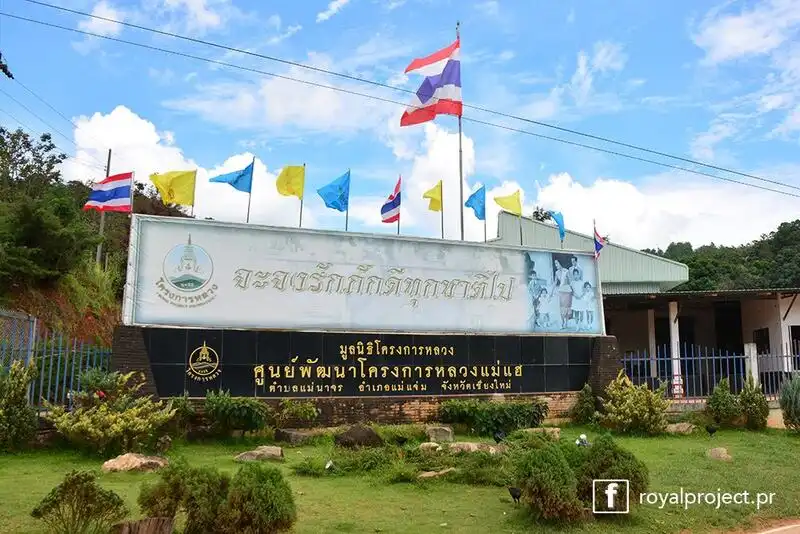
Mae Hae Royal Project Development Center (Northern Mae Hae Royal Project) is a learning-oriented destination for travelers who wish to experience Chiang Mai through nature, local communities, and real-world highland development rather than conventional sightseeing. The area and nearby villages once faced poverty, limited transportation access, and land-use practices that affected watershed forests, such as shifting cultivation and opium poppy farming. The implementation of the Royal Initiative gradually transformed these survival conditions into more stable livelihood systems aligned with natural resource conservation.
The center’s area of responsibility covers Mae Hae Village and surrounding communities across Mae Win Subdistrict in Mae Wang District and Mae Na Chon Subdistrict in Mae Chaem District, Chiang Mai Province. The population is ethnically diverse, including Karen, Hmong, and Yunnanese Chinese communities, making development efforts highly dependent on both geographical conditions and cultural context rather than a single agricultural solution.
According to available records, in 1978 His Majesty King Bhumibol Adulyadej initiated a royal development program to improve livelihoods for highland communities in the Mae Hae area. The project was initially implemented as the Mae Hae Highland Agricultural Development Project and later evolved into the Mae Hae Royal Project Development Center, marking a shift from short-term assistance toward long-term, systematic support covering crop selection, soil and water management, and market linkage.
The terrain consists mainly of rolling hills and complex mountain ranges, with narrow plains running north to south along Mae Hae Stream and Mae Tian Stream. The center is located at an elevation of approximately 1,300 meters above sea level and oversees an area of about 33 square kilometers across three districts—Mae Wang, Mae Chaem, and Samoeng—covering 24 villages and around 1,750 households. The average temperature is approximately 24 degrees Celsius, though figures may vary depending on annual surveys and field conditions.
For agricultural tourism, visitors often enjoy observing year-round demonstration plots of vegetables and ornamental plants, as well as production areas managed by participating farmers. Key crops include persimmons, pears, seedless grapes, and strawberries. These field visits provide insight into how highland agriculture manages seasonal cycles, water, and soil to achieve long-term sustainability rather than short-term yields.
A frequently mentioned highlight is the large-scale strawberry plantation operated by the Bo Kaeo sub-center. The harvest season typically runs from November to February, with processed products such as strawberry wine and strawberry juice available. Actual yields depend on annual weather conditions, so advance inquiries are recommended for visitors planning harvest-season trips.
In terms of cultural tourism, the area preserves living traditions that reflect the relationship between people and nature. These include the Hmong New Year Festival, usually held in December, and the Karen wrist-tying ceremony, traditionally performed before and after the rice-growing season (around October–November and May–June), as well as during periods of illness or community spirit rituals. These practices highlight development as a process of strengthening communities without erasing cultural roots.
Nature-oriented travelers are drawn to viewpoints offering sea-of-mist scenery and sunrise–sunset views at Mon Ya Peak, Ban Nam Chang, and Ban Mon Ya Tai, some of which allow camping under appropriate conditions. Another notable site is the Mae Sanga Watershed Management Area, featuring relatively intact forest ecosystems suitable for nature study and camping. Natural water sources can also be found at Ban Huai Khamin, approximately 3 kilometers from the center.
During the late rainy season to early winter, the Mae Tian–Mae Hae and Mae Hae–Pa Kia Noi routes are known for seasonal floral landscapes along the so-called Thung Bua Tong Road. Between October and November, wildflowers bloom along the hillsides, while Himalayan cherry blossoms typically appear from December to January, depending on annual climate conditions.
Local souvenirs and products include seasonal agricultural produce, fresh temperate fruits and vegetables, strawberry wine, and ethnic textiles produced by local communities, offering visitors a direct way to support community livelihoods.
Regarding food and accommodation, the center operates one guesthouse with five rooms accommodating up to approximately 30 guests, along with designated camping areas and tent rentals for two people with sleeping bags. Visitors bringing their own tents may be subject to a maintenance fee. There is no permanent restaurant on-site, but catering can be arranged with advance notice. Community homestays in nearby villages are also available.
Getting There: The distance from Chiang Mai city is approximately 101 kilometers. Travel via Highway 108 (Chiang Mai–Hot) to San Pa Tong District, then turn right at Ban Kad Junction onto Highway 1013 (San Pa Tong–Mae Wang) for about 27 kilometers. Continue past the Thung Luang Royal Project Development Center and travel approximately 16 kilometers further to reach the Mae Hae Royal Project Development Center. The route includes mountainous terrain and winding roads; travelers should allow sufficient time and exercise caution, especially during the rainy season.
| Place Name | Mae Hae Royal Project Development Center (Northern Mae Hae Royal Project) |
| Location | Mae Hae area connecting Mae Wang and Mae Chaem Districts, Chiang Mai Province (entry points should be confirmed in advance) |
| Key Characteristics | Highland agricultural development center under the Royal Initiative, integrating livelihoods, conservation, and learning-based tourism |
| Established | Development initiated in 1978 (official records may vary depending on source) |
| Key Data | Elevation ~1,300 m; area ~33 sq.km; 3 districts; 24 villages; ~1,750 households; average temperature ~24°C |
| Current Status | Active development and learning-based tourism area; advance contact recommended |
| Contact Number | 053-211-489 |
Frequently Asked Questions (FAQ)
Q: Who is this place suitable for?
A: It is ideal for travelers interested in learning-based tourism, royal development projects, highland agriculture, ethnic cultures, and real working landscapes rather than photo-oriented attractions.
Q: What can visitors mainly see?
A: Demonstration plots, seasonal fruit farms, community landscapes, and nearby natural viewpoints, with experiences varying by season and project activities.
Q: When is the best season for strawberries?
A: Strawberry harvest usually occurs between November and February, but yields depend on weather conditions and should be confirmed in advance.
Q: Are there cultural activities to observe?
A: Yes. Visitors may encounter traditional festivals and ceremonies of local ethnic communities. Respectful behavior and permission are recommended, especially when photographing.
Q: What should visitors be cautious about during the rainy season?
A: Slippery roads, reduced visibility, and longer travel times. Vehicle readiness and route condition checks are strongly advised.
 Tel: 053211489
 Mobile: 0899483546
 Mae Hae Royal Project Development Center Map
 Category:
  Group:
  Last Update: 13 HourAgo
Comment
 Nearby Attractions
| Keyword (Advance) |
 Facebook Fanpage
 Region
 Art, Culture and Heritage
 Historical Sites and Monuments(
 Landmarks and Memorials(
 Royal Palace(
 Art, Craft Centres, Tradition(
 Museums(
 Educational Places
 Museum for Study(
 Educational Gardens, Farm(
 Training Center(
 University
 Places of Worship
 Temple(
 Mosque(
 Other religious and spiritural sites(
 Suburban Living
 Village, Community(
 Local Market(
 Nature and Wildlife
 National Parks and Marine Reserves(
 Mountain (Doi)(
 Dam, Reservoir, Lake(
 Waterfalls(
 Hot Springs(
 Caves(
 River, Canal(
 Other natural attractions(
 Entertainment and Agricultural
 Zoos and Aquariums(
 Animal camps and shows(
 Stadium(
 Farm, Parks, Gardens and Ecotourism(
 Waterpark(
 Theater(
 Outdoor and Adventure Activities(
 Shopping
 Shopping and Night Market(
 Restaurant
 Michelin Star(
 Michelin Guide(
 Call Customer Service in Tourism
 Call Customer Service in Tourism(
 Travel Articles, Recipes
 Travel Review, Food Review(
 Food Menu, North Recipes(
 Thai Desserts, North Recipes(