

 Home
Home Chiang Mai(







Rating: 3.6/5 (9 votes)
 |
|  Map
Map 
 Have Map
  No Map
Kanchanaburi attractions
Attractions in Thailand
Open Days: Daily (natural area – please call ahead before traveling)
Opening Hours: Recommended 08:00 – 17:00 (visit during daylight hours for safety)
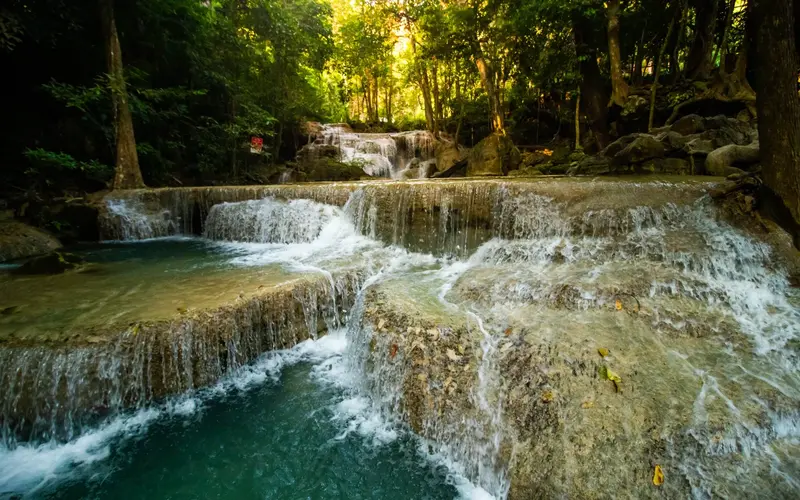
Sathit Waterfall is located in Moo 12, Ban Hin Si Phatthana, Chorakhe Phueak Subdistrict, Dan Makham Tia District, Kanchanaburi Province. It is a waterfall that still feels more like a “natural area” than a commercial tourist spot. The key appeal here is simplicity, quietness, and the sense of stepping into real forest scenery without having to travel too far from Kanchanaburi town. It suits travelers who want to slow down for half a day or a full day and let the sound of flowing water, the breeze, and the earthy scent after rain do the restoring — without needing anything elaborate.
The first thing many visitors notice at Sathit Waterfall is the feeling of “nature that hasn’t been dressed up.” The area around the waterfall is mixed forest with rock formations, a small stream, and natural pools shaped by the terrain. This makes the atmosphere change clearly from season to season. During the rainy season and the late rainy-to-cool period, the water volume increases, the flow becomes more visible in layers, the air feels cooler and more humid, and the forest turns intensely green as if nature has boosted its own saturation. In the dry season, the water level drops; some sections become a gentle trickle or shallow pools among rocks. The experience then shifts from “seeing a powerful waterfall” to “walking in a forest and listening to nature.” If you want the waterfall to look its fullest, the late rainy season into early cool season is typically the best choice in Kanchanaburi, because walking is often more comfortable, heavy downpours are less frequent than mid-rainy season, and there is usually still enough water left from the rains to show the waterfall’s beauty more clearly.
In some sources, Sathit Waterfall is also mentioned with a similar name such as “Satit Chon Dan Waterfall,” reflecting that it is a waterfall in the Chorakhe Phueak area where the landscape remains largely natural and rural near the forest edge. Because this is a natural site that may not be fully organized like major attractions, the most important plan is not the photo angle — it is safety preparation. This includes grippy footwear, flexible clothing, a waterproof pouch for your phone or camera, enough drinking water, and a small first-aid kit. Walking on damp rock or wet ground can be slippery, especially after fresh rain. If you prefer a low-risk visit, arrive in the morning, stay on sections where the conditions are clearly visible, avoid steep or slick areas, and exit before late afternoon to avoid reduced light.
Another reason Sathit Waterfall is worth visiting is that it naturally functions as a “nature learning space” without needing many explanatory signs. You can observe how plants change with the seasons, how water shapes rock over time into patterns and pools, and how the forest and stream interact to keep the area pleasantly humid through much of the year. For nature photographers, this is a place for story-driven images: droplets on leaves, a stream slipping over mossy rock, or morning sunlight filtering through the canopy in soft beams. The trip doesn’t need to be rushed. If you slow down, nature reveals details you might normally overlook.
In terms of local history and place narrative, Sathit Waterfall reflects the typical path of a community-level natural site: first known within a limited circle, then gradually shared more widely as roads improve and social media increases demand for quiet places that are not crowded. Even the village name “Ban Hin Si Phatthana” hints at a landscape shaped by rock and hills. Combined with a stream running through the area, the environment becomes suitable for seasonal waterfall formation. The value of places like this is that nature still “does its own work” without being rushed into dense construction or overdevelopment. The most suitable travel approach is therefore eco-minded and respectful: do not leave trash, keep noise low, do not disturb wildlife, do not remove plants or stones, and avoid activities that damage the soil — especially cutting across the landscape and creating new shortcut trails, which can accelerate soil erosion during the rainy season.
If you ask who this place is best for, the honest answer is: people who truly enjoy nature and can accept minor imperfections. Facilities such as restrooms or visitor services may not be as complete as major attractions. Photo spots are not decorated with props; they are beautiful because they are real. Visitors often feel satisfied because they get peace, the clear sound of water, fresh forest green after rain, and the reminder that a restorative natural space can still exist near the city. On the other hand, if you want easy concrete walkways, many shops, and fully managed visitor zones like a large national-park site, you may need to adjust expectations. Sathit Waterfall offers a different kind of beauty, and it doesn’t need to be compared — it just needs to match your travel style.
Getting There (Private Car) From Kanchanaburi town, head toward Dan Makham Tia District and Chorakhe Phueak Subdistrict via the main route connecting the town to the rural area. Then take local roads into Ban Hin Si Phatthana, Moo 12. Practical tips: fuel up before leaving the town area, download an offline map in case signal becomes weak, and drive at an appropriate speed because local roads may include curves, short rises/descents, and surfaces that change by season. In the rainy season, mud, gravel, or sand can wash onto the road in some sections. Near the waterfall area, park neatly without blocking access and avoid parking on soft ground that could sink after rain.
The best time to visit for “good photos and comfortable walking” is morning after sunlight begins, when the light is softer, mist can be more visible, and the temperature is still mild. In the late afternoon, the light often becomes harsher and the humidity can feel heavier, especially toward the end of the rainy season. Also, if heavy rain falls in the upstream area, flash-flood conditions can happen even when the waterfall area itself doesn’t seem to be raining hard. Calling local contacts before you go is a sensible step, especially if you are unfamiliar with the route or traveling with children or elderly family members.
Activities that suit Sathit Waterfall are “light but meaningful”: walking in nature, photography, safe water play only where conditions are clearly suitable (and only after assessing the real flow that day), leave-no-trace picnicking, or simply sitting and listening to the forest. If you are a camping or overnight traveler, it is generally safer and more comfortable to stay at a nearby accommodation or an organized campsite, then drive to the waterfall in the morning. Overnighting inside a less-developed natural area can be limited by safety and communication constraints.
This is why Sathit Waterfall works well as a “half-day nature trip,” combined with other Kanchanaburi highlights — whether town, history, or famous temples. You can enjoy forest freshness and city convenience in a single itinerary without rushing too much. If you plan your timing well and keep safety as the priority, Sathit Waterfall can become a quiet, simple destination that feels genuinely rewarding for people who love nature.
| Place Name | Sathit Waterfall |
| Address | Moo 12, Ban Hin Si Phatthana, Chorakhe Phueak Subdistrict, Dan Makham Tia District, Kanchanaburi Province |
| Place Summary | A community-level natural waterfall area with a quiet forest atmosphere, suited for eco-minded visits, stream-and-rock scenery, and seasonal pools. |
| Key Highlights | Raw, peaceful nature; clear water-and-forest ambience; greener and fuller flow in rainy – late rainy/early cool season (water level drops noticeably in the dry season). |
| Open Days | Daily (natural area – please call ahead before traveling) |
| Opening Hours | Recommended 08:00 – 17:00 (visit during daylight hours for safety) |
| Travel | Private car: drive from Kanchanaburi town toward Dan Makham Tia, enter Chorakhe Phueak, then continue via local roads to Ban Hin Si Phatthana, Moo 12 (download an offline map and drive carefully in rainy season). |
| Current Status | Community-level natural site (facilities may be limited depending on season/time); call ahead before entering, especially during the rainy season. |
| Contact (Local Info / Tourism) | Chorakhe Phueak Subdistrict Administrative Organization: 034-670-426 Tourism Authority of Thailand (Kanchanaburi Office): 034-511-200 |
| Nearby Tourist Attractions (Approx. Road Distance) | 1) Wat Hin Thaen Lam Pachee – ~20 km 2) Wat Tham Suea (Tiger Cave Temple) – ~55 km 3) Bridge Over the River Kwai – ~50 km 4) Kanchanaburi War Cemetery (Don Rak) – ~50 km 5) Thailand-Burma Railway Centre – ~50 km |
| Popular Restaurants Nearby (Approx. Road Distance + Phone) | 1) Manoch Kaeng Pa – ~35 km – 081-943-4964 2) Chai Curry Restaurant – ~35 km – 034-510-365 3) Dab Ud Restaurant – ~35 km – 034-525-993 4) Trio Farm Cafe – ~40 km – 095-854-8108 5) Baan Rai Nai Rung – ~40 km – 089-051-9242 |
| Popular Accommodations Nearby (Approx. Road Distance + Phone) | 1) The Legacy River Kwai Resort – ~30 km – 063-875-5381 2) River Kwai Kiri Resort – ~45 km – 082-264-2666 3) Khaokondo Resort – ~35 km – 098-271-8479 4) Kungfu Home – ~40 km – 087-818-7611 5) Rabbit Campsite – ~30 km – 062-615-5954 |
Frequently Asked Questions (FAQ)
Q: When is the best time to visit Sathit Waterfall?
A: If you want greener scenery and stronger flow, the rainy season through the late rainy/early cool period is usually best, because water volume is typically higher and the forest feels freshest.
Q: Is visiting during the rainy season risky?
A: Risk can be higher due to slippery surfaces and possible flash-flood conditions. Call ahead, avoid heavy-rain days, and visit only during daylight hours.
Q: Is Sathit Waterfall suitable for children or elderly visitors?
A: It depends on the real trail and ground conditions that day. If walking involves wet rocks or steep areas, it may not be suitable. Choose short, easy sections and prioritize safety.
Q: What should I prepare before visiting?
A: Bring non-slip shoes, comfortable clothing, drinking water, a waterproof pouch for phone/camera, and a small first-aid kit. Download an offline map in case mobile signal is weak.
Q: What time should I go if I plan a day trip?
A: Start in the morning for a relaxed visit, such as arriving around 08:00–09:00, and leave before 17:00 to avoid low light and reduce slip risk.
Q: Who should I contact for the latest route and site conditions?
A: You can contact Chorakhe Phueak SAO at 034-670-426 or the Tourism Authority of Thailand (Kanchanaburi Office) at 034-511-200, especially during rainy months.
 Sathit Waterfall Map
 Category:
  Group:
  Last Update: 10 HourAgo
Comment
 Nearby Attractions
| Keyword (Advance) |
 Facebook Fanpage
 Region
 Art, Culture and Heritage
 Historical Sites and Monuments(
 Landmarks and Memorials(
 Art, Craft Centres, Tradition(
 Museums(
 Art Gallery(
 University
 Places of Worship
 Temple(
 Church(
 Other religious and spiritural sites(
 Research and Development
 Royal Project(
 Suburban Living
 Village, Community(
 Local Market(
 National Parks and Marine Reserves(
 Mountain (Doi)(
 Dam, Reservoir, Lake(
 Hot Springs(
 Caves(
 River, Canal(
 Other natural attractions(
 Entertainment and Agricultural
 Zoos and Aquariums(
 Animal camps and shows(
 Farm, Parks, Gardens and Ecotourism(
 Cinema(
 Outdoor and Adventure Activities(
 Travel Articles, Recipes
 Travel Review, Food Review(