
 Home
Home North(
 Chiang Mai(


Rating: 3.6/5 (5 votes)
 |
|  Map
Map 
 Have Map
  No Map
Nonthaburi attractions
Attractions in Thailand
Open Days: Open Daily
Opening Hours: 08:00–18:00
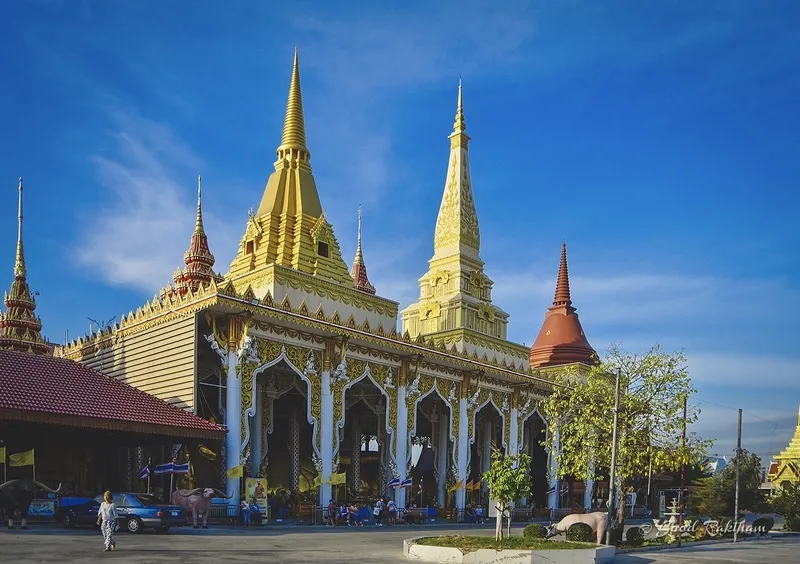
Wat Rat Prakhong Tham is an old temple in Bang Yai District, Nonthaburi, with a rare combination of local history, religious devotion, and a strong social role in contemporary Thai society. For visitors looking for a temple in Nonthaburi that offers more than beautiful architecture, this is one of the most worthwhile places to know. The temple has clear historical depth, important sacred objects, and a visible connection to the lives of local people. Its roots go back to the late Ayutthaya period, and it was once known by the local name “Wat Khang Khao,” or “Bat Temple,” before being revived and restored into a major temple of the community. Today it is widely known for Luang Pho To, Sam Po Kong, its great reclining Buddha, and its charitable work that has made the temple respected far beyond the immediate neighborhood.
Wat Rat Prakhong Tham is located at 63/1 Rim Khlong Om Road, Moo 1, Ban Khlong Om, Sao Thong Hin Subdistrict, Bang Yai District, Nonthaburi Province. It is a Mahanikaya temple, and the current abbot is Phra Kittiwachirathada, also known as Phra Ajarn Wittaya Mahaviro. One of the temple’s most important highlights is its reclining Buddha image, or Luang Pho Phra Non, which measures 32 meters in length and is widely described as the largest reclining Buddha in Nonthaburi Province. The temple also enshrines Luang Pho To, Sam Po Kong, and the pavilion above the reclining Buddha is decorated with symbolic replicas of three important Thai relic stupas: Phra That Hariphunchai, Phra That Phanom, and Phra Pathom Chedi. This makes the temple both a place of worship and a highly interesting cultural destination in the Bang Yai area.
The history of Wat Rat Prakhong Tham is deeper than that of an ordinary community temple because its origin is traced back to around B.E. 2256, during the late Ayutthaya period. There is also a belief that the site may in fact be older than that, although evidence is incomplete. At one point the temple was neglected, with no resident monks and no serious restoration work, and its buildings fell into deterioration. Because of that abandoned condition, local villagers called it “Wat Khang Khao,” or “Bat Temple.” The name reflects a period when the temple was quiet, worn down, and left to decline over time. Yet this earlier phase also makes the story of the temple’s later revival much more compelling, because it did not enjoy continuous prosperity without interruption. Instead, it passed through hardship and was carefully brought back to life.
The major turning point came in B.E. 2493, when Mo Daeng Phumlek and local villagers joined together to restore and develop the temple in earnest. Their work gave the temple renewed life, restored order to the grounds, and returned it to its position as a spiritual center for the community. At that stage the temple was renamed Wat Rat Prakhong Tham, a name with a deeply positive meaning that reflects the temple’s role very clearly, as a place that helps support and guide people through both spiritual life and everyday hardship. Later, the temple received its Wisungkhamsima on January 31, B.E. 2505, which further confirmed its formal status as a complete and recognized Buddhist temple.
The name Wat Rat Prakhong Tham is therefore much more than a replacement for its earlier local name. It expresses the temple’s identity in a profound way. Looking back at its actual history, this was a temple once supported back from decline by the local community, and later it became a place that helps support people in a wider sense, through faith, through its relationship to canal-side community life, and through practical help for the poor at the final stage of life. The meaning carried by the name gives the temple additional character and makes its story especially attractive for readers interested in historic temples and local heritage.
Inside the temple grounds, the sacred object most widely known among worshippers is Luang Pho To, or Sam Po Kong, a revered Buddha image that serves as a focus of devotion for Thai and international Buddhists alike. The presence of Luang Pho To gives the temple a spiritual atmosphere that goes beyond simple sightseeing. Many visitors come here specifically to pay respect and pray for blessings related to security, success, prosperity, and peace of mind. Because of this, the temple continues to receive visitors on a regular basis, not only during major festivals or holy days, but throughout the year.
Another feature that makes Wat Rat Prakhong Tham especially prominent in the province is its large reclining Buddha image, or Luang Pho Phra Non, which is 32 meters long and has been widely described as the largest reclining Buddha in Nonthaburi. The sheer scale of the image creates an immediate sense of grandeur and reverence for anyone entering the pavilion. Yet what makes this reclining Buddha even more memorable than its size is the way the space is arranged so that visitors can approach the image closely, observe its details, and experience a feeling that is at once calm, comforting, and majestic.
The reclining Buddha pavilion also contains a special feature that many visitors remember easily, namely the symbolic representation of three major Thai relic monuments above the structure. These are Phra That Hariphunchai, Phra That Phanom, and Phra Pathom Chedi. Bringing these three sacred symbols together in one place gives the temple a broader spiritual meaning. Visitors are not only coming to pay respect to the reclining Buddha, but also feel as though they are honoring important Buddhist symbols from different regions of Thailand at the same time. This gives Wat Rat Prakhong Tham a distinctive identity and clearly sets it apart from other temples in the same area.
From the perspective of landscape and atmosphere, the temple stands beside Khlong Om Non, with the front of the temple facing the canal and the surrounding area still reflecting the old orchard and garden character once typical of Nonthaburi. This gives a visit to Wat Rat Prakhong Tham the enduring charm of a waterside temple. Although Bang Yai today has expanded quickly and includes many modern developments, the atmosphere inside the temple remains calmer than the surrounding urban environment. The pace of walking through the grounds suits visitors who want a break from hurried city life and are looking for a place that offers both peace of mind and meaningful stories.
One of the reasons Wat Rat Prakhong Tham has such strong significance in contemporary society is the role it played during the COVID-19 crisis. The temple helped provide funeral services for the poor free of charge, including transport, cremation, and related expenses. This work became widely known through the project called “Ban Lang Sutthai,” or “The Last Home.” Because of this, the temple is remembered not only as a beautiful temple or as the home of a major reclining Buddha, but also as a place that took real action to help people in times of hardship. That role has continued beyond the peak of the pandemic, making the temple a clear example of a Buddhist institution that remains actively engaged with society instead of standing apart from it.
For people visiting in person, Wat Rat Prakhong Tham works well both as a focused place of worship and as part of a wider temple trip in Nonthaburi. Travelers interested in historic and well-known temples can combine it with routes that include Wat Sao Thong Hin, Wat Phra Ngern, Wat Phikul Ngern, and Wat Prang Luang. Those who prefer a trip that mixes merit-making with relaxation can continue on to the Wat Phra Ngern plant market, Wat Takian Floating Market, or food spots in the Bang Yai area. This gives the temple a strong advantage for planning either a half-day or full-day outing.
In terms of architecture and visitor experience, the temple is easy to appreciate because its key highlights are clear, memorable, and visually strong. Luang Pho To, the giant reclining Buddha, and the Three Relics feature all create immediate points of interest. Even visitors without a background in Thai art history can walk through the temple and understand why each area matters. At the same time, those who enjoy deeper cultural interpretation will find much more to study, especially the connection between the temple, the canal, and the older community life of Bang Yai.
This temple is also a strong example of a religious site with a modern public identity. It is not remembered only because of its past, but because it remains fully alive in the present, through religious ceremonies, merit-making, and continuing charitable work. The temple’s ongoing activity allows visitors to feel that this is not merely a quiet historical monument, but an active institution still serving as a spiritual refuge and a social support center for many people. That quality gives Wat Rat Prakhong Tham greater weight than temples known only for their outward beauty.
Getting There is convenient from both Nonthaburi and Bangkok. Visitors traveling by private car can use Rattanathibet Road, cross Phra Nang Klao Bridge, pass Tha It Intersection, and continue toward Bang Phlu Intersection before turning into the local road leading to the temple. Another access route comes from Taling Chan–Suphan Buri Road near Bang Muang Municipality, then continues toward Rim Khlong Om Road and Sao Thong Hin. Those using rail transit can use the Bang Phlu or Bang Yai area as a transfer point and continue locally from there. This makes the temple especially suitable for those who want to visit a significant temple near Bangkok without undertaking a long journey.
The best time to visit is from the morning to late morning, or again in the late afternoon, when the weather is more comfortable and the reclining Buddha pavilion and other parts of the temple can be explored at a relaxed pace. On weekends the atmosphere is livelier and visitors will encounter more people, while weekdays are quieter and better suited for worship, contemplation, or photography. Whatever time of day one chooses, respectful dress and behavior remain important because the temple is an active place of religious practice, not simply a sightseeing location.
In summary, Wat Rat Prakhong Tham is a historic temple with a rich and well-rounded identity. Its story stretches back to the Ayutthaya period, includes its transformation from the former Wat Khang Khao into a major temple of Bang Yai, and continues today through the presence of Luang Pho To, Sam Po Kong, the great reclining Buddha, and its social role in helping poor families and vulnerable people. For anyone seeking a temple in Nonthaburi that offers sacred meaning, peace, historical depth, and real social value, Wat Rat Prakhong Tham is a destination that deserves at least one visit.
| Name | Wat Rat Prakhong Tham |
| Location | Moo 1, Ban Khlong Om, Sao Thong Hin Subdistrict, Bang Yai District, Nonthaburi Province |
| Address | 63/1 Rim Khlong Om Road, Sao Thong Hin, Bang Yai, Nonthaburi 11140 |
| Highlights | Luang Pho To (Sam Po Kong), a 32-meter reclining Buddha, a pavilion symbolizing Three Relics, and an old canal-side temple setting |
| History / Period / Era | Its history goes back to around B.E. 2256 during the late Ayutthaya period. The temple was formerly known as Wat Khang Khao, underwent major restoration in B.E. 2493, and received Wisungkhamsima on January 31, B.E. 2505 |
| Name Origin | Local people originally called it Wat Khang Khao. After restoration and development, the temple was renamed “Wat Rat Prakhong Tham” |
| Distinctive Features | Enshrines a large reclining Buddha image and a pavilion above it that symbolically represents Phra That Hariphunchai, Phra That Phanom, and Phra Pathom Chedi |
| Getting There | Accessible via Rattanathibet Road through Phra Nang Klao Bridge and Bang Phlu, or from Taling Chan–Suphan Buri Road through the Bang Muang municipal area before connecting to Rim Khlong Om Road |
| Current Status | Still active as a community temple, with ongoing charitable work and regular religious activities |
| Open Days | Open Daily |
| Opening Hours | 08:00–18:00 |
| Facilities | Parking area, worship spaces, cremation and ceremonial facilities |
| Main Areas / Important Zones | Luang Pho To Hall, Reclining Buddha Pavilion, Three Relics worship point, and the Ban Lang Sutthai service area |
| Abbot / Caretaker | Phra Kittiwachirathada (Wittaya Mahaviro) |
| Main Contact Number | 02-595-1456 |
| Official Website / Official Page | Amazing Thailand, Facebook: Ban Lang Sutthai Project, Wat Rat Prakhong Tham |
| Nearby Tourist Attractions | 1) Wat Sao Thong Hin – about 2 km 2) Wat Phra Ngern – about 4 km 3) Wat Phra Ngern Plant Market – about 4 km 4) Wat Phikul Ngern – about 5 km 5) Wat Prang Luang – about 6 km |
| Popular Restaurants Nearby | 1) Baan Rim Khlong Coffee – about 1 km 2) After You Dessert Cafe, PTT Bang Yai – about 1 km 3) Banthat Thong Fish Balls, JS100 No.1 Bang Yai, Soi Kantana – about 2 km 4) Yoon's Korean BBQ Bang Yai – about 2 km 5) Mong Du Khlong Cafe – about 3 km |
| Popular Accommodations Nearby | 1) W1@Bangkoknoi Hotel – about 4 km 2) Sabai Residence @ Bangyai – about 5 km 3) The Park Bangyai Residence – about 6 km 4) Westgate Residence Hotel – about 8 km 5) Nongnuch Resort – about 3 km |
Frequently Asked Questions (FAQ)
Q: Where is Wat Rat Prakhong Tham located?
A: The temple is located at 63/1 Rim Khlong Om Road, Sao Thong Hin Subdistrict, Bang Yai District, Nonthaburi Province.
Q: What is Wat Rat Prakhong Tham best known for?
A: Its best-known highlights are the 32-meter reclining Buddha, widely described as the major reclining Buddha of Nonthaburi, as well as Luang Pho To, Sam Po Kong, and the Three Relics feature.
Q: What was the temple formerly called?
A: Local villagers originally referred to it as “Wat Khang Khao,” or “Bat Temple,” before it was restored and renamed Wat Rat Prakhong Tham.
Q: Is Wat Rat Prakhong Tham open every day?
A: Yes. The temple is open daily, and public travel information commonly lists visiting hours at about 08:00–18:00.
Q: What social role is the temple known for?
A: The temple is widely known for the Ban Lang Sutthai project, which helps provide funeral support for poor families and people with limited means.
Q: Is Wat Rat Prakhong Tham easy to reach?
A: Yes. It is convenient to reach by private car and can also be approached from the Bang Phlu or Bang Yai area using local transport connections.
 Tel: 025951456
 Wat Rat Prakhong Tham Map
 Category:
  Group:
  Last Update: 1 DayAgo
Comment
 Nearby Attractions
| Keyword (Advance) |
 Region
|
 Muang Nonthaburi(