

 Home
Home Chiang Mai(









Rating: 4.2/5 (5 votes)
 |
|  Map
Map 
 Have Map
  No Map
Bangkok attractions
Attractions in Thailand
Open Days: Daily
Opening Hours: 08:00 – 18:00
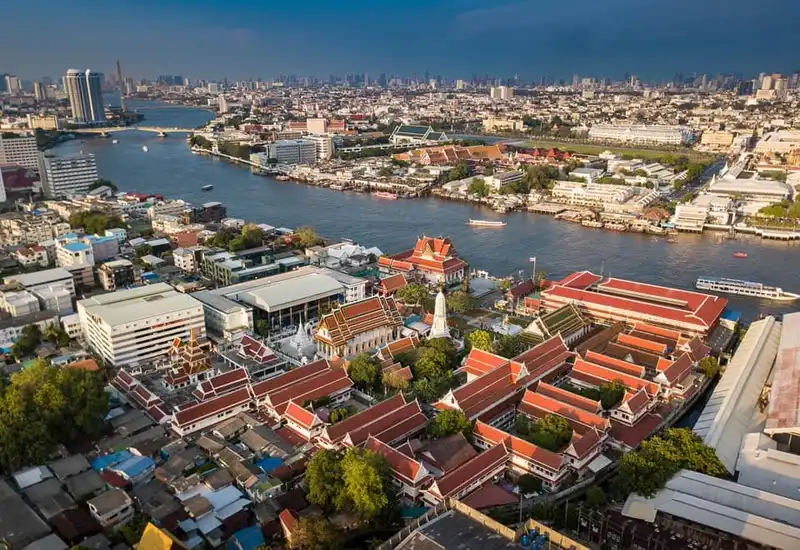
Wat Rakang Kositaram Woramahawihan When people talk about Thonburi-side temples that function as both a true community center and a living chapter of Bangkok’s history, Wat Rakang Kositaram Woramahawihan is almost always part of the conversation. The temple traces its roots back to the Ayutthaya period, and it has long been a place where city residents stop by to pay respects, make merit, settle the mind, or simply take a slow walk through sacred art beside the Chao Phraya River. The overall atmosphere feels “peaceful, but never empty”—because the rhythm of people, merit-making, and Thai temple life continues to flow here every day.
Wat Rakang’s importance is not only about age. It is also woven into Buddhist history and into the memory of key figures, especially its association with Somdet Phra Phutthachan (To Phromrangsi), a senior monastic figure during the reign of King Rama IV. That connection gives the temple an extra emotional weight for visitors who feel close to the Thai monastic tradition. Once you step into the temple grounds, the liveliness outside gradually gives way to a quiet calm that naturally supports mindfulness and a slower pace.
The first highlight many visitors come for is the ubosot (ordination hall) and the principal Buddha image known by its memorable name, “Phra Prathan Yim Rap Fa” (“the Buddha who smiles up to the sky”). This Buddha image is cast in bronze and sits in meditation posture, with a lap width of a little over 4 sok. In front of the Buddha are three disciple figures seated with palms pressed together as if receiving the Buddha’s teachings. What people remember most is the gentle expression—as you step through the ubosot doorway, it can feel as if the Buddha’s face offers a soft smile that meets your gaze. A well-known story says that when King Rama V came to present kathin robes at this temple, he remarked to those nearby that whenever he entered the ubosot here, the principal Buddha seemed to “smile up to the sky.” The story helped the name become widely remembered, reinforcing the idea that this is a temple you can truly “feel” the moment you enter the hall.
Another must-see is the great prang (Khmer-style tower) positioned in front of the viharn. King Rama I commissioned the construction with royal faith and shared the merit with his elder sister (Somdet Chao Fa Ying, Krom Phra Ya Thepsudawadi). This prang is often praised as a fine early-Rattanakosin example with graceful proportions, and it influenced later prang designs. If you appreciate Thai craftsmanship that feels structurally “right” even at first glance, this is the kind of landmark you can stand in front of for a long while without getting bored.
From there, another important set of monuments is the three chedis built by three members of the Wang Lang royal household during the reign of King Rama III, around the time a new ubosot was constructed. These are smaller chedis in the “yom liam mai yi sip” style with a “chom hae” finial. Even though they are not large, their proportions are refined and remarkably neat. Located to the north of the current ubosot, they reward visitors who enjoy walking slowly and noticing details instead of rushing from photo spot to photo spot—because Wat Rakang’s real charm often lives in the fine points.
For lovers of interior art and temple architecture, the ubosot reflects the Rama I period style: a three-tiered roof with chofa, bai raka, and hang hong elements, along with beautifully carved bracket supports. The gable displays Vishnu riding Garuda, framed with delicate gilded kanok patterns. There are also gilded stucco details and gold-on-black lacquer patterns on the exterior doors and windows, featuring a bell motif as the emblem of the temple. Inside, visitors can see guardian figures and mural paintings widely praised for their artistic quality. The wall in front of the principal Buddha depicts episodes connected to the Twin Miracle and the Buddha’s ascent to, and descent from, the Tavatimsa heaven. Behind the principal Buddha is the story of Phra Malai paying homage to the Great Chedi of Chulamani in Tavatimsa, with depictions of hell beings below. Other mural sections include celestial assemblies above and the Ten Great Birth Stories below, painted with lively movement and well-balanced light and color. These murals relate to a restoration around B.E. 2465 (1922 CE) during the reign of King Rama VI, making the ubosot feel like a “living museum” that is still actively used as a sacred space.
Another gentle but meaningful feature is the Sri Lankan Bodhi tree (Ton Pho Lanka). This Bodhi lineage was brought in during the reign of King Rama IV, who ordered that it be planted at various royal temples. Tradition also says that the king personally came to plant the Bodhi tree at Wat Rakang. Because of that, the tree is more than just shade—it symbolizes continuity of Buddhist heritage and the way faith is carried from one era into the next.
If you enjoy layered historical narratives, one place that is often discussed is the “Tamnak Daeng” (Red Residence), a teakwood structure with paneled walls that was presented to the temple to be used as monastic quarters. There is also a belief or historical assumption, repeated in some accounts, that it may be connected to King Taksin’s meditation practice. References have been made to earlier interior panels that once showed images related to contemplation and meditation practice, though those images have faded away with time. Even so, the story adds another dimension to visiting the building—it invites you to read the past through place, rather than through words alone.
A cultural highlight that should not be missed is the Tripitaka Library Hall (Ho Phra Trai Pitaka), designed as a set of three connected houses. The craftsmanship includes gold-on-black lacquer patterns, carved decorative motifs, and large lacquered Tripitaka cabinets. There is also a smaller Tripitaka hall located in front of the Tamnak Daeng, a wooden paneled structure decorated with gold and painted in a vivid green, with beautifully executed lacquered doors and windows. If you enjoy fine workmanship, this is the kind of area where you may feel you are gaining both merit and knowledge at the same time.
Beyond the major viewing points, Wat Rakang is a community center in the most practical sense—hosting observances on Buddhist holy days, kathin ceremonies, pha pa offerings, and temple activities throughout the Buddhist calendar. If you come to pay respects, it’s best to dress modestly and keep your voice low, especially in the inner sacred areas. And if you take photos, do it in a way that respects the space. Part of Wat Rakang’s charm is its quiet dignity: it doesn’t need volume to feel powerful.
Getting There The temple is on the Thonburi side of Bangkok, along the Chao Phraya River. It is accessible by private car and public transport. If driving, search for “Wat Rakang Kositaram Woramahawihan” on your map and allow extra time in the morning and evening, as traffic around the Siriraj – Arun Ammarin area can become dense. If using public transport, you can travel by BTS/MRT and then connect by taxi, bus, or boat services closer to the riverside. Many visitors also plan their day as a connected route through nearby areas such as Tha Phra Chan, Tha Tien, and Wang Lang, since the locations can link together without much difficulty.
| Place Name | Wat Rakang Kositaram Woramahawihan |
| Location | 250 Arun Ammarin Road, Siriraj, Bangkok Noi, Bangkok 10700 |
| Key Characteristics | An Ayutthaya-era temple on the Thonburi side, famous for Phra Prathan Yim Rap Fa, an important great prang, notable chedis, mural paintings, and heritage zones such as the Sri Lankan Bodhi tree, Tamnak Daeng, and Tripitaka library halls |
| Period | Ayutthaya → Early Rattanakosin (Rama I style) → Major mural restoration around B.E. 2465 (Rama VI) |
| Highlights / Key Evidence | Phra Prathan Yim Rap Fa, the ubosot and mural paintings, the great prang, the three chedis, Sri Lankan Bodhi tree, Tamnak Daeng, the Tripitaka library hall (three connected houses) and the smaller Tripitaka hall in front of Tamnak Daeng |
| Current Status | Open for worship and visits during operating hours, and remains an active community temple with Buddhist calendar events |
| Contact Number | 02-418-1079 |
| Nearby Attractions (Distance) | Wang Lang Market (0.8 km) Siriraj Bimuksthan Museum (1.2 km) Royal Barges National Museum (2.6 km) Tha Phra Chan (2.2 km) Wat Arun Ratchawararam Ratchawaramahawihan (3.5 km) |
| Popular Restaurants Nearby (Distance + Phone) | Supanniga Eating Room, Tha Tien (3.1 km) Tel. 092-253-9251 Rongros (3.0 km) Tel. 096-946-1785 The Deck by Arun Residence (3.2 km) Tel. 02-221-9158 The Sixth (3.4 km) Tel. 064-078-7278 Saeng Tha Tien (3.3 km) Tel. 062-169-6591 |
| Popular Accommodations Nearby (Distance + Phone) | Sala Arun (3.3 km) Tel. 02-622-2932 Riva Arun Bangkok (3.4 km) Tel. 02-221-1188 ibis Bangkok Riverside (5.0 km) Tel. 02-659-2888 Millennium Hilton Bangkok (5.5 km) Tel. 02-442-2000 The Peninsula Bangkok (5.2 km) Tel. 02-020-2888 |
Frequently Asked Questions (FAQ)
Q: Is Wat Rakang Kositaram Woramahawihan open every day?
A: Generally, yes. Visiting in the morning or late afternoon is often more comfortable for walking around.
Q: What are the opening hours of Wat Rakang?
A: Generally 08:00 – 18:00.
Q: What are the must-see highlights at Wat Rakang?
A: Phra Prathan Yim Rap Fa in the ubosot, the great prang, the mural paintings, and the heritage zones such as the Sri Lankan Bodhi tree, Tamnak Daeng, and the Tripitaka library halls.
Q: How much time should I plan for a visit?
A: At least 1–2 hours. If you enjoy architectural details and mural storytelling, 2–3 hours can pass quickly.
Q: When is it less crowded?
A: Weekday mornings are usually calmer. Weekends and late mornings tend to be busier, especially near the main worship areas.
Q: What should I wear when visiting Wat Rakang?
A: Dress modestly. Avoid very short or overly tight clothing, and keep a respectful, quiet tone in the sacred zones.
 Website: www.watrakang.com
 Tel: 024181079
 Wat Rakang Kositaram Woramahawihan Map
 Category:
  Group:
  Last Update: 2 MonthAgo
Comment
 Nearby Attractions
| Keyword (Advance) |
 Facebook Fanpage
 Region
 Art, Culture and Heritage
 Historical Sites and Monuments(
 Landmarks and Memorials(
 Royal Palace(
 Art, Craft Centres, Tradition(
 Museums(
 Historical Houses and The Ancient City(
 Art Gallery(
 Educational Places
 Museum for Study(
 Library(
 University
 Church(
 Mosque(
 Other religious and spiritural sites(
 Research and Development
 Royal Project(
 Suburban Living
 Village, Community(
 Local Market(
 Floating Market(
 Nature and Wildlife
 River, Canal(
 Bays and Beaches(
 Other natural attractions(
 Entertainment and Agricultural
 Zoos and Aquariums(
 Animal camps and shows(
 Stadium(
 Farm, Parks, Gardens and Ecotourism(
 Amusement Park(
 Waterpark(
 Theater(
 Cinema(
 Shopping
 Shopping and Night Market(
 Department Store(
 Spas and Wellness
 Spas and Wellness(
 Restaurant
 Michelin Star(
 Accommodation
 Hotel(
 Call Customer Service in Tourism
 Call Customer Service in Tourism(
 Travel Articles, Recipes
 Travel Review, Food Review(
 Royal Thai Desserts, Traditional Dessert, Thai Dessert Recipes(