

 Home
Home Chiang Mai(














Rating: 3/5 (11 votes)
 |
|  Map
Map 
 Have Map
  No Map
Bangkok attractions
Attractions in Thailand
Open Days: Daily
Opening Hours: 08:00 – 18:00 (Sat–Sun) / 08:30 – 17:00 (Mon–Fri) Please recheck before visiting
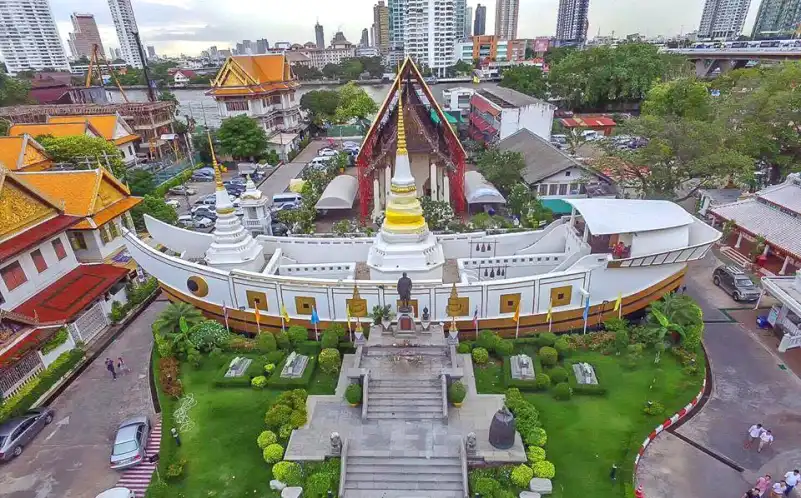
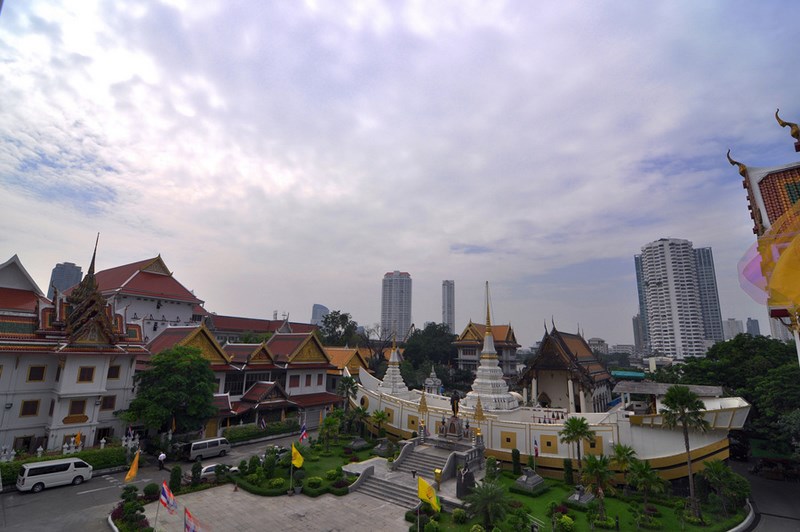
Wat Yannawa is located on Charoen Krung Road in Yan Nawa Subdistrict, Sathon District, Bangkok. This royal temple (third class, common type) is instantly recognizable for its life-size junk-boat pagoda base, built during the reign of King Rama III (King Nangklao). What makes this place special isn’t just the “wow” factor of its unusual design—it tells the story of Bangkok through art, belief, and the city’s rise as a river-based trading hub. Standing before the towering junk-boat structure behind the ordination hall feels like reading a living page of early Rattanakosin history—history you can actually see and touch.
The temple was originally known as “Wat Khok Khwai” (Buffalo Pen Temple), an ancient temple dating back to the Ayutthaya period, though the founder is unknown. It was later elevated to royal temple status during the Thonburi era. In the reign of King Rama I (Phra Phutthayotfa Chulalok the Great), a small ordination hall was built as a royal offering, the temple was granted its consecrated boundary (wisungkhamsima), and it received a new name: “Wat Khok Krabue” (Water Buffalo Pen Temple). The most significant transformation came in the reign of Rama III, when the name “Wat Yannawa” truly became part of public memory.
In 1844 (B.E. 2387), Rama III appointed Krom Muen Kraisorn Wichit to oversee the restoration of the ordination hall, which had previously been renovated in Rama I’s reign. At the same time, the King ordered the construction of the iconic junk-boat pagoda base behind the ordination hall, completed within the same year. He also sponsored the building of 2 new monks’ quarters and had the gables, doors, windows, and doorway/window frames of the ordination hall gilded in the same campaign—resulting in a grand and cohesive artistic statement that reflects the refined taste of the Rama III period.
Why a “junk boat”? Because it speaks in two languages at once: history and dhamma. Historically, Chinese-style junks symbolized commerce and international connections in an era when Bangkok grew powerfully through river trade. Building a pagoda on a full-sized junk base served as a memorial, offering future generations a clear picture of what such trading vessels looked like—fitting for a reign often associated with economic prosperity and trade. In spiritual terms, the boat becomes a Dhamma riddle: a vessel that carries beings across the flood of suffering (the ocean of samsara), from the worldly shore to the transcendent shore—the ultimate goal of Buddhism, Nibbana. So here, the journey is not only across water, but also across the mind.
The junk-boat base at Wat Yannawa was designed to match a real vessel in scale, with detailed descriptions of length and width preserved in historical accounts. This makes it a meaningful reference point for anyone interested in the form of trading ships in Rama III’s era. On the boat base stand 2 chedis (stupas): a larger and a smaller one, each with distinct recessed-corner base designs. This combination creates a signature landmark often described as unique in Thailand. If you’re visiting, the most rewarding way to look is to pause and follow the lines of the “hull” with your eyes—the structure isn’t just a photo backdrop; it was clearly intended to communicate meaning through form.
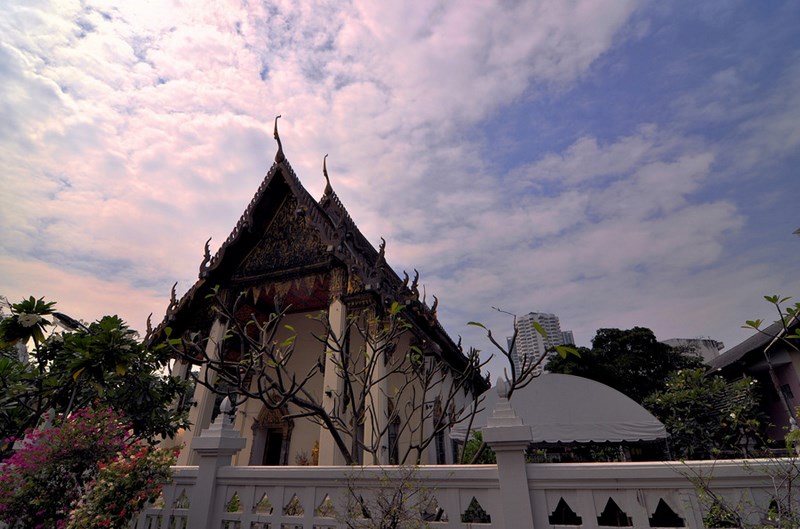
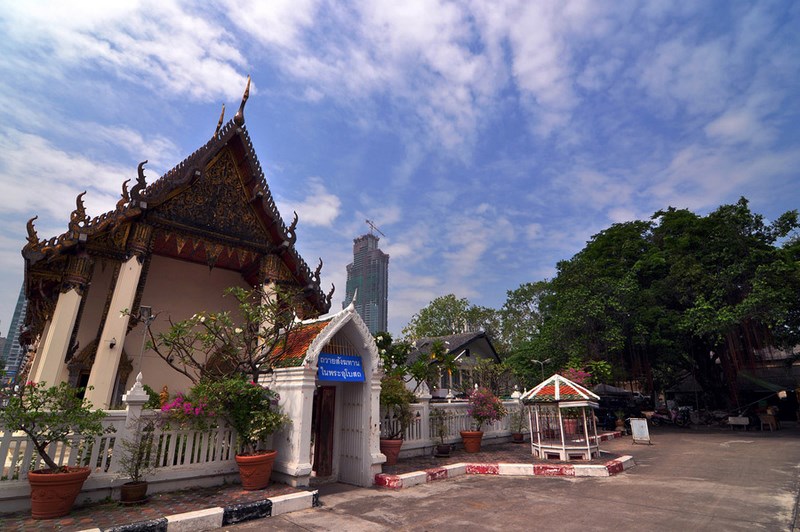
As you move toward the ordination hall, you’ll find fine Rattanakosin-era craftsmanship. The gable features court artisan work from Rama I’s time, depicting a waiing deity motif and Himalayan creatures. The doorway arch is shaped as a naga and decorated with glass mosaic, adding a vivid, shimmering detail. The doors and windows are celebrated works from the Rama III period, featuring exquisite gilded lacquer (lai rot nam). Outer window panels depict the Ten Jataka tales with explanations, while inner panels reflect motifs linked to ceremonies and court culture of the time. Inside, 4 principal Buddha images in the Mara-victory posture (Maravijaya) are enshrined in varying sizes, creating an atmosphere that feels calm yet quietly powerful—ideal for worship and unhurried observation.
Another reason Wat Yannawa feels more than a quick stop is its Tripitaka Hall. This 3-story building, styled in Thai architectural form with 3 spires, is reinforced concrete and brick, designed to house cabinets of the Buddhist canon. The first floor is arranged as a temple library, offering access to Tripitaka references, important scriptures, dhamma books, and general collections. It turns a temple visit into something deeper than worship or sightseeing—especially for those who want a quiet moment with Buddhist texts or reliable reference material.
In front of the junk-boat pagoda stands a royal statue of King Rama III, a place where visitors often pause to pay respect and remember the King whose patronage shaped the temple into the landmark it is today. Walking through the grounds in order—ordination hall, junk-boat chedi, Tripitaka Hall, and the royal statue—you may notice how neatly this temple holds three worlds in one space: city, art, and dhamma. The older character of Charoen Krung as a historic district only strengthens that feeling, bringing the temple’s story to life.
Wat Yannawa suits an unhurried visit. Begin with worship inside the ordination hall, then walk to the junk-boat chedi to take in both the full silhouette and the smaller details, and finally stop by the Tripitaka Hall if you want a more reflective, learning-focused moment. If you’re visiting with someone who loves photography, it’s worth allowing extra time—the junk-boat structure changes mood with the light, and the most satisfying shots often come from shifting angles until the hull lines and the chedis sit naturally in the same frame. For those coming mainly to make merit, the ordination hall offers a calm space to settle the mind, and the rest of the temple can be explored respectfully in that same quiet tone.
Getting There If you’re using the BTS Skytrain, many visitors start at Saphan Taksin Station, then take a taxi or local transport onward to Charoen Krung Road. The area connects easily with Sathon and the Chao Phraya riverside. If you drive, it’s wise to budget extra time during rush hours, since Charoen Krung is a major artery. And if you like riverside travel, planning a day that blends “boat + temple + old-district walk” fits beautifully here—it helps you sense the same river-trade world that the junk-boat symbolism was built to remember.
What many people find memorable about Wat Yannawa is how it refuses to be swallowed by the modern skyline. Instead, it stands out with a symbol you won’t confuse with any other temple—and backs it up with artistic detail worth lingering over. With half a day, Wat Yannawa can also be the starting point for a wider itinerary nearby, from riverside malls to walking spots and food along Charoen Krung. It turns a simple “temple visit” into a day of understanding Bangkok’s layered character.
| Place Name | Wat Yannawa |
| Location | Charoen Krung Road, Yan Nawa, Sathon, Bangkok |
| Status | Royal Temple (Third Class, Common Type) |
| Key Era | Early Rattanakosin, especially Rama III (junk-boat chedi base built in 1844 / B.E. 2387) |
| Highlights / Key Evidence | Life-size junk-boat chedi base, Rattanakosin-era ordination hall art, Tripitaka Hall, Rama III statue |
| Name Origin | “Yannawa” is tied to the “junk boat” symbol, expressing both river-trade prosperity and a Buddhist riddle about crossing beyond suffering |
| Abbot (Latest) | Phra Thammawachiramoli (Thongsun Suriya-choto) |
| Key Features | Life-size junk-boat chedi base (iconic nationwide), gilded lacquer art on doors/windows, learning space via the Tripitaka Hall library |
| Getting There | BTS Saphan Taksin, then taxi/local transport to Charoen Krung; riverside area makes it easy to combine with Chao Phraya travel |
| Contact | 02-672-3216 |
| Nearby Attractions (Approx. Distance) | ICONSIAM – 1.1 km Siam Takashimaya – 1.2 km Sri Maha Mariamman Temple (Wat Khaek) – 1.3 km Asiatique The Riverfront – 1.9 km Wat Traimit (Temple of the Golden Buddha) – 2.3 km |
| Nearby Restaurants (Approx. Distance + Phone) | Khun Ja Khao Tom Pla – 0.03 km – 099-553-6646 Wan Dee – 0.1 km – 081-567-8445 Cherry Yen Ta Fo – 0.1 km – 088-882-4998 ailati resto – 0.2 km – 02-236-9046 Ni-Ang Ice Cream (Charoen Krung Branch) – 0.2 km – 082-621-4632 |
| Nearby Accommodations (Approx. Distance + Phone) | Shangri-La Hotel – 0.9 km – 02-236-7777 Chatrium Hotel Riverside Bangkok – 1.9 km – 02-307-8888 Mandarin Oriental Bangkok – 0.7 km – 02-659-9000 Millennium Hilton Bangkok – 1.4 km – 02-442-2000 Tower Club At Lebua Hotel – 1.0 km – 02-624-9999 |
Frequently Asked Questions (FAQ)
Q: Where is Wat Yannawa located?
A: Wat Yannawa is on Charoen Krung Road in Yan Nawa, Sathon, Bangkok, in an area that connects easily to Sathon and the Chao Phraya riverside.
Q: What is the main highlight of Wat Yannawa?
A: The standout landmark is the life-size junk-boat chedi base built in the reign of Rama III, which has become the temple’s signature symbol.
Q: Which BTS station should I use to get to Wat Yannawa?
A: Many visitors use BTS Saphan Taksin Station, then take a taxi or local transport onward to Charoen Krung Road.
Q: Is Wat Yannawa open every day, and what are the opening hours?
A: It is open daily, with hours that may vary between weekdays and weekends. It’s best to double-check before you go.
Q: How long should I plan to visit Wat Yannawa?
A: Most visitors spend about 1–2 hours for worship and the main highlights. If you want to linger on the art details or visit the Tripitaka Hall, plan extra time.
Q: Are there any places nearby that I can visit afterward?
A: Yes—popular options include ICONSIAM, Sri Maha Mariamman Temple (Wat Khaek), and Asiatique The Riverfront, making it easy to plan a same-day “temple + walk + food” itinerary.
 Wat Yannawa Map
 Category:
  Group:
  Last Update: 2 MonthAgo
Comment

Photo Gellery(3) 
 Thank you photo(3) from: Angel Magics
|
|
|
| ● Photographer: Angel Magics ● Link: pixpros.net/forums/showthread.php?t=5138 ● Ref: pixpros.net |
● Copyright Photography. (800*500)
● View full size images from the photographer.
● View full size images from the photographer.
 Nearby Attractions
| Keyword (Advance) |
 Facebook Fanpage
 Region
 Art, Culture and Heritage
 Historical Sites and Monuments(
 Landmarks and Memorials(
 Royal Palace(
 Art, Craft Centres, Tradition(
 Museums(
 Historical Houses and The Ancient City(
 Art Gallery(
 Educational Places
 Museum for Study(
 Library(
 University
 Church(
 Mosque(
 Other religious and spiritural sites(
 Research and Development
 Royal Project(
 Suburban Living
 Village, Community(
 Local Market(
 Floating Market(
 Nature and Wildlife
 River, Canal(
 Bays and Beaches(
 Other natural attractions(
 Entertainment and Agricultural
 Zoos and Aquariums(
 Animal camps and shows(
 Stadium(
 Farm, Parks, Gardens and Ecotourism(
 Amusement Park(
 Waterpark(
 Theater(
 Cinema(
 Shopping
 Shopping and Night Market(
 Department Store(
 Spas and Wellness
 Spas and Wellness(
 Restaurant
 Michelin Star(
 Accommodation
 Hotel(
 Call Customer Service in Tourism
 Call Customer Service in Tourism(
 Travel Articles, Recipes
 Travel Review, Food Review(
 Royal Thai Desserts, Traditional Dessert, Thai Dessert Recipes(