

 Home
Home Chiang Mai(












Rating: 4.2/5 (6 votes)
 |
|  Map
Map 
 Have Map
  No Map
Bangkok attractions
Attractions in Thailand
Open Days: Tuesday – Sunday (Closed Monday and bank holidays/public holidays as announced)
Opening Hours: 09:30 – 12:00 and 13:00 – 16:30
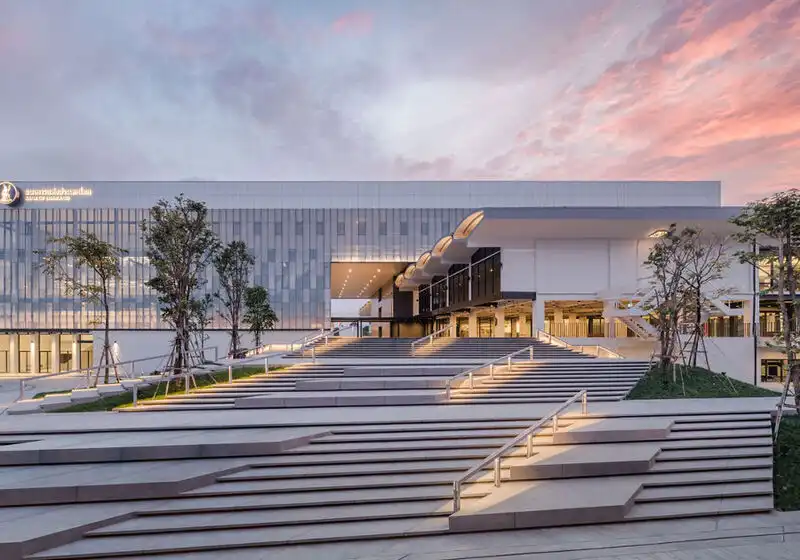
Bank of Thailand Museum (Bang Khun Phrom Palace) is one of Bangkok’s best “smart-and-beautiful” attractions: it’s not just about looking at displays, but about reading Thailand’s economic and social history through currency, banknotes, and the role of the central bank—all inside a riverside palace known for its architecture and fine artistic details. What makes this place special is that the content is genuinely approachable even if you’re not a finance person, and the experience feels different because you’re walking through a historic site that still feels “alive” today.
The museum is located inside Bang Khun Phrom Palace on Samsen Road, Phra Nakhon District, within the same compound as the Bank of Thailand. That setting gives the whole visit a calm, orderly atmosphere, and it feels a little different from typical tourist museums. The upside is that the site is well maintained, peaceful, and ideal for an unhurried visit. The key thing to know from the start is that entry often follows an advance contact/registration process, because this is the grounds of a major national institution.
In timeline terms, Bang Khun Phrom Palace was built in the reign of King Rama V as a residence for His Royal Highness Prince Paribatra Sukhumbandhu, Prince of Nakhon Sawan (which is why the name “Paribatra” appears prominently in the story of this place). After 1932, the palace was used as a government office for a period. In 1945, the Bank of Thailand began using the site as part of its operations, and later the area was developed into a museum in 1982 so the public could learn about currency and the role of the central bank through real artifacts and systematic exhibitions.
The museum’s core idea is to turn “money” into a story rather than just numbers in an account. You’ll see the evolution of Thai money from ancient currencies to modern banknotes, along with changes in materials, designs, symbols, and the ideas Thai society valued in each era. That is what makes the visit truly engaging: you’re not looking at old objects just because they are old—you’re seeing how the country moved through different periods, and how the financial system was gradually designed to support a more complex world.
Inside, the museum features multiple exhibition rooms across two floors. The first floor is often where visitors feel the most “flow,” because the themes are very tangible: Ancient Currency, Pod Duang (bullet money), Thai Coinage, Thai Banknotes, Gold Seals, and Foreign Currency. These rooms reveal how diverse monetary systems can be, and how international exchange shaped trade—without requiring long theoretical reading. The second floor expands to the institution and the palace context, with rooms such as 60 Years of the Bank of Thailand, Banknote Printing, the Paribatra Room, the Small Meeting Room, the Pink Room, the Blue Room, the Ma Son Room, and the Wiwat Chaiyanusorn Room—helping you understand both the “institution” and the “palace atmosphere” in the same visit.
A good way to visit without feeling tired is to start on the first floor and move from Ancient Currency to Pod Duang and Coinage, then connect to Thai Banknotes to see the shift from metal money to the banknote era. After that, go upstairs to understand the Bank of Thailand context, banknote printing, and the palace’s layered history. This order helps you connect the story logically, so each room feels like it moves you forward rather than a scattered walk-through.
Another thing that makes this different from most museums is Bang Khun Phrom Palace itself. It is known for its beauty and detail, and when that setting is paired with the story of currency, the experience feels like walking through a historical scene where evidence still surrounds you. It’s especially suited to a half-day trip for people who want something calm, meaningful, and visually memorable all at once.
Before you go, it’s helpful to know clearly that the museum operates with morning and afternoon visiting sessions and may close on bank holidays/public holidays as announced. Admission is free, but it’s recommended to contact or check visiting requirements in advance to avoid a wasted trip—especially if you plan to visit as a group or want the smoothest experience.
Getting There For the easiest route, set your map to “Bank of Thailand Learning Center” on Samsen Road, then follow the entry procedures at the front reception point. If you want to avoid traffic, you can take the Chao Phraya Express Boat to Thewet Pier and continue by a short walk or a quick taxi ride. There are also multiple bus routes that pass the Bank of Thailand/Wat Sam Phraya area, so using public transport is realistic on weekdays.
If you want a well-rounded half-day plan, after the museum you can continue to the old-town area around Phra Athit–Banglamphu, or choose a nearby riverside cafe/walk to end the day in a relaxed way—with both knowledge and classic Bangkok atmosphere in one loop.
| Place Name | Bank of Thailand Museum (Bang Khun Phrom Palace) |
| Zone | Samsen – Bang Khun Phrom – Phra Nakhon (Chao Phraya Riverside) |
| Location | Bang Khun Phrom Palace (Bank of Thailand Learning Center), 273 Samsen Road, Wat Sam Phraya, Phra Nakhon, Bangkok 10200 |
| Highlights | A museum about currency and the role of the central bank, with multiple exhibition rooms across 2 floors (e.g., Ancient Currency, Pod Duang, Thai Coinage, Thai Banknotes, Foreign Currency, Banknote Printing, the Paribatra Room, etc.) inside Bang Khun Phrom Palace by the Chao Phraya River. |
| Period (Summary) | Palace built in the reign of King Rama V; Bank of Thailand has used the site since 1945; opened as a museum in 1982 |
| Key Evidence / Must-See | Ancient currency, Pod Duang (bullet money), Thai coins, Thai banknotes, foreign currency, banknote printing exhibits, and rooms/spaces reflecting palace history and the central bank’s role. |
| Name Origin | “Bang Khun Phrom” is the traditional name of the riverside area, and “Bang Khun Phrom Palace” refers to the residence built in this district, later becoming part of the Bank of Thailand compound. |
| Travel (Summary) | Car/taxi/ride-hailing: set destination to BOT Learning Center (Samsen Road); Boat: Thewet Pier then a short walk/ride; Bus: multiple routes pass “Bank of Thailand / Wat Sam Phraya” |
| Current Status | Open with morning/afternoon visiting sessions and may close on bank holidays/public holidays as announced (recommended to contact/confirm before visiting) |
| Admission | Free |
| Contact | Tel. 0 2356 7766 |
| Nearby Attractions (Distance) | Thewet Pier (1.2 km) Tel. 0 2225 6179 Phra Sumen Fort (3.3 km) Tel. 0 2224 1402 Santichaiprakarn Park (3.4 km) Tel. 0 2224 1402 Khaosan Road (3.5 km) Tel. 0 2225 6179 Wat Benchamabophit Dusitwanaram (4.0 km) Tel. 092 939 5646 |
| Popular Restaurants Nearby (Distance) | Krua Apsorn (Dinso Road Branch) (3.9 km) Tel. 080 550 0310 On Lok Yun (4.0 km) Tel. 02 223 9621 Hemlock (3.6 km) Tel. 02 282 7507 Madame Musur (3.8 km) Tel. 02 281 4238 Methavalai Sorndaeng (4.3 km) Tel. 02 224 3088 |
| Popular Accommodations Nearby (Distance) | The Raweekanlaya Bangkok (2.4 km) Tel. 02 628 5999 Casa Nithra Bangkok (3.7 km) Tel. 02 628 6228 Riva Surya Bangkok (3.7 km) Tel. 02 633 5000 Chillax Heritage Hotel Khaosan (3.9 km) Tel. 02 281 8899 Royal Princess Larn Luang Bangkok (4.6 km) Tel. 02 281 3088 |
| Facilities | Indoor exhibition areas, learning spaces within the Learning Center, and security/entry procedures based on site regulations (recommended to confirm the latest requirements before visiting). |
Frequently Asked Questions (FAQ)
Q: Do I need to book or contact in advance before visiting?
A: It’s recommended to contact/confirm visiting requirements in advance, especially for group visits, so entry procedures and the museum visit are smooth and you don’t waste the trip.
Q: What are the open days and hours?
A: Typically Tuesday – Sunday (closed Monday and bank holidays/public holidays as announced), with two sessions: 09:30 – 12:00 and 13:00 – 16:30.
Q: Is admission really free?
A: Yes, admission is free. However, you should follow site regulations and check entry/visiting procedures before traveling for the most up-to-date information.
Q: How much time should I plan for the visit?
A: About 1.5 – 2.5 hours is a comfortable visit. If you like reading every detail and appreciating the palace architecture carefully, you may want to allow more time.
Q: Is it convenient to come by boat?
A: Yes. You can get off at Thewet Pier and continue with a short walk or a quick taxi ride, which is a great option on days when you want to avoid road traffic in the Phra Nakhon area.
 Website: www.bot.or.th
 Tel: 022835286, 022836723, 022835265
 Fax: 022835283
 Bank of Thailand Museum (Bang Khun Phrom Palace) Map
 Category:
  Group:
  Last Update: 2 MonthAgo
Comment
 Nearby Attractions
| Keyword (Advance) |
 Region
|
 Phra Nakhon(