

 Home
Home Chiang Mai(













Rating: 3.6/5 (11 votes)
 |
|  Map
Map 
 Have Map
  No Map
Bangkok attractions
Attractions in Thailand
Open Days: Daily (recommended to call ahead before visiting)
Opening Hours: Please call to confirm (prayer times/activities may vary by day)
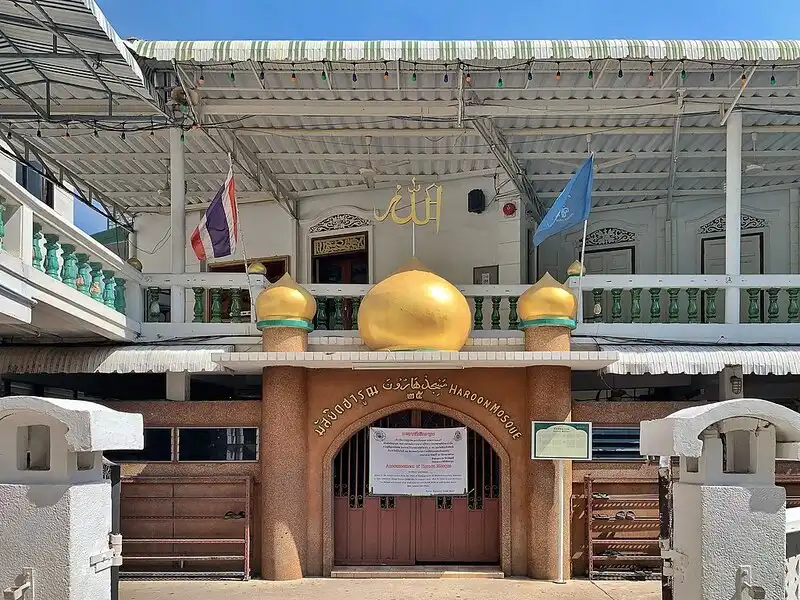
Haroon Mosque is one of the cultural landmarks of Bang Rak that lets you see Bangkok from a quietly powerful angle. It is not only a place where Thai Muslims perform religious rites, but also a long-running hub for learning, training, and community activities. Located in Charoen Krung Soi 36, it is easy to walk past without noticing that a historic community is tucked inside this small lane—with stories connected to the Chao Phraya River, trade, migration, and the city’s transformation.
If you are looking for Bangkok attractions that go beyond a simple check-in, Haroon Mosque is special because it is both a religious site and a living reflection of the Charoen Krung–Bang Rak area, a multicultural district since the early eras of Bangkok. This route was once a major corridor of transport and commerce. When you place the mosque within that context, you begin to understand why a community needs a “shared heart”—not only for ritual, but also for everyday mutual support.
The roots of Haroon Mosque are often described as beginning around 1828 (B.E. 2371), founded by Tok Haroon Bafaden, the first imam and founder, as the mosque of the Ton Samrong village community, which originally lived along the Chao Phraya River. In the earliest period, the building was a single-storey teak wooden structure, reflecting the riverside community’s familiarity with building homes and places of worship in wood. The spiritual space in that era therefore felt very much like a “home”—simple, practical, and tightly bound to the community.
Later, in 1899 (B.E. 2442), the Thai government expropriated the original riverside mosque land to construct a customs house. The mosque then relocated to the present area, set further back from the river. This move was not simply about transporting a building—it was about relocating the community’s “center of life.” It also reflects how the city began overlaying modern state infrastructure onto riverfront areas that had long been densely settled by communities.
Over time, the original wooden building deteriorated significantly. The founder’s son, Haji Muhammad Yusuf (Tuan So), who became the next imam, dismantled the old structure and built a new brick-and-mortar mosque. Construction was completed in 1934 (B.E. 2477), and it has continued in use up to the present. The shift from wood to masonry was not only about durability, but also a sign that the community was “setting its footing” in a rapidly growing city and needed a stable religious space capable of supporting people and activities over the long term.
Another reason Haroon Mosque carries rich layers of time is its former names, which were often tied to surrounding places: “Ton Samrong Mosque” (after the Ton Samrong village), “Muang Khae Mosque” (after Wat Muang Khae), and “Mosque Behind the Customs House” (after the customs facility). Later, after the Islamic Mosque Act B.E. 2490 was enacted, the mosque was registered under the name “Haroon Mosque” in honor of Tok Haroon Bafaden, the founder and first imam. These names show that the mosque never stood alone—it has always been intertwined with its neighborhood and the people around it.
In terms of artistry and interior details, visitors are often impressed by the Arabic calligraphy on the upper level and the carved and fretworked decoration along the upper edge beneath the ceiling, which is said to be the work of artisans from Jepara, Indonesia. This kind of craftsmanship gives Haroon Mosque a distinctive signature—you can sense the refinement of skilled hands, and the broader connections of Muslim communities that extend well beyond Bangkok.
Even with so much to admire, the mosque remains a place of faith with its own rhythm. The best way to visit is unhurriedly, with the understanding that you are a guest of the space. Dress modestly, keep quiet, avoid walking across prayer areas during worship, and if you would like to take photos, it is best to ask permission first—especially if people are engaged in religious activities. The beauty of this place becomes even clearer when you see the meaning people give to it, not only the architecture.
Getting There The mosque is located in Charoen Krung Soi 36, Bang Rak District. If you come by private car or taxi, pin the mosque name on your map and enter the soi from Charoen Krung Road. The key thing to note is that traffic in this area can change quickly, especially during rush hours, so you should always allow extra time. If you are using public transport, a practical approach is to travel to the Bang Rak–Si Phraya area and then take a taxi or motorcycle taxi into the soi, or connect from the Sathorn–Silom BTS/MRT zone and continue by car into the Charoen Krung area. In all cases, calling ahead can help you choose a time that best fits the mosque’s religious schedule.
If you want to make your day trip worthwhile, Haroon Mosque is in a location that is easy to build around. It is close to the riverside zone and key landmarks in Bang Rak–Si Phraya, and there are plenty of dining options along Charoen Krung. A gentle, respectful itinerary would be to start by learning about the community and the mosque, then move on to a riverside walk or nearby attractions, and end with a meal in the area, which offers both classic Thai eateries and contemporary spots—while keeping the simple rule of respecting the space and not disturbing religious activities.
| Place Name | Haroon Mosque |
| Location | Charoen Krung Soi 36, Bang Rak Subdistrict, Bang Rak District, Bangkok |
| Period | Founded around 1828 (B.E. 2371), relocated in 1899 (B.E. 2442), and the current brick-and-mortar building completed in 1934 (B.E. 2477) |
| Mosque Highlights | Historic mosque in the Charoen Krung–Bang Rak area, the present building is a long-used brick-and-mortar structure, features Arabic calligraphy and carved/fretworked detailing beneath the upper ceiling said to be crafted by artisans from Indonesia, and serves as a learning and activity center for the Thai Muslim community |
| Mosque Leadership (Verified Info) | Imam Thanarat Watcharapisut (referenced from guided-visit activities shared by the mosque’s page) |
| Travel | Enter Charoen Krung Soi 36 and pin the mosque name | From the Bang Rak–Si Phraya area, take a taxi/motorcycle taxi into the soi | Recommended to call ahead to choose a suitable time around prayers |
| Nearby Places (Approx. Distance) | Bang Rak District Office (2 km) Tel. 02-236-1395 River City Bangkok (2 km) Tel. 02-237-0077 ICONSIAM (5 km) Tel. 02-495-7000 Bangkokian Museum (3 km) Tel. 02-236-1586 Assumption Cathedral (2 km) Tel. 02-234-8557 |
| Nearby Restaurants (Approx. Distance) | ROTINI Charoen Krung 36 (1 km) Tel. 080-075-5070 Baan Somtum Bangrak (1 km) Tel. 093-126-5560 Blue Elephant Bangkok (3 km) Tel. 02-673-9353 Baan Khanitha by The River (6 km) Tel. 02-108-4910 Khao Mok (Haroon Mosque Community) (1 km) Tel. 085-098-3424 |
| Nearby Accommodations (Approx. Distance) | Mandarin Oriental, Bangkok (3 km) Tel. 02-659-9000 Shangri-La Bangkok (4 km) Tel. 02-236-7777 Centre Point Silom (3 km) Tel. 02-266-0521 lebua at State Tower (4 km) Tel. 02-624-9999 Holiday Inn Bangkok Silom (5 km) Tel. 02-207-4300 |
| Facilities | Not clearly specified (recommended to call ahead) |
| Fees | Not specified (as a courtesy, it is recommended to ask about on-site guidelines before visiting) |
| Current Status | Active as a community mosque (recommended to call ahead before visiting) |
| Contact Number | 08-1488-8154 |
Frequently Asked Questions (FAQ)
Q: Which soi is Haroon Mosque in, and how do I get there without getting lost?
A: It is in Charoen Krung Soi 36, Bang Rak. The easiest way is to pin the mosque name on your map and enter from Charoen Krung Road. If you take a taxi, tell the driver: “Charoen Krung Soi 36, Haroon Mosque community.”
Q: How old is Haroon Mosque, and what are the key milestones in its timeline?
A: It was founded around 1828 (B.E. 2371), relocated in 1899 (B.E. 2442) due to the expropriation of the original riverside site, and the current brick-and-mortar building was completed in 1934 (B.E. 2477), continuing in use to the present.
Q: What interior artistic details should I look for?
A: Many visitors are impressed by the Arabic calligraphy and the carved/fretworked decoration beneath the upper ceiling, which is said to be crafted by artisans from Indonesia, giving the interior a refined and distinctive atmosphere.
Q: How should I dress and behave when visiting?
A: Dress modestly, keep quiet, avoid disturbing prayer times, and ask permission before taking photos or entering specific areas, to respect the space and worshippers.
Q: What number can I call to contact Haroon Mosque?
A: You can call 08-1488-8154. It is recommended to call ahead to confirm a suitable time and any visiting guidelines.
 Haroon Mosque Map
 Category:
  Group:
  Last Update: 2 MonthAgo
Comment
 Nearby Attractions
| Keyword (Advance) |
 Region
|
 Phra Nakhon(