

 Home
Home Chiang Mai(
















Rating: 3.1/5 (11 votes)
 |
|  Map
Map 
 Have Map
  No Map
Bangkok attractions
Attractions in Thailand
Open Days: Generally open for visiting every day, but the main market/fair zones are usually at their busiest and have the most shops operating on Saturdays and Sundays (opening days and activity levels can vary by zone and by individual vendors)
Opening Hours: The main market area is commonly referenced as around 09:00–18:00 (for the most reliable experience, plan around Saturday–Sunday, and note that some shops may close earlier)
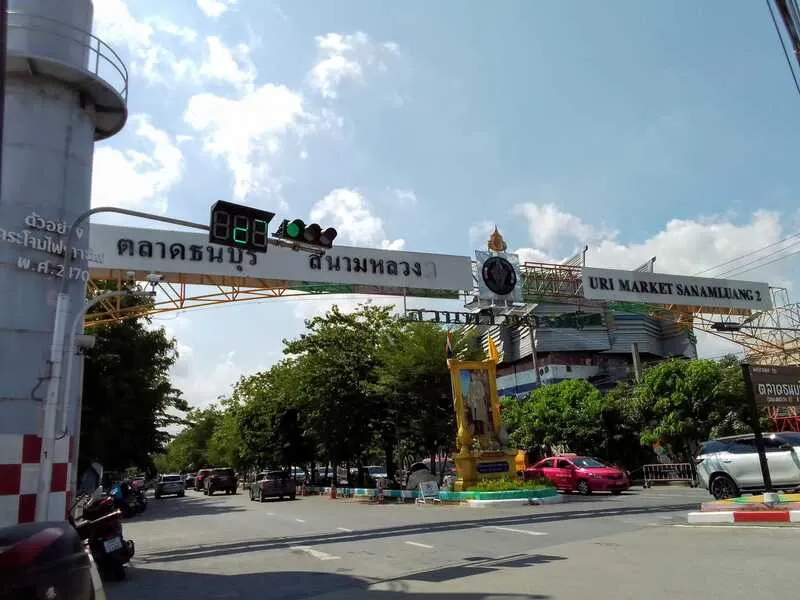
Thonburi Market (Sanam Luang 2) If you want a market where you can “get everything in one trip”—from street food and local snacks to plants, home décor, and even a pet zone to browse—Thonburi Market (Sanam Luang 2) is one of the go-to destinations on the western side of Bangkok. A lot of people come on purpose because it’s big, you can walk for hours, and it feels family-friendly, especially if you like a market that’s genuinely used by locals—people buying daily essentials, shopping for household items, picking out plants, and stopping for something tasty without the place needing to “perform” like a tourist attraction. This market is everyday life for the neighborhood, and that’s part of its charm.
The name “Sanam Luang 2” sticks because it’s easy to remember and it matches the mental image: a large market that gathers many categories in one place, similar to a central market concept but in an area that’s easier to reach by car and doesn’t require battling inner-city congestion every time. The nice thing about a market like this is you don’t need a strict checklist to enjoy it. If you keep walking, you’ll usually stumble into something you actually want—a small everyday item that feels like a bargain, a plant that fits your space, or food that makes you pause and take a real break.
From the moment you step in, you can feel the classic Thai market energy: vendors calling out, friendly bargaining, laughter from people who’ve found a good deal, and a pace that isn’t so rushed it becomes stressful. Many people find the real fun is in “discovering as you walk,” rather than hunting down a fixed list, and Sanam Luang 2 supports that style well because the range of products is wide enough to keep shifting your mood. You can start around the food stalls, drift into the plant area, take a rest, then circle back for home goods—or return to a shop you hesitated at earlier once you’ve seen the overall vibe and price range.
The plant and garden-supplies area is often a magnet in markets like this, because it offers that immediate feeling of “I can take something home and my place will look better right away.” You’ll find ornamentals, flowering plants, fruit trees, pots, and all kinds of garden items. A simple beginner tip: don’t judge by looks alone—check the leaves and the base. Leaves should look fresh, not droopy, and not covered with suspicious spots; the base shouldn’t be overly wet in a way that makes you worry about root rot. If you really want your plant to survive, ask the vendor two quick questions: “Does it need full sun?” and “How often should I water it?” Those two answers alone can prevent the classic mistake of bringing home a plant that dies quickly for reasons you can’t figure out.
Next is the pet and pet-supplies zone. Many people stop by at least to look around, and it does add another layer of life to the market. But if you’re considering adopting or buying a pet, it’s worth pausing for a moment to check your real readiness—time, budget, and space—because pet ownership shouldn’t be a spur-of-the-moment decision based on cuteness. A better approach is to ask about basic care, suitable food, general health, and the shop’s responsibility or aftercare conditions. When a vendor can answer clearly and provide helpful information, you’ll feel more confident and reduce risk for both you and the animal.
The food and local-snacks zone is another reason this market works as a half-day or full-day outing without feeling forced. Whenever you get tired, there’s something to eat—savory dishes, sweets, snacks, and cold drinks that make it easier to keep walking. One small strategy to keep the day enjoyable: don’t get completely full right at the beginning. Do one quick “explore loop” first, then choose the stalls you genuinely want. That way you’re less likely to miss a great spot deeper inside, and you won’t be carrying heavy shopping bags while trying to eat and walk at the same time.
Another area many people enjoy is home décor, handicrafts, and collectibles. This is where “small objects have stories.” Some items are handmade; some are everyday household pieces that feel surprisingly good for the price; and occasionally you’ll find older pieces that collectors notice immediately. If you’re a collector, slow down, look closely, and always check condition before paying—especially for items where completeness matters. Cracks, repairs, or missing parts can be deal-breakers depending on what you’re looking for. A collectible is only truly “worth it” when the condition matches what you’re comfortable owning.
Opening hours are one of the most searched topics, and the reason information can look inconsistent online is simple: the market has multiple zones, and individual vendors can keep different schedules. A safe planning approach is to treat Saturday and Sunday as your primary days, because many sources and visitor experiences align that these are the busiest days with the most shops operating. If you want a more comfortable walk, go in the morning. You’ll get cooler weather, more choices, and less time fighting heat—especially if you plan to buy large items or plants. Arriving early also makes packing and transporting purchases easier, so you don’t end up exhausted before you even leave.
Getting There The market is in the Thawi Watthana area. Driving is convenient for many visitors because the area generally handles vehicles better than markets in the city center, and it’s especially practical if you plan to take home multiple items. If you want to avoid the busiest traffic windows, leave extra time and go earlier in the day. Public transport is possible by using main routes on the Thonburi/Thawi Watthana side and then connecting into the market area, but if you expect to carry heavier purchases, it’s smart to plan your “getting there and getting back” steps clearly so your trip ends smoothly rather than turning into a logistics headache.
If you’re going for serious shopping, prepare like you would for a large market mission. Bring a reusable bag (or a foldable tote), wear comfortable shoes, and consider walking in two rounds: a first round to explore and compare prices, and a second round to buy. This reduces the chance of purchasing too early and then hauling bags for hours, and it gives you room to return to the shop that feels genuinely “best value” after you’ve seen enough to judge fairly.
In the end, if you ask who Sanam Luang 2 is best for, it’s for people who want a large, well-rounded market experience. It works for families who want a relaxed walk with easy food breaks, plant lovers who want both greenery and supplies in one trip, and anyone who wants to feel the real rhythm of Thai market life that still happens every weekend. If you set your expectations as “this is where locals come to buy real things,” and you let yourself walk with the market’s pace, you’ll likely leave with bags in your hands and the feeling that you used your day well.
| Place Summary | A large market in Thawi Watthana known as “Sanam Luang 2,” combining multiple zones in one place: shopping, home décor, food, plants, garden supplies, and a pet zone. Great for a half-day to full-day outing without going into central Bangkok. |
| Key Highlights | Big market with wide variety, strong plant/garden and food appeal, friendly Thai-market atmosphere, and convenient for visitors who drive and shop in larger quantities. |
| Travel | Driving is convenient (especially if buying many items) | Public transport is possible via main routes on the Thonburi/Thawi Watthana side with local connections (check the latest routes before you go) | Going early helps with comfort and easier transport of purchases. |
| Current Status | Open as usual. Some official references highlight “Saturday–Sunday 09:00–18:00” as the most reliable and busiest window (hours and activity can vary by zone and by vendor). |
| Contact | Thonburi Market (Sanam Luang 2) Office: 02-421-4523-4 |
| Nearby Attractions (Approx. Distance) | World Market (Khlong Thawi Watthana) ~5 km Tel. 02-053-3699 The Paseo Park Kanchanaphisek ~7 km Tel. 02-111-3989 Phutthamonthon Park / National Office of Buddhism ~14 km Tel. 02-441-7964 Khlong Lat Mayom Floating Market ~11 km Tel. 02-422-4270 Wat Rai Khing (Royal Monastery) ~24 km Tel. 034-323-616 |
| Nearby Restaurants (Approx. Distance) | Khrua Sakina (Sanam Luang 2 zone) ~0 km Tel. 082-181-3540 Pook Sanam Luang 2 ~0 km Tel. 099-154-2222 Pranee Duck Noodles (World Market Branch 2) ~5 km Tel. 065-674-9985 SHAke (Phutthamonthon Sai 3) ~10 km Tel. 095-679-8843 Khun Lek Thawi Watthana Crispy Pork ~9 km Tel. 081-828-9293 |
| Nearby Accommodations (Approx. Distance) | Loft Salaya ~14 km Tel. 02-800-3899 Salaya One Hotel ~15 km Tel. 02-441-4888 Crystal Place Salaya ~15 km Tel. 02-800-2904 The Palm Resort Salaya ~16 km Tel. 02-441-5367 RG Salaya Golf Resort ~18 km Tel. 02-429-8151 |
Frequently Asked Questions (FAQ)
Q: Which day is the most reliable to visit Thonburi Market (Sanam Luang 2)?
A: If you want the most reliable experience with the most shops open and the liveliest atmosphere, plan around Saturday and Sunday. That’s the window most sources and visitor patterns align on.
Q: What time should I go if I want a comfortable walk and cooler weather?
A: Morning to late morning is best. The weather is typically easier, the market feels less tiring to walk, and it’s especially practical if you plan to buy plants or larger items.
Q: Which zone should I prioritize first when I arrive?
A: If you plan to buy larger or heavier items, start with those zones first—such as plants or home goods—and save the food zone for later. It keeps your walk more comfortable and helps you avoid carrying heavy bags while eating.
Q: How can a beginner choose plants that are more likely to survive after purchase?
A: Look for fresh leaves with minimal unusual spotting, avoid plants with a base that feels overly wet (possible root issues), and ask the vendor about sunlight needs and watering frequency. Those two quick answers prevent most beginner mistakes.
Q: What should I be careful about if I’m interested in the pet zone?
A: If you’re seriously considering a pet, ask clearly about basic care, suitable food, and health. Most importantly, check your own readiness first—time, cost, and space—so the decision is responsible, not impulsive.
Q: Is it convenient to drive there?
A: Generally yes, especially if you plan to shop in volume. During peak times, leaving earlier helps you walk more comfortably and manage parking and transport more easily.
 Thonburi Market (Sanam Luang 2) Map
 Category:
  Group:
  Last Update: 2 MonthAgo
Comment
 Nearby Attractions
| Keyword (Advance) |
 Region
|
 Phra Nakhon(