

 Home
Home Chiang Mai(




Rating: 2.7/5 (7 votes)
 |
|  Map
Map 
 Have Map
  No Map
Phranakhon Si Ayutthaya attractions
Attractions in Thailand
Open Days: Daily
Opening Hours: 08.30 – 16.30 (Generally)
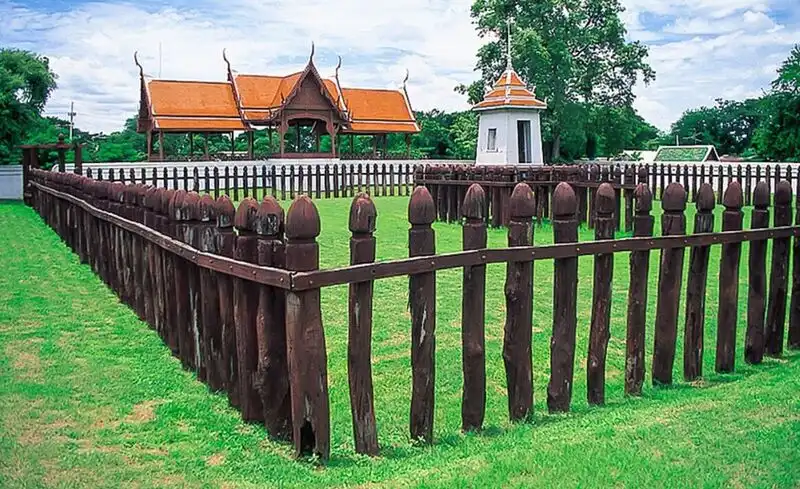
Ayutthaya Elephant Kraal is one of those Ayutthaya places that takes you into “another layer” of the old capital’s history — the layer shaped by elephants, warfare, royal ritual, and state power. Historically, the Elephant Kraal was used for the royal elephant capture and selection process “before the King,” and it was also a place where members of the royal family (and often the monarch) would attend to witness the event. It wasn’t only a practical method of recruiting elephants into service — it functioned as a public spectacle of its time, reflecting how Ayutthaya organized manpower, animal power, and royal authority in a highly visible way.
If you’ve ever wondered just how important elephants were to Ayutthaya, this is one of the clearest places to understand it in a concrete, physical sense. In the Ayutthaya period, elephants held high status: they were the elite land transport of the ruling class, and in warfare they were considered heavy frontline strength. Combined with Ayutthaya’s geography as an island city surrounded by wetlands and waterways, elephants became essential not only for movement and logistics, but also for projecting royal presence. This importance rises even further when we talk about white elephants, regarded as auspicious royal animals. When an elephant matched the desired characteristics, it could be taken into royal care and granted rank and ceremonial status according to tradition.
Historical narratives about the Elephant Kraal often explain that the elephant-catching ground was once located near Chankasem Palace, but later, during the reign of King Maha Chakkraphat, it was moved to the site recognized today. The relocation supported a more suitable layout for ritual procedures and for managing the controlled herding of wild elephants from outside the capital into an organized “system.” Seen this way, the Elephant Kraal was far more than a large enclosure — it was an engineered space designed to manage risk and control intense situations, because capturing elephants required exceptional skill, courage, and coordinated teamwork.
The traditional elephant capture process described in older accounts is detailed, and that detail is exactly what makes this place fascinating for visitors who enjoy deeper historical storytelling. Elephant handlers would rely on “decoy elephants” to lure and steer wild elephants into the kraal. Once inside, only the elephants needed for training were selected. Several decoy elephants would then help herd and control movement. The main catcher would ride a decoy elephant and hold a long pole with a loop at one end — timing was everything. The aim was to slip the loop onto the wild elephant’s hind leg. Once tightened, the remaining rope would be released so the elephant would drag it until it caught on a post or anchor point in the enclosure, securing the capture. After that, two decoy elephants could flank the captured elephant to escort it to a designated area where the King could make selections, with physical characteristics and traditional “elephant traits” serving as the key criteria before training followed the methods described in manuals and practice.
By the time you reach this point in the story, it’s hard not to feel how massive and intense such an event would have been. That’s also why, today, the story of the Elephant Kraal is best told carefully and with full context. Modern society places far greater weight on animal welfare, so visiting the kraal now is not about cheering on old capture methods. It’s about understanding how past state systems and daily life were deeply linked to elephants, and how this site once operated as a royal-ritual space for selecting national animal strength. When the past is understood without over-romanticizing it, the visit becomes meaningful while still respecting the sensitivity many people feel about animals today.
What makes the Elephant Kraal visually compelling is the openness of the site and the enclosure-like structures that help you imagine how large animals would have been guided and contained. If you walk slowly and pay attention to scale, you can see how the space was intended to handle the movement of powerful animals and large groups of people involved in the process — elephant doctors, mahouts, decoy elephants, assistants, and spectators in historical settings. At certain times, the area may also host tourism-oriented programs or learning activities about elephants, which is why checking current information from official channels before visiting can help you align your plan with what you want to experience.
If you want an Ayutthaya itinerary that feels “complete,” the Elephant Kraal is a strong counterbalance to temple-hopping. It adds the dimension of “city systems” and “elephant culture” rather than focusing only on religious architecture. A popular approach is to place the kraal as one stop among the Chankasem Palace zone, museums, and key temples on Ayutthaya Island, then finish with a riverside café or meal — you get both learning and a calmer ending to the day.
Getting There If you’re driving from Bangkok, head into Phra Nakhon Si Ayutthaya and enter the main tourist zone, then set your destination to “Ayutthaya Elephant Kraal / Wang Chang Ayutthaya Lan Pheniad.” The site sits within a core travel area, making it easy to connect with Chankasem Palace, island-city temples, and museums. If you’re not driving, take the train or a van to Ayutthaya town, then use a taxi/local hire car/ride-hailing app to reach the kraal. If you have multiple stops in one day, hiring transport by the hour or arranging a multi-stop ride often saves time and keeps the route smooth.
Before you go, it’s smart to check the latest information about opening hours and any on-site activities through the site’s official channels or reliable tourism sources. Details can change depending on the season and on-the-ground management. Checking ahead helps you choose a quieter time, enjoy a more relaxed walk, and plan the rest of the day with better accuracy.
| Place Summary | The Ayutthaya Elephant Kraal is a historic site associated with royal elephant capture and selection ceremonies in the Ayutthaya Kingdom. It offers a clear way to learn how elephants shaped warfare, ritual, and state organization, with physical site features that help visitors imagine the herding and capture process. |
| Key Highlights | A tangible look at Ayutthaya through the “Elephants And The State” perspective / Rich storytelling around the capture ceremony, decoy elephants, and traditional tools / A balanced stop between temple visits for a more varied itinerary / Easy to visit and simple to connect with island-city landmarks. |
| Nearby Accommodations (Approx. Road Distance) | Sala Ayutthaya (Approx. 3 km) Tel. 035-242-588 iuDia on the River (Approx. 4 km) Tel. 086-080-1888 Classic Kameo Hotel Ayutthaya (Approx. 6 km) Tel. 035-212-535 Krungsri River Hotel (Approx. 7 km) Tel. 035-244-333 Centara Ayutthaya (Approx. 8 km) Tel. 035-243-555 |
| Nearby Tourist Attractions (Approx. Road Distance) | Chankasem Palace (Approx. 2 km) Chao Sam Phraya National Museum (Approx. 4 km) Wat Mahathat (Approx. 4 km) Wat Phra Si Sanphet (Approx. 5 km) Viharn Phra Mongkhon Bophit (Approx. 5 km) |
| Nearby Restaurants (Approx. Road Distance) | Baan Pomphet (Approx. 5 km) Tel. 035-242-242 Grand Chaopraya Ayutthaya (Approx. 6 km) Tel. 081-942-1666 Phae Krung Kao Ayutthaya (Approx. 7 km) Tel. 088-649-1347 Sala Ayutthaya Eatery And Bar (Approx. 7 km) Tel. 035-242-588 Sainaam Pom Phet Restaurant (Approx. 7 km) Tel. 035-243-354 |
| Site Contact Number | Wang Chang Ayutthaya Lan Pheniad Tel. 065-009-9361 |
Frequently Asked Questions (FAQ)
Q: What Is The Ayutthaya Elephant Kraal?
A: It is a historic site associated with royal elephant capture and selection ceremonies in the Ayutthaya Kingdom, where the royal court could witness the process and elephants could be chosen for training and service.
Q: How Is The Elephant Kraal Connected To Chankasem Palace?
A: Historical narratives often describe earlier elephant-catching grounds near Chankasem Palace before the kraal was moved to the location known today during the reign of King Maha Chakkraphat.
Q: Why Were Elephants So Important In Ayutthaya?
A: Elephants served as elite transport and heavy frontline strength in warfare, and they also carried symbolic meaning for state authority and ritual — especially white elephants, regarded as auspicious royal animals.
Q: How Much Time Should I Plan For A Visit?
A: For a relaxed walk that includes reading the story, taking photos, and experiencing the atmosphere, plan about 45 – 90 minutes, then continue to Chankasem Palace or major temples on Ayutthaya Island.
Q: What Are The Typical Opening Hours?
A: It is commonly referenced as open around 08.30 – 16.30, but it’s best to check the latest details through official channels before visiting.
Q: Who Should I Contact For The Latest Updates?
A: You can contact Wang Chang Ayutthaya Lan Pheniad at 065-009-9361 to confirm the latest opening hours and on-site activities.
 Ayutthaya Elephant Palace and Royal Kraal Map
 Category:
  Group:
  Last Update: 2 MonthAgo
Comment
 Nearby Attractions
| Keyword (Advance) |
 Region
|
 Phranakhon Si Ayutthaya(