

 Home
Home Chiang Mai(




Rating: 4.5/5 (4 votes)
 |
|  Map
Map 
 Have Map
  No Map
Phranakhon Si Ayutthaya attractions
Attractions in Thailand
Open Days: Tuesday – Sunday (Closed on Monday)
Opening Hours: 09:00 – 16:00
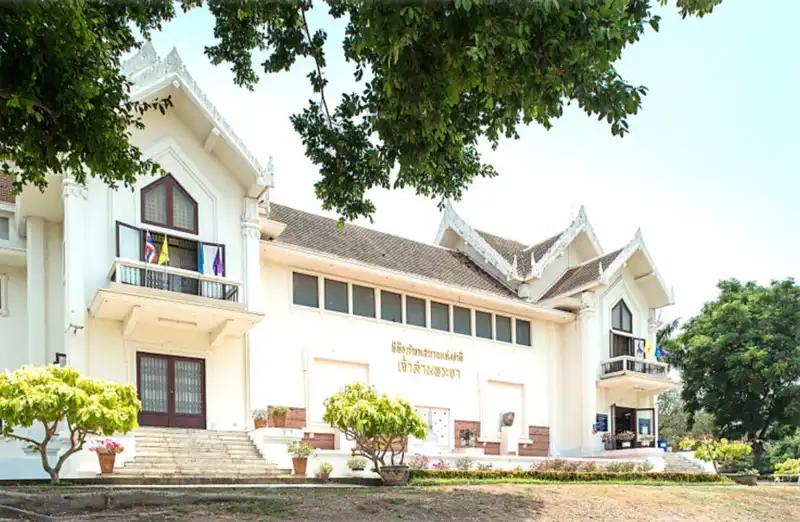
Chao Sam Phraya National Museum is one of Ayutthaya’s best spots for travelers who want to “see the real artifacts” and connect the story of the old capital with solid evidence right in front of them. This museum houses a large collection of significant antiquities, especially items linked to major temple crypts in Ayutthaya such as Wat Ratchaburana and Wat Mahathat. That means an Ayutthaya trip is not only about walking through ruined monuments—you also get to understand the details of art, beliefs, craftsmanship, technology, and everyday life through authentic objects that have survived through time.
The museum is located in Pratu Chai Subdistrict on Rojana Road, directly opposite Phranakhon Si Ayutthaya Rajabhat University. The location is easy to reach and convenient for planning the rest of your route because it sits near many key attractions both on and around the island city—important temples in central Ayutthaya, markets, restaurants, cafes, and visitor services. If you’re doing Ayutthaya in one day, stopping by the museum in the late morning to midday is often ideal: it helps you escape the heat and recharge with knowledge before heading back out to explore open-air historical sites in the afternoon.
This museum was built using funds raised from the public through renting Phra Phim (votive tablets) excavated from the crypt of Wat Ratchaburana, a temple built by King Boromracha II (Chao Sam Phraya). For this reason, it was named “Chao Sam Phraya National Museum.”
His Majesty the King and Her Majesty Queen Sirikit graciously presided over the official opening of this museum in B.E. 2504. Key highlights inside include three main exhibition buildings:
Building 1, ground floor, displays ancient art objects discovered during excavations and restoration of historical sites in Phra Nakhon Si Ayutthaya Province between B.E. 2499–2500. Notable Buddha images on display include the Seated Buddha with Legs Hanging (a white-stone Buddha in the Dvaravati style, seated with legs hanging), which was once enshrined in a niche of an ancient stupa at Wat Phra Menru, Nakhon Pathom Province, as well as Buddha images in Dvaravati, Lopburi, and Ayutthaya styles.
The Fine Arts Department made efforts to track down scattered parts of the statue from various locations and reassemble them into a complete figure. It is considered one of the most valuable Buddha images, with only 6 known examples in the world: 5 in Thailand and 1 in Indonesia. In Thailand, they are enshrined at Phra Pathom Chedi (Nakhon Pathom) 2 images, the National Museum Bangkok 1 image, Chao Sam Phraya National Museum 1 image, and Wat Na Phra Menru (Ayutthaya) 1 image. Also featured is the head of a Buddha image in the U-Thong period.
This large bronze head was brought from Wat Thammikarat, demonstrating the temple’s antiquity and the advanced skill of casting large-scale objects in ancient times. In addition, there are also carved wooden works created by Ayutthaya-era craftsmen.
On the upper floor, there are two rooms dedicated to gold artifacts. The first room displays gold objects found in the crypt of the prang at Wat Ratchaburana in B.E. 2500. Significant items include the golden Phra Saeng Khan Chai Si (a ceremonial sword). The blade is iron and sharpened on both edges, while the scabbard is gold, decorated with traditional patterns and gemstone-inlaid kanok motifs. The hilt is made from a “Hanuman tusk” stone.
The second room displays gold artifacts found in the crypt of the prang at Wat Mahathat, where the Buddha’s relics were enshrined inside a gold reliquary. Along the surrounding gallery, there are also votive tablets made of chin (an alloy mainly of lead and tin with copper gilding) and terracotta, from the Sukhothai, Lopburi, and Ayutthaya periods, discovered in the crypts of the prangs at Wat Ratchaburana, Wat Mahathat, and Wat Phra Ram.
Building 2 presents ancient art objects found in Thailand in chronological order, spanning Buddhist centuries 11–24—from Dvaravati, Srivijaya, Lopburi, Chiang Saen, Sukhothai, U-Thong, Ayutthaya, to Rattanakosin—to support comparative study. Important objects on display include Buddha images in various postures, Avalokiteshvara Bodhisattva, and Ganesha.
Building 3 is a group of traditional Thai houses in the central Thai style, built as a cluster of wooden homes set in the middle of a water moat. Inside, the displays focus on folk arts and everyday tools used by Thai people in the past, such as a coconut scraper, earthenware pots, and various types of basketry.
These antiquities reflect the former glory of the Ayutthaya Kingdom and are truly worth studying. The museum is open Wednesday to Sunday from 09.00–16.00, closed Monday to Tuesday and on public holidays. Admission is 30 baht for Thais and 150 baht for foreigners.
Getting there: From Bangkok, enter Ayutthaya town, cross the Somdet Phra Naresuan Maharaj Bridge, then continue straight for about 2 traffic lights near the Ayutthaya Provincial Court. The museum will be on your right.
To keep this article up to date and genuinely useful for today’s travelers, it’s worth emphasizing that opening days and admission fees have been updated from official tourism sources. In general, the museum opens Tuesday to Sunday from 09:00–16:00 and is closed on Monday, with admission at 30 baht for Thais and 200 baht for foreigners. This helps visitors plan more accurately before they go.
If you want to make the visit feel “like one continuous storyline,” it’s recommended to start with Building 1 first. It helps you understand why Ayutthaya became a center of politics, religion, and craftsmanship. Then move to Building 2 to compare the development of Thai art across eras, and finish at Building 3 so Ayutthaya doesn’t feel like only palaces and temples—you also see real “everyday life” through tangible folk tools and household objects.
Another point that many visitors find impressive is seeing the gold objects and the reliquary containing the Buddha’s relics up close. When visiting temples, we often see “architecture and space” but not the smaller objects that are at the heart of faith and ritual. In the museum, that picture becomes clearer: you can understand how devotion in the past was expressed through precious materials, elite craftsmanship, and arrangements consistent with the worldview of people in that era.
If you’re visiting with family, this is an excellent place to bring children or elderly relatives because it’s learning without standing under the sun all day. You can walk in short stretches and choose sections based on interest. The simple tip is to set aside at least 1–2 hours without rushing, so you have time to look closely and read the descriptions—many objects come with context that lets you “read Ayutthaya” more deeply than a quick photo check-in ever could.
Getting There From Bangkok, you can drive into Ayutthaya town and head to Rojana Road (Pratu Chai area). The museum is opposite Phranakhon Si Ayutthaya Rajabhat University. Key landmarks that help you avoid missing it are the Rojana Road corridor near the Provincial Court and major intersections with traffic lights. If you arrive by van or train, you can easily take a local hired car, tuk-tuk, or songthaew to the Pratu Chai/Rojana Road area because it’s a central zone with frequent transport throughout the day.
| Place Name | Chao Sam Phraya National Museum |
| Place Summary | A major Ayutthaya museum showcasing important antiquities, with a strong focus on art and artifacts from excavations and temple crypts (such as Wat Ratchaburana and Wat Mahathat). The exhibitions span 3 buildings, covering royal-level art, gold objects, Buddhist devotional items, and Thai ways of life through traditional houses and folk tools. |
| Address | Pratu Chai Subdistrict, Rojana Road, Phra Nakhon Si Ayutthaya District, Phra Nakhon Si Ayutthaya Province |
| Highlights | 3 exhibition buildings, gold rooms featuring treasures from Wat Ratchaburana and Wat Mahathat crypts, the Seated Buddha with Legs Hanging (Dvaravati), chronological displays for comparing Thai art across eras, and a cluster of traditional Thai houses with folk tools showing everyday life in the past. |
| Open Days And Hours | Tuesday – Sunday 09:00 – 16:00 (Closed on Monday) |
| Admission Fee | Thais 30 THB, Foreigners 200 THB |
| Current Status | Open during the days and hours above (recommended to check public holiday notices before visiting). |
| Contact Number | 0 3524 1587 |
| Nearby Tourist Attractions (Approx. Real-Route Distance) | Wat Ratchaburana ~2.0 km Wat Mahathat ~2.2 km Wat Phra Si Sanphet ~2.8 km Wihan Phra Mongkhon Bophit ~2.9 km Ayutthaya Historical Study Centre ~3.5 km |
| Nearby Restaurants (Approx. Real-Route Distance) | Baan Kao Nhom ~2.8 km Tel. 097-921-9465 PRANG VIEW Cafe ~2.4 km Tel. 089-801-0138 Kuay Teow Ruea (Pa Lek) Old Shop ~2.5 km Tel. 089-804-7418 The Summer House Ayutthaya ~6.5 km Tel. 094-224-2223 sala ayutthaya eatery and bar ~3.2 km Tel. 035-242-588 |
| Nearby Accommodations (Approx. Real-Route Distance) | sala ayutthaya ~3.2 km Tel. 035-242-588 iuDia on the river ~3.5 km Tel. 035-323-208 Krungsri River Hotel ~2.2 km Tel. 035-244-333 Classic Kameo Hotel, Ayutthaya ~5.5 km Tel. 035-212-535 Kantary Hotel, Ayutthaya ~6.0 km Tel. 035-337-177 |
Frequently Asked Questions (FAQ)
Q: Where is Chao Sam Phraya National Museum located in Ayutthaya?
A: It is in Pratu Chai Subdistrict on Rojana Road, opposite Phranakhon Si Ayutthaya Rajabhat University. It’s easy to reach and convenient for continuing to major temples in the island city.
Q: What are the most outstanding things to see here?
A: Many visitors come specifically for the gold rooms featuring treasures from the Wat Ratchaburana and Wat Mahathat crypts, the Seated Buddha with Legs Hanging (Dvaravati), and the 3-building layout that presents Ayutthaya in a well-rounded way.
Q: How many hours should I set aside for the visit?
A: At least 1–2 hours is recommended. If you want to read the descriptions and study the craftsmanship in detail, set aside more time.
Q: What are the opening days and hours?
A: In general, it opens Tuesday to Sunday from 09:00–16:00 and is closed on Monday (it’s recommended to check public holiday notices before visiting).
Q: How much is the admission fee?
A: 30 THB for Thais and 200 THB for foreigners (there may be exemptions in certain cases depending on the museum’s notice).
Q: When is the most comfortable time to visit?
A: Morning to late morning is usually cooler and less crowded, which is great for unhurried viewing—then you can head out to open-air historical sites in the afternoon.
 Tel: 035241587
 Chao Sam Phraya National Museum Map
 Category:
  Group:
  Last Update: 2 MonthAgo
Comment
 Nearby Attractions
| Keyword (Advance) |
 Region
|
 Phranakhon Si Ayutthaya(