

 Home
Home Chiang Mai(




Rating: 3.9/5 (7 votes)
 |
|  Map
Map 
 Have Map
  No Map
Phranakhon Si Ayutthaya attractions
Attractions in Thailand
Open Days: Open daily (located within Ayutthaya Historical Park; please check the latest information before your visit)
Opening Hours: Generally around 08:00–18:00 (opening hours for ruins may change according to park policy)
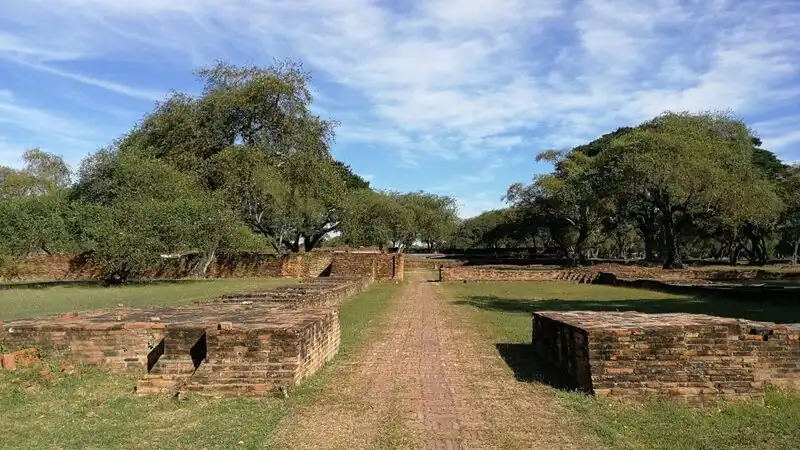
Phra Racha Wang Luang (Ancient Royal Palace) was the heart of Ayutthaya in its former role as the “Grand Palace” of the kingdom. Today, although only brick foundations and traces of royal halls remain, visitors entering the grounds can still feel the scale and grandeur of the old capital that once flourished for more than 400 years. The Ancient Royal Palace stands right next to Wat Phra Si Sanphet in the center of Ayutthaya Historical Park, which is inscribed as a UNESCO World Heritage Site. This makes it one of the must-visit landmarks when traveling in Ayutthaya.
If you try to picture the scene several hundred years ago, the wide lawns and broken brick ruins we see today were once occupied by towering royal halls and prangs, royal flags fluttering in the wind, the sound of gongs and drums echoing through the air, and processions of soldiers, officials, and foreign envoys coming in and out of the palace in a constant flow. Every step you take on the bricks of the Ancient Royal Palace is like walking over the traces of political history, diplomacy, and grand royal ceremonies of the Ayutthaya kingdom.
The story of the Royal Palace began alongside the founding of Ayutthaya itself, when King Ramathibodi I (King U Thong) established the capital in 1350 (B.E. 1893). His Majesty ordered the construction of the first royal palace on the eastern side of the island, in the area that is now Wat Phra Si Sanphet. This original palace consisted of four important halls: Phra Thinang Phra Thaen Phra Thinang Phaitun Maha Prasat, Phra Thinang Phra Chaiyan Maha Prasat, Phra Thinang Aisawan Maha Prasat, and Phra Thinang Mangkhala Phisek Maha Prasat, which served as royal residences for the early monarchs of the dynasty.
The original palace was located in the same zone as the royal temple. Over time, the royal precinct and temple area gradually overlapped in function and significance. In the reign of King Borommatrailokkanat, around 1448 (B.E. 1991), His Majesty introduced major administrative reforms and clearly separated the royal palace grounds from the Buddhist monastic area. He granted the entire original palace compound to be converted into Wat Phra Si Sanphet and relocated the royal palace to a new site further north, next to the Lopburi River and the northern city moat, creating the Royal Palace that we see as ruins today.
This new Royal Palace began with the construction of Phra Thinang Benchatratna Maha Prasat and Phra Thinang Sanphet Maha Prasat as the main audience halls. Later, another royal hall known as Phra Thinang Mangkhala Phisek, sometimes referred to as “Phra Thinang Wihan Somdet,” was added. These halls together served as royal residences for a total of 16 kings over around 182 years. During this period, the Royal Palace functioned as the central hub for state administration, military affairs, and royal ceremonies. It was also the setting for receptions of foreign envoys, whose travel accounts recorded the splendor of Ayutthaya’s royal court.
In the reign of King Prasat Thong, the palace grounds were expanded until they directly adjoined Wat Phra Si Sanphet, creating a seamless visual connection between the Royal Palace and the royal temple. During this time, two more grand halls were constructed: Phra Thinang Suriyat Amarin and Phra Thinang Chakkrabat Phimarn (often rendered as Chakkrabad Phra Chaiyan), further reinforcing the cluster of great audience halls at the heart of Ayutthaya’s royal power.
Later, during the reign of King Narai the Great, Phra Thinang Banyong Rattanat was added as another royal residence. By the late Ayutthaya period, the Royal Palace therefore contained six principal maha prasat halls in total. They formed the main stage for many historic events, from coronations and declarations of war to receptions of foreign missions and royal cremations, over a span of roughly 137 years, until the second fall of Ayutthaya in 1767 (B.E. 2310).
After the fall of Ayutthaya, the Royal Palace was heavily damaged by fire. Only the lines of foundation walls, bases of royal halls, and scattered bricks remained across the grounds. When the Rattanakosin (Bangkok) era began, the Grand Palace in Bangkok was planned and built following the layout and concept of the old Ayutthaya Royal Palace. In this way, the Ancient Royal Palace became a “prototype” for later Thai royal courts in many respects.
As you walk into the Royal Palace area today, you can still recognize the overall layout divided into three main zones following traditional Thai court practice: the Outer Court, the Middle Court, and the Inner Court. Even though only foundations and wall traces remain, the arrangement of space still clearly suggests the structure of the former royal residence.
The Outer Court was once home to Phra Thinang Chakkrabat Phimarn, as well as important administrative buildings such as the audience halls for legal sessions, state offices, and various official pavilions. It served as the “administrative heart” where high-ranking officials came to attend audiences and conduct state business. The Middle Court contained three major maha prasat halls: Phra Thinang Wihan Somdet, Phra Thinang Sanphet Maha Prasat, and Phra Thinang Suriyat Amarin. These were used for the most important royal ceremonies, including state ceremonies, religious functions presided over by the king, and formal receptions of foreign delegations.
The Inner Court was the private and residential area of the palace, serving as the living quarters of the queen consort, royal princesses, consorts, and women of the court. It also housed some of the royal workshops, stables, and elephant sheds. This section was once a separate, hidden world behind high walls, invisible to outsiders. Today, only the bases of the buildings and traces of walls remain, but they still help us imagine the layout of the royal household in former times.
One of the favorite spots for visitors is the base of Phra Thinang Suriyat Amarin and Phra Thinang Sanphet Maha Prasat, whose large platforms are still clearly visible. Walking around these foundations and looking upward with a bit of imagination allows you to sense the former height and elegance of the buildings. Nearby are the remains of Phra Thinang Trimuk, where King Chulalongkorn (Rama V) later ordered a trimuk pavilion to be erected during the Rattanakosin era for royal rites honoring Ayutthaya kings on the 40th anniversary of his reign. This gesture underscored the deep symbolic link between the Bangkok court and the legacy of Ayutthaya.
Within the area known as Suan Phra Phra Phra Phya Chandrath (often referred to as Suan Phra Phra Phya or “Phra Phra garden” in some sources), the zone called Suan Phai Chaiyon Bencharat functioned as the location of the royal treasure houses: Supharat Treasury, Phiman Akat Treasury, Wiset Treasury, the royal chariot house, and armories. It was essentially the “economic and military logistics center” of the Ayutthaya kingdom. Today, the area appears as open ground with only foundations left, but if you walk slowly and read the explanatory signs, it becomes easier to visualize this space once filled with treasures, royal regalia, golden ornaments, and royal chariots prepared for grand ceremonies.
Further out is the area known as the “Royal Vineyard Garden,” which served as the palace’s royal garden. It housed pavilions such as Tamnak Sa Kaeo and Tamnak Sala Luad. This corner reflects the court’s taste in garden design and historic landscape architecture. Although only the general outline of the area remains today, knowing that this was once a royal garden where kings came to relax adds a softer, more intimate dimension to a walk through the Ancient Royal Palace.
Another helpful element for understanding the overall layout of the Royal Palace is the scale model showing the plan of the palace and major buildings, exhibited at the Ayutthaya Historical Study Centre. Visitors especially interested in architectural details might visit the model first and then walk through the actual site. Doing so makes it easier to recognize which foundations correspond to which halls and how different parts of the palace were connected.
Today, the atmosphere at the Ancient Royal Palace is relatively calm. As you enter the grounds, you will feel the cool breeze from the Lopburi River, see green lawns alternating with orange-brick foundations, and walk under newly planted shade trees. A slow-paced stroll, paired with reading the Thai and English information boards, reveals a long narrative arc, from the founding of the capital under King U Thong to the final period of Ayutthaya before its fall.
The Royal Palace also ties seamlessly into routes that connect other major temples nearby. Most visitors like to combine their visit with Wat Phra Si Sanphet and Viharn Phra Mongkhon Bophit, which stand right next door within walking distance. From there, it is easy to hop on a tuk-tuk or rent a bicycle to continue to Wat Mahathat, Wat Ratchaburana, or the Chao Sam Phraya National Museum. Planning a half-day or full-day trip in the island area is therefore quite straightforward.
For photography lovers, the Ancient Royal Palace offers beautiful natural lighting in both the morning and late afternoon. In the morning, soft light from the east gently grazes the walls and foundations. In the evening, warm golden light stretches across the lawns and weathered bricks, giving photos depth and a nostalgic atmosphere. Visitors who enjoy minimalist compositions can use the strong lines of the foundations and walls as striking visual elements.
Even though only ruins remain, for history enthusiasts this Royal Palace is like a “giant open-air history book” that you read by walking. Each line of wall, each hall foundation, each former garden site, and even the burn marks on the bricks tell part of the story. Standing on the wide open ground and recalling the accounts of foreign envoys who once described the splendor of Ayutthaya’s court gives you a fresh perspective on this old capital city.
Getting There The Ancient Royal Palace is located inside Ayutthaya Historical Park in Pratu Chai Subdistrict, near Wat Phra Si Sanphet and Viharn Phra Mongkhon Bophit. From central Ayutthaya town, you can drive onto the island via Pridi Thamniyom Bridge or Pridi Panomyong Bridge, then follow signs to Ayutthaya Historical Park and park near Wat Phra Si Sanphet. From the parking area, it is only a short walk into the Royal Palace grounds.
If you are traveling from Bangkok, you can take Highway 1 (Phahonyothin Road) and then join Highway 32 (Asian Highway) heading to Phra Nakhon Si Ayutthaya. When you approach the city, follow the signs to enter the island. Total travel time is around 1–1.5 hours, and you can use the Bang Pa-in Expressway to shorten the trip. Those who prefer public transport can take a train from Bangkok to Ayutthaya Railway Station, then hire a songthaew, tuk-tuk, or taxi to tour the historical sites. Many drivers offer half-day or full-day charter services, which you can arrange directly with them.
When visiting the Ancient Royal Palace, it is best to dress modestly and comfortably, as you will be walking outdoors for quite some time. Lightweight, breathable clothing, long trousers or a long skirt, and comfortable walking shoes or trainers are recommended. Bring a hat, sunglasses, a folding umbrella, and sunscreen, especially in the hot season. In the rainy season, some areas may be damp or slippery, so take care when walking on lawns and brick foundations. Please follow the Historical Park’s rules at all times: do not climb on the ruins, do not scratch or write on the bricks, and avoid placing items on the bases of stupas or former royal halls.
After exploring the Ancient Royal Palace, you can easily add several nearby attractions to your itinerary, such as Wat Phra Si Sanphet, Viharn Phra Mongkhon Bophit, Wat Phra Ram, Wat Mahathat, Wat Ratchaburana, and the Chao Sam Phraya National Museum. There are also local markets and cafes around the island. A popular way to enjoy Ayutthaya is to walk through the ruins in the morning, have lunch or coffee with a temple view, and then return for more sightseeing and photography in the softer afternoon light.
As for accommodation, visitors have plenty of options ranging from cozy homestays in old neighborhoods to stylish riverside resorts on the Chao Phraya River with views of temples on the island. Places such as Sala Ayutthaya with its modern riverside design, Baan Thai House hidden in a lush garden near the railway station, Niwas Ayutthaya with its quiet, homey atmosphere near the ruins, Krungsri River Hotel on the riverside, and small guesthouses in the Pratu Chai and Hua Ro area are all within easy reach of the Ancient Royal Palace, accessible by car or tuk-tuk.
Food and cafe options in Ayutthaya are equally varied. You can find traditional Thai restaurants, local specialties such as boat noodles, and contemporary cafes with views of heritage sites. Popular choices include Coffee Old City near Wat Mahathat, Malakor Kitchen and Cafe overlooking Wat Ratchaburana, Sala Ayutthaya Eatery and Bar serving Thai fusion dishes by the river, The Summer House Ayutthaya with its relaxed riverside vibe, and local riverside places like Khrua Pa Lek in Ko Rian, known for its river fish dishes. This makes it easy to combine heritage sightseeing with a food and cafe-hopping day in Ayutthaya.
Overall, the Royal Palace or Ancient Royal Palace is far more than just a quiet field of old bricks. It is a space still filled with traces of Ayutthaya’s royal court, from the founding of the capital and the expansion of the palace to the reception of foreign envoys and the eventual fall of the city. Walking among the remaining hall foundations and walls feels like having a close conversation with history and invites us to reflect on how we can preserve and pass on this important cultural heritage to future generations.
| Name | Ancient Royal Palace (Old Royal Palace), Ayutthaya |
| Place Summary | The former Grand Palace of the Ayutthaya Kingdom, located in the heart of Ayutthaya Historical Park. It once served as the main residence of the kings and the administrative center of the kingdom. Today, the site preserves the foundations of royal halls, palace walls, and the overall plan of the complex, with information boards helping visitors understand the palace layout and historical background in detail. |
| Highlights | Prototype for the layout of Bangkok’s Grand Palace; clearly shows the structure of the former royal palace through its foundations and site plan; directly connected to Wat Phra Si Sanphet and Viharn Phra Mongkhon Bophit, allowing visitors to grasp the overall structure of the old capital in one area; ideal for visitors interested in history, architecture, and heritage photography. |
| Location | Ayutthaya Historical Park, Pratu Chai Subdistrict, Phra Nakhon Si Ayutthaya District, Phra Nakhon Si Ayutthaya Province, Thailand |
| Approximate Address | Northern side of Wat Phra Si Sanphet in central Ayutthaya Island, around Si Sanphet Road – U Thong Road, Pratu Chai Subdistrict, postal code 13000 |
| Period / Background | Originated in the reign of King Ramathibodi I (King U Thong) in 1350 (B.E. 1893). The first royal palace stood where Wat Phra Si Sanphet is today before King Borommatrailokkanat moved the palace northwards to the Lopburi River. It remained the principal royal residence and administrative center of Ayutthaya until the second fall of the city in 1767 (B.E. 2310). |
| Key Features / Evidence | Foundations of Phra Thinang Sanphet Maha Prasat, Phra Thinang Suriyat Amarin, and Phra Thinang Wihan Somdet (Mangkhala Phisek); remains of Phra Thinang Trimuk; palace wall traces; the Suan Phai Chaiyon Bencharat area (site of the royal treasuries); and the visible layout of the Outer, Middle, and Inner Courts. |
| Origin of the Name | “Royal Palace” refers to the grand royal residence of the king. The term “Ancient Royal Palace” is used for the remains of the former royal palace of Ayutthaya after the fall of the kingdom, to distinguish it from the current Grand Palace in Bangkok. |
| Travel Overview | From Bangkok, take Highway 32 (Asian Highway) to Phra Nakhon Si Ayutthaya, enter the city and cross a bridge onto Ayutthaya Island, then follow signs to Ayutthaya Historical Park and park near Wat Phra Si Sanphet. From there, it is a short walk to the Ancient Royal Palace. Total travel time is about 1–1.5 hours. Visitors can use private car, minivan, or train plus local tuk-tuk, or rent a bicycle to tour the island. |
| Current Status | A major historic ruin within Ayutthaya Historical Park, open to visitors daily. It forms one of the main points of interest alongside Wat Phra Si Sanphet and Viharn Phra Mongkhon Bophit. The site is maintained and conserved by the Fine Arts Department, with informational signs in both Thai and English installed around the area. |
| Fees | The Ancient Royal Palace lies within Ayutthaya Historical Park, where entrance fees are charged for certain key sites, especially for foreign visitors. Ticket types (single-site or combined tickets) and rates may change over time. It is recommended to check the latest information from the Historical Park or official agencies before visiting. |
| Facilities | Parking areas around the Historical Park, ticket booths at designated sites, some public restrooms near the ruins, local shops and souvenir stalls in nearby areas, as well as local tuk-tuk services and bicycle rentals from operators around the island (facilities may change depending on time and season). |
| Nearby Attractions (Distance) | Wat Phra Si Sanphet – about 0.2 km Viharn Phra Mongkhon Bophit – about 0.3 km Wat Phra Ram – about 0.5 km Wat Mahathat – about 1 km Wat Ratchaburana – about 1 km Chao Sam Phraya National Museum – about 1.5 km (distances are approximate along actual routes) |
| Nearby Restaurants (Distance + Phone) | Coffee Old City Thai Bistro, near Wat Mahathat, about 1 km, Tel. 089-889-9092 Malakor Kitchen and Cafe, near Wat Ratchaburana, about 1 km, Tel. 091-779-6475 Sala Ayutthaya Eatery and Bar, riverside in Pratu Chai area, about 2 km, Tel. 035-242-588 The Summer House Ayutthaya, riverside cafe and restaurant, about 3–4 km, Tel. 094-224-2223 Khrua Pa Lek (local Thai and river fish dishes in Ko Rian area), about 6–7 km, Tel. 087-410-9020 |
| Nearby Accommodations (Distance + Phone) | Sala Ayutthaya, boutique riverside hotel, about 2 km, Tel. 035-242-588 Niwas Ayutthaya, home-style guesthouse near Wat Mahathat, about 1.5 km, Tel. 093-590-0599 Baan Luang Harn Guesthouse, in Pratu Chai – Hua Ro area, about 1.5–2 km, Tel. 087-072-1657 Baan Thai House Ayutthaya, garden resort near the railway station, about 4 km, Tel. 080-437-4555 Krungsri River Hotel, large riverside hotel on the Chao Phraya River, about 3–4 km, Tel. 035-244-333 |
| Main Contact Number | Ayutthaya Historical Park Office (for information on ruins and general opening hours): Tel. 035-242-285, 035-242-286; and heritage information line from related cultural and environmental agencies: Tel. 035-241-407 (it is recommended to call in advance to confirm the latest details). |
Frequently Asked Questions (FAQ)
Q: How is the Ancient Royal Palace different from Wat Phra Si Sanphet?
A: The Ancient Royal Palace area is the former royal residence and administrative center of the kings of Ayutthaya, while Wat Phra Si Sanphet was the royal temple of the palace, later formally designated as a monastic area. Today, the two sites are adjacent and lie within the same Historical Park, but they served different roles and have distinct historical meanings.
Q: What are the opening hours of the Ancient Royal Palace?
A: The Ancient Royal Palace is part of Ayutthaya Historical Park, where outdoor ruins are generally open around 08:00–18:00. However, exact opening hours may be adjusted according to the season and conservation measures, so it is best to check the latest information from the Historical Park or official agencies before your visit.
Q: Is there an entrance fee to visit the Ancient Royal Palace?
A: Most of the Ancient Royal Palace area is open-air ruins within Ayutthaya Historical Park and may be covered by the park’s ticketing system, especially for foreign visitors. Ticket prices and types (single-site or combined tickets) are subject to change. You should check the latest fees and ticket options on official channels or at the park ticket office before visiting.
Q: How much time should I allow for visiting the Ancient Royal Palace?
A: If you plan to walk around only the palace grounds, read the information boards, and take photos at a relaxed pace, around 1–1.5 hours is usually enough. If you want to extend your visit to include Wat Phra Si Sanphet, Viharn Phra Mongkhon Bophit, Wat Phra Ram, Wat Mahathat, or the Chao Sam Phraya National Museum, it is better to allow at least half a day to a full day so you can explore and take breaks without rushing.
Q: When is the best time of day to visit the Ancient Royal Palace?
A: Early morning (around 08:00–10:00) and late afternoon (after about 15:30) are the most comfortable and photogenic times, with cooler temperatures and softer light. Midday can be very hot, so bring a hat, umbrella, and water, especially in the hot season. During the rainy season, showers are possible, so checking the weather forecast in advance is recommended.
Q: Are guided tours or English information boards available at the site?
A: There are information boards in both Thai and English throughout the Ancient Royal Palace, explaining the history and the function of key structures. Visitors who want deeper insight can hire local guides, many of whom offer their services around the Historical Park and major attractions. You can arrange routes and fees directly with the guides in advance.
Q: Can I take photos or videos inside the Ancient Royal Palace?
A: Yes, you may freely take photos and videos for personal travel purposes, provided you respect the Historical Park’s rules: do not climb the ruins, do not place heavy equipment or props on the structures, and avoid any actions that might damage the remains. For commercial shoots or large film crews, it is advisable to seek permission from the relevant authorities beforehand.
 Tel: 035242501, 035244570
 Phra Racha Wang Luang (Ancient Royal Palace) Map
 Category:
  Group:
  Last Update: 2 MonthAgo
Comment
 Nearby Attractions
| Keyword (Advance) |
 Facebook Fanpage
 Region
 Historical Sites and Monuments(
 Landmarks and Memorials(
 Art, Craft Centres, Tradition(
 Museums(
 Educational Places
 Museum for Study(
 Educational Gardens, Farm(
 Training Center(
 University
 Places of Worship
 Temple(
 Church(
 Mosque(
 Other religious and spiritural sites(
 Research and Development
 Royal Project(
 Suburban Living
 Village, Community(
 Local Market(
 Floating Market(
 Nature and Wildlife
 Dam, Reservoir, Lake(
 River, Canal(
 Islands(
 Other natural attractions(
 Entertainment and Agricultural
 Animal camps and shows(
 Farm, Parks, Gardens and Ecotourism(
 Travel Articles, Recipes
 Travel Review, Food Review(