

 Home
Home Chiang Mai(




Rating: 3.1/5 (7 votes)
 |
|  Map
Map 
 Have Map
  No Map
Phranakhon Si Ayutthaya attractions
Attractions in Thailand
Open Days: Daily
Opening Hours: 08.30 – 17.00
Bang Pa-In Palace If you’re looking for an Ayutthaya attraction with a truly regal atmosphere—elegant, polished, and easy to explore without needing much imagination like many ruin-only sites—Bang Pa-In Palace is one of the most rewarding choices. The palace lies about 18 kilometers south of Ayutthaya Island (Ko Mueang), which makes it perfect for a morning-to-afternoon outing, or an easy add-on before continuing into the city to visit several well-known temples.
What makes Bang Pa-In special isn’t only that it is “beautiful” in a very photogenic way (though it absolutely is). Its charm comes from layers of history—from the late Ayutthaya memories embedded in the site, to major restorations in the Rattanakosin era that shaped the palace into what we see today. As you walk through the grounds, you’ll notice Thai traditional architecture, Western-inspired buildings, and Chinese-style structures sharing one landscape naturally. It doesn’t feel mismatched at all, because everything is arranged so the experience flows through gardens, ponds, and shaded paths in a calm, unhurried rhythm.
According to accounts referenced in the royal chronicles, the origins of Bang Pa-In Palace are closely associated with King Prasat Thong, who ordered the palace to be built because Bang Pa-In Island was his birthplace and also the former home of his mother, a commoner. Traditional narratives connect this to an earlier incident in which King Ekathotsarot traveled by royal barge and the vessel capsized near Bang Pa-In Island, leading to the meeting with the woman who later became the mother of King Prasat Thong.
In 2175 BE (1632 CE), King Prasat Thong granted royal permission for a temple to be built on Bang Pa-In Island at the site of his mother’s former residence. He named it “Wat Chumphon Nikayaram.” He also ordered a pond to be excavated and a royal residence to be created on the island for leisure visits. A pavilion-like royal hall was then constructed by the pond and bestowed the name “Aisawan Thiphya-At.” This same name would later be used again for the iconic pavilion that now stands in the middle of the water.
Over time, the palace experienced periods of quiet, before being revived again in the reign of King Rama IV, who ordered a new royal residence for stays, with row houses for the Inner Court and a riverside pavilion to support royal excursions. In the reign of King Rama V, the palace entered a major era of expansion: many buildings and structures were added, creating the distinctive appearance visitors recognize today. The palace has also continued to serve as a royal residence on occasion, a venue for receiving royal guests, and a place for formal functions from time to time.
Walking through the grounds feels clearly divided into two zones, because the palace is organized into the Outer Royal Court and the Inner Royal Court. The outer area carries a more ceremonial character and was used for audiences and royal rituals. The inner area is more private, intended for personal residence. As you cross from one zone to the other, the mood shifts from grand formal architecture into quieter gardens, pavilions, and tucked-away halls beneath trees and greenery.
If you begin in the Outer Court, one of the most eye-catching sights is “Ho Hemmonthian Thewarat,” a stone prang built in the style of a Khmer-inspired tower. King Rama V ordered it constructed as a dedication to King Prasat Thong. Inside, it enshrines a royal effigy of King Prasat Thong in ceremonial attire, making this not only a striking landmark but also a symbolic marker that anchors the palace narrative back to its Ayutthaya-era beginnings.
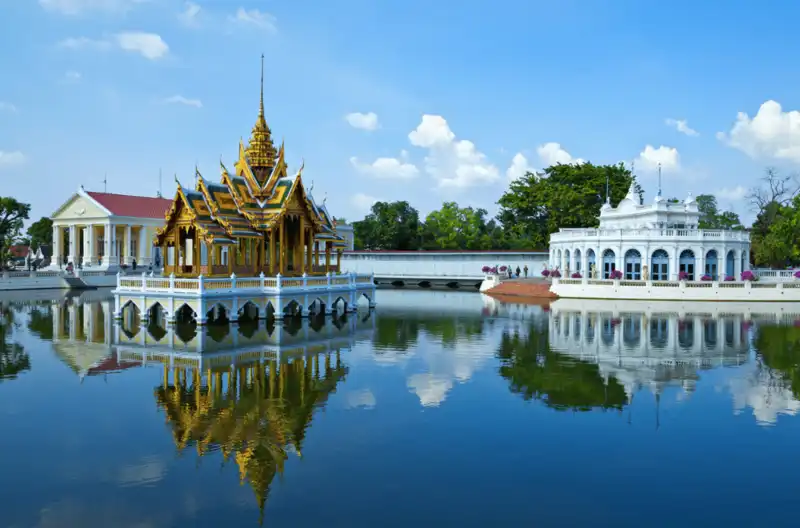
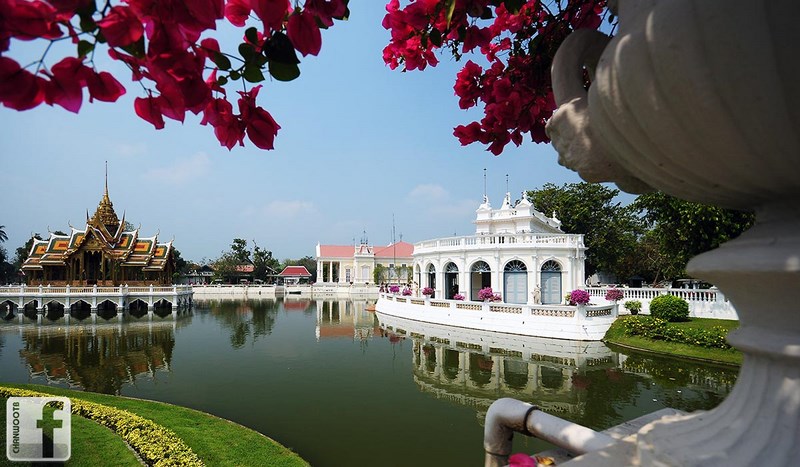
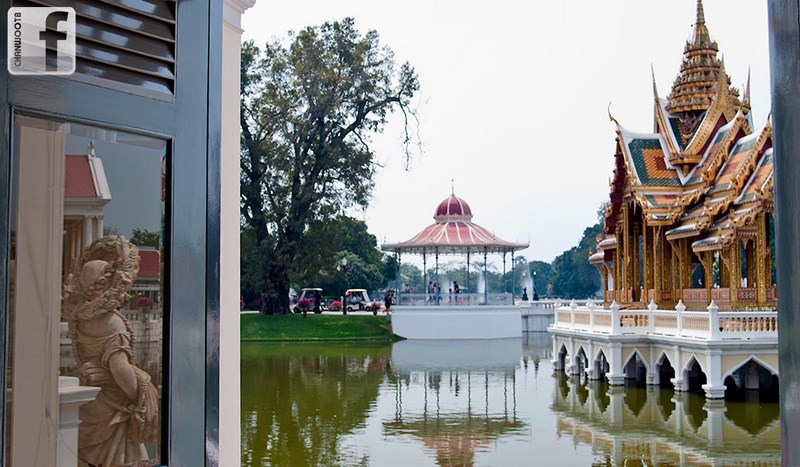
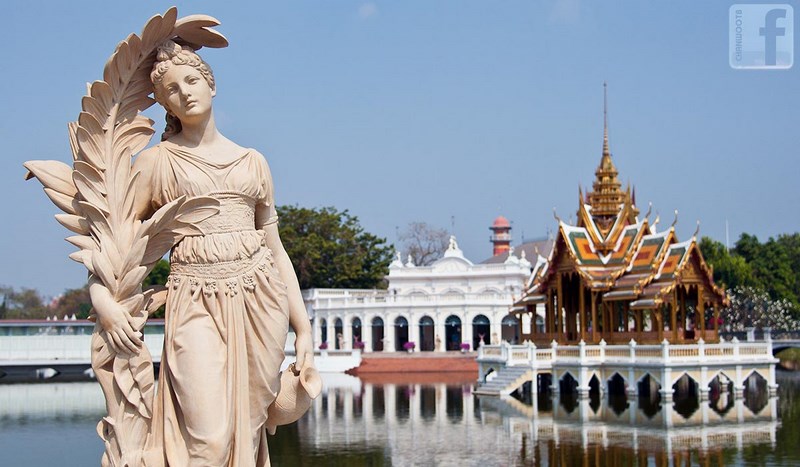
Not far away, you’ll reach the most iconic image of Bang Pa-In—the pavilion that appears on postcards and travel photos again and again: “Aisawan Thiphya-At,” a Thai-style four-gabled open hall set in the middle of a pond. King Rama V ordered it built in 2419 BE (1876 CE), modeled after the Aphon Phimok Prasat pavilion at the Grand Palace in Bangkok. Many visitors naturally linger here, because reflections on the water and the changing light make the pavilion look especially dignified without needing any effort to “find” the perfect angle.
This pavilion also carries an interesting architectural timeline. The earliest version from King Prasat Thong’s time was built entirely of wood. Later, in the reign of King Rama VI, the columns and flooring were replaced with reinforced concrete to strengthen the structure. Today, it enshrines a bronze statue of King Rama V in full field marshal uniform, commissioned by King Rama VI. It becomes one of those places where Ayutthaya roots and Rattanakosin continuity feel quietly linked in a single view.
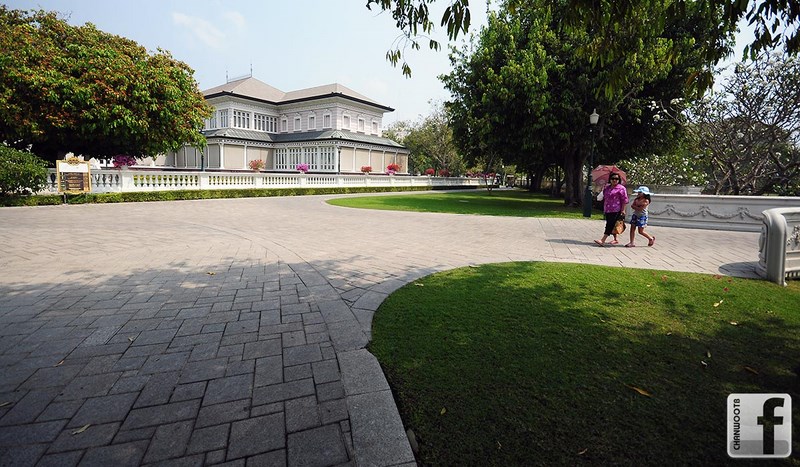
Another building many visitors enjoy is “Warophat Phiman,” located north of the royal bridge. It began as a two-story wooden residence that served both as living quarters and a throne hall, before later being dismantled and rebuilt in a Western architectural style. Constructed of brick with classical influences reminiscent of a Greek-style façade, it shifts the atmosphere from Thai elegance by the water into a more international, formal grandeur. Inside, there are notable displays such as antique weapons, finely carved stone figures, and paintings that depict episodes from royal chronicles as well as famous Thai literary works—a rewarding stop for anyone who wants more than just photo moments.
Across the water from Warophat Phiman stands “Saphakhan Ratchaprayun,” a two-story riverside building constructed in the reign of King Rama V to accommodate senior royals of the Outer Court and royal attendants. This area helps complete the picture that the palace is not a collection of isolated buildings, but a carefully planned system of spaces designed to support ceremony, residence, and the many people involved in royal functions.
The transition into the Inner Court comes with a detail people tend to remember once they hear it. The bridge that links Warophat Phiman to the Inner Court gate features a partition that runs along the bridge, dividing the path into the Outer Court side and the Inner Court side. The Inner Court could look outward through the screen without being seen. Even a simple walkway, then, carries the etiquette and order of court life embedded directly into its design.
Once you enter the Inner Court, the atmosphere softens and feels more private. One of the most distinctive residences here is “Uthayan Phumisathian,” originally a two-story wooden hall designed in the Swiss chalet style, painted in alternating soft and deeper green tones. The interior was known for mahogany furnishings and decorative pieces, including rare items and royal gifts from various regions. It is also associated with a significant event: during renovation work on 9 December 2481 BE (1938 CE), a fire destroyed the structure. Later, in 2531 BE (1988 CE), it was rebuilt to match the original design, with construction material changed from wood to concrete for durability.
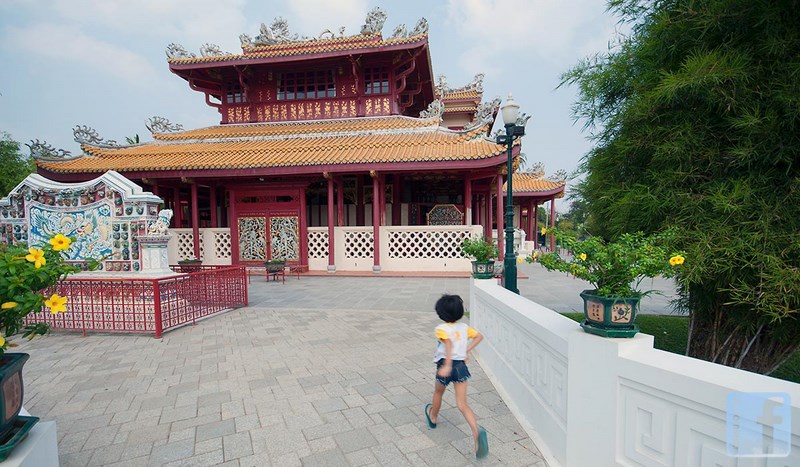
A completely different mood appears at “Wehat Chamrun,” which also carries a Chinese name rendered as “Tian Meng Di” (with the sense of “Sky” and “Prosperity” in the name). Built in 2432 BE (1889 CE) under the supervision of Phraya Choduek Ratchaseththi (Fak) as a winter residence for King Rama V, it was also used to receive foreign royals during that era. The Chinese-style architecture is richly decorated with intricate carvings, and the front hall is known for its hand-painted porcelain tiles—the kind of craftsmanship that draws you closer the longer you look.
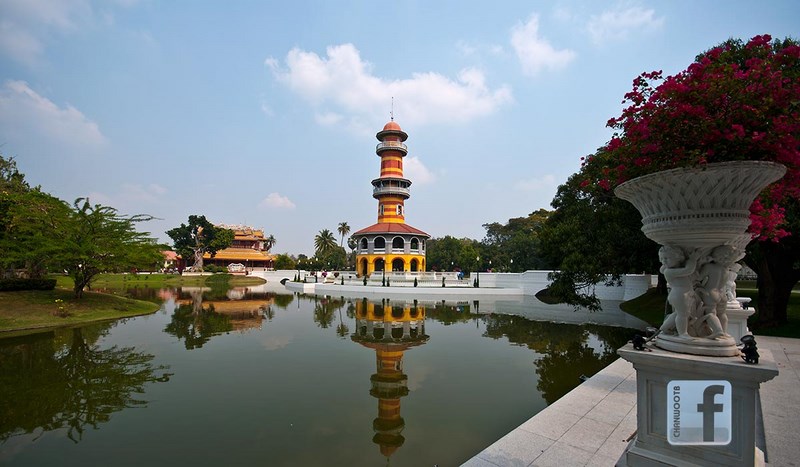
The Inner Court gardens also feature smaller structures that make the walk more enjoyable, such as “Keng Buppha Praphat,” a small pavilion in the garden beside the pond, and “Ho Withun Thatthana,” a tall three-level viewing tower on a small island, reached by a spiral staircase and once used as a lookout to observe the surrounding landscape. Together with the ponds and garden paths, these details keep the palace from feeling like a static museum; it feels more like stepping through living scenes arranged with intention.
Another area that shifts the mood into quiet reflection is the group of memorial monuments, especially the monument to Queen Sunandha Kumariratana—commonly referred to as the “boat accident memorial.” The marble monument is a six-sided pillar that contains her ashes, accompanied by a memorial inscription written by King Rama V in both Thai and English. Nearby is the “Ratchanuson Monument,” created to commemorate the loss of the King’s consort and three royal children within the same year. These places add emotional depth to the visit, naturally slowing your pace and changing the feel of the walk.
For a comfortable, truly worthwhile visit, it’s best to set aside at least half a day. The grounds are spacious and there are many photo-worthy corners, and mornings are generally more comfortable before the heat builds. If you prefer not to walk long distances, there is information suggesting golf cart service is available (often cited around 400 baht per hour, though rates can vary by conditions on site). It can be especially helpful for families, seniors, or anyone who wants to see everything without rushing.
Dress is worth taking seriously here, because the overall atmosphere is formal and dignified. A practical guideline for visiting royal palace sites in Thailand is to dress modestly: cover shoulders and knees, avoid overly tight or sheer clothing, and choose secure footwear for ease and appropriateness while walking. If you plan your outfit properly from the start, the day feels smoother—and photos tend to look naturally in harmony with the setting without needing extra editing later.
Getting There If you’re driving from Bangkok, you can follow Phahonyothin Road, pass the Phra In gate area, and turn onto Highway 308 toward Bang Pa-In, then follow signs to the palace. Another option is to enter via Ayutthaya city and drive south toward Bang Pa-In District. By bus, you can take the Bangkok–Bang Pa-In route from Mo Chit 2 and connect with local transport into the palace. If you prefer a relaxed trip, the train is also a good choice: get off at Bang Pa-In Railway Station, then take a local songthaew, tuk-tuk, or motorbike taxi to the palace.
In the end, if you want Bang Pa-In to feel truly “worth it” without rushing, plan your time so you can enjoy three rhythms: the main halls and landmark buildings, a slower stroll through gardens and waterside paths, and a proper break for food nearby. The Bang Pa-In area has a number of restaurants and cafés worth stopping at, and from there you can continue into Ayutthaya city for temple visits or another riverside café. It makes for a balanced one-day Ayutthaya plan—beauty, history, and comfort in one flow.
| Place Name | Bang Pa-In Palace |
| Address | Ban Len Subdistrict, Bang Pa-In District, Phra Nakhon Si Ayutthaya 13160, Thailand |
| Place Summary | A historic royal palace with roots in the Ayutthaya period, later revitalized and expanded under Kings Rama IV and Rama V. Known for its harmonious blend of Thai, Western, and Chinese architecture, set within serene gardens and ponds with many photogenic viewpoints. |
| Highlights | Aisawan Thiphya-At pavilion over the pond, Warophat Phiman (Western-style hall), Wehat Chamrun (Chinese-style residence), landscaped gardens and waterscapes, many scenic photo spots, layered history linking Ayutthaya and Rattanakosin eras. |
| Open Days | Daily |
| Opening Hours | 08.30 – 17.00 |
| Fees | Adults 30 THB, Children 20 THB (Foreigners 100 THB) |
| Facilities | Spacious gardens and walkways, resting points in the grounds, and commonly reported golf cart service for touring (rates may vary by on-site conditions). |
| Current Status | Open to visitors (modest dress recommended: cover shoulders and knees). |
| Contact Number | 0 3526 1044, 0 3526 1548 |
| Nearby Tourist Attractions (Approx. Distance) | Wat Niwet Thammaprawat (2 km) Ayothaya Floating Market (20 km) Wat Yai Chai Mongkhon (18 km) Wat Phanan Choeng Worawihan (19 km) Wat Chaiwatthanaram (26 km) |
| Popular Restaurants Nearby (Approx. Distance + Phone) | Tonnam Riverview (6 km) Tel. 035-261-006 Ruen Jarung (5 km) Tel. 094-956-6165 Khon Dee Si Ayutthaya (10 km) Tel. 066-118-6656 Rak Bang Pa-In Cafe (3 km) Tel. 094-862-9987 Hoi Thod Mae Nuay (4 km) Tel. 084-665-5961 |
| Popular Accommodations Nearby (Approx. Distance + Phone) | SALA Bang Pa-In (9 km) Tel. 035-246-388 Kantary Hotel Ayutthaya (23 km) Tel. 035-337-177 Kantary Hotel Ayutthaya (23 km) Tel. 035-229-955 Centara Ayutthaya (25 km) Tel. 035-243-555 Krungsri River Hotel (24 km) Tel. 035-244-333 |
Frequently Asked Questions (FAQ)
Q: Is Bang Pa-In Palace open every day?
A: Yes. It is open daily, and the opening hours used in this article are 08.30 – 17.00.
Q: How much is the entrance fee for Bang Pa-In Palace?
A: The fees cited here are 30 THB for adults and 20 THB for children (foreign visitors are commonly listed at 100 THB).
Q: What should I wear when visiting Bang Pa-In Palace?
A: Dress modestly—cover shoulders and knees, avoid overly tight or sheer clothing, and wear secure shoes for comfort and appropriateness.
Q: How long should I plan to spend at Bang Pa-In Palace?
A: For an unhurried visit with time for photos, plan around 3–4 hours. A half-day visit is the most comfortable option.
Q: Are golf carts available if I don’t want to walk far?
A: Golf cart service is commonly reported to be available for touring, and prices may vary depending on on-site conditions. It’s best to confirm at the service point when you arrive.
Q: How can I contact Bang Pa-In Palace for more information?
A: You can call 0 3526 1044 or 0 3526 1548.
 Bang Pa-In Palace Map
 Category:
  Group:
  Last Update: 6 DayAgo
Comment

Photo Gellery(6) 
 Thank you photo(6) from: Chanwootb
|
|
|
|
|
|
 | ● Photographer: หนุ่มสะเร็น ● Link: pixpros.net/forums/showthread.php ● Ref: pixpros.net |
● Copyright Photography. (800*500)
● View full size images from the photographer.
● View full size images from the photographer.
 Nearby Attractions
| Keyword (Advance) |
 Facebook Fanpage
 Region
 Historical Sites and Monuments(
 Landmarks and Memorials(
 Art, Craft Centres, Tradition(
 Museums(
 Educational Places
 Museum for Study(
 Educational Gardens, Farm(
 Training Center(
 University
 Places of Worship
 Temple(
 Church(
 Mosque(
 Other religious and spiritural sites(
 Research and Development
 Royal Project(
 Suburban Living
 Village, Community(
 Local Market(
 Floating Market(
 Nature and Wildlife
 Dam, Reservoir, Lake(
 River, Canal(
 Islands(
 Other natural attractions(
 Entertainment and Agricultural
 Animal camps and shows(
 Farm, Parks, Gardens and Ecotourism(
 Travel Articles, Recipes
 Travel Review, Food Review(