

 Home
Home Chiang Mai(




Rating: 3.1/5 (7 votes)
 |
|  Map
Map 
 Have Map
  No Map
Phranakhon Si Ayutthaya attractions
Attractions in Thailand
Open Days: Daily (Generally)
Opening Hours: 08.00 – 18.30 (Generally – This Is A Ruins Site, Please Check Any Latest Notices And On-Site Conditions Before Visiting)
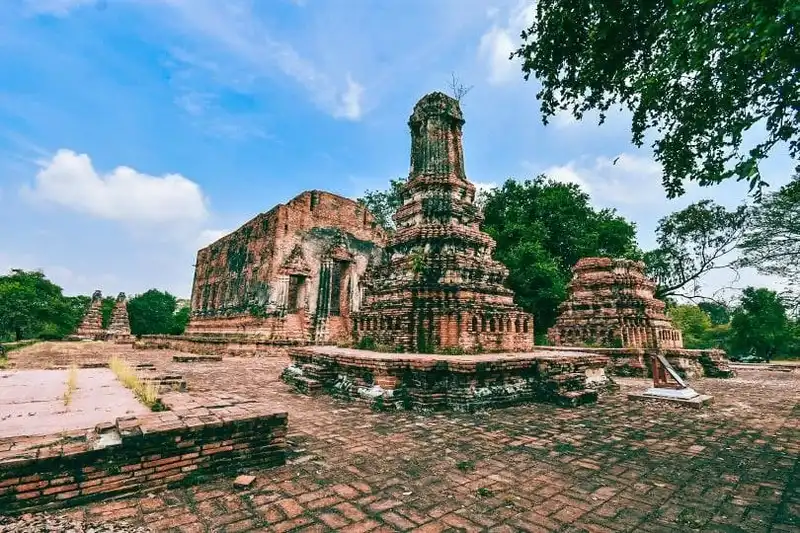
Wat Phraya Man Historical Ruins is a quieter Ayutthaya spot north of the island city, around the Khlong Sa Bua / Lumphli area, and it’s a great fit for anyone who wants “Ayutthaya with calm air but heavyweight stories.” This is a fairly spacious abandoned temple site whose name appears clearly in chronicles from the era of King Phetracha, and it still offers real architectural details to walk through, especially the ordination hall, the chamfered (recessed-corner) chedi, and the bell tower with its distinctive lotus-petal-shaped openings. Visiting here isn’t just about staring at old bricks; it’s about reading the craft behind them and the layered relationship between royal power and religious space in late Ayutthaya in a way you can actually feel on the ground.
What sets Wat Phraya Man apart from many other ruins is that its significance leans heavily on a narrative tied to people and politics, not only on art history. Historical records do not clearly state an exact founding year or a confirmed founder, but the temple’s name stands out in Ayutthaya chronicles during King Phetracha’s reign. A key memory attached to the site is the tradition that he once ordained here while he was still a nobleman, under an abbot-teacher who gave guidance in monastic practice and was later remembered for a prophecy that he would ascend the throne. After becoming king, Phetracha is said to have returned to pay respects and ordered a major restoration to make the monastery more permanent than before. The chronicles also describe days of celebration and the formal appointment of the abbot as “Phraya Si Satchayanamuni,” a senior ecclesiastical rank in the forest/monastic-residence tradition. In plain terms, this wasn’t just a local temple; it became a place with political meaning and a role in reinforcing royal legitimacy during a turning point in Ayutthaya history.
Once you place that “King Phetracha storyline” over the real landscape, the visit becomes more interesting because it invites better questions. Why did this place become meaningful enough for a king to return and elevate it? Why did restoring a temple carry such symbolic weight in that era? In a simple, everyday reading of the past, temples were community centers of faith, and building or restoring them was also a public statement: stability, righteousness, and the ability to protect and support the religious order. That is why being remembered as “a temple restored by the king” can give a ruins site a longer afterlife in public memory than bricks alone ever could.
From an archaeology and architecture perspective, Wat Phraya Man is also a genuinely enjoyable walk, because even as a ruins site, you can still trace key elements of the temple layout. Several heritage references describe the location clearly in the Lumphli / Khlong Sa Bua zone and provide mapped coordinates for reference, which is useful if you want to pin the site accurately and avoid confusion with other similarly named places. That clarity makes it easier to arrive at the correct spot and spend your time on the ruins themselves rather than on navigation.
If you like “seeing the structure behind the scenery,” start by walking the perimeter of the ordination hall area. In Thai Buddhist temple planning, the ordination hall is the heart of formal monastic ceremonies, and it often carries clues about the period. As you stand and look, notice the orientation, the placement of entrances, window openings, and any differences in brickwork and mortar that may suggest multiple construction or restoration phases. When you move slowly like this, you begin to “see time” through craftsmanship rather than relying only on signage.
Another feature many visitors enjoy is the chamfered (recessed-corner) chedi. Its geometry photographs beautifully because the recessed planes catch light and shadow in a way that makes the form feel dimensional, especially early in the morning or late in the afternoon when the sun is lower. If you want images that tell a different kind of Ayutthaya story, this site often feels less crowded than the island city’s most famous temples, so you can walk at your own pace and let the space stay quiet around you.
The bell tower is also easy to miss if you rush, but it’s worth a careful look. Accounts describe lotus-petal-shaped openings pierced through all four sides, with a tiered section above the base used for hanging the bell. If you’re visiting with kids or anyone who loves construction details, it’s fun to talk about what those openings do for light, airflow, and structural weight. You may come away feeling that the “thinking” behind historical architecture was often more precise than we casually assume.
One more reason Wat Phraya Man works well in an Ayutthaya itinerary is that it helps complete your picture of the city beyond the island. Many trips loop around Wat Mahathat, Wat Phra Si Sanphet, or riverside fort zones, but the northern side and the Khlong Sa Bua area have important sites connected to royal narratives and conflict-era history, alongside living temples where local practice continues. Adding Wat Phraya Man gives your day a more varied route, instead of simply swapping one famous island temple for another.
It’s also worth saying plainly: this is an abandoned temple / protected ruins site, so the best way to visit is with a light step and a respectful pace. Avoid climbing fragile structures, leaning on cracked sections, or scratching bricks, because small marks last far longer than we do. If you’re photographing, use open paths and stable ground, keep distance from weak points, and if you carry a tripod, be mindful not to bump bases or delicate remnants that may be more fragile than they look.
If you want the story to feel even richer, try holding one simple theme while you walk: Wat Phraya Man shows how three forces can overlap in one place – (1) faith and the monastic institution, (2) personal memory of a powerful figure (ordination, teacher, guidance), and (3) the politics of legitimacy (restoration after taking the throne). With that frame in mind, you’ll keep asking better questions as you move, and the ruins stop being “just old bricks” and start feeling like a stage where real history happened.
Getting There If you drive from Bangkok, head into Phra Nakhon Si Ayutthaya city and then continue north toward the Khlong Sa Bua / Lumphli area. Pin “Wat Phraya Man Historical Ruins” on your map and follow the real-route navigation, which is usually straightforward. Because this site is not far outside the island city, you can comfortably plan a one-day route such as “Wat Phraya Man + Northern Zone Temples + Back To The Island City.” If you don’t drive, you can take a train or minivan into Ayutthaya town and then use a taxi, local hired car, or ride-hailing app to reach the site. If you plan multiple stops, hiring a car for several stops often saves time and keeps the day flowing.
To avoid wasted time, it’s smart to confirm current access conditions first, because occasional on-site maintenance or management changes can affect entry. Checking the latest information from the historical park authority or other reliable local sources is especially helpful if you plan to visit late in the day or during long holiday weekends, so you can adjust your timing and nearby stops with confidence.
| Place Summary | Wat Phraya Man Historical Ruins (Abandoned Temple) in the Khlong Sa Bua / Lumphli area, north of Ayutthaya Island. The temple name appears in chronicles from King Phetracha’s era, and traditions describe a major restoration after he became king. Key remains include the ordination hall area, a chamfered chedi, and a bell tower with lotus-petal-shaped openings, making it ideal for slow, story-driven heritage walking. |
| Key Highlights | A spacious ruins site where you can clearly “read the temple layout” / A strong King Phetracha-linked narrative (ordination – restoration – celebrations – ecclesiastical appointment) that adds real context / Visible components including an ordination hall area, chamfered chedi, and bell tower details / Typically quieter than the island’s most famous temples, making it good for photography and calm exploration. |
| Popular Accommodations Nearby (Approx. Road Distance) | Sala Ayutthaya (Approx. 8 km) Tel. 035-242-588 iuDia On the River (Approx. 9 km) Tel. 086-080-1888 Krungsri River Hotel (Approx. 10 km) Tel. 035-244-333 Classic Kameo Hotel Ayutthaya (Approx. 12 km) Tel. 035-212-535 (Note: If you plan to explore many sites on Ayutthaya Island, staying riverside/on the island can help reduce travel time.) |
| Nearby Tourist Attractions (Approx. Road Distance) | Wat Na Phra Meru Rachikaram (Approx. 5 km) Chankasem Palace (Approx. 7 km) Chao Sam Phraya National Museum (Approx. 8 km) Wat Mahathat (Approx. 9 km) Wat Phra Si Sanphet & Viharn Phra Mongkhon Bophit (Approx. 10 km) |
| Popular Restaurants Nearby (Approx. Road Distance) | Café Kantary Ayutthaya (Approx. 9 km) Tel. 035-337-177 Baan Pomphet (Approx. 10 km) Tel. 035-242-242 Grand Chaopraya Ayutthaya (Approx. 11 km) Tel. 081-942-1666 Phae Krung Kao Ayutthaya (Approx. 12 km) Tel. 088-649-1347 Sala Ayutthaya Eatery and Bar (Approx. 12 km) Tel. 035-242-588 |
| Contact (Area Information) | Ayutthaya Historical Park Tel. 035-242-525 |
Frequently Asked Questions (FAQ)
Q: Where is Wat Phraya Man Historical Ruins located?
A: It is in the Khlong Sa Bua / Lumphli zone, slightly north of Ayutthaya Island City. You can pin “Wat Phraya Man” on your map and follow navigation to reach the ruins site.
Q: How is Wat Phraya Man connected to King Phetracha?
A: Ayutthaya chronicles mention Wat Phraya Man during King Phetracha’s era, and traditions describe his earlier ordination here as well as a significant restoration after he became king, including an ecclesiastical appointment for the abbot-teacher associated with the temple.
Q: What should I focus on when visiting?
A: Focus on the ordination hall area, the chamfered chedi, and the bell tower, and take time to read the layout and scale of the site, which helps you imagine its former importance more clearly.
Q: How long should I plan to spend here?
A: If you want to walk slowly, take photos, and explore the site properly, plan around 45 – 90 minutes.
Q: What are the opening hours?
A: It is generally referenced as open around 08.00 – 18.30, but because it is a ruins site, it is wise to check the latest access conditions and any on-site management updates before you go, especially in the late afternoon or on long holidays.
Q: Who can I contact for the latest local information?
A: You can contact Ayutthaya Historical Park at 035-242-525 to ask about current access conditions and general heritage-site information in the area.
 Wat Prayaman Archaeological Site Map
 Category:
  Group:
  Last Update: 1 WeekAgo
Comment
 Nearby Attractions
| Keyword (Advance) |
 Region
|
 Phranakhon Si Ayutthaya(