
Ratchaburi National Museum
Rating: 4/5 (5 votes)
Search By |
Map Map Map Have Map Have Map No Map No Map

Ratchaburi attractions

Attractions in Thailand

Open Days: Wednesday – Sunday
Opening Hours: 09.00 – 16.00
 
Ratchaburi National Museum is one of the most important historical attractions in the heart of Ratchaburi city. Its value lies not only in the artifacts and exhibitions displayed inside, but also in the building itself, which once served as the former Ratchaburi Provincial Hall. Constructed during the reign of King Rama VI, the building was later transformed into a national museum that presents the story of Ratchaburi in a comprehensive way, covering history, archaeology, ethnic communities, daily life, folk art, and the distinct identities of the province’s various communities. For anyone who wants to explore Ratchaburi through both knowledge and the atmosphere of the old town in one place, this museum is a destination well worth including in the itinerary.
 
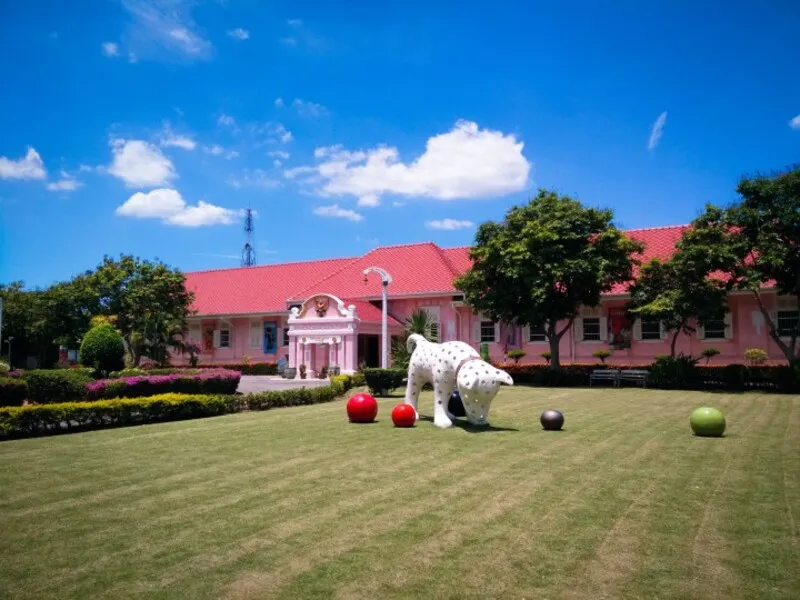
Ratchaburi National Museum is located on Woradet Road, Na Mueang Subdistrict, Mueang Ratchaburi District, near the riverside clock tower along the Mae Klong River in the old town area. It is a museum distinguished by its location, the history of its building, and the richness of its exhibitions. Upon arrival, the first thing many visitors notice is the pale pink building, elegant and understated, yet carrying the dignified character of an early 20th-century government structure. The beauty of the building gives the museum a charm very different from that of modern museums, because the building itself is also a historical object telling the story of Ratchaburi alongside the exhibitions inside.
 
The charm of Ratchaburi National Museum lies in the way it gathers the meaning of “Ratchaburi” into multiple dimensions within a single place. Visitors do not come merely to look at artifacts displayed in cases, but also to see a broader picture of Ratchaburi as a land with a long and continuous history, ancient communities, diverse ethnic groups, the Mae Klong River as the lifeblood of local life, distinctive folk art, and cultural traditions that have evolved over time in fascinating ways. This museum is therefore ideal for those who want to understand Ratchaburi beyond simply stopping by a few landmarks for photographs.
 
Looking back at the history of the site, its importance began decades before it became a museum. The main museum building was originally the former Ratchaburi Provincial Hall, built in 1922 during the reign of King Vajiravudh, Rama VI. At that time, Ratchaburi was a significant city in western Thailand, and the regional administrative system was developing government buildings to reflect order, modernity, and the image of a modern state. The building was therefore designed with a Western-influenced character combined with construction methods suited to Thailand’s climate. It clearly reflects the era of administrative reform and state organization in Siam.
 
Later, when the system of administration changed from the monthon system to the provincial and district system, the building continued to serve as the center of provincial administration for many years. Eventually, when Ratchaburi acquired a new provincial hall and government offices were relocated, the old building became recognized as a site of remarkable architectural and historical value. The Fine Arts Department then surveyed and restored it in order to establish it as the national museum of Ratchaburi. This decision was highly meaningful because it transformed a historically valuable government building from a place of state administration into a public learning space, preserving the memory of the city while giving the site a new purpose.
 
According to official documentation, the Fine Arts Department states that Ratchaburi National Museum was formally established on 20 November 1986, following the preparation and restoration of the building in the preceding years. Some sources also mention the year 1983, which can be understood as the beginning of the project and the initial process of allocating the old building for museum use. However, the most important milestone that firmly placed the museum in the memory of local people was 14 October 1991, when Her Royal Highness Princess Maha Chakri Sirindhorn presided over its official opening ceremony. This event marked the museum as one of the key cultural landmarks of the province.
 
Another reason why Ratchaburi National Museum is so worth visiting is the architectural value of the building itself. The main exhibition building has a simple yet well-proportioned form, with a high roof for ventilation, a rectangular floor plan, and verandas that create the atmosphere of an old government building. These features reflect the strong influence of Western architecture that was especially popular during the reigns of King Rama V and King Rama VI. Yet when adapted to the Thai environment, the result is a building that appears graceful and timelessly elegant. Its present-day color scheme makes the museum feel approachable rather than rigid like a typical government office, and it has become one of the visual icons of old-town Ratchaburi.
 
Once inside the museum, what becomes immediately clear is that the exhibitions aim to explain “Ratchaburi” as a place of deep historical layers and cultural diversity. The museum does not limit itself to art or archaeology alone, but instead connects many fields together, including local history, geology, archaeology, ethnology, folk art, traditional tools, fishing equipment, and information about major attractions throughout the province. This gives the museum more dimensions than many visitors might expect, making it especially suitable for those who want to understand the broad picture of Ratchaburi before traveling on to the province’s actual sites.
 
The historical and archaeological sections play a particularly important role in showing that Ratchaburi is not known only for dragon jars or good food, but is also a place with evidence of human settlement stretching back a very long time. It has connections with cultural networks in the Mae Klong basin and the broader western region. The exhibitions explain the development of communities, ancient sites, and artifacts in the province, as well as Ratchaburi’s links to early states and networks of exchange in the past. For those who visit Ratchaburi and want to understand the background of the city in a systematic way, these exhibition rooms form the core of the museum and deserve close attention.
 
Another highly interesting part of the museum is its presentation of ethnology and the ways of life of the province’s various communities, which is one of its greatest strengths. Ratchaburi is a province with clear ethnic and cultural diversity, including Lao Song, Karen, Tai Yuan, and other local communities. Each group has its own language, clothing, beliefs, tools, and traditions. The museum does not present these ethnic groups simply as exotic images, but instead helps visitors understand the relationship between geography, settlement, livelihoods, and the adaptation of people in Ratchaburi across many periods of time.
 
The exhibitions on the everyday life of local people also make the museum experience feel more accessible, because visitors encounter tools and objects closely connected to real daily life, whether they are livelihood equipment, household items, or implements related to rivers and canals. These displays reflect how deeply Ratchaburi is connected to waterways. Seeing fishing tools and everyday utensils helps visitors understand that the identity of Ratchaburi is shaped not only by political history or ancient monuments, but also by the way people lived, worked, raised families, and depended on the natural environment around them. This is one of the museum’s strengths, as it prevents historical knowledge from feeling too distant or abstract.
 
Among all the objects on display, one of the most significant is the ceremonial sword of Monthon Ratchaburi. This object is valuable not only as an artifact, but also because it reflects the relationship between Ratchaburi and the former monthon administrative structure. It helps visitors see how the area once played a role in regional administration. Exhibiting an object like this means the museum is not merely a place that collects beautiful things, but a space that connects material objects to state power, administration, and regional history in an engaging way.
 
However, the object that attracts particular attention from tourists, students, and those interested in ancient art is the Radiant Avalokitesvara Bodhisattva in the Bayon-style Khmer tradition, considered one of the museum’s masterpieces. What makes this sculpture exceptional is both its artistic beauty and its national significance, as it is one of only a small number discovered in Thailand and remains in remarkably fine condition. Seeing this piece in person makes it immediately clear that Ratchaburi National Museum is important not only at the provincial level, but also in a much broader artistic and archaeological context.
 
What makes viewing the Radiant Avalokitesvara so memorable is not just its rarity, but also the way it helps visitors see Ratchaburi as a point of connection between multiple cultural traditions: local culture, the culture of ancient regional states, and artistic influences that moved across territories. Having an object of this significance in a provincial museum sets Ratchaburi National Museum apart from what many casual travelers might expect, since they may assume it contains only basic local information. In reality, the museum offers both accessible local narratives and major masterworks that give the visit substantial academic depth.
 
For travelers who are not specifically museum enthusiasts, this museum is still highly worthwhile because it can be enjoyed without feeling overly demanding. The exhibitions combine in-depth knowledge with themes that connect directly to travel, such as information about the province’s major attractions, the cultures of its different communities, and the broader identity of Ratchaburi. Visiting the museum therefore feels somewhat like reading a complete guidebook to the province, except that here you also see real objects and occupy the real place itself. Those with limited time can use it as a starting point before continuing on to other attractions, while those with a strong interest in culture can spend a long and satisfying visit inside.
 
The atmosphere of visiting this museum is very different from that of outdoor attractions. Its appeal does not lie in excitement or the need to rush around collecting multiple photo spots, but in slowly absorbing the story of the city through an old building, displayed artifacts, and carefully arranged narratives. Many visitors are first drawn by the building itself, because the exterior is distinctive and highly photogenic, but once inside, they discover that the true strength of the museum lies in its content, which adds new dimensions to their understanding of Ratchaburi. For travelers who enjoy visiting places with a foundation of knowledge behind them, this museum can transform a trip to Ratchaburi from simple sightseeing into a deeper understanding of the province.
 
In the urban context, Ratchaburi National Museum also plays an important role in preserving the atmosphere of the historic quarter along the Mae Klong River. Its location links easily with other important city sites, including the riverside clock tower, Wat Mahathat Worawihan, the old market, and creative spaces such as Tao Hong Tai d Kunst. When these places are connected together, visitors can see that the area has strong potential for walking-based urban exploration. The museum serves as a center of knowledge in the middle of this quarter, helping explain why the surrounding district looks and feels the way it does today.
 
Another strength of Ratchaburi National Museum is that it is suitable for several types of visitors at once. Children and young people can use it as an outdoor classroom for history. Students and those interested in archaeology or ethnology can use it as a place for deeper study. General tourists can enjoy the old building and gain an overall understanding of the province. Local residents of Ratchaburi can also use it as a space to revisit the memory of their city and see their province from a wider perspective. This is the mark of a good museum: whatever the reason for visiting, each visitor can take away something meaningful.
 
From the perspective of cultural tourism, Ratchaburi National Museum fulfills its role extremely well because it combines the functions of a learning center, an architectural attraction, a place to view artifacts, and a starting point for planning further exploration of Ratchaburi in the same day. Travelers who arrive in the morning can spend time in the museum and then continue on to nearby attractions or stop by restaurants and cafés in the Na Mueang area. This rhythm makes the museum not a single isolated destination, but part of a well-balanced city itinerary.
 
When people think about visiting a museum, many worry that it will take too much time or be rather dull. In truth, the strength of this museum lies in how well its narrative is connected. Visitors can begin with the history of the building, then move into the development of Ratchaburi, and later continue into the details of ethnic communities and daily life, or focus only on the key artifacts they most want to see. This flexibility makes the museum approachable even for those who do not often visit museums. If one takes time to read the explanations and walk through the exhibitions at a relaxed pace, it becomes clear that Ratchaburi has many more layers of story than the province’s general tourist image might suggest.
 
For those who enjoy photography, Ratchaburi National Museum also has a very distinctive appeal. The exterior of the building offers the nostalgic atmosphere of an old government structure that is increasingly rare to find today. The lines of the columns, the pale walls, the windows, and the symmetry of the front façade create photographs that feel calm, refined, and classic. Combined with the atmosphere of riverside Ratchaburi and the surrounding old quarter, a visit here appeals both to people who like to collect knowledge and to those who enjoy collecting beautiful images. Even so, the true charm of the museum still lies in entering the building and engaging with its contents, not only photographing the exterior.
 
For those planning a visit, the museum is currently open from Wednesday to Sunday, from 09.00 to 16.00, and closed on Monday, Tuesday, and public holidays. Admission is 20 baht for Thai visitors and 100 baht for foreign visitors, which is highly worthwhile considering the value of the experience. Visitors coming as groups or families may wish to allow anywhere from around 45 minutes to 2 hours, depending on their level of interest in the exhibitions and details of the displays.
 
Getting There Ratchaburi National Museum is very easy to reach from the center of Ratchaburi city. The museum is located on Woradet Road in Na Mueang Subdistrict, near the riverside clock tower along the Mae Klong River, which serves as an easy landmark. Visitors traveling by private car can simply navigate directly to the museum and enter the old town area. Those staying in the city center can take a short local ride, and in some cases may even be able to walk there. If planning a one-day trip in central Ratchaburi, beginning at this museum is an excellent choice, as it helps establish a meaningful framework for understanding the province before visiting other nearby sites.
 
Overall, Ratchaburi National Museum is not only a destination for those seriously interested in the past, but also a place that clearly enriches a trip to Ratchaburi. It helps visitors understand why this province matters, what kinds of people have lived here, what artistic and cultural heritage deserves to be remembered, and why the historic riverside district along the Mae Klong River still retains its charm today. For anyone who wants to experience Ratchaburi in a more meaningful way than simply stopping for photos and good food, Ratchaburi National Museum is one place that deserves real time and attention.
 
Especially if you enjoy reading about cities, looking at old buildings, studying artifacts, or understanding the diversity of people in western Thailand, this museum offers an especially deep and rewarding experience. A visit here is not just about looking at old objects; it helps visitors trace the path of Ratchaburi from past to present, see the legacy of old administrative systems, understand the world of different ethnic communities, appreciate fine art, and recognize the humble everyday tools that together form the province’s local history. It can be said with confidence that if one had to choose a single place from which to begin understanding Ratchaburi in depth, Ratchaburi National Museum would be one of the clearest and strongest choices.
 
Name Ratchaburi National Museum
Address 325/1 Woradet Road, Na Mueang Subdistrict, Mueang Ratchaburi District, Ratchaburi 70000
Place Summary An important museum in Ratchaburi Province, housed in the former Ratchaburi Provincial Hall, with exhibitions on history, archaeology, ethnology, geology, folk art, and the ways of life of the province’s communities.
Highlights A heritage building from the reign of King Rama VI, the ceremonial sword of Monthon Ratchaburi, the Radiant Avalokitesvara Bodhisattva in Bayon-style Khmer art, and ethnographic exhibitions on Lao Song, Karen, and Tai Yuan communities.
Period / Era The main building was constructed in 1922 during the reign of King Rama VI; the museum was formally established in 1986 and officially opened in 1991.
Key Evidence Artifacts from Ratchaburi and nearby areas, historical objects related to Monthon Ratchaburi, the Radiant Avalokitesvara sculpture, traditional tools and utensils, and information on ethnic communities and important archaeological sites in the province.
Getting There Located on Woradet Road in Na Mueang Subdistrict, near the riverside clock tower along the Mae Klong River in central Ratchaburi. Easy to reach by private car or local transport, and ideal for continuing to other sites in the old town area.
Open Days Wednesday – Sunday
Opening Hours 09.00 – 16.00
Closed On Monday, Tuesday, and public holidays
Admission Fee Thai visitors 20 baht, foreign visitors 100 baht
Facilities Permanent exhibition building, special exhibition space, information counter, museum shop with books and souvenirs, and a learning space within the historic city center.
Current Status Open to visitors as usual
Contact Number 032 321 513
Nearby Attractions 1. Mae Klong Riverside Clock Tower – approx. 0.2 km
2. Tao Hong Tai d Kunst Art Space & Cafe – approx. 0.3 km
3. Ko Yokee Old Market by the River – approx. 0.7 km
4. Wat Mahathat Worawihan – approx. 1.5 km
5. Khao Ngu Stone Park – approx. 5.8 km
Popular Restaurants Nearby 1. Tao Hong Tai d Kunst Art Space & Cafe – approx. 0.3 km Tel. 094 297 9617
2. A Tee Kopi – approx. 0.4 km Tel. 086 465 3649
3. OongOongCha – approx. 0.8 km Tel. 094 454 5725
4. Kam Cheng Egg Noodles – approx. 1.0 km Tel. 032 323 278
5. Khun Maem Egg Noodles – approx. 1.7 km Tel. 081 944 5406
6. Mai Thai Restaurant – approx. 2.0 km Tel. 062 636 5544, 032 314 790
Popular Accommodations Nearby 1. Numsin Hotel Ratchaburi – approx. 0.9 km Tel. 032 337 551
2. Space 59 Hotel – approx. 1.2 km Tel. 032 315 559, 064 002 2259
3. Western Grand Hotel Ratchaburi – approx. 1.6 km Tel. 032 337 777
4. Le Lert Hotel Ratchaburi – approx. 1.8 km Tel. 064 619 6265
5. TAI-SHAN Suites – approx. 2.9 km Tel. 032 206 889, 099 843 4678
6. Navela Hotel Ratchaburi – approx. 6.0 km Tel. 032 206 599, 032 206 899
 
Frequently Asked Questions (FAQ)
Q: What days is Ratchaburi National Museum open?
A: The museum is open from Wednesday to Sunday, from 09.00 to 16.00, and is closed on Monday, Tuesday, and public holidays.
 
Q: How much is the admission fee for Ratchaburi National Museum?
A: Admission is 20 baht for Thai visitors and 100 baht for foreign visitors.
 
Q: What are the main highlights of Ratchaburi National Museum?
A: The main highlights include the former provincial hall building from the reign of King Rama VI, the Radiant Avalokitesvara Bodhisattva in Bayon-style Khmer art, and exhibitions that comprehensively explain Ratchaburi through multiple dimensions.
 
Q: Who is Ratchaburi National Museum suitable for?
A: It is suitable for general tourists, people interested in history, archaeology, and local culture, as well as students and visitors who want to understand Ratchaburi in greater depth before exploring other sites in the province.
 
Q: What was the museum building originally used for?
A: The main building originally served as the former Ratchaburi Provincial Hall. It was built in 1922 during the reign of King Rama VI before being restored and later established as a national museum.
 
Q: How do I get to Ratchaburi National Museum?
A: The museum is located on Woradet Road in Na Mueang Subdistrict, near the Mae Klong riverside clock tower in central Ratchaburi. It is easy to reach by private car or local transport.
 
Q: How long should I spend at Ratchaburi National Museum?
A: Most visitors spend about 45 minutes to 2 hours, depending on their interest in the exhibitions and how much time they want to spend exploring the building and displays.
TelTel: 032321513
FaxFax: 032327235
 Ratchaburi National Museum Map
Museums Group: Museums
Last UpdateLast Update: 19 HourAgo


Comment

Comment


Keyword (Advance)
   
Email :
Password :
  Register | Forgot password
 

Facebook Fanpage Facebook Fanpage


Region Regionhttps://www.lovethailand.org/

Art, Culture and Heritage Art, Culture and Heritage

Historical Sites and Monuments Historical Sites and Monuments(2)

Landmarks and Memorials Landmarks and Memorials(1)

Art, Craft Centres, Tradition Art, Craft Centres, Tradition(5)

Museums Museums(7)

Art Gallery Art Gallery(1)

Educational Places Educational Places

Educational Gardens, Farm Educational Gardens, Farm(2)

University University

Places of Worship Places of Worship

Temple Temple(18/399)

Other religious and spiritural sites Other religious and spiritural sites(3)

Research and Development Research and Development

Royal Project Royal Project(1)

Suburban Living Suburban Living

Village, Community Village, Community(4)

Local Market Local Market(1)

Floating Market Floating Market(3)

Nature and Wildlife Nature and Wildlife

National Parks and Marine Reserves National Parks and Marine Reserves(2)

Mountain (Doi) Mountain (Doi)(5)

Dam, Reservoir, Lake Dam, Reservoir, Lake(1)

Waterfalls Waterfalls(4)

Hot Springs Hot Springs(3)

Caves Caves(4)

Flower Field Flower Field(2)

River, Canal River, Canal(1)

Other natural attractions Other natural attractions(3)

Entertainment and Agricultural Entertainment and Agricultural

Zoos and Aquariums Zoos and Aquariums(2)

Animal camps and shows Animal camps and shows(1)

Farm, Parks, Gardens and Ecotourism Farm, Parks, Gardens and Ecotourism(2)

Waterpark Waterpark(1)

Outdoor and Adventure Activities Outdoor and Adventure Activities(4)

Shopping Shopping

Shopping and Night Market Shopping and Night Market(2)

Spas and Wellness Spas and Wellness

Spas and Wellness Spas and Wellness(1)

Travel Articles, Recipes Travel Articles, Recipes

Travel Review, Food Review Travel Review, Food Review(1)