

 Home
Home Chiang Mai(










Rating: 3.8/5 (5 votes)
 |
|  Map
Map 
 Have Map
  No Map
Chiang Mai attractions
Attractions in Thailand
Open Days: Daily
Opening Hours: November – March 07:00 – 18:00 / April – October 08:00 – 17:00
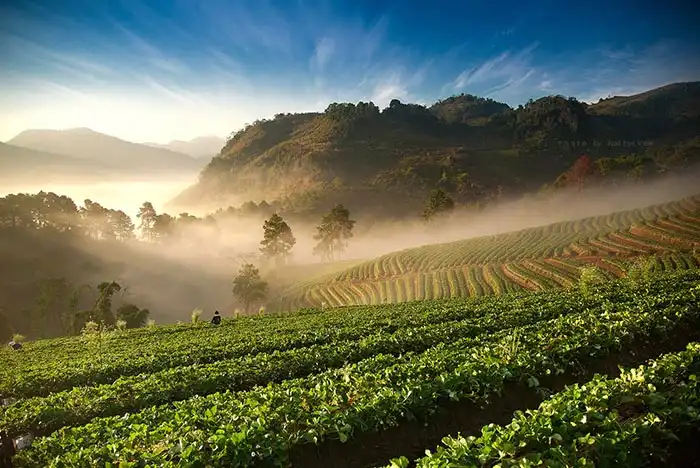
Doi Ang Khang (Angkhang Royal Agricultural Station) is one of those “Chiang Mai / Northern Thailand” trips that feels different from a typical mountain lookout. Sitting at roughly 1,400 meters above sea level, the weather stays consistently cool, so flower gardens and temperate crops don’t feel like a staged attraction — they’re simply part of daily life on the mountain. The name “Ang Khang” in Northern Thai can be understood as “a square basin,” and once you see the landscape, it clicks: the key area forms a basin-like depression ringed by higher ridgelines, which helps the cold linger in the early mornings and evenings. In December and January, some years get cold enough for frost, so it’s worth packing proper winter layers — a warm jacket, hat, gloves, and thick socks — especially if you plan to wake up early for sea-of-mist views or sunrise on the ridge.
Another layer of Doi Ang Khang’s charm is its “borderland” setting not far from the Thailand–Myanmar frontier. That geography creates a place where stories overlap — landscape, communities, and the long arc of highland development. Villages around the mountain are home to people of diverse backgrounds, including Yunnan Chinese and Chinese Haw groups known for distinctive food culture and trade traditions, the Palaung community at Ban Nor Lae that remains deeply rooted in Buddhist practice, and Lahu communities in areas such as Ban Khob Dong where local handicrafts and community storytelling are shaped with respect for privacy. What makes a visit feel “meaningful” is that you don’t just see scenery — you see how people adapt to altitude and cold, how they live with steep winding roads, and how they maintain identity in a place that welcomes visitors year-round.
At the heart of the visit is Angkhang Royal Agricultural Station, the first research station of Thailand’s Royal Project, established in 1969. The core idea was to create real, viable highland livelihoods through valuable crops suited to the climate, replacing the older opium-based system. So when you walk through the station, you aren’t only strolling through a “pretty garden” — you’re moving through a working concept of development that turns cold air and altitude into opportunity. You’ll see temperate fruit plots such as plums, peaches, kiwifruit, grapes, apples, pears, and persimmons, alongside economic crops like Arabica coffee, seasonal temperate flowers, and vegetables that make “fresh produce from the mountain” mean more than taste — it reflects testing, extension work, and serious land management.
If you like slow travel and letting a place tell its story, many visitors end up lingering around the Bonsai Garden area, where temperate and cold-climate plants are carefully trained and shaped. It’s a quiet kind of beauty — simple at first glance, then richer the longer you look. Nearby, you’ll often find an herb garden and plant displays that make the biodiversity of the highlands feel tangible. And “Doi Ang Khang” isn’t only inside the station fences: once you start driving along the ridge road, you’ll pass Ban Khum, a small hub of shops and traveler atmosphere, and you’ll reach junctions leading toward Ban Nor Lae and Ban Khob Dong. These routes let you experience both the terrain and highland life up close, without forcing you into a rushed “up-and-down in one day” itinerary.
One of Ang Khang’s iconic images is Kiu Lom Viewpoint, often mentioned for its sea of mist and sunrise views. The ridge opens the view into layers of mountains, and on clear days you can see the rolling highlands like still waves. If you come in the cool season, the experience often feels sharper — drier air and better visibility. For travelers who love photography that captures both people and landscape, Mon Son is frequently a favorite thanks to its pine forest feel and open space where morning and late-afternoon light can look good without much effort.
What makes Doi Ang Khang easy to love is that you can choose your own pace. Nature lovers might do gentle walks or head out early for birdwatching, since the forest edges and agricultural mosaic can attract both resident and seasonal species. Food-focused travelers can enjoy local meals and products tied to Royal Project agriculture, where “freshness” becomes an experience rather than a marketing line. And if you want cultural learning, the best approach is respectful curiosity — don’t point cameras into people’s homes without permission, keep noise down, and engage through local shops, community leaders, or designated display areas. Many villages already have a way of sharing their story while protecting everyday privacy, and visitors who follow that rhythm tend to receive something more real than a pretty snapshot.
Getting There: From Chiang Mai city, take Highway 107 (Chiang Mai – Fang). Around kilometer 137, you’ll reach the junction for the Doi Ang Khang ascent (passing local market/community zones near the base). From there, the climb is roughly 25 km. The road is paved but steep and winding, so a well-maintained vehicle with adequate power and a confident driver is recommended. If you’d rather not drive yourself, you can usually arrange local hired transport (such as songthaews or local taxis) near the base area, which is often more relaxing if you don’t want to deal with tight curves or seasonal parking congestion. During the peak cool season, allow extra time and avoid driving up or down in the dark if you can — the bends are the part that demands respect.
Before wrapping up, it’s worth seeing Doi Ang Khang through the lens of responsible travel. Yes, it’s beautiful and cold, but the warmth of the place comes from the people and the working systems that make life possible on a mountain. Help keep it that way: reduce trash, keep noise down, respect religious and community spaces, don’t pick flowers or step into cultivation plots, and support local products in a considerate, sustainable way. Then your visit becomes more than a “check-in” — it’s a visit that doesn’t leave damage behind.
| Place Name | Doi Ang Khang (Angkhang Royal Agricultural Station) |
| Location | Mae Ngon Subdistrict, Fang District, Chiang Mai (Doi Ang Khang area) |
| Key Characteristics | Cool highland climate year-round, ridge views and sea of mist, Royal Project learning destination, multi-ethnic borderland culture |
| Best Time To Visit | November – January (cool season; flowers and mist) / December – January (coldest; frost possible in some years) |
| Fees | Adults 50 THB/person, Car 50 THB/vehicle (subject to change by official notice) |
| Travel | Highway 107 (Chiang Mai – Fang) then turn to the Doi Ang Khang ascent; about 25 km uphill from the base; steep and winding — use a suitable vehicle/experienced driver or hire local transport |
| Current Status | Open to visitors |
| Contact Number | +66 53 450 107 (ext. 0–9) |
| Nearby Tourist Attractions With Distance | Kiu Lom Viewpoint (5 km) Mon Son Viewpoint (8 km) Ban Nor Lae (10 km) Ban Khob Dong (12 km) Fang Hot Springs (35 km) Doi Pha Hom Pok National Park (45 km) |
| Popular Restaurants Nearby (Approx. Distance + Phone) | Angkhang Club (1 km) Tel. 053-969-476 Krua Khum Thai (1 km) Tel. 053-450-046 Krua Nor Lae, Doi Ang Khang (10 km) Tel. 089-997-5895 Khum Thai Restaurant (2 km) Tel. 080-848-4139 Yod Khao Restaurant, Mon Son Viewpoint (8 km) Tel. 097-937-6890 |
| Popular Accommodations Nearby (Approx. Distance + Phone) | Angkhang Royal Agricultural Station Guesthouse (0 km) Tel. 053-450107 (ext. 0–9) Angkhang Nature Resort (2 km) Tel. 053-450-110 Lau Ting Guesthouse (2 km) Tel. 053-450-005 Angkhang Villa (3 km) Tel. 053-450-010 Khum Doi Luang Angkhang Homestay (3 km) Tel. 086-330-9079 Oom Hum Homestay (35 km) Tel. 095-453-5293 |
| Facilities | Parking areas, eateries/cafes, restrooms, photo spots within the station, Royal Project product shop (some services may vary by season) |
Frequently Asked Questions (FAQ)
Q: When is the best time to visit Doi Ang Khang?
A: For cold weather plus flowers and misty mornings, November to January is ideal. December to January is typically the coldest period.
Q: Is the road up to Doi Ang Khang difficult?
A: The road is paved but steep and winding in sections. A well-maintained vehicle and an experienced driver are recommended. Hiring local transport can be more comfortable if you’re not used to mountain driving.
Q: Can I do Doi Ang Khang as a day trip?
A: Yes, but it will feel rushed and you may miss the best early-morning and evening atmosphere. Staying one night is better if you want mist, sunrise, and the full cold-season vibe.
Q: What are the highlights inside Angkhang Royal Agricultural Station?
A: Seasonal flower areas, temperate crop plots, the Bonsai Garden zone, and the overall “Royal Project learning” story that shows how highland development works in practice.
Q: What should I keep in mind when visiting villages like Ban Nor Lae or Ban Khob Dong?
A: Respect privacy, ask before photographing people or homes, keep noise down, don’t leave trash, and use the community’s designated areas for learning — it’s the best way to engage without disturbing everyday life.
 Tel: 053450107-9
 Doi Ang Khang National Park Map
 Category:
  Group:
  Last Update: 16 HourAgo
Comment

Photo Gellery(54) 
 Thank you photo(3) from: YuTtaNa DT