

 Home
Home Chiang Mai(










Rating: 4.5/5 (6 votes)
 |
|  Map
Map 
 Have Map
  No Map
Chiang Mai attractions
Attractions in Thailand
Open Days: Recommended to confirm / make an appointment in advance
Opening Hours: 08.30–16.30 (may change depending on on-site operations)
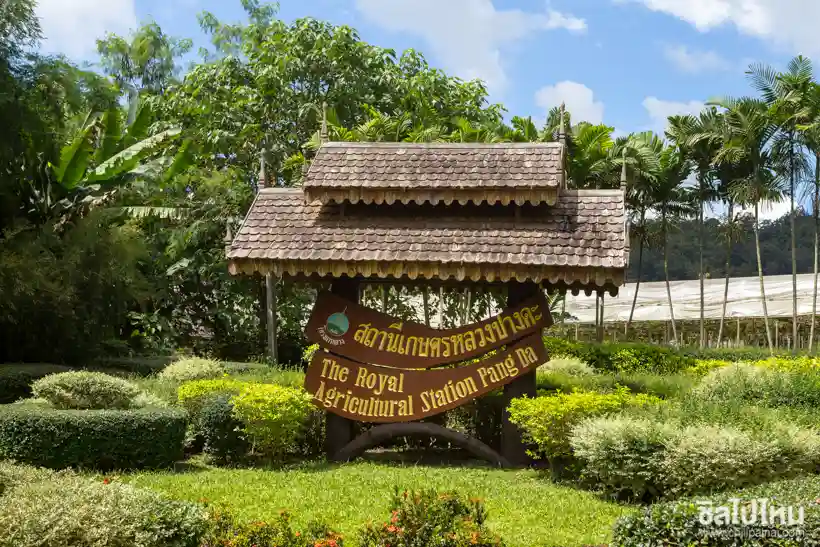
Pang Da Royal Agricultural Station is a calm, mountain-air retreat in Chiang Mai for travelers who want more than just photo stops. It is a working site under the Royal Initiative and the Royal Project framework, where plant research and large-scale propagation take place in real conditions. Visiting here gives you a clear, grounded sense of how highland agriculture becomes sustainable through knowledge, experimentation, and systems designed to match the terrain.
The area’s development is closely tied to highland agricultural expansion and seedling propagation that began in 1979. At that time, the Royal Project Foundation selected a site within the Samoeng upland rice and cool-climate cereal trial station operated by the Department of Agriculture in Pang Da village. The purpose was to serve as a plant propagation hub, supporting the growing demand for seeds and seedlings as alternative crops were increasingly promoted.
As demand for plant material rose, the available supply became insufficient. In 1983, a new site was opened on approximately 25 rai, adjacent to Huai Pla Kang Reservoir, a Royal Initiative reservoir not far from the original area. This expansion enabled propagation work to continue with more suitable space and better long-term capacity.
In 1985–1986, an additional roughly 65 rai of land was acquired to establish a permanent expansion base. Operations continued under the name “Pang Da Royal Project Plant Propagation Center” until 12 February 1987, when His Majesty the King, together with Her Royal Highness Princess Maha Chakri Sirindhorn, visited the Center for the first time and observed various activities within the site.
On that occasion, His Serene Highness Prince Bhisadej Rajani, Chairman of the Royal Project Foundation, respectfully requested a new royal name for the Center: “Pang Da Royal Agricultural Station.” His Majesty graciously granted permission to use this name, and the site was expanded further to a total of about 150 rai in the same year. The royal name was more than a label—it clearly affirmed the station’s mission as a dedicated royal agricultural facility.
Today, Pang Da Royal Agricultural Station has grown into a research and plant propagation station for a wide range of crops. Beyond cool-climate fruits and flowers, it also supports tropical and semi-tropical fruit crops, as well as kidney beans and forestry species, including fast-growing trees. The station’s overall atmosphere feels like an open-air classroom in a mountain valley—changing with the seasons and shaped by real experimental and production plots.
For agricultural tourism, visitors can walk through demonstration plots of both temperate and warm-climate fruits, such as coffee, avocado, seedless grapes, oranges, figs, Taiwanese starfruit, and other crops depending on the station’s production cycle. There are also diverse vegetable demonstration plots, including Japanese cucumbers, asparagus, jade bitter melon, white bitter melon, kidney beans, sweet corn, and white chives. These plots help visitors see how different crops require specific climate conditions and management approaches to produce high-quality results in highland environments.
Another charm is the station’s tropical flower demonstration area, which adds visual softness and variety beyond fruits and vegetables. If you enjoy scenery that feels easy on the eyes, a slow walk around the station often feels more like resting your mind than rushing through a checklist of attractions.
On the nature side, a key highlight is the Samoeng viewpoint area, where you can admire layered mountain scenery. On clear days, the view may extend as far as Doi Inthanon. Morning and late afternoon light often makes the landscape look especially dimensional, ideal for those who love natural mountain panoramas.
Souvenirs here are typically seasonal agricultural products, such as bi-color sweet corn, figs, guava, and organic vegetables. A major appeal is freshness and the sense that these are products from a site that takes quality control seriously. For travelers who like edible souvenirs with a real story behind them, this is usually a satisfying choice.
Regarding accommodation and food, the station provides an on-site guesthouse with 4 bedrooms, suitable for about 10–15 guests. There is also a camping area and rental tents with sleeping bags. Visitors, especially group travelers, can pre-order meal arrangements before arrival so the station can prepare appropriately and reduce on-site complications.
Getting There There are two main routes to Pang Da Royal Agricultural Station. Route 1: from Chiang Mai city toward Hang Dong, then at the junction to Samoeng turn right and follow Highway 1269 for about 39 km. Route 2: from Chiang Mai city toward Mae Rim, then turn left onto Highway 1096 and continue until the junction to Samoeng; turn right onto Highway 1269. The total distance on this route is about 33 km. Both routes are mountain roads with curves, so allow extra time and drive at a safe speed, especially during the rainy season.
Navigation reference: Pang Da Royal Agricultural Station, 192 Moo 10, Samoeng Tai Subdistrict, Samoeng District, Chiang Mai 50250, Thailand.
If your goal is a relaxed walk through the plots and gentle photography, mornings are recommended because the air tends to be clearer and the heat is milder. Winter is especially comfortable for walking, while the rainy season has the advantage of lush green mountains. Just choose shoes with good traction and be mindful of slippery ground.
One simple way to be “kind to the place” is to remember that this is an active working station, not merely a display garden. Follow designated paths, avoid picking plants or disturbing research plots, and if you see staff working, a polite question often leads to explanations that make your visit feel far more meaningful than simply walking past.
| Name | Pang Da Royal Agricultural Station |
| Location | 192 Moo 10, Samoeng Tai Subdistrict, Samoeng District, Chiang Mai 50250, Thailand |
| Key Characteristics | Royal Project / Royal Initiative agricultural station with research and plant propagation plots plus mountain viewpoints |
| Brief History | Highland propagation work began in 1979. A new site opened in 1983. Land expansion continued in 1985–1986. On 12 Feb 1987, the site received the royal name “Pang Da Royal Agricultural Station” and expanded to about 150 rai. |
| Highlights | Agricultural tourism (fruit/vegetable/flower demonstration plots), Samoeng viewpoints, seasonal produce shopping |
| On-site Accommodation | 4-bedroom guesthouse (approx. 10–15 guests), camping area, tent rental with sleeping bags |
| Food | Group meals can be arranged by pre-ordering in advance so the station can prepare appropriately |
| Fees | For camping or specific activities, it is recommended to confirm in advance |
| Contact | Recommended to call / arrange in advance before visiting |
| Nearby Attractions with Distance | Mon Jam (approx. 20 km) Pong Yaeng area (approx. 15–20 km) Samoeng viewpoint area (approx. 10–15 km) Mae Rim–Samoeng scenic road (multiple photo stops along mountain curves) Huai Pla Kang Reservoir (near the station area) |
| Popular Restaurants Nearby (Distance – Phone) | Bann Mon Muan (approx. 19 km) – 083-318-6444, 083-318-6555 Tune In Garden (approx. 17 km) – 087-185-2951, 053-879-251 Panviman Resort and Spa (approx. 18 km) – 053-879-540, 084-721-6062, 084-378-6986 |
| Popular Accommodations Nearby (Distance – Phone) | Hlong Khao Samoeng (approx. 22 km) – 062-789-9444 Phu Mok Dao (approx. 25 km) – 098-494-5626 Lisu Camp (approx. 13 km) – 080-897-9888 Proud Phu Fah (approx. 18 km) – 053-879-389 Panviman Chiang Mai Spa Resort (approx. 18 km) – 053-879-540, 084-721-6062, 084-378-6986 |
Frequently Asked Questions (FAQ)
Q: What is the best time to visit Pang Da Royal Agricultural Station?
A: Winter is the most comfortable for walking and enjoying cool mountain air. The rainy season can be very beautiful and lush, but you should wear shoes with good grip and allow extra travel time.
Q: What can I do there?
A: You can walk through fruit, vegetable, and flower demonstration plots, learn about highland crops, enjoy mountain viewpoints in Samoeng, and buy seasonal produce as souvenirs.
Q: Is there accommodation at the station?
A: Yes. There is an on-site guesthouse for about 10–15 guests, plus a camping area and tent rentals with sleeping bags. It is recommended to contact the station in advance, especially for groups.
Q: Is it difficult to get there, and what kind of car do I need?
A: You can reach the station via Highway 1269 (Hang Dong–Samoeng) or via Highway 1096 connecting to 1269 (Mae Rim–Samoeng). The roads are mountainous with curves, so drive carefully. Regular cars can generally reach the area, but it is wise to ensure your brakes and vehicle condition are good.
Q: If we are traveling as a group, how should we handle meals?
A: It is best to pre-order meal arrangements in advance so the station can prepare appropriately. This is more convenient than arriving without prior notice.
 Tel: 053378-046, 053318322
 Pang Da Royal Agricultural Station Map
 Category:
  Group:
  Last Update: 18 HourAgo
Comment
 Nearby Attractions
| Keyword (Advance) |
 Region
|
 Muang Chiang Mai(