

 Home
Home Chiang Mai(




Rating: 4/5 (6 votes)
 |
|  Map
Map 
 Have Map
  No Map
Phetchaburi attractions
Attractions in Thailand
Open Days: Daily
Opening Hours: 06:00 – 18:00 (best for birdwatching: 06:00–09:00 and 15:30–18:00) / LERD Project study-visit sessions: 09:00–16:00 (please contact staff in advance if visiting as a group)
Laem Phak Bia Birdwatching Spots If you want serious coastal birdwatching in Phetchaburi — with both thriving mangrove habitat and spectacular scenes of seabirds gathering in large flocks — Laem Phak Bia is a highly rewarding destination because it has 2 distinct zones that deliver very different experiences. The first zone is the series of ponds and nature-study routes within the Laem Phak Bia Environmental Research and Development Project (Royal Initiative), where you can observe waterbirds and mangrove birds up close in a landscape shaped by a knowledge-driven ecological system. The second zone is Laem Phak Bia Cape, best known for large gulls and many shorebird species, especially during the late-rainy to early-hot season migration period, when you can often capture truly “frame-filling” bird scenes that typical locations rarely provide.
Laem Phak Bia Birdwatching Spots (Ban Laem District, Phetchaburi) have a “quiet but substantial” charm — the kind of place that doesn’t need staged scenery because nature and the rhythms of the coast are doing the work on their own. What makes Laem Phak Bia stand apart from other birding points is the way these 2 landscapes sit very close together yet feel like two different trips. One is the project area, which functions like a “living outdoor classroom,” helping visitors understand how a healthier coastal ecosystem can be achieved through correct wastewater and waste management. The other is the open cape, where sea winds and moving seabird flocks create an experience that feels like a live performance driven by tides and migration seasons.
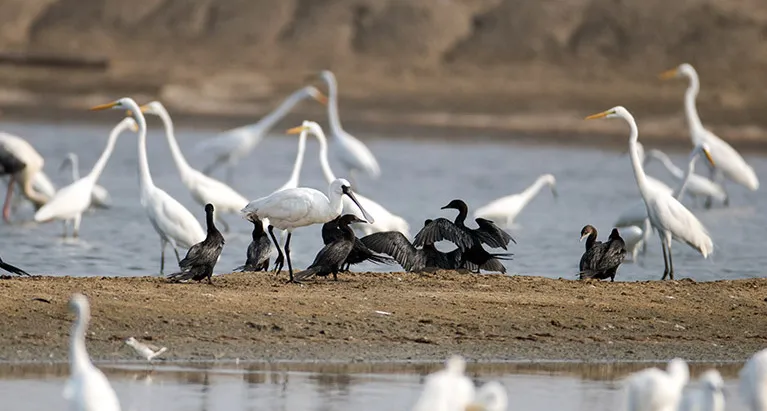
From a birder’s perspective, the project zone is ideal for collecting “species” and “behavior,” while the cape zone is ideal for collecting “numbers” and “flock-scale” scenes. In the project zone you can see multiple egret and heron species feeding along wetlands and pond edges, cormorants diving for prey, and Asian Openbills standing out as bright white accents against the mangrove-green background. The enjoyment comes from reading behavior: slow, deliberate steps to stir prey, long still pauses to wait for fish to come into range, or short flights to shift feeding spots as wind direction and light change. On many days you’ll get images that communicate the calm of the place beautifully, because the backdrop isn’t a city — it’s a carefully designed learning and research landscape with a clear ecological purpose.
Another layer that makes the project zone compelling is the mangrove forest, which is home territory for birds that many people want to see but don’t encounter easily, such as the Mangrove Gerygone and Mangrove Whistler, both strongly tied to mangrove habitats. These birds are highly specialized — in food sources, nesting choices, and the way they use branch structure to avoid predators. If you walk the nature trail without rushing, and listen more than you stare, you’ll start to recognize their “signature” sounds and quick wing flicks that reveal their presence even when the birds are small and visually blended into leaves. This is why many birders return: not just to “check in,” but to become better at “reading” the habitat.
The “rare bird” people often talk about here is the skimmer (commonly referred to locally as นกกรีดน้ำ), a species with a distinctive feeding style — flying low and using its bill to slice the water surface to catch prey. Sightings depend heavily on season and local conditions, so the right expectation is “increase your chances” rather than “guarantee a sighting.” The advantage of Laem Phak Bia is that the overall diversity is high, so even if you don’t find the one species you came for, you’ll still have a valuable trip for photography, learning, and the quiet mood of the coast.
When you move from the project zone to the second zone, Laem Phak Bia Cape, the scene changes immediately — from “mangroves and wetlands” to “sea wind, sand ridges, and the horizon.” The cape is used by many seabirds as a gathering area, especially larger gulls that are often clearly visible in prominent groups. You may also encounter Chinese Pond Herons and a variety of shorebirds using the coastline and shallow waters as feeding grounds. What bird lovers focus on here is flock behavior and the moment birds lift off together — a scene that photographs beautifully in early morning or late afternoon light, when shadows and highlights define wing shapes and flight direction with clarity.
Laem Phak Bia Cape is also mentioned as a natural area associated with nesting and egg-laying for certain species, such as the Malaysian Plover. This detail matters because it suggests the cape is not only a stopover for migrants, but also a place where some birds choose to live and reproduce. Visiting a habitat like this should prioritize “do not disturb.” The best practice is to keep distance, avoid crossing sensitive nesting areas, and keep noise low near resting and feeding spots. The best photo is the one taken while birds remain relaxed and undisturbed — not the closest shot achieved at the cost of wildlife stress.
Seasonality matters. If you ask which months are best, Phetchaburi’s coastal/mangrove birding is often especially active from late year into early year, when many migrants use Thailand’s coastlines for rest and feeding. At the same time, the rainy season can bring a different type of richness to wetlands, with more food available in the system and stronger visibility of some waterbird groups. The trade-off is comfort: wind, rain, and humidity can make some paths less pleasant than in the cool season. For photography, cool-season to early hot-season light tends to be softer and crisper. For learning and ecological observation, “every season tells a story,” as long as you adjust your method to match the conditions.
One of Laem Phak Bia’s most meaningful strengths is that it genuinely connects environmental management with tourism. The project zone is not only a birdwatching site; it is also a model area for wastewater treatment and waste management under a Royal Initiative. This helps visitors understand why the coastline still supports so many birds, and why caring for water, soil, and mangroves is the foundation of biodiversity. Seeing the system in real life makes “environment” stop being a slogan and become something tangible — for example, treated water moving through a managed process before release, and land use that creates human benefit without destroying the underlying ecosystem.
Getting There If you drive from Phetchaburi town, take the Phetchaburi–Had Chao Samran route (Highway 3177) to the Had Chao Samran intersection, then turn left onto Highway 4028 for about 5 kilometers to reach Laem Phak Bia Pier (for boats to the cape). From the pier, travel about 2 kilometers to reach the entrance of the Laem Phak Bia Environmental Research and Development Project, which is the main birdwatching and nature-trail zone within the project area.
For travelers who want to reach Laem Phak Bia Cape, you typically take a boat from Laem Phak Bia Pier. The boat ride is about 45 minutes (actual time depends on wind, waves, and the day’s navigation route). The key is to confirm boat schedules and operating conditions before you go, especially during monsoon periods when rough seas may cause postponements or cancellations. The difference from the project zone is simple: the project is accessible by car and works well for flexible visits, while the cape is a sea trip that requires more planning around time and safety.
If you want this article to be truly practical for Thai travelers and international visitors living in Thailand, the most important point is to make clear that these 2 zones are visited differently and need different time buffers. The project zone suits families, students, people interested in environmental learning, and birdwatchers who want a relatively easy walk-and-observe experience. The cape suits those who want the full sea-wind experience, wide-open photography of gulls and shorebirds, and a destination that feels more like an “end point” than a casual stop.
From a photography and observation standpoint, Laem Phak Bia offers excellent light conditions because the landscape is open and the horizon line is clean. In the morning you get angled light that reveals feather texture and bill detail; in the late afternoon you get warmer tones, ideal for flock flight shots and silhouettes — especially at the cape. Midday light is harsher with higher contrast, better for species/behavior observation than for “pretty” images. In other words, timing strongly determines the quality of the trip at this location.
Another practical factor that helps readers make real decisions is basic safety and respect for nature. The project zone is managed and more visitor-ready, but it still includes water bodies and pond edges, so staying on designated paths and supervising children is important. The cape zone exposes you to strong sun, wind, and heat reflecting off sand and open ground, plus boat boarding and disembarking. When readers understand these conditions in advance, they can prepare properly and avoid unnecessary friction during the trip.
For travelers who want to maximize the day, Laem Phak Bia sits on a coastal route that connects easily to Had Chao Samran, Puek Tian Beach, and the Bang Tabun community area. A realistic plan is to birdwatch in the early morning, then enjoy seafood or explore riverside community life in the late morning to afternoon. The key reminder is that birdwatching is not an activity that rewards rushing; this place works best when you give the first 1–2 hours to slow observation, then move on to other activities.
Finally, if you want a one-sentence description: Laem Phak Bia is a place that shows how “a healthy environment” is inseparable from “good travel,” because when the ecosystem works, birds return, communities have stories to tell, and visitors gain an experience that means more than just a photo.
| Place Name | Laem Phak Bia Birdwatching Spots (LERD Project Zone & Laem Phak Bia Cape), Ban Laem District, Phetchaburi |
| Address (Main Zones) | Laem Phak Bia Subdistrict, Ban Laem District, Phetchaburi (project entrance is along the Ban Laem–Had Chao Samran coastal route / Laem Phak Bia Pier is the departure point to the cape) |
| Place Summary | A key coastal birding destination in Phetchaburi with 2 standout areas: the LERD Project zone (wastewater ponds and mangroves) and Laem Phak Bia Cape (gulls and shorebird flocks). Ideal for birdwatching, photography, and learning about coastal ecosystems. |
| Highlights | 1) Birdwatch waterbirds, mangrove birds, shorebirds, and seabirds in one trip 2) The project zone is a Royal Initiative environmental learning site with real wastewater/waste management alongside nature 3) The cape delivers strong gull and shorebird flock scenes, especially during migration season 4) Easy to combine with Ban Laem coastal travel routes (Had Chao Samran–Cha-am) for a full-day plan |
| Fees | Project Zone: No admission fee (contact staff in advance for group visits) / Cape: Boat fee applies (depends on operator and charter/scheduled service) |
| Facilities | Project zone: learning points and mangrove nature routes (services depend on daily activities) / Pier: boat boarding area and community-operated services (advance arrangements recommended) |
| Travel | From Phetchaburi town, take Highway 3177 to the Had Chao Samran intersection, then Highway 4028 to Laem Phak Bia Pier. From the pier, about 2 km to the LERD Project entrance. Boat to the cape takes ~45 minutes. |
| Current Status | Open subject to project schedules/conditions / Boat access to the cape depends on weather and operator arrangements |
| Contact (Verified) | LERD Project (general information): 032-441-264, 032-441-265 Chaipattana Foundation (Royal projects information): 02-579-2116 Boat trip coordination (local contact as listed by travel sources): 092-713-9730, 081-856-4939 |
| Nearby Attractions (Approx. Distance) | 1) Had Chao Samran Beach – 5 km 2) Puek Tian Beach – 13 km 3) Phra Ram Ratchaniwet (Ban Puen Palace) – 16 km 4) Phetchaburi Old Town – 16 km 5) Phra Nakhon Khiri National Museum (Khao Wang) – 17 km |
| Popular Restaurants Nearby (Approx. Distance + Phone) | 1) Baan Talay Restaurant, Laem Phak Bia – 2 km – 085-405-2856 2) Krua Baan Ton Mai Seafood (Ban Laem) – 10 km – 083-436-3942 3) Khong Nam Ban Laem – 12 km – 062-226-9544 4) Bang Tabun Bay – 20 km – 082-499-9993 5) Krua Bang Tabun (Lung Ya) – 20 km – 032-581-297 |
| Popular Accommodations Nearby (Approx. Distance + Phone) | 1) i Tara Resort & Spa (Had Chao Samran) – 6 km – 032-478-301 2) Merito Boutique Beach Resort – 7 km – 086-001-3499 3) Fisherman’s Resort (Had Chao Samran) – 7 km – 032-478-020 4) Seaman Resort (Had Chao Samran) – 8 km – 081-846-1327 5) Chomtalay Resort Had Chao Samran – 7 km – 099-097-7271 |
Frequently Asked Questions (FAQ)
Q: How many birdwatching zones are there at Laem Phak Bia, and how are they different?
A: There are 2 main zones: the LERD Project zone (wastewater ponds and mangroves, ideal for species variety and behavior) and Laem Phak Bia Cape (ideal for gulls and large shorebird flocks along the open seafront).
Q: What time of day is best for birdwatching?
A: Early morning 06:00–09:00 and late afternoon 15:30–18:00 are recommended for softer light, cooler weather, and more active feeding behavior.
Q: Do I need to take a boat to reach Laem Phak Bia Cape?
A: Yes, reaching the cape typically requires a boat from Laem Phak Bia Pier (about 45 minutes). The LERD Project zone is accessible by car.
Q: Is there an admission fee for the LERD Project zone?
A: Generally, there is no admission fee. If you are visiting as a group or want a study-visit session, it is best to contact staff in advance.
Q: What rare birds might I have a chance to see at Laem Phak Bia?
A: Beyond common herons/egrets and cormorants, the mangrove zone may offer sightings of mangrove-specialist birds such as the Mangrove Gerygone and Mangrove Whistler, and in certain periods there may be a chance to encounter skimmers (locally known as นกกรีดน้ำ).
 Laem Phak Bia Birdwatching Spots Map
 Category:
  Group:
  Last Update: 15 HourAgo
Comment
 Nearby Attractions
| Keyword (Advance) |
 Facebook Fanpage
 Region
 Art, Culture and Heritage
 Historical Sites and Monuments(
 Landmarks and Memorials(
 Royal Palace(
 Art, Craft Centres, Tradition(
 Museums(
 Educational Places
 Educational Gardens, Farm(
 University
 Places of Worship
 Temple(
 Other religious and spiritural sites(
 Research and Development
 Royal Project(
 Suburban Living
 Village, Community(
 Floating Market(
 National Parks and Marine Reserves(
 Mountain (Doi)(
 Dam, Reservoir, Lake(
 Waterfalls(
 Hot Springs(
 Caves(
 River, Canal(
 Bays and Beaches(
 Islands(
 Entertainment and Agricultural
 Farm, Parks, Gardens and Ecotourism(
 Theater(
 Outdoor and Adventure Activities(
 Travel Articles, Recipes
 Travel Review, Food Review(