

 Home
Home Chiang Mai(




Rating: 3.4/5 (7 votes)
 |
|  Map
Map 
 Have Map
  No Map
Phetchaburi attractions
Attractions in Thailand
Open Days: Daily
Opening Hours: 07:30 – 17:00 (Recommended: contact in advance if you want a demonstration session or a study-visit program)
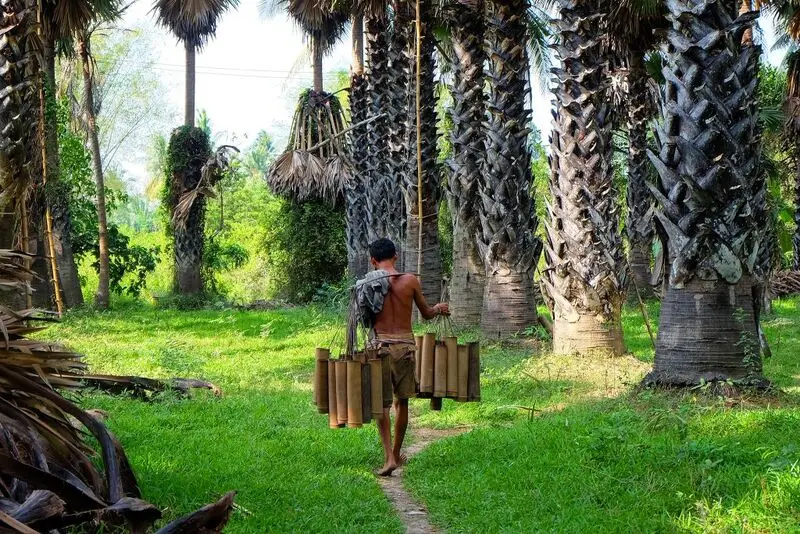
Loong Thanom Palm Garden (Suan Tan Loong Thanom) in Tham Rong, Ban Lat, Phetchaburi is a small-but-remarkable community learning spot where you can see what “Phetchaburi’s tanod palm (Borassus flabellifer) identity” looks like in real life: rows of palms across a roughly 10-rai plot, the logic behind conserving palms as living heritage, and the food culture that turns palm sap into the signature aroma of Phetchaburi’s palm sugar and desserts. If you want to understand why Phetchaburi is called a “palm city” beyond slogans, this is one of the most tangible places to start.
Loong Thanom Palm Garden (Suan Tan, Tham Rong Subdistrict, Ban Lat District, Phetchaburi) is an agri-tourism stop and a hands-on learning area focused on Phetchaburi’s iconic tanod palm and the wider “palm-sugar ecosystem” that has shaped local taste, livelihoods, and landscape for generations. Instead of the seaside-and-café version of Phetchaburi that most travelers recognize first, this place presents a deeper layer of the province: sweetness that has roots, seasons, labor, skill, and a living environment behind it. In a simple rural setting, visitors can walk through a dense palm garden, get a clearer sense of how palm products are harvested and processed, and shop for community-made palm items when available. If you have ever wondered why “Phetchaburi palm sugar” is repeatedly singled out as a local treasure, and why the phrase “เมืองตาล” (the palm city) persists as a cultural identity, the answers feel more concrete when you stand among the palms themselves.
Phetchaburi has long been associated with tanod palms because the province’s lowland-and-field geography, local water conditions, and inherited skills made the palm a practical and culturally meaningful resource. Over the past decades, the palm has not only remained in traditional forms such as palm sugar blocks and palm-based desserts sold in old markets, but has also expanded into more contemporary products, including ready-to-drink fresh palm sap and modern dessert-and-beverage recipes that highlight the tanod aroma as a signature note. Yet behind that appealing sweetness is a serious challenge: palm populations have declined in many areas due to land-use change, reduced availability of skilled labor, and a general loss of knowledge about long-term palm care. This is why a palm garden framed as a learning-and-conservation space matters. It functions like a practical classroom where people can see the entire picture of “palm life” in one visit, not only the packaged end-product.
One of the first things that makes this palm garden memorable is scale and density. Community messaging commonly describes a plot of about 10 rai with roughly 450 palms, which is large enough to feel intentional as conservation, not incidental palms left behind after other land conversions. As you walk in, you can notice palms at different stages of growth, from younger trees that have not yet reached full height to mature palms that can produce harvestable yield. That mix matters because it signals continuity: the garden is not simply a snapshot of today’s palms, but a managed space that aims to sustain “generations of palms” so the landscape and production can continue into the future.
The best experience at a palm garden is never just a photo stop, even though the lines and rhythm of tall palm trunks can produce striking images. The real value is understanding why tanod palms carry both cultural and economic weight. A tanod palm can provide multiple kinds of yield: fresh palm sap collected from palm inflorescences, palm fruit used for desserts (including soft, jelly-like palm kernels), and a range of processed items derived from palm sugar. What makes tanod palm sugar special to many Thai cooks and dessert makers is its aroma and its “rounded sweetness” that feels softer and more layered than plain refined sugar. When used in cooking and confectionery, it can give a distinct fragrance that people often recognize immediately as a classic “palm sugar note.” Visiting a palm garden makes that fragrance feel less abstract, because you are looking at the raw source of the aroma, not only buying a product without context.
From a conservation angle, preserving palms in Phetchaburi is not only about protecting a plant species. Tanod palms are tied to rural ecology and landscape character. As tall, long-lived trees, palms contribute shade and habitat; they punctuate rice-field horizons; they hold a visual identity that signals “Phetchaburi countryside” in the same way certain temples or old markets signal other provinces. If you look deeper, the phrase “saving palms” also means saving knowledge: how to select the right inflorescence, how to collect sap cleanly, how to boil sap to the correct color and viscosity, and how to manage hygiene and safety throughout production. These are forms of cultural capital. If they are not shown, practiced, and transmitted, they can disappear quietly as older practitioners retire and younger generations turn to different work.
A typical visit begins with a slow walk through the garden to absorb the atmosphere and grasp how the palms are arranged. For many visitors, the main purpose is to see demonstrations or learn about collecting palm sap and transforming it into palm sugar. Whether you can see a full demonstration depends heavily on season and the working rhythm of the gardeners. If you arrive at the right time, you may see real tools and processes in use: containers prepared for sap collection, the emphasis on cleanliness in handling, the way sap is temporarily stored before boiling, and the careful fire control needed for consistent quality. The key point is that these are not staged “shows” in the theme-park sense; they are real tasks tied to real livelihoods. The most respectful way to visit is to treat the space as a working rural area, ask before entering production zones, and ask before photographing people at work.
Another reason palm gardens resonate with travelers is taste. Palm knowledge becomes easier to understand when you can taste the difference. High-quality tanod palm sugar is noticeably aromatic, sweet without sharpness, and often carries a natural, gentle caramel-like depth. That sensory profile is why it performs differently in desserts and drinks, giving a “round” and fragrant sweetness rather than a one-dimensional sugary hit. In Phetchaburi, palm-based products can be diverse: palm sugar blocks, palm sugar paste, palm sugar syrup, palm desserts, and other traditional Thai sweets that depend on tanod flavor. In that sense, visiting a palm garden is like learning the science-and-culture of sweetness: not sweetness alone, but sweetness with origin, context, and craft behind it.
Seasonality is a central factor in planning a visit. Palms have their own production rhythm shaped by weather and local management. Some periods are better for seeing palm fruit; other periods are better for observing sap collection or sugar-making. If your goal is a learning-heavy visit rather than a quick stop, coordination in advance is strongly recommended so the community can align your visit with the most meaningful timing. This is especially important for family groups, school visits, or organizations that want a structured study-visit experience.
One strength of a palm garden visit in Phetchaburi is how naturally it links community, food, and culture. Phetchaburi has been famous for refined Thai desserts and “sweet craftsmanship” for a long time, and tanod palm sugar is one of the ingredients that makes local desserts taste and smell the way they do. When you visit a palm garden and then continue to eat well in Ban Lat or explore Phetchaburi city’s cultural sights, you begin to see how a celebrated flavor profile is not accidental. It comes from local raw materials and inherited methods. This is the kind of day trip that gives you a story to tell, not only photographs to post.
If you want your visit to be genuinely eco- and community-friendly, a few behaviors matter: keep the area clean, avoid leaving any litter, do not damage plants or walk into sensitive agricultural zones, and do not disrupt working processes. If you visit with children, supervise closely because the garden is a rural workspace with narrow paths and occasional working equipment. Respectful travel helps such learning-based places remain viable and welcoming for future visitors.
Another reason “palm gardens in Phetchaburi” are meaningful is identity management. Phetchaburi’s tanod palm sugar has been framed for decades as a local pride and part of Thai food heritage. When communities show the real production source and process, the phrase “Phetchaburi palm sugar” gains stronger credibility in a market where consumers increasingly care about origin, safety, and authenticity. In this context, a palm garden is not merely a new attraction; it becomes a practical mechanism to protect local reputation while supporting local livelihood and knowledge at the same time.
As requested, here is a clear comparison between “Phetchaburi tanod palms” and tanod palm contexts in other provinces. Tanod palms are not exclusive to Phetchaburi; they appear in multiple regions, especially across parts of central Thailand and also in some southern areas. You can find palm products associated with provinces such as Samut Songkhram, Samut Sakhon, Ratchaburi, Suphan Buri, Phetchaburi, Prachuap Khiri Khan, and beyond. What distinguishes Phetchaburi most strongly is not simply the existence of palms, but the way the province has elevated tanod palm sugar into a widely recognized food-and-dessert identity. Phetchaburi’s dessert culture is unusually strong, and the aroma of tanod palm sugar functions as a foundational “signature note” that people associate with the province. That creates a broad culinary ecosystem that supports tanod palm sugar from upstream (raw material and sap collection) to downstream (dessert shops, local specialties, tourism narratives) more visibly than many other places.
Another common difference is product perception and storytelling. Some provinces may focus on tanod palm sugar as a cooking sweetener or produce it mainly as palm sugar blocks for households and local markets, while Phetchaburi tends to be known both for palm sugar itself and for a wide range of desserts that use it. This makes “tanod sweetness” in Phetchaburi more publicly legible, because people encounter it through menus, dessert brands, and tourism routes. Meanwhile, Phetchaburi has also grown more accessible learning sites and community experiences, where visitors can connect “living palms” to “sugar on the shelf.” That bridge helps travelers understand why two provinces that both have palms may still feel very different in taste identity and cultural emphasis.
A fair comparison also recognizes that each province has its own tanod palm context. Micro-environmental factors can subtly influence sap character; different communities may use different boiling techniques, storage practices, and quality standards; and those differences can affect aroma, texture, and aftertaste. Phetchaburi’s advantage tends to be consistency of identity and the longevity of its reputation in food-and-tourism markets, while other provinces may excel in output volume or in specialized products. In practical terms, visiting a palm garden in Phetchaburi can serve as a strong baseline for understanding “tanod palm sugar standards” as commonly perceived in Thailand, after which you can explore other provinces to taste the nuanced differences for yourself.
If you enjoy photography, this palm garden is naturally “camera-friendly” because palm trunks create strong lines and depth without needing artificial props. Early morning and late afternoon light often works best; the angled sunlight creates more dimensional shadows along trunks and palm leaves. On clear days, palms against a bright sky look sharp; on lightly clouded days, the scene can feel softer and more nostalgic. As always in agricultural spaces, avoid stepping into working plots, and ask permission before photographing people or close-up work processes.
For a well-rounded one-day itinerary, a practical plan is to start at the palm garden in the morning for walking and learning, then move to food stops in Ban Lat (or along the Phet Kasem Road corridor), and later continue into Phetchaburi city for cultural sightseeing such as Phra Nakhon Khiri (Khao Wang) or important temples. The distance from Ban Lat into Phetchaburi city is manageable, so a “agri-learning – food – culture” route can flow smoothly without feeling overly exhausting, while also distributing spending across multiple local areas.
Getting There Use Phet Kasem Road (Highway 4) and enter Tham Rong Subdistrict, Ban Lat District, Phetchaburi. Continue via local roads to the community tourism / learning area (recommended: contact Tham Rong Subdistrict Administrative Organization for the latest directions and activity coordination).
| Place Summary | A community-based agri-learning and tanod palm (Borassus flabellifer) conservation spot in Tham Rong, Ban Lat, Phetchaburi, known for a dense palm garden (commonly described as about 10 rai with hundreds of palms). Suitable for walking, photography, learning about palm-sap and palm-sugar heritage, and supporting local products when available. |
| Highlights | Striking rows of palms for photography, hands-on learning about Phetchaburi tanod palm identity, potential demonstration / study-visit programs (by coordination), palm-based products (availability depends on day and season), and a clear cultural link between palms, palm sugar, and Phetchaburi desserts. |
| Location | Tham Rong Subdistrict, Ban Lat District, Phetchaburi, Thailand |
| Address (For Reference) | Mu 3, Tham Rong Subdistrict, Ban Lat District, Phetchaburi 76150, Thailand (Tham Rong community area) |
| Contact (Coordinator) | Tham Rong Subdistrict Administrative Organization (SAO) โทร. 032-491-467 |
| Facilities | Walking area within the garden, photo spots, demonstration / activity zone (by schedule and coordination), and community product sales area (availability depends on day and time). |
| Fees | Recommended: ask in advance (especially for group study visits or arranged demonstration sessions). |
| Nearby Tourist Attractions | 1) Phra Nakhon Khiri (Khao Wang) (Approx. 20 km) 2) Wat Khao Bandai It (Approx. 18 km) 3) Khao Yoi Cave (Khao Yoi District) (Approx. 25 km) 4) Phetchaburi Old Town / Riverside Market Area (Approx. 20 km) 5) Chao Samran Beach (Approx. 40 km) |
| Popular Restaurants Nearby | 1) Krua Tanote Restaurant (Approx. 7 km) โทร. 087-074-7214 2) Chef Chumchon Tham Rong (Approx. 5 km) โทร. 032-491-124, 099-246-9099 3) Lod Chong Ban Sum Mai Phai (Approx. 8 km) โทร. 081-981-2668 4) Kofuku Coffee & Bistro (Approx. 9 km) โทร. 080-113-4567 5) Pleyuan Restaurant (Phetchaburi) (Approx. 16 km) โทร. 089-081-2559 |
| Popular Accommodations Nearby | 1) Super Highway Hotel (Ban Lat) (Approx. 10 km) โทร. 097-189-9159 2) Super Resort (Ban Lat) (Approx. 9 km) โทร. 080-009-8883 3) Ton Tan Resort (Ban Lat) (Approx. 15 km) โทร. 032-490-088 4) Sun Hotel Petchaburi (Phetchaburi City) (Approx. 20 km) โทร. 032-400-000 5) Palm View Hotel (Ban Lat) (Approx. 12 km) โทร. 032-586-144 |
Frequently Asked Questions (FAQ)
Q: Where is the well-known “palm garden” experience in Phetchaburi, and what area is it in?
A: One of the commonly visited community learning areas is in Tham Rong Subdistrict, Ban Lat District, Phetchaburi, where visitors can connect Phetchaburi’s tanod palm identity with real garden landscapes and local palm-based products (availability depends on day and season).
Q: What is the main highlight of visiting a palm garden in Phetchaburi?
A: The key highlight is seeing a dense palm landscape and understanding “palm life” in context: how tanod palms support Phetchaburi palm sugar, how aroma-driven sweetness becomes a food identity, and how conservation connects to local livelihoods and knowledge.
Q: When is the best time to visit if I want demonstrations or a study-visit experience?
A: You can visit year-round, but demonstration-style learning depends on season and local work rhythm. If you want a structured program, contact the local coordinator in advance to match your visit with suitable timing.
Q: How is Phetchaburi’s tanod palm culture different from other provinces?
A: Tanod palms exist in many provinces, but Phetchaburi stands out for how strongly tanod palm sugar is integrated into a widely recognized dessert-and-food identity. The province’s dessert culture helps palm sugar move from raw material to recognizable flavors, shops, and tourism storytelling more broadly than in many places.
Q: How should I prepare for a palm garden visit?
A: Wear comfortable walking shoes, bring sun protection (hat or umbrella), carry drinking water, and follow respectful rural-visit etiquette: do not litter, avoid damaging plants, do not disrupt working processes, and ask before photographing people or work zones.
 Tel: 032491467
 Suan Tan Map
 Category:
  Group:
  Last Update: 17 HourAgo
Comment
 Nearby Attractions
| Keyword (Advance) |
 Region
|
 Muang Phetchaburi(