

 Home
Home Chiang Mai(




Rating: 2.4/5 (59 votes)
 |
|  Map
Map 
 Have Map
  No Map
Phetchaburi attractions
Attractions in Thailand
Open Days: Daily
Opening Hours: 24 Hours
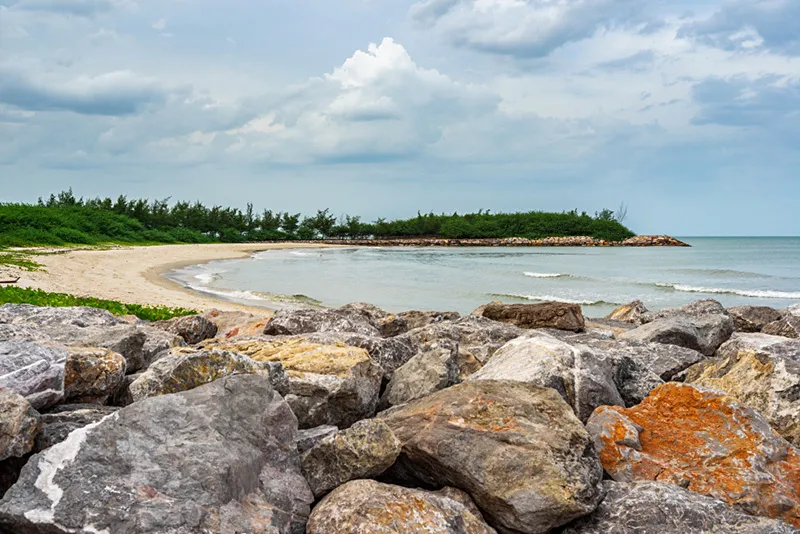
Koh Tha Sai (Cha-am District, Phetchaburi) is the kind of destination that gently pulls you away from the familiar idea of “wide sandy beaches” and into another coastal world on the upper Gulf of Thailand—a world of mangrove forests, narrow tidal canals, rich mudflats that feed countless tiny organisms, and an open sky where waterbirds and woodland birds can appear with real seasonal rhythm. Koh Tha Sai is often described as a mangrove-edge attraction with strong ecological richness, giving your Phetchaburi trip a sense of “real nature” beyond simple seaside photo stops. It also fits flexible travel styles: you can visit briefly for about 45 minutes or slow down and stay closer to 2 hours, depending on your pace and what you want to observe.
The charm of Koh Tha Sai begins with the “mood of the place” itself. It feels distinctly different from commercial tourist beaches because nature is the main character, not construction. What you remember is rarely a giant landmark for check-ins, but rather small details that make mangroves feel alive: the shadow patterns of stilted roots on the water, the tide cycle that reshapes the mudflat view within hours, and a soundscape that comes not from speakers but from wind, wings, and the movement of an ecosystem doing its work. When you look slowly, you start to see that the “coast” is not just a line dividing land and sea; it is a working zone that helps filter water, shelters juvenile marine life, and serves as a feeding ground for many birds.
That is why Koh Tha Sai suits travelers who love nature without rushing and who want the journey to carry meaning on its own. Whether you come to spot rare waterbirds, rare forest birds, or native wildlife—as this area is often described as an ecologically rich mangrove-side attraction—the best “birdwatching” experience here is not about checking off names on a list. It is about learning to observe with restraint: watch from a respectful distance, avoid loud sounds, never chase birds into flight for photos, and take all trash and food scraps with you so nature is not forced to handle our leftovers. This kind of care makes even a short trip feel worthwhile because you experience wildlife while helping the habitat remain healthy.
From a coastal geography perspective, mangroves function like a natural “buffer” between the mainland and the sea. They reduce wave energy, slow erosion, provide refuge for young aquatic species, and help keep the coastal food chain strong—which, in turn, supports local fisheries and the coastal economy. Seeing mangroves as more than just “trees by the mud” changes how you travel: it encourages respect for the area and makes ecotourism more realistic as a long-term relationship between nature and community.
In terms of background, Koh Tha Sai is mentioned in local materials as one of the natural tourism resources within the area connected to Bang Kao (Cha-am). This framing matters because it suggests Koh Tha Sai was not created solely for tourism; it is part of a coastal landscape that local communities have known and lived with over time. Understanding this helps readers recognize that the “value of the island” comes from its natural character and its connection to community life, not from large-scale facilities.
If your goal is to enjoy panoramic views around the island, try focusing on the “structure of the landscape” rather than searching for a single perfect photo angle. Notice how mangrove density shifts along the shoreline, how water channels curve like veins through wetlands, and how bird sounds change across the day. Even if the place looks simple at first glance, its details are surprisingly complex. If you bring binoculars or a telephoto lens, birdwatching becomes dramatically more engaging because you can see feeding behavior, resting posture, and flock movement clearly—without getting close enough to disturb wildlife.
Your visit length can range from about 45 minutes to 2 hours. This flexibility works well for both time-limited travelers and those who want a true “slow nature” experience. With a short visit, you still get the overall atmosphere of a coastal mangrove setting. With 1–2 hours, you begin to feel the subtle changes in light, breeze, and ambient sound, and you increase your chance of seeing birds and wildlife that do not always appear on a quick stop.
Many visitors prefer early morning or late afternoon because the air is more comfortable, the light is softer, and observation is less tiring. No matter what time you go, the most important rule is simple: do not leave the place with extra burden. Do not litter, avoid loud noise, and do not do anything that damages mangrove roots or mudflat surfaces. Good ecotourism means you leave, and the habitat remains a stable home for living things.
Another interesting dimension is that Koh Tha Sai has been referenced within the broader context of a Cha-am birdwatching route mentioned in local tourism activity coverage. This indicates the area is not only for a tiny niche of travelers; it has been presented publicly as part of the region’s nature-based potential. If you are a serious birdwatcher, you can plan a connected route across nearby natural spots while maintaining the same guiding principle: observe quietly and never disturb wildlife.
Preparation for Koh Tha Sai is simple, but it improves your experience significantly: bring a hat, sunglasses, sunscreen, drinking water, a small towel, and footwear suitable for humid coastal conditions or paths that may be slippery from moisture. If you are focused on birdwatching, binoculars are highly useful because they let you see clearly without approaching. For photographers, a telephoto lens and a light cover to protect gear from spray or humidity can help, since coastal air often carries moisture and fine salt.
For safety, it is worth checking weather and wind conditions before you go, because coastal trips can change quickly in some seasons. If you are traveling with family—especially children or older adults—plan a relaxed schedule and carry enough water. Respecting local rules and walking carefully reduces the risk of slipping and also helps avoid stepping on small organisms that may be hard to notice.
If you want to combine Koh Tha Sai with other nearby highlights, it is convenient that it is not far from Cha-am. With information commonly cited that it is roughly 10 kilometers from Cha-am Beach, you can design a full-day plan such as “half-day nature + seafood + seaside stroll” without long drives. For example: start the morning with mangroves and birdwatching, enjoy seafood for lunch, then return to the beach area in the evening for a relaxed walk or sunset. This structure gives you both calm and enjoyment in one trip.
Getting There Koh Tha Sai is located in Cha-am District, Phetchaburi. Driving a private car is generally the most convenient option. It is recommended to pin “Koh Tha Sai” in your navigation app as shown in the referenced map source to reach the correct point and reduce route confusion. As you approach the coastal area, drive carefully because some sections may run through community roads or along wetland edges. If you plan to birdwatch or spend 1–2 hours on site, leaving earlier in the day helps you enjoy cooler air and gives you flexibility to adjust plans based on wind and weather.
| Place Name | Koh Tha Sai |
| Address | Cha-am District, Phetchaburi (Recommended: pin “Koh Tha Sai” in your navigation app) |
| Summary | A rich mangrove-edge nature destination ideal for scenic views, birdwatching, and learning about coastal ecosystems. Typical visit time ranges from about 45 minutes to 2 hours, and it is not far from the Cha-am area. |
| Highlights | Natural mangroves and coastal wetlands with strong ecological character, suitable for birdwatchers, nature photographers, and travelers seeking a calm, experience-led visit rather than a commercial check-in spot. |
| Atmosphere | Upper Gulf of Thailand coastal setting with mangroves, humidity, sea breeze, and tidal cycles that change the landscape throughout the day. |
| Background | Presented as a natural tourism resource within the Cha-am/Bang Kao coastal area (No officially verified establishment year available in open sources). |
| Nearby Tourist Attractions With Distance | 1) Cha-am Beach — Approx. 10 km 2) Mrigadayavan Palace — Approx. 18 km 3) Khao Nang Phanthurat Forest Park — Approx. 20 km 4) Had Chao Samran Beach — Approx. 25 km 5) Laem Phak Bia Environmental Research & Development Project (Royal Initiative) — Approx. 28 km |
| Popular Restaurants Nearby | 1) Krua Med Sai (Cha-am Beach) — Approx. 12 km — Tel. 089-800-2299 2) Krua Loong Mun Seafood (Cha-am) — Approx. 14 km — Tel. 080-917-4597 3) Daeng Seafood Restaurant — Approx. 15 km — Tel. 089-918-6836 4) Krua Hoi Lod Restaurant — Approx. 30 km — Tel. 083-779-5737 5) Krua Liang Hoi (Bang Tabun) — Approx. 40 km — Tel. 065-534-3741 |
| Popular Accommodations Nearby | 1) Novotel Hua Hin Cha Am Beach Resort & Spa — Approx. 16 km — Tel. 032-708-300 2) The Regent Cha-Am Beach Resort — Approx. 18 km — Tel. 032-451-240 3) Springfield @ Sea Resort & Spa — Approx. 19 km — Tel. 032-709-300 4) Veranda Resort & Villas Hua Hin Cha Am — Approx. 21 km — Tel. 032-709-000 5) Dusit Thani Hua Hin — Approx. 24 km — Tel. 032-520-009 |
Frequently Asked Questions (FAQ)
Q: Where is Koh Tha Sai located?
A: It is in Cha-am District, Phetchaburi. It is recommended to pin “Koh Tha Sai” in your navigation app to reach the correct location.
Q: What kind of trip is Koh Tha Sai best for?
A: It suits nature lovers and mangrove-focused ecotourism, especially birdwatching, wildlife observation, nature photography, and calm, learning-oriented travel.
Q: How long does a visit to Koh Tha Sai usually take?
A: Most visits range from about 45 minutes to 2 hours, depending on whether you focus on atmosphere only or spend time observing birds and photographing nature.
Q: What is the best time of day to visit Koh Tha Sai?
A: Early morning and late afternoon are typically most comfortable with softer light for observation and photos. Always check weather and wind conditions before you go.
Q: How should I birdwatch at Koh Tha Sai without disturbing wildlife?
A: Bring binoculars or a telephoto lens, observe from a respectful distance, avoid loud sounds, do not feed animals, and never approach closely enough to change birds’ behavior.
Q: What should I prepare before visiting Koh Tha Sai?
A: Bring a hat, sunglasses, sunscreen, drinking water, and footwear suitable for humid or potentially slippery paths. These essentials make the trip safer and more comfortable.
 Ko Tha Sai Map
 Category:
  Group:
  Last Update: 1 DayAgo
Comment
 Nearby Attractions
| Keyword (Advance) |
 Region
|
 Muang Phetchaburi(