

 Home
Home Chiang Mai(




Rating: 3/5 (13 votes)
 |
|  Map
Map 
 Have Map
  No Map
Phetchaburi attractions
Attractions in Thailand
Open Days: Daily
Opening Hours: 06:00 – 19:00 (Recommended: 06:30–09:00 and 16:30–18:30 for the best light and sunset views)
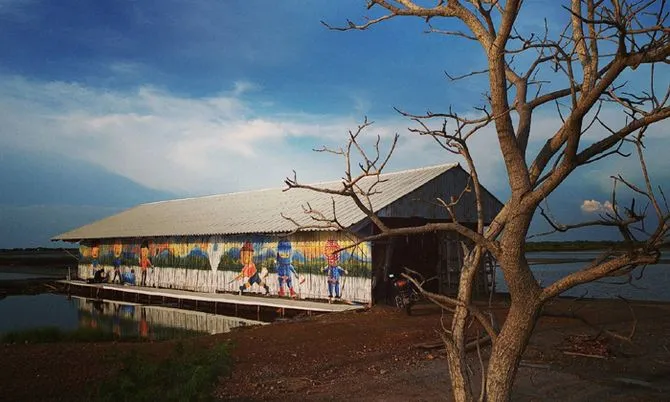
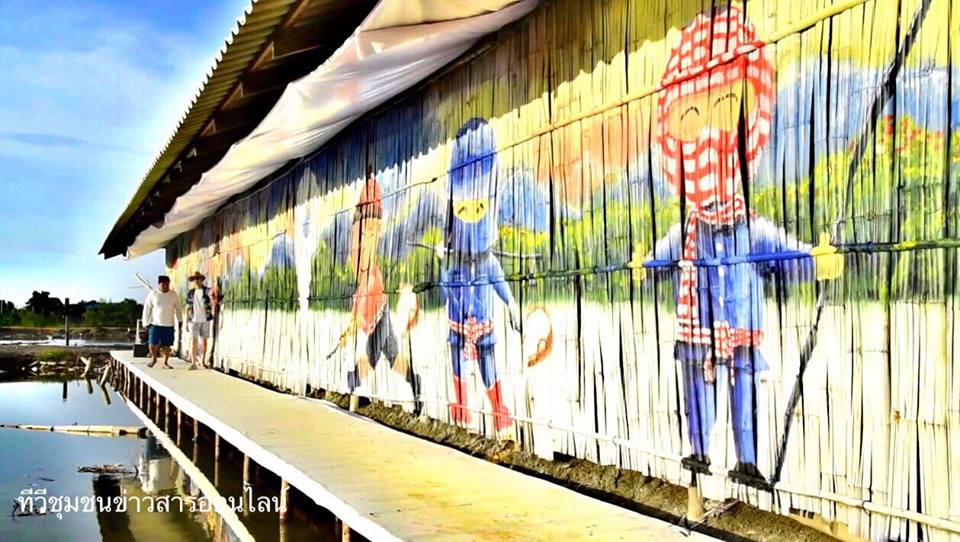
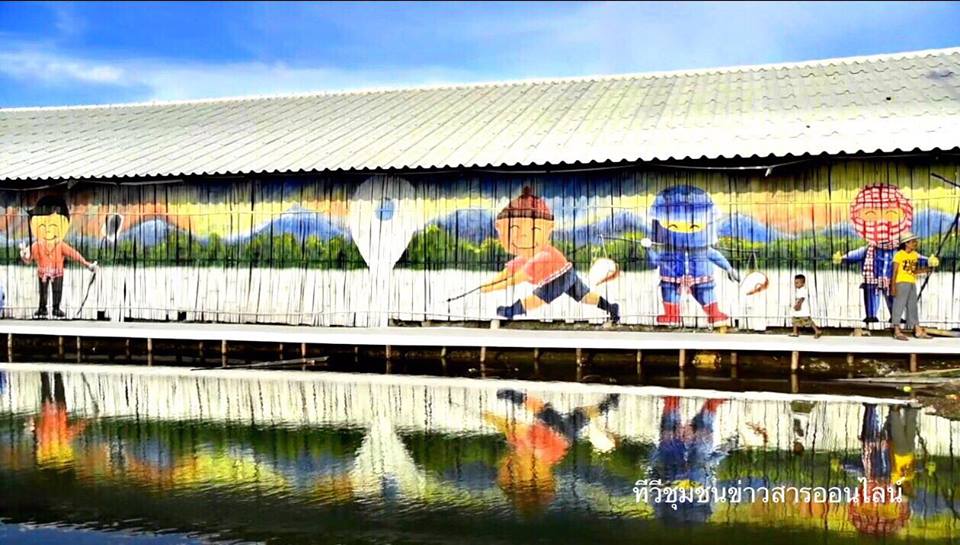
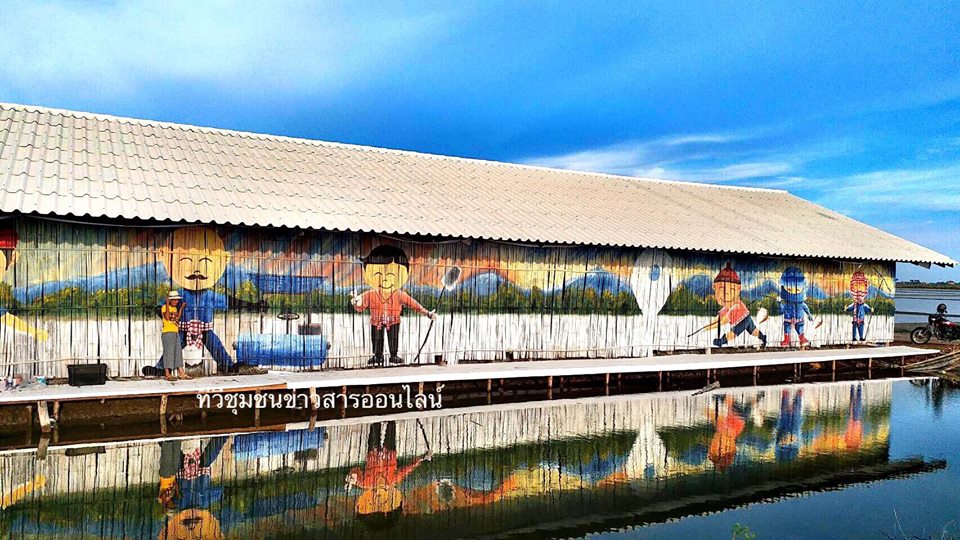
Si San Lai Sin (Colorful Art) on Bang Kaeo Salt Road is a photo stop that turns a simple drive through Ban Laem, Phetchaburi into a trip with both striking pictures and a real story behind them. This is not just a pretty painted wall. It is a series of vibrant murals painted across salt barns set in working salt fields in Village No. 7, Bang Kaeo Subdistrict, Ban Laem District, where local life has long been closely tied to sea salt production. If you want the clean white tones of salt piles paired with colorful art and beautiful evening light, come close to sunset. If your goal is to see the salt piles at their most dramatic, April is often the month when the “mini salt mountains” look the brightest and most impressive.
The phrase “Si San Lai Sin” is used here to describe the mural paintings that transform ordinary salt storage buildings into lively backdrops that reflect the salt-making way of life in Ban Laem. That is what makes this area especially appealing to travelers who love photography. In a single frame, you get two layers of meaning: the art, created to help the place tell its story more clearly, and the real landscape of working salt fields behind it. With long rows of salt barns, raised field embankments, and a wide-open setting that catches natural light all day, the photos here have depth that typical staged photo spots cannot replicate.
What makes Bang Kaeo Salt Road interesting is how it becomes a destination rather than just a route to somewhere else. People used to drive through on the way to Cha-am or other coastal areas, but once the colorful art appeared, the area gained a reason for travelers to pull over, step out, take photos, and start noticing what salt-field life actually looks like. In certain months, especially during the production season, you can see bright white salt piles lined up neatly on both sides of the road. The scene resembles small mountain ranges built by skilled hands and patient work rather than by nature, and that is the unique beauty of Ban Laem: when you photograph it, you capture something real, not just a backdrop.
To put it simply, this is a working landscape, not an exhibition set. The salt fields did not exist to attract tourists, but tourists can visit because the salt fields are still here. That is why walking around feels calm and authentic. Everything follows the rhythm of real work, from traces of carts and tools to how salt piles are arranged and how storage buildings are positioned. As you slow down, you begin to see that the “orderliness” of the salt piles is not decoration. It comes from a precise workflow that must be done correctly to produce good salt.
In terms of the area’s roots and identity, Ban Laem is widely recognized as one of Thailand’s most important sea-salt regions, long known for large-scale salt production along the Phetchaburi coast. The craft has been passed down in coastal communities because the landscape and climate support traditional salt farming that relies on sun, wind, and long stretches without rain. During the dry season, strong sunlight helps seawater evaporate efficiently, allowing salt crystals to form through the salt-field process. This helps explain why the most photogenic scenes vary by month, and why April is often highlighted as a time when salt piles can be especially abundant and visually striking.
If you want to get the most out of your photo session, start by walking along the painted salt barns first. The bright colors work as a natural focal point, then you can step back to capture wider shots that include both the murals and the surrounding salt fields. Wide frames tell a fuller story than close-ups because they show how the art exists alongside real livelihoods. After that, head toward the wooden walkway that stretches into the salt fields. It is one of the best spots for creating depth and strong leading lines, especially in the late afternoon when the light warms up, shadows lengthen, and the surface textures of the salt fields catch the light with a soft shimmer.
The wooden walkway is a highlight because it makes the visit feel like more than just parking for murals. As you walk out from the roadside into the open landscape, you gain a more peaceful perspective. Road noise fades, and what remains is wind, space, and the coastal atmosphere. If you come specifically for sunset, this walkway is often one of the most rewarding vantage points. Its simple lines help frame the sky and the evening light without needing a complicated background.
Another element people enjoy is the presence of seagulls in the area, which can make photos feel more alive. Even if you are not aiming to photograph birds, having them in the scene adds movement and strengthens the coastal story. It connects the working salt fields with nature in a single frame and makes sunset watching feel less like simply waiting for the sun to drop and more like sharing space with a living landscape.
The best time to visit depends on what you want. For softer light and a comfortable walk, early morning is excellent: the air is cooler, the sky is clean, and the tones are gentle. For sunset and golden light, late afternoon is the strongest choice. The open salt fields catch the light fully, and the contrast between highlights and shadows gives the salt piles a more three-dimensional look. Midday is still possible, but you should prepare for heat and stronger glare, since open salt fields reflect sunlight more intensely than many visitors expect.
One reason this place feels educational without being heavy is that it lets you see the salt-production landscape directly. You can notice the flatness of the fields, the careful alignment of embankments, and the organized handling of salt piles, all of which require both experience and patience. Families can use the visit as a simple, hands-on way for children to learn that salt does not only come from factories. Sea salt is formed through sun and wind, and there are communities that still depend on this work as a primary livelihood. Adults, meanwhile, get a clear view of local coastal economics with their own eyes rather than through secondhand explanations.
In some periods, you may also find small community stalls or local vendors serving visitors. That adds a practical layer to the stop because it becomes more than just taking photos and leaving. Supporting local sellers helps the tourism cycle remain healthy: the photo spot stays active, the community earns income, and travelers get a more authentic experience. At the same time, the top priority is always respect for a working area. Salt fields are workplaces. Keep a proper distance from active work zones, do not climb salt piles, and do not litter. A clean salt field is the most beautiful scene you can capture without needing any extra styling.
For visitors deciding whether to stop, safety matters as much as aesthetics. Bang Kaeo Salt Road is a real roadway with vehicles passing through, including local transport and occasional trucks. Choose a parking spot that does not block traffic and be mindful when walking near the road. If you travel with children or elderly family members, hold hands when crossing and stay alert around roadside areas. The best photo spot should never come at the expense of safety. The best pictures are the ones you can take calmly, without rushing or worrying.
Getting There A practical route is to start around Wat Khao Yi San, then head toward Phetchaburi via Bang Taboon Bay, and continue into the Bang Kaeo Salt Road area (Village No. 7, Bang Kaeo Subdistrict, Ban Laem District) to stop for the “Si San Lai Sin” murals and sunset light. After that, you can continue to Cha-am in the evening or stay overnight around Haad Chao Samran or Cha-am, depending on your plan. This route works well for a one-day trip because the locations connect smoothly without excessive backtracking.
If you want a full but easy day plan, one workable pattern is to visit Bang Taboon in the morning for seafood and canal-side local life, then drive to Bang Kaeo Salt Road in the late afternoon for murals and salt-field photos, and finish by standing on the wooden walkway for sunset. This gives you both a riverside community experience and the salt-making landscape, plus golden-hour photos, without feeling rushed. For travelers who love the bright white look of salt piles most of all, scheduling the trip in April often increases your chances of seeing especially dramatic piles, because many travel sources describe April as a peak month for visible salt stacks, making the road feel lined with white “salt mountains” on both sides.
In the clearest terms, Si San Lai Sin on Bang Kaeo Salt Road is a Phetchaburi stop for people who want fresh photo content without crowded attractions and who also want to see a meaningful local way of life that still exists in real time. It is proof that Phetchaburi is not only about beaches and famous temples. It also has working landscapes that are beautiful on their own terms, and when art is added thoughtfully, the place becomes even easier to appreciate without needing too many words.
| Place Name | Si San Lai Sin (Colorful Art) on Bang Kaeo Salt Road, Village No. 7, Bang Kaeo Subdistrict, Ban Laem District, Phetchaburi |
| Address | Village No. 7, Bang Kaeo Subdistrict, Ban Laem District, Phetchaburi (Bang Kaeo Salt Road area within Ban Laem salt fields) |
| Place Summary | A roadside photo spot in Ban Laem’s working salt fields featuring colorful murals painted on salt barns (“Si San Lai Sin”), with views of neatly stacked salt piles and a wooden walkway into the salt fields. Best visited in early morning or late afternoon, especially during the salt production season. |
| Highlights | 1) Murals on real salt storage barns reflecting Ban Laem salt-farming life 2) Bright white salt piles lined up on both sides of the road during the production season 3) A wooden walkway extending into the salt fields, ideal for photos with strong leading lines 4) A scenic sunset spot that connects well with Bang Taboon and Cha-am itineraries |
| Admission Fee | No admission fee (a roadside stop in a working area; please respect local rules and livelihoods) |
| Facilities | Roadside photo points / Wooden walkway into the salt fields / Community stalls (available in some periods) / Open area so bring sun protection and drinking water |
| Getting There | A common route is Wat Khao Yi San → Bang Taboon Bay → Bang Kaeo Salt Road → Cha-am (ideal for a one-day morning-to-evening trip) |
| Current Status | A public photo stop within Ban Laem’s salt-field area, accessible depending on weather and local activity |
| Nearby Tourist Attractions (Approx. Distance) | 1) Bang Taboon Bay (Bang Taboon) – 12 km 2) Wat Khao Yi San – 18 km 3) Haad Chao Samran – 22 km 4) Laem Phak Bia Environmental Research and Development Project – 28 km 5) Cha-am Beach – 35 km |
| Popular Restaurants Nearby (Approx. Distance + Phone) | 1) Baan Chao Lay Seafood (Bang Taboon) – 12 km – 088-959-4184 2) Mae Look Chan Restaurant (Bang Taboon) – 12 km – 063-978-2645 3) Bangtaboon Bay – 13 km – 082-499-9993 4) Krua Bang Taboon (Loong Ya) – 13 km – 032-581-297 5) Jae Meow Talay Sod (Bang Taboon) – 13 km – 081-986-3182 |
| Popular Accommodations Nearby (Approx. Distance + Phone) | 1) Fisherman’s Resort Haad Chao Samran – 23 km – 032-478-020 2) i Tara Resort & Spa (Haad Chao Samran) – 23 km – 032-478-301 3) Seaman Resort (Haad Chao Samran) – 24 km – 081-846-1327 4) Rablom Resort (Haad Chao Samran) – 24 km – 032-478-333 5) Loft Caravan Resort (Haad Chao Samran) – 25 km – 086-777-9677 |
Frequently Asked Questions (FAQ)
Q: Where is Si San Lai Sin on Bang Kaeo Salt Road located?
A: It is in Village No. 7, Bang Kaeo Subdistrict, Ban Laem District, Phetchaburi, within the Ban Laem salt-field area. It is a convenient photo stop between Bang Taboon and Cha-am routes.
Q: Which month gives the best chance to see impressive salt piles?
A: If you want especially dramatic salt piles, many travel sources highlight April as a month when piles can look particularly abundant and bright white, though the exact scene still depends on weather and yearly production cycles.
Q: What time of day is best for photography?
A: Early morning (06:30–09:00) and late afternoon (16:30–18:30) are best for softer light and more comfortable walking, and late afternoon is ideal for sunset on the wooden walkway.
Q: Is there an admission fee?
A: Typically no. It is a roadside photo stop in a working salt-field area. Please respect local livelihoods, do not climb salt piles, and park without blocking traffic.
Q: What should I prepare for sunset viewing?
A: Bring a hat, drinking water, sun protection, and comfortable walking shoes. The area is open and reflective, so it can feel hotter and brighter than expected. Also allow time to walk and choose a safe parking spot.
Q: Is it suitable for children and older visitors?
A: Yes. It is an easy stop without long walking distances, but visitors should be careful near the road and watch for uneven surfaces around the wooden walkway. Avoid midday heat for a more comfortable visit.
 Colorful Stripes Art (Bang Kaeo Road) Map
 Category:
  Group:
  Last Update: 7 HourAgo
Comment

Photo Gellery(6) 
 Thank you photo(6) from: Community TV News Online
|
|
|
|
|
|
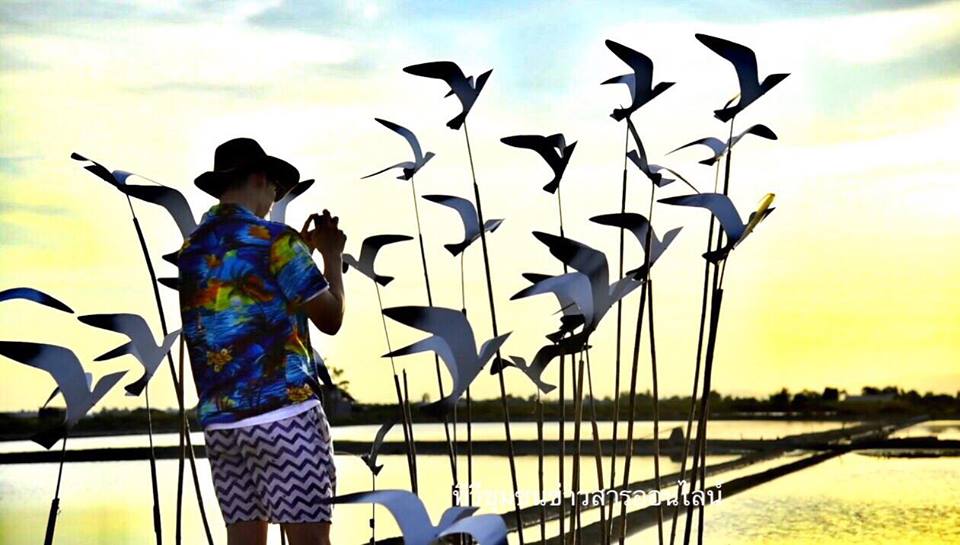
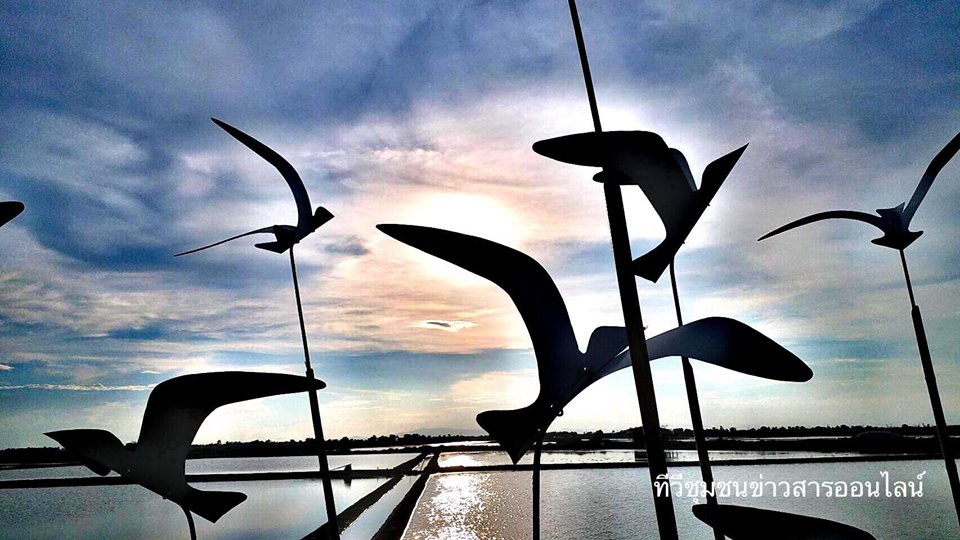
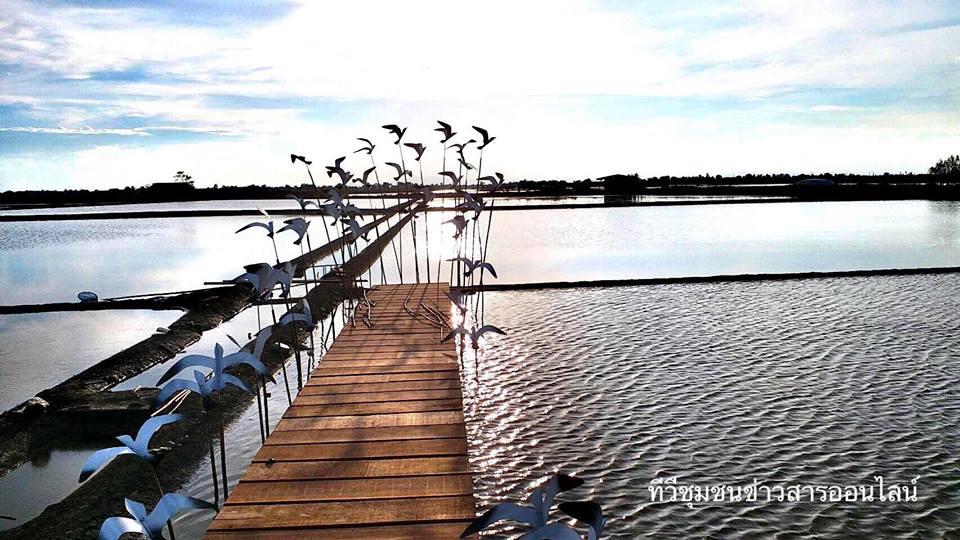
 | ● Photographer: Community TV News Online ● Link: facebook.com/phetchaburipost/ |
● Copyright Photography. (800*500)
● View full size images from the photographer.
● View full size images from the photographer.
 Nearby Attractions
| Keyword (Advance) |
 Facebook Fanpage
 Region
 Art, Culture and Heritage
 Historical Sites and Monuments(
 Landmarks and Memorials(
 Royal Palace(
 Art, Craft Centres, Tradition(
 Museums(
 Educational Places
 Educational Gardens, Farm(
 University
 Places of Worship
 Temple(
 Other religious and spiritural sites(
 Research and Development
 Royal Project(
 Suburban Living
 Village, Community(
 Floating Market(
 Nature and Wildlife
 National Parks and Marine Reserves(
 Mountain (Doi)(
 Dam, Reservoir, Lake(
 Waterfalls(
 Hot Springs(
 Caves(
 River, Canal(
 Bays and Beaches(
 Islands(
 Other natural attractions(
 Theater(
 Outdoor and Adventure Activities(
 Travel Articles, Recipes
 Travel Review, Food Review(