

 Home
Home Chiang Mai(






Rating: 4/5 (4 votes)
 |
|  Map
Map 
 Have Map
  No Map
Lop Buri attractions
Attractions in Thailand
Open Days: Monday - Friday
Opening Hours: 08.30 - 16.30 hrs.
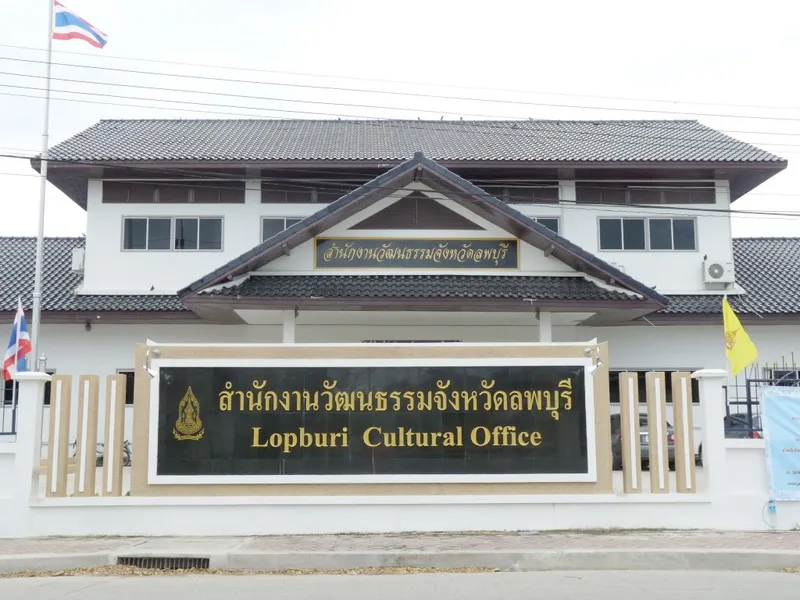
Lopburi Cultural Center is an important learning center for arts, culture, and local heritage in Lopburi Province. It is located within Thepsatri Rajabhat University on Narai Maharat Road in Mueang Lopburi District. This place plays an important role both as an exhibition space for the province’s cultural knowledge and as a center for studying and researching Lopburi’s identity in dimensions deeper than its image as merely an ancient city or the city of King Narai the Great.
Viewed as a whole, Lopburi Cultural Center is highly important for understanding Lopburi Province as an area with a long history that connects traditional culture, the influence of ancient states, local ways of life, and the development of modern society. The exhibitions inside the cultural hall do not merely present general information, but also reveal the foundations of Lopburi through the provincial map, legends and folk tales, a linguistic map, and ancient documents discovered within the province.
The cultural center was officially opened on October 18, 1981, by Her Royal Highness Princess Maha Chakri Sirindhorn. This event reflects the importance of the place as an institution dedicated to preserving and promoting Thai arts and culture in Lopburi, and it confirms the role of Thepsatri Rajabhat University as an important local knowledge base, not only in education, but also in collecting, conserving, and disseminating cultural heritage.
Inside Lopburi Cultural Center, exhibitions are arranged in a way that helps visitors gain a clearer overview of the province. The provincial map explains the relationships among different parts of Lopburi, from the old city center and long-established communities to agricultural areas and outer districts with distinct geographical and cultural characteristics. Beginning with the map allows visitors to understand that Lopburi is not only a historic urban center, but also a province made up of networks of communities and stories spread across the entire area.
Another especially interesting section is the display of Lopburi legends and folk tales. This part allows visitors to discover another dimension of the province through stories passed down by local people, whether they concern place names, community beliefs, or moral ideas that reflect the lives of people in different eras. These legends and folk tales are extremely valuable because they help explain the identity of the area in ways that official records or archaeological evidence alone cannot fully provide.
The linguistic map exhibition is another highlight that makes Lopburi Cultural Center different from ordinary learning venues, because language is one of the most important traces of community history. The display of language features and local vocabulary helps visitors see the ethnic and cultural diversity that once existed in Lopburi. It also reveals population movement, settlement patterns, and the province’s connections with surrounding areas in an especially interesting way.
In addition to cultural exhibitions, Lopburi Cultural Center also plays an important role in collecting and displaying ancient documents found in the province. These documents are primary sources of great value for the study of local history because they reveal social development, thought, belief systems, administration, and the ways of life of people in the past. By gathering these documents in one place, the cultural center has become an important source of information for scholars, students, and members of the public who are seriously interested in Lopburi’s history.
In terms of atmosphere, Lopburi Cultural Center feels different from open-air historic sites because it is located within a university and functions as a calm, orderly learning space, well suited for reading, understanding, and gradually absorbing the content inside the cultural hall. Visitors therefore often gain more than a simple check-in or photo-taking experience; they also spend time with the story of Lopburi in a more academic and deeper way.
The cultural center is especially suitable for those interested in history, local culture, and in-depth learning, whether they are school students, university students, teachers, lecturers, researchers, or general tourists who want to understand Lopburi beyond visits to Phra Prang Sam Yot, San Phra Kan, or Phra Narai Ratchaniwet. Once inside the cultural hall, visitors can see another side of Lopburi as a province with rich linguistic heritage, storytelling traditions, documents, and a diverse local identity.
In its contemporary role, Lopburi Cultural Center is also important for sustaining the province’s identity in the present era. Cultural conservation does not mean simply storing old objects, but ensuring that knowledge continues to be read, interpreted, and passed on. Having a cultural center within an educational institution therefore helps keep Lopburi’s heritage within an active cycle of learning, rather than allowing it to become information quietly stored away in an archive room.
For those planning a trip in Lopburi city, Lopburi Cultural Center can easily be included in a cultural and historical itinerary. From Thepsatri Rajabhat University, it is convenient to continue on to important attractions in the city, including Phra Prang Sam Yot, San Phra Kan, Phra Narai Ratchaniwet, Ban Wichayen, and the King Narai the Great Monument. It therefore works well either as a place to visit before touring the city or as a final stop to help visitors understand Lopburi in a more systematic way.
Getting There Lopburi Cultural Center is located within Thepsatri Rajabhat University at 321 Narai Maharat Road, Tha Le Chup Son Subdistrict, Mueang Lopburi District, Lopburi Province. Visitors traveling by car can conveniently reach the university from the city’s main roads. Those arriving by train or bus can get off in Lopburi town and continue by hired vehicle or local taxi to the university without difficulty, since the campus is located within the city and is well known to local residents.
As a cultural tourism destination, Lopburi Cultural Center may not stand out through the scale of its building or the grandeur of its architecture in the same way as a royal palace or major archaeological site. Its real value lies in being a place that gathers the identity of Lopburi into a body of knowledge. When visitors spend time with the exhibitions inside, they gain a deeper understanding of Lopburi, see the connections between history, culture, language, and people’s lives more clearly, and realize that Lopburi is not defined only by its great past, but also by a cultural foundation that is subtle, rich, and highly engaging.
| Name | Lopburi Cultural Center |
| Place Summary | A learning center for arts, culture, local history, and ancient documents of Lopburi Province, located within Thepsatri Rajabhat University. |
| Highlights | Features exhibitions on the map of Lopburi Province, legends and folk tales, a linguistic map, and ancient documents found in the province. It serves as a learning center that systematically connects history with local culture. |
| History / Period | Officially opened on October 18, 1981, by Her Royal Highness Princess Maha Chakri Sirindhorn. It developed from an arts and culture center under Thepsatri Teachers College into Lopburi Cultural Center. |
| Address | 321 Narai Maharat Road, Tha Le Chup Son Subdistrict, Mueang Lopburi District, Lopburi 15000 |
| Travel | Located within Thepsatri Rajabhat University in Lopburi city, it is convenient to reach by private car, local hired vehicle, or public transport from central Lopburi. |
| Open Days | Monday - Friday |
| Opening Hours | 08.30 - 16.30 hrs. |
| Facilities | Permanent exhibition room, rotating exhibition room, learning space within the university, parking within the university, restrooms |
| Zones | Permanent Exhibition Room, Rotating Exhibition Room, Office of Arts and Culture Area |
| Nearby Tourist Attractions | 1. San Phra Kan - approximately 3.5 km. 2. Phra Prang Sam Yot - approximately 3.7 km. 3. Phra Narai Ratchaniwet - approximately 4.2 km. 4. Ban Wichayen - approximately 4.3 km. 5. King Narai the Great Monument - approximately 4.8 km. |
| Popular Restaurants Nearby | 1. O Cafe' Thepsatri Rajabhat University - approximately 0.1 km. - Tel. 097-110-3395 2. PunThai Coffee Thepsatri Rajabhat University Lopburi - approximately 0.1 km. - Tel. 061-393-7091 3. Me Waffle Thepsatri Rajabhat University - approximately 0.1 km. - Tel. 064-939-4979 4. Bear Honey behind Thepsatri Rajabhat University - approximately 0.4 km. - Tel. 062-147-8524 5. Tee Restaurant - approximately 1.2 km. - Tel. 036-412-460 |
| Popular Accommodations Nearby | 1. Theptani Place - approximately 0.2 km. - Tel. 062-590-8428 2. PJ Loft Hotel Lopburi - approximately 3.7 km. - Tel. 094-952-4246 3. JRD Grand Place - approximately 3.6 km. - Tel. 090-116-2292 4. Baan Ruay Suk Resort Lopburi - approximately 3.0 km. - Tel. 097-795-9555 5. HOP INN Lopburi - approximately 5.2 km. - Tel. 02-080-2222 |
| Main Contact Number | 036-413-096 |
Frequently Asked Questions (FAQ)
Q: Where is Lopburi Cultural Center located?
A: Lopburi Cultural Center is located within Thepsatri Rajabhat University at 321 Narai Maharat Road, Tha Le Chup Son Subdistrict, Mueang Lopburi District, Lopburi Province.
Q: When was Lopburi Cultural Center officially opened?
A: Lopburi Cultural Center was officially opened on October 18, 1981, by Her Royal Highness Princess Maha Chakri Sirindhorn.
Q: What is interesting inside Lopburi Cultural Center?
A: Inside, there are exhibitions on the map of Lopburi Province, legends and folk tales, a linguistic map, and ancient documents found in the province, all of which help visitors understand Lopburi more deeply in cultural and historical terms.
Q: Who is Lopburi Cultural Center suitable for?
A: It is suitable for school students, university students, teachers, lecturers, researchers, and tourists interested in history, local culture, and in-depth learning about Lopburi Province.
Q: How can I get to Lopburi Cultural Center?
A: Visitors can drive directly into Thepsatri Rajabhat University or take public transport into Lopburi town and continue to the university by hired vehicle.
Q: Why is Lopburi Cultural Center important?
A: The center is important as a place that collects, preserves, and shares Lopburi’s cultural heritage, including folk narratives, language, ancient documents, and local knowledge that help explain the province’s identity in a systematic way.
 Lopburi Cultural Center Map
 Category:
  Group:
  Last Update: 1 HourAgo
Comment
 Nearby Attractions
| Keyword (Advance) |
 Region
|
 Muang Lop Buri(