
Rating: 4/5 (4 votes)
Lop Buri attractions
Attractions in Thailand
Open Days: Every day
Opening Hours: 06.00 - 18.00 hrs.
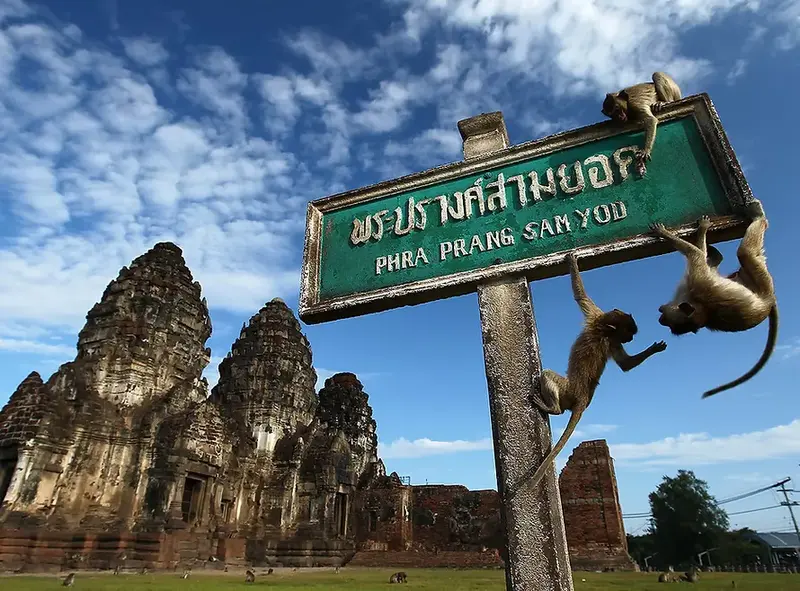
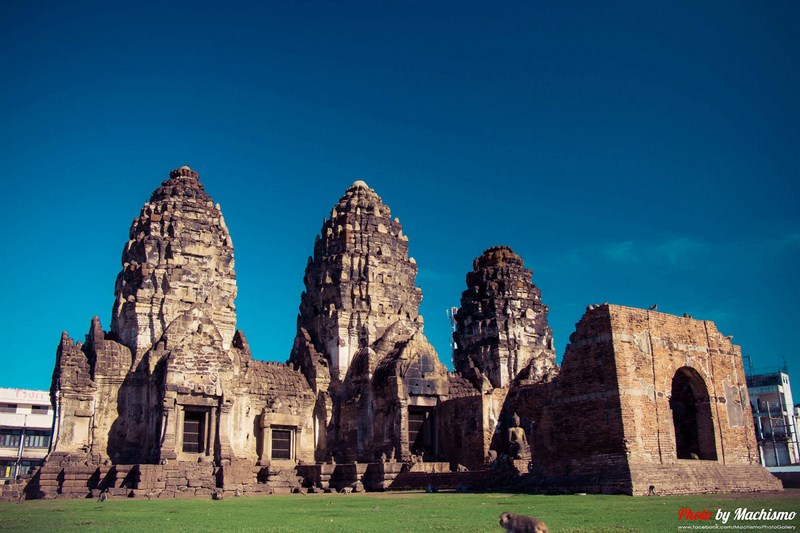
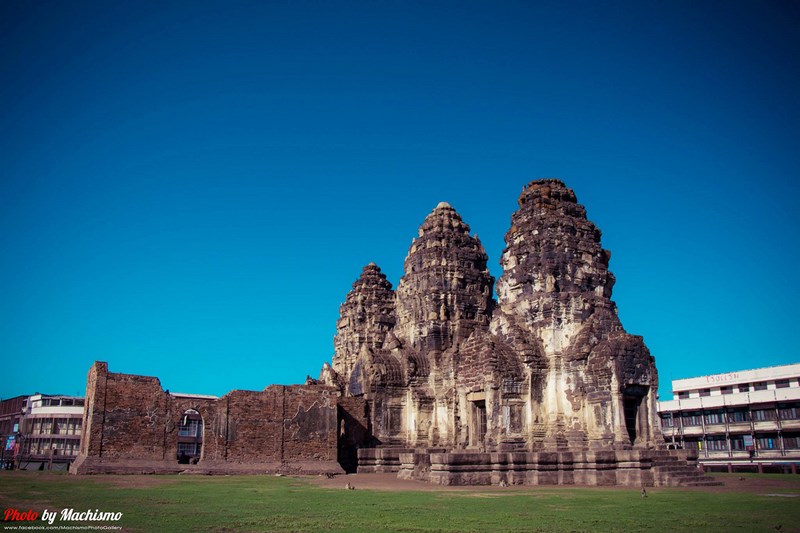
Phra Prang Sam Yot is one of the most important historical landmarks in Lopburi and one of the province’s best-known sites in Thailand. Located in Lopburi Old Town near San Phra Kan, it has become one of the city’s most recognizable symbols, valued both as a historical monument and as a travel destination with a highly distinctive identity. The monument consists of 3 prangs aligned in a row and connected by passageways. Built of laterite and once decorated with beautiful stucco ornamentation, Phra Prang Sam Yot is not merely an ancient structure, but also an important piece of evidence reflecting the development of art, religion, and political power in the ancient city of Lavo.
From a historical perspective, Phra Prang Sam Yot is described as a Khmer monument in the Bayon style, dating to around the 18th Buddhist century, and is associated with the period when Khmer influence spread prominently into Lavo. Its architectural character was therefore not originally Ayutthaya Thai craftsmanship, but part of the Khmer artistic world, with its own distinct planning, materials, and decorative elements. One of its most notable features is the carved doorframe columns depicting hermits seated with raised knees inside ornate niches, which is considered a characteristic feature of Bayon-style Khmer art.
The most striking feature of Phra Prang Sam Yot is the arrangement of its 3 prangs in a continuous row, creating a powerful and elegant silhouette that remains impressive even after centuries. These 3 prangs are not only visually distinctive, but also meaningful in terms of religion and ritual. It is believed that during its original construction, each prang housed sacred images associated with Mahayana and Vajrayana Buddhism. The central prang is thought to have enshrined a Buddha image, while the side prangs were associated with Avalokitesvara and Prajnaparamita. This makes Phra Prang Sam Yot an important archaeological witness to the adoption of Mahayana Buddhist beliefs in Lavo during that era.
Another dimension that gives Phra Prang Sam Yot exceptional historical value is its role as evidence of religious transition. Originally, the site was associated with Mahayana Buddhism, but it was later adapted into a Hindu sanctuary, with Shiva lingam bases appearing in all 3 prangs. This transformation reflects how sacred spaces in the past did not remain fixed, but were continually reinterpreted and reused according to the beliefs of each period. By the reign of King Narai the Great, Phra Prang Sam Yot was restored and redefined again within a Buddhist context, showing how the ancient monument continued to be used without severing its connection to the past.
On the eastern front of Phra Prang Sam Yot stands a vihara built during the reign of King Narai the Great, serving as another important layer of overlapping history within the same space. This vihara displays Ayutthaya architecture blended with European elements in its doors and windows, reflecting Lopburi’s atmosphere during the period when the city played an important role in politics and foreign relations. Inside, there was once a large stone Buddha image in the meditation posture that was considered relatively well preserved, along with a sandstone Buddha image in the Mara-vijaya posture from the early Ayutthaya period, which is connected to the site’s later use as a Buddhist religious space.
When viewed in architectural detail, Phra Prang Sam Yot is notable not only for its external form, but also as a document of craftsmanship and artistic expression. The prangs are constructed of laterite, a material commonly found in Khmer monuments throughout the region, and were coated with stucco and enriched with decorative patterns. The details of the doorframe columns and other structural elements clearly confirm the influence of Bayon art. Interior traces, such as the record of a red star-patterned painted wooden ceiling in the central prang, also suggest that the monument’s interior was once more complete and visually refined than what remains visible today.
For this reason, Phra Prang Sam Yot should not be seen merely as a photogenic tourist attraction, but as a place containing multiple layers of history in a single location. These layers include Khmer influence, shifts in religious belief, and restoration during the late Ayutthaya period, especially in the reign of King Narai the Great, when Lopburi held great significance within the Ayutthaya Kingdom. The importance of Phra Prang Sam Yot lies in the fact that it is not evidence of only one era, but a place where several historical periods can still be read through the physical elements that remain.
In terms of location, Phra Prang Sam Yot stands in an area that is highly significant for understanding Lopburi as a whole, because it lies close to San Phra Kan and allows convenient walking connections throughout the old quarter. From here, visitors can continue on to Wat Nakhon Kosa, Wat Phra Si Rattana Mahathat, King Narai’s Palace, Prang Khaek, and Baan Wichayen without much difficulty. This makes Phra Prang Sam Yot not simply a stand-alone destination, but an excellent starting point for understanding the wider city of Lopburi, especially for those who want to explore the historic urban landscape on foot.
The atmosphere of Phra Prang Sam Yot today is distinctive because it combines an ancient monument with contemporary city life. Visitors can feel the character of an old town that has not been separated from daily life, while at the same time experiencing one of the features that has made the site famous nationally and internationally: the large number of monkeys living nearby. The image of monkeys against the prangs has become an identity of Lopburi in its own right. Although the site’s primary value lies in its history and art, the monkeys undeniably play an important role in the modern atmosphere and in how tourists perceive the place.
However, anyone visiting Phra Prang Sam Yot today should prepare appropriately for being in an area shared with monkeys. Visitors should avoid carrying visible food or items that easily attract attention, and should take care with valuables such as glasses, mobile phones, and anything that can be quickly snatched away. This is important practical information for real visitors, because although it is not directly part of the site’s history, it forms an essential part of the travel experience and helps make a visit smoother and safer.
Getting There to Phra Prang Sam Yot is convenient by private car, public transport, and train. Those driving from Bangkok can use the main highways into Lopburi and continue directly to the old town area. Travelers coming by train should check their destination station in advance, as the rail system in Lopburi has changed in recent years and some trains may arrive at Lopburi 2 Station. For visitors planning to see Phra Prang Sam Yot and the surrounding historic quarter, arriving in the city and then continuing on foot or by local transport is one of the most practical and rewarding ways to explore the area.
From the perspective of trip planning, Phra Prang Sam Yot is especially well paired with San Phra Kan, since the 2 sites are close enough to reach easily on foot. From there, visitors can extend their route to other historical attractions in the old city such as Wat Nakhon Kosa, Wat Phra Si Rattana Mahathat, King Narai’s Palace, Prang Khaek, and Baan Wichayen. Exploring in this way allows visitors to see not only Phra Prang Sam Yot as an isolated monument, but also the wider historical structure of the old city and gain a clearer understanding of Lopburi as a heritage city.
In terms of present-day significance, Phra Prang Sam Yot remains one of the strongest symbols of Lopburi Province in tourism, civic identity, and cultural value. It serves as a gateway through which people can access the story of Lavo and the historical transformation of religion and political power in central Thailand in a tangible way. It also gives Lopburi a distinctive identity unlike other historical destinations, because the city combines Khmer monuments, Ayutthaya heritage, traces of international contact from the reign of King Narai, and a modern atmosphere unlike anywhere else.
For history lovers, Phra Prang Sam Yot is a place where Bayon art, Lavo history, Mahayana Buddhism, Khmer influence, and Ayutthaya restoration can all be read within a single site. For general travelers, it is a landmark of remarkable beauty, dignity, and uniqueness. Combined with its convenient location near many other important attractions, Phra Prang Sam Yot deserves a place on any Lopburi itinerary, whether the purpose is to study history, photograph architecture, enjoy the old-town atmosphere, or experience one of Lopburi’s most important symbols in person.
| Summary | An important historical monument in Lopburi Province, featuring 3 connected prangs in Khmer Bayon style, located in the old town area near San Phra Kan. |
| Highlights | 3 aligned prangs, laterite and stucco craftsmanship, traces of Mahayana religious use, restoration in the reign of King Narai the Great, and status as a major Lopburi landmark. |
| History / Period | Dates to around the 18th Buddhist century, in Bayon style, associated with the Khmer-influenced era of Lavo, and later restored in the reign of King Narai the Great. |
| Current Caretaker | Fine Arts Office 4, Lopburi |
| Address | Tha Hin Subdistrict, Mueang Lopburi District, Lopburi Province |
| Coordinates | RJ37+5JF, Tha Hin Subdistrict, Mueang Lopburi District, Lopburi 15000 |
| Getting There | Well suited for a connected walking trip through Lopburi Old Town, with easy access to San Phra Kan, Wat Nakhon Kosa, Wat Phra Si Rattana Mahathat, King Narai’s Palace, Prang Khaek, and Baan Wichayen. |
| Zones | Northern prang, central prang, southern prang, and the eastern vihara. |
| Nearby Attractions | 1. San Phra Kan — approximately 0.2 km. 2. Wat Nakhon Kosa — approximately 0.4 km. 3. Wat Inthra — approximately 0.6 km. 4. Wat Bandai Hin — approximately 1.0 km. 5. Wat Phra Si Rattana Mahathat — approximately 1.3 km. |
| Nearby Restaurants | 1. Je Ju Tom Lueat Moo — near Phra Prang Sam Yot — Tel. 084-094-3516, 080-109-8897 2. Khao Tom Ho Restaurant (Chulathip Restaurant) — near Na Phra Kan Road — Tel. 0-3641-1672 3. Heartbeathouse — near Na Phra Kan — Tel. 084-337-1123 4. Ran Lio — Prang Sam Yot Road — Tel. 036-413-612 5. Enjoy68 — Prang Sam Yot Road — Tel. 093-856-4451 |
| Nearby Accommodations | 1. Nett Hotel — approximately 0.5 km. — Tel. 036-411-738, 036-421-460 2. Noom Guesthouse — near the old town area — Tel. 036-427-693, 091-041-811, 064-154-4342 3. Windsor Resort — approximately 1.3 km. 4. Lopburi Inn Hotel — approximately 10 minutes by car — Tel. 036-412-300 5. Benjatara Boutique Resort — approximately 5.1 km. — Tel. 036-422-608 |
| Main Contact Number | 036-412-510 |
Frequently Asked Questions (FAQ)
Q: When was Phra Prang Sam Yot built?
A: Phra Prang Sam Yot is a Khmer monument in the Bayon style, dating to around the 18th Buddhist century, and is associated with the period of Khmer influence in Lavo.
Q: What religion was Phra Prang Sam Yot originally associated with?
A: It was originally associated with Mahayana and Vajrayana Buddhism, before later being adapted into a Hindu sanctuary, and eventually restored into a Buddhist context again in the reign of King Narai the Great.
Q: What is the most distinctive feature of Phra Prang Sam Yot?
A: Its most distinctive feature is the row of 3 connected prangs linked by passageways, making it one of the most important examples of Bayon-style Khmer architecture in Lopburi.
Q: What attractions are near Phra Prang Sam Yot?
A: Phra Prang Sam Yot is located near San Phra Kan and connects easily to Wat Nakhon Kosa, Wat Phra Si Rattana Mahathat, King Narai’s Palace, Prang Khaek, and Baan Wichayen.
Q: Why is Phra Prang Sam Yot important today?
A: Today, Phra Prang Sam Yot is a major landmark of Lopburi and an important symbol of the province’s history, culture, and tourism identity.
Q: What should visitors be careful about when visiting Phra Prang Sam Yot?
A: Visitors should be cautious of the monkeys in the surrounding area, avoid carrying visible food or easily snatched belongings, and keep valuables secure while exploring the site.
Comment
Photo Gellery(3) 
| ● Photographer: Machismo ● Link: pixpros.net/forums/showthread.php?t=7403 ● Ref: pixpros.net |
● Copyright Photography. (800*500)
● View full size images from the photographer.
| Keyword (Advance) |
Region
|


Category:
Group: