
 Home
Home Chiang Mai(






Rating: 5/5 (1 votes)
 |
|  Map
Map 
 Have Map
  No Map
Lop Buri attractions
Attractions in Thailand
Open Days: Local Tradition
Opening Hours: According to Local Announcements
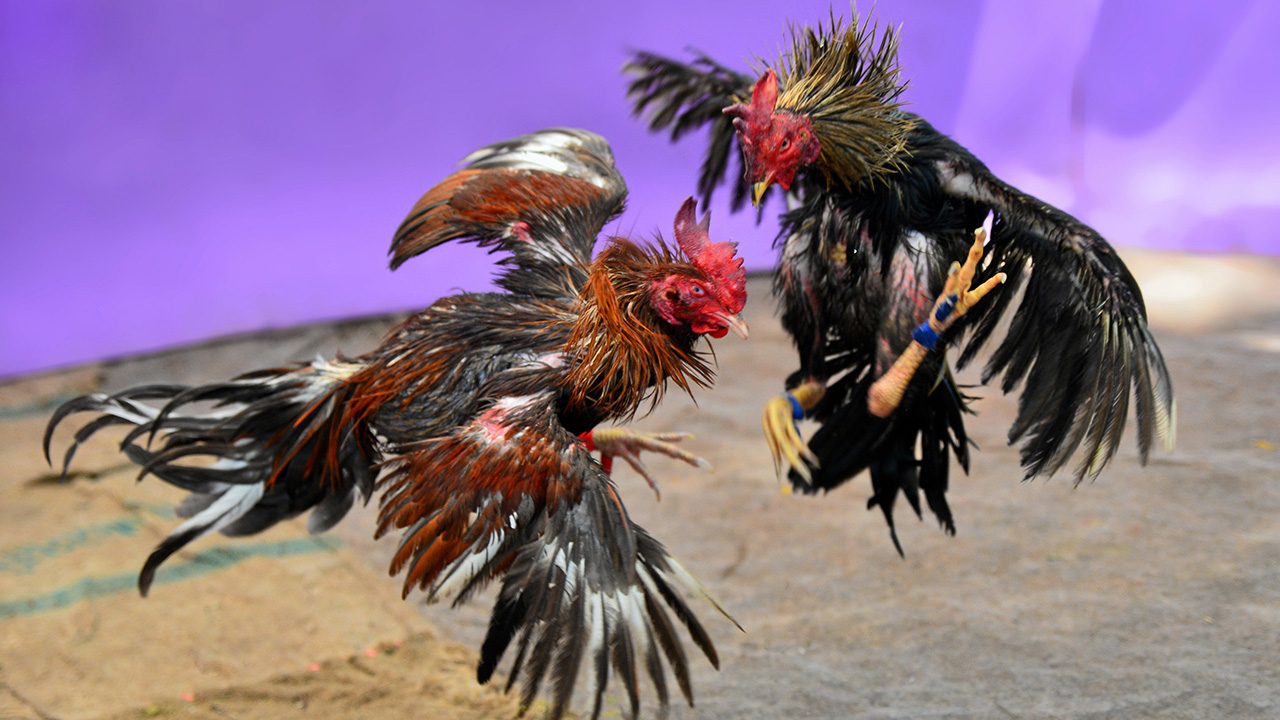
The Wild Jungle Fowl Tradition of Ban Lan Khwai: A Folk Performance Art of Lopburi is a reflection of the cultural life of rural communities in Central Thailand, where the atmosphere of traditional ways of life remains clearly present. The essence of this tradition does not lie solely in the excitement of the performance itself, but in the relationship between people, animals, nature, and the community that once sustained everyday life in Lopburi. Looking at this tradition more deeply reveals that it is a form of cultural heritage born from the real experiences of villagers, not merely something created for performance.
In the context of this article, Ban Lan Khwai is therefore not simply the name of a village, but a cultural space that has shaped the memories of local people. The wild jungle fowl tradition is remembered as a folk performance rooted in the real lives of rural people in Central Thailand, whose past was closely tied to rice fields, open land, scrub forests, water sources, and the wildlife surrounding their livelihood. As villagers had to learn from the natural world around them in order to survive, a body of knowledge gradually emerged, including knowledge of the seasons, animals, and the ways of living together within the community.
The jungle fowl has long occupied a place in the imagination of rural Thai society. It is seen as agile, highly alert, strong, and instinctively protective of its territory. These qualities made the jungle fowl a symbol of endurance, courage, and strategic skill. In the eyes of villagers, the jungle fowl was not just an ordinary wild animal, but one with character and distinct behavior, requiring genuine understanding for anyone wishing to raise or train it to become familiar with people.
The roots of this wild jungle fowl tradition are closely linked to the former way of life in which villagers depended on nature as their primary source of sustenance. When the rural landscape of Lopburi was more abundant than it is today, various wild animals, including jungle fowl, were part of everyday life. Capturing jungle fowl to raise them or studying their habits was therefore something that could naturally occur in an agricultural society. Over time, this knowledge gradually developed into the raising, selection, and presentation of the birds’ abilities in communal village spaces.
What matters most is that, from a cultural perspective, this tradition did not arise solely from the idea of competition. It also grew from the pride of the keepers, the display of skill in caring for animals, and the gathering of people within the community. Each keeper did not merely bring a bird to display strength, but also brought years of experience, careful observation, and accumulated expertise. In this sense, the wild jungle fowl tradition can be understood as a display of community wisdom expressed through an animal that local people had long known and valued.
Once this tradition took root in Ban Lan Khwai, it gradually became a center of community gathering. The day of the event or communal gathering carried meaning beyond simply watching the birds. It was a day when people could step away from their daily responsibilities, meet one another, exchange news, and remind themselves that they were still part of the same community. In rural Thai society, the folk traditions that remain alive are often not the grandest ones, but those that local people still feel belong to them and continue to hold value in their shared lives.
One of the most interesting aspects of the Ban Lan Khwai wild jungle fowl tradition is its distinctly homegrown atmosphere and strong sense of familiarity. Unlike large-scale festivals focused mainly on tourism, this kind of event draws its charm from sincerity and closeness. Visitors are able to witness culture in a form that remains connected to real people, real places, and genuine local speech. The conversations of elders, the lively cheering, the attentive gaze of children and youth, and the presence of traditional food and community products all give the event a natural vibrancy.
From the perspective of community history, this tradition also helps explain how entertainment in rural Thai society in the past was rarely separated from everyday life. Leisure activities often grew out of things people were already familiar with, whether animal-based performances, folk songs, music, or seasonal games. The wild jungle fowl tradition is therefore an example of culture that emerged from real life, not something separated and elevated into a special ritual only for ceremonial occasions.
At another level, the tradition also reflects the subtlety of local wisdom. Bird keepers did not view the animals merely in practical terms, but had to learn their habits, rhythms of response, physical strength, and the environment best suited to them. This kind of knowledge rarely appears in written texts, but is transmitted through experience, observation, memory, and imitation across generations. This is the value of folk wisdom, often hidden within activities that may appear simple at first glance.
As a folk tradition, this wild jungle fowl performance also carries social meaning because it creates space for people of many ages to take part. Elders tell stories of the past and explain the meaning of the tradition. Working-age adults serve as the main force in organizing and coordinating the event. Children and youth act as learners and inheritors. When a community has the opportunity to engage in such shared activities, cultural continuity has a much greater chance of surviving than if the tradition were kept only in memory.
Even though the modern world has greatly changed rural life, the value of the wild jungle fowl tradition has not disappeared. On the contrary, it has become even more important as a reminder that local communities possess their own roots, their own way of thinking, and their own forms of entertainment shaped by their own cultural foundations. They do not need to imitate everything from urban society in order to have value. Traditions of this kind are therefore forms of cultural power that affirm community identity in an age of rapid change.
From the perspective of visitors, the Ban Lan Khwai wild jungle fowl tradition is especially interesting because it offers a way to understand Lopburi from another angle. Many people know Lopburi through its historic city, Narai Ratchaniwet Palace, Phra Prang Sam Yot, the Shrine of Phra Kan, or the renowned atmosphere of its old town. Yet another side of Lopburi lies in its rural communities, which still preserve local ways of life, folk culture, and shared memory with remarkable charm. This tradition therefore broadens the image of Lopburi beyond historical tourism alone.
The importance of this tradition is also connected to the preservation of intangible cultural heritage. What has been passed down is not a building or an object, but knowledge, practices, beliefs, atmosphere, and the meanings that people in the community have attached to this activity. Preservation therefore does not simply mean repeating the event every year. It means helping younger generations understand why this tradition once mattered so deeply and why it still deserves to be remembered today.
In practice, sustaining the wild jungle fowl tradition requires a balance between preserving its original core and adapting it to the present era. Many communities in Thailand face a similar question: how can culture remain alive without losing its original meaning? The answer is often not to freeze time, but to retain the essential substance of the tradition, such as community spirit, the transmission of local wisdom, and respect for nature, while adjusting certain forms to suit contemporary society.
For Ban Lan Khwai, the wild jungle fowl tradition should therefore be seen as a form of cultural capital for the community. Whether it is held on a small or large scale, whether it attracts many outsiders or not, its core value lies in enabling local people to see the meaning of their own roots once again. When a community truly sees the value of what it possesses, preservation no longer feels like a burden, but becomes a shared source of pride.
Another dimension that should not be overlooked is the connection between the tradition and the local economy. Although a folk event like this is not a large commercial festival, whenever people gather, economic activity naturally follows. This may include traditional food, drinks, community products, and local services. If managed appropriately, a folk tradition can help circulate income within the community and allow local people to see the benefits of preserving culture alongside the development of the grassroots economy.
Even so, what gives the Ban Lan Khwai wild jungle fowl tradition its deepest value is not merely that it is unusual or difficult to find elsewhere, but that it tells the story of local people in a direct and honest way. It shows that life in rural Central Thailand was never limited to images of rice fields and quiet homes. It was also full of cultural activities born from real human experience, folk creativity, forms of entertainment tied to social relationships, and wisdom embedded in the small details of everyday life.
From a learning perspective, this tradition is also highly suitable for the study of community culture because it brings together many issues at once, including local history, rural anthropology, animal-related ways of life, community relationships, and informal transmission of knowledge. Anyone interested in Thai culture can clearly see that many folk traditions do not exist merely for enjoyment, but operate as systems of shared learning within communities, repeated over time until they become part of the collective memory of a locality.
Traveling to understand the Ban Lan Khwai wild jungle fowl tradition should therefore not mean merely going to witness a single event. It should mean going to experience the atmosphere of rural Lopburi, listening to local stories, observing the way people think and speak within the community, and recognizing the value of small details that often do not appear in ordinary travel guides. These are the things that make cultural learning meaningful and profound, far beyond simply checking in or taking photographs.
In the context of cultural tourism, this tradition has the potential to become content that helps give Lopburi a more diverse identity. The province is not defined only by monkeys or historical monuments. It also has folk communities that preserve their own cultural identity in compelling ways. Telling the story of this rural tradition with depth and respect for the real context of the area can help modern travelers understand that quality tourism in Thailand is not measured only by the number of places in an itinerary, but by understanding the meaning of the places one visits.
Another major charm of this tradition is the shared sense of ownership felt by the people in the community. Many folk traditions survive because local people do not see them as activities belonging to any one agency, but as something that belongs to them. The more community members participate, from storytelling and organizing the event to attending it and passing it on to younger generations, the more alive the tradition becomes, rather than existing only as a staged performance on an annual event calendar.
For younger generations, the Ban Lan Khwai wild jungle fowl tradition also serves as a bridge between the past and the present. Children growing up in the digital world may not be familiar with a lifestyle so closely tied to nature as earlier generations were. But when they see, hear, and participate in a tradition that has been handed down over time, they naturally develop questions, curiosity, and a deeper sense of connection to their hometown. This process is extremely important in preventing local culture from becoming disconnected.
Ultimately, the Ban Lan Khwai wild jungle fowl tradition does not have value because it is exotic, but because it is real to the people of the area. It stands as evidence that rural communities in Central Thailand once had distinctive forms of entertainment, learning, and social gathering. It reminds us that Thai identity is not singular, but made up of many local cultures that grew out of the environments and experiences of people in each place.
Seen in this way, the Ban Lan Khwai wild jungle fowl tradition deserves to be remembered as a folk performance art of the people of Lopburi, rich in historical, social, cultural, and communal memory value. It affirms that the roots of Thai society still hold power in local communities, and the faster the world changes, the more meaningful such traditions become as reminders of where people come from and what kind of beauty their communities once created.
Getting There If you wish to travel to study this cultural area in Lopburi Province, it is best to begin from Lopburi town, which serves as the transportation center of the province, and then coordinate with local agencies in the area before traveling. This is because community folk traditions do not usually have fixed display schedules like ordinary tourist attractions. The best preparation is to choose a time when the community is actually holding activities, respect the rules of the area, dress politely, and enter the community with genuine respect. By traveling with this attitude, visitors are likely to gain an experience that is deeper and more authentic than simply passing through as ordinary tourists.
| Summary | The Ban Lan Khwai wild jungle fowl tradition in Lopburi Province is a folk performance of a rural Central Thai community that reflects local ways of life, the relationship with nature, and communal gathering. |
| Highlights | Its main highlight lies in being a folk tradition rooted in raising jungle fowl, the transmission of local wisdom, and the atmosphere of real community gathering among the people of Lopburi. |
| History / Period | Its roots lie in an older rural way of life in which people were closely connected to scrub forests, local wildlife, and animal raising before it gradually developed into a folk performance and community tradition. |
| Cultural Heritage Type | Folk performance and community tradition |
| Location | Ban Lan Khwai, Lopburi Province |
| Getting There | It is best to begin from Lopburi town and then confirm access to the community and the activity schedule with local agencies before traveling, since traditions of this kind are usually held on community occasions rather than being open for viewing every day. |
| Current Importance | It serves as a symbol of community identity, helps preserve shared memory, strengthens unity, and broadens the image of Lopburi cultural tourism beyond historical monuments. |
| Atmosphere | The atmosphere is that of a rural Central Thai community event: close, friendly, and centered on local gathering, storytelling, and the preservation of folk culture. |
| Visitor Information | Visitors should confirm the activity schedule with the local area before traveling, dress politely, and attend with respect for the community context, since folk traditions hold cultural meaning beyond entertainment alone. |
Frequently Asked Questions (FAQ)
Q: What is the Ban Lan Khwai wild jungle fowl tradition?
A: It is a folk performance tradition of a community in Lopburi Province, rooted in rural life, the raising of jungle fowl, and communal gathering, and it has developed into a culturally meaningful local tradition.
Q: Why is this tradition important to the community?
A: Its importance lies in bringing community members together, passing on local wisdom, strengthening unity, and reinforcing pride in the identity of Ban Lan Khwai.
Q: What makes the Ban Lan Khwai wild jungle fowl tradition distinctive?
A: Its distinctiveness lies in the fact that it grew out of the real lives of rural people in Central Thailand. It is not only about enjoyment, but also reflects the relationship between people, animals, nature, and community.
Q: Can tourists visit to learn about this tradition?
A: Yes, tourists can visit to learn about it culturally, but they should confirm the local schedule before traveling, since events of this kind usually depend on community arrangements, and visitors should attend respectfully and politely.
Q: How does this tradition help people understand Lopburi more deeply?
A: It reveals Lopburi through the lens of rural communities and folk cultural heritage, showing that the province is not defined only by its historic city or monuments, but also by its local ways of life and traditions.
Q: Why should folk traditions like this be preserved?
A: Because folk traditions are forms of intangible cultural heritage that preserve knowledge, shared memory, ways of thinking, and community roots. If they disappear, future generations lose an important opportunity to understand their own local identity.
Q: How should visitors prepare if they want to study this tradition?
A: They should begin by asking local agencies or community members about the event schedule, plan the trip from Lopburi town, dress politely, and keep an open mind in order to learn from local stories while experiencing the real atmosphere of the community.
 Category:
  Group:
  Last Update: 9 HourAgo
Comment
 Nearby Attractions
| Keyword (Advance) |
 Facebook Fanpage
 Region
 Historical Sites and Monuments(
 Landmarks and Memorials(
 Royal Palace(
 Museums(
 Historical Houses and The Ancient City(
 University
 Places of Worship
 Temple(
 Other religious and spiritural sites(
 Research and Development
 Royal Project(
 Suburban Living
 Village, Community(
 Floating Market(
 Nature and Wildlife
 National Parks and Marine Reserves(
 Mountain (Doi)(
 Dam, Reservoir, Lake(
 Waterfalls(
 Hot Springs(
 Caves(
 Flower Field(
 Entertainment and Agricultural
 Zoos and Aquariums(
 Farm, Parks, Gardens and Ecotourism(
 Outdoor and Adventure Activities(