

 Home
Home Chiang Mai(





Rating: 5/5 (1 votes)
 |
|  Map
Map 
 Have Map
  No Map
Lop Buri attractions
Attractions in Thailand
Open Days: Please contact Wat Samrong before visiting
Opening Hours: Please contact Wat Samrong before visiting
Hua Samrong Folk Museum is located within Wat Samrong in Hua Samrong Subdistrict, Tha Wung District, Lopburi Province. It serves as an important cultural learning center for the local community. The museum preserves and presents traditional knowledge and wisdom of Thai rural life through exhibitions of tools, equipment, and objects that reflect the agricultural lifestyle of communities in the central river basin of Thailand. Therefore, the museum is not merely a place for displaying old artifacts but also functions as a cultural learning center for children, youth, and the general public both within and outside the community.
The museum was established in 1999 by Phra Khru Siripunyaphiwat, the abbot of Wat Samrong at that time. He recognized the importance of preserving traditional tools and objects that reflect the way of life of villagers in the past so that this valuable knowledge would not disappear over time. The abbot, together with local residents, collected various items including agricultural tools, kitchen utensils, and fishing equipment that were once used in daily life and arranged them for exhibition in the museum.
The exhibition room is located on the ground floor of the multipurpose pavilion within Wat Samrong. The exhibition space is organized into different categories so that visitors can clearly understand the traditional lifestyle of past communities. The museum displays many types of local tools that illustrate local wisdom, livelihoods, and the relationship between humans and nature in rural Thai society.
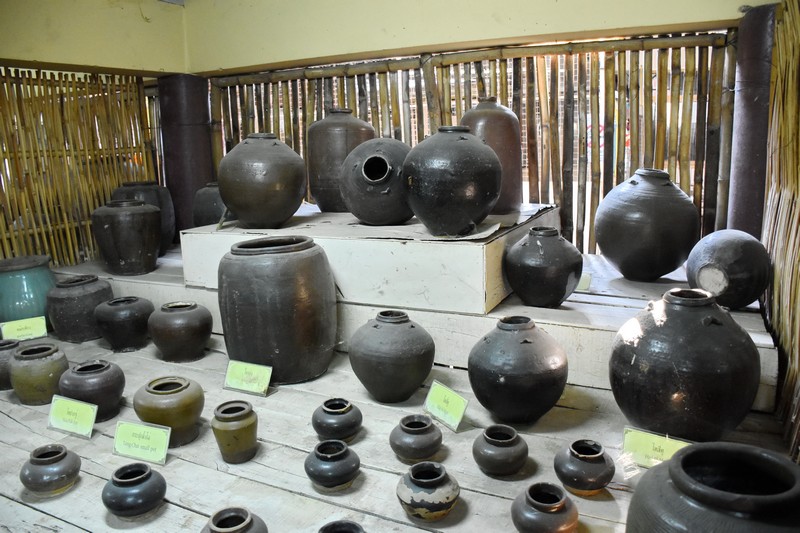
The first exhibition section is the traditional kitchen area, which displays cooking utensils and kitchen equipment once commonly used in Thai households. Items on display include clay stoves, various types of clay pots such as cooking pots and kettles, as well as household items like fish washing baskets, coconut graters, ladles, and water jars. These objects reflect how people in the past prepared food using natural materials and local craftsmanship.
Another important section is the traditional handicraft display, which features woven tools made from bamboo and rattan. These include hanging food carriers, baskets, rice containers, trays, sieves, and other woven utensils used in daily life. These items demonstrate the craftsmanship of local artisans and their ability to efficiently utilize natural resources.
The museum also displays rice measuring tools, which were essential in Thailand’s agricultural society because rice has long been the staple crop of Thai people. Items in this section include wide-mouth baskets, grain scooping baskets, measuring baskets, wooden and metal rice measuring containers, as well as rice grinding trays and pounding tools. These tools illustrate traditional methods of measuring agricultural produce using simple but effective equipment.
Another significant section of the museum is the rice farming tools display. It reflects the agricultural lifestyle of Thai farmers in the past who relied heavily on animal labor such as buffaloes and oxen. Tools exhibited include buffalo neck yokes for plowing, wooden yokes, harrows, plows, carrying poles for transporting rice, harvesting sickles, farmer hats, and shoulder poles. These tools symbolize the agricultural culture that played a crucial role in the livelihood of communities in the central river basin.
The museum also features equipment used for trapping animals and catching fish, reflecting the self-sufficient lifestyle of rural communities. The tools displayed include animal traps such as rat traps and snares, as well as fishing equipment like fish baskets, hooks, nets, spears, and fish traps. These tools were commonly used for catching fish and aquatic animals from natural water sources.
The final section of the museum contains miscellaneous household items such as brass betel nut trays, oil lamps, door locks, woodworking tools like hand planes and saws, and brass utensils such as trays and pots. In addition, visitors can see traditional weighing scales, abacuses, and various everyday objects that were once used in the daily lives of Thai people in the past.
The Hua Samrong Folk Museum is therefore considered an important cultural learning center for Hua Samrong Subdistrict and Lopburi Province. It preserves knowledge about the traditional lifestyle of Thai people and allows younger generations to learn about local wisdom through authentic tools and artifacts once used in everyday life.
Getting There Visitors can travel to Hua Samrong Folk Museum from Lopburi city by heading toward Tha Wung District. Upon reaching Hua Samrong Subdistrict, continue to Wat Samrong, where the museum is located. Traveling by private car is convenient since the temple is located not far from the main road of the district.
| Place Name | Hua Samrong Folk Museum |
| Address | Wat Samrong, Hua Samrong Subdistrict, Tha Wung District, Lopburi Province, Thailand |
| Place Characteristics | A community museum displaying traditional tools and agricultural lifestyle of local villagers in the past |
| Year Established | 1999 |
| Place Type | Local Folk Museum / Community Cultural Learning Center |
| Current Status | Community cultural learning center located within Wat Samrong |
| Open Days | Visitors should contact Wat Samrong before visiting |
| Opening Hours | Visitors should contact Wat Samrong before visiting |
| Entrance Fee | No confirmed entrance fee (generally a temple-based learning center) |
| Nearby Tourist Attractions | 1. Wat Samrong (0.1 km) 2. Wat Lai, Lopburi (14 km) 3. Wat Phra Si Rattana Mahathat, Lopburi (22 km) 4. Phra Prang Sam Yot (22 km) 5. King Narai's Palace (23 km) |
| Popular Restaurants Nearby | 1. Baan Rim Nam Floating Restaurant, Tha Wung (12 km) Tel. 036-421-203 2. Lopburi Krua Thai Restaurant (21 km) Tel. 036-411-145 3. Baan Suan Lopburi Restaurant (22 km) Tel. 036-412-704 4. Lopburi Rice Porridge Restaurant (22 km) Tel. 036-411-404 5. Esan Restaurant near Lopburi Railway Station (23 km) |
| Popular Accommodations Nearby | 1. Lopburi Inn Resort (22 km) Tel. 036-412-300 2. Windsor Resort Lopburi (23 km) Tel. 036-411-673 3. Benjatara Boutique Place Resort (24 km) Tel. 036-422-608 4. O2 Hotel Lopburi (25 km) Tel. 036-422-777 5. Nett Hotel Lopburi (23 km) Tel. 036-411-333 |
Frequently Asked Questions (FAQ)
Q: Where is Hua Samrong Folk Museum located?
A: The museum is located within Wat Samrong, Hua Samrong Subdistrict, Tha Wung District, Lopburi Province.
Q: What can visitors see at Hua Samrong Folk Museum?
A: Visitors can see traditional household tools, kitchen utensils, woven handicrafts, rice farming tools, fishing equipment, and various everyday objects used by villagers in the past.
Q: When was Hua Samrong Folk Museum established?
A: The museum was established in 1999 by Phra Khru Siripunyaphiwat, the abbot of Wat Samrong, together with the local community.
Q: Who is the museum suitable for?
A: The museum is suitable for students, researchers, tourists, and anyone interested in learning about Thai local culture and traditional wisdom.
Q: How can visitors travel to Hua Samrong Folk Museum?
A: Visitors can travel from Lopburi city to Tha Wung District and continue to Wat Samrong, where the museum is located.
 Tel: 034265418
 Mobile: 0892231243
 Fax: 034389622
 Hua Samrong Folk Museum Map
 Category:
  Group:
  Last Update: 16 MinuteAgo
Comment
 Nearby Attractions
| Keyword (Advance) |
 Facebook Fanpage
 Region
 Historical Sites and Monuments(
 Landmarks and Memorials(
 Royal Palace(
 Art, Craft Centres, Tradition(
 Historical Houses and The Ancient City(
 University
 Places of Worship
 Temple(
 Other religious and spiritural sites(
 Research and Development
 Royal Project(
 Suburban Living
 Village, Community(
 Floating Market(
 Nature and Wildlife
 National Parks and Marine Reserves(
 Mountain (Doi)(
 Dam, Reservoir, Lake(
 Waterfalls(
 Hot Springs(
 Caves(
 Flower Field(
 Entertainment and Agricultural
 Zoos and Aquariums(
 Farm, Parks, Gardens and Ecotourism(
 Outdoor and Adventure Activities(