

 Home
Home Chiang Mai(




Rating: 3.5/5 (4 votes)
 |
|  Map
Map 
 Have Map
  No Map
Chai Nat attractions
Attractions in Thailand
Open Days: Every Day
Opening Hours: 08:00 – 17:00
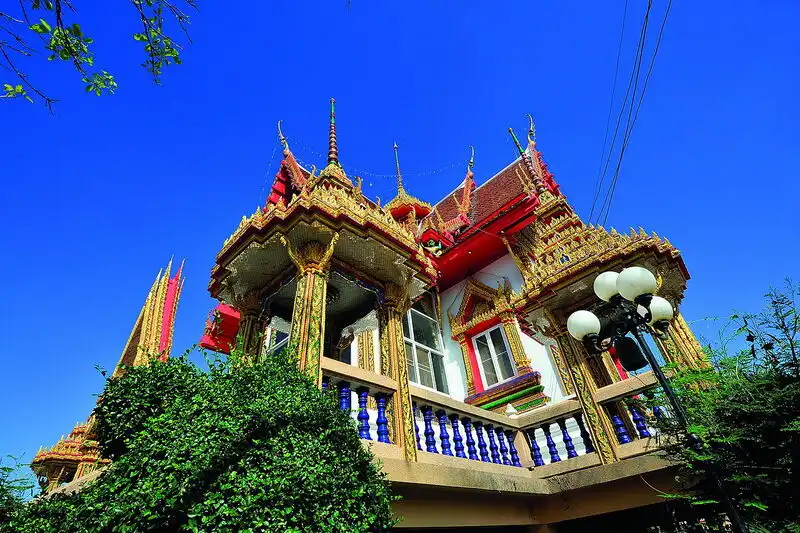
Wat Intharam (Taluk) is an important ancient temple in Chai Nat Province, located along the Chao Phraya River in Taluk Subdistrict, Sapphaya District. It is believed to have been built around B.E. 2390. Within the temple grounds are many valuable historic structures and architectural features, especially the scripture hall in the middle of the water and the twin bell towers, both of which are rare examples of Rattanakosin-period art. The temple was also once a well-known center for Pali studies and reflects the long-standing way of life of riverside communities along the Chao Phraya River, whose lives have long been closely connected with Buddhism and Thai culture.
Wat Intharam (Taluk) is an old temple located in Village No. 2, Taluk Subdistrict, Sapphaya District, Chai Nat Province, on the left bank of the Chao Phraya River, the major river that has sustained the lives of people in central Thailand since ancient times. The temple is not far from the Asian Highway, about 3 kilometers away, and approximately 12 kilometers from Chai Nat town, making it convenient for both tourists and worshippers to visit.
According to local information, Wat Intharam is believed to have been established around B.E. 2390, making it more than 100 years old. Inside the temple are historic buildings and sacred objects that reflect the craftsmanship and artistic wisdom of Thai artisans during the Rattanakosin period, including the scripture hall in the water, twin bell towers, the old ordination hall, ancient viharns, a twelve-cornered chedi, and a large wooden sermon hall built in B.E. 2461.
Wat Intharam was not only a place for Buddhist rituals, but also a cultural and educational center for the local community in the past, particularly in the study of Pali. The temple was once a respected Pali learning center and housed many palm-leaf manuscripts of the Tripitaka inscribed in ancient Khmer script, reflecting its importance as a center of Buddhist knowledge in earlier times.
One of the most remarkable features of Wat Intharam is the scripture hall in the middle of the water, a traditional Thai building constructed during the Rattanakosin period. It measures approximately 8 meters wide and 9 meters long and stands in the middle of a pond within the temple grounds. The building is decorated with colored glass and beautifully carved wooden details along the eaves, gables, and roof elements.
The construction of a scripture hall in the middle of the water reflects the wisdom of Thai artisans in the past. Since the Tripitaka was traditionally written on palm leaves, it was vulnerable to destruction by termites and insects. Building the scripture hall over water was therefore an effective way to protect the sacred manuscripts from such damage. Halls of this kind can be found in several ancient temples in Thailand, especially in the central region.
When compared with the scripture halls of other ancient temples in central Thailand, such as the ho trai of Wat Yai Suwannaram in Phetchaburi Province or the ho trai of Wat Phra Si Rattana Mahathat in Lopburi Province, the scripture hall of Wat Intharam stands out for its simple yet elegant Thai architectural form. It reflects the artistic style of the early Rattanakosin period and preserves many of its original elements in an especially interesting way.
In addition to the scripture hall, the temple also has twin bell towers, an architectural feature that is not commonly found in ordinary temples. Twin bell towers were built to hang bells used to signal the times for chanting or religious ceremonies. Their presence reflects the importance of the temple in the past, suggesting that it may once have been a temple of considerable significance to the community or a center of important religious activities.
Another important architectural feature is the twelve-cornered chedi, a style of chedi popular during the Ayutthaya and early Rattanakosin periods. The base of the chedi is recessed at intervals, forming a total of twelve angles. This gives the chedi a sense of dimension and enhances its architectural beauty. Above the base are niches enshrining U-Thong-style Buddha images in the blessing posture, reflecting the flourishing of Buddhism in the central region.
The temple’s architecture also includes other important decorative elements such as the chofa, gable panel, and hong pole, all of which are details found in ancient temples. The chofa is the decorative finial at the end of the roof ridge, shaped somewhat like a bird’s or Garuda’s head, and is believed to symbolize the sacredness of religious architecture. The gable panel is the wooden or stucco section beneath the roof peak, often carved with elaborate Thai motifs. The hong pole is a pillar topped with a swan figure, symbolizing auspiciousness and sacredness.
Within the temple grounds are also two ordination halls. The older one is in a much deteriorated condition due to age, while the newer ordination hall is about 100 years old. In addition, there are three old viharns housing many Buddha images, making Wat Intharam a place rich in ancient Buddhist sculpture that reflects artistic styles from various periods.
Another important structure in the temple is the wooden sermon hall, built in B.E. 2461. This building has large wooden pillars and reflects the construction techniques of Thai artisans in the past. Sermon halls were commonly used for meetings, Dhamma instruction, and religious activities of the community.
From the perspective of local history, Wat Intharam is an important place that reflects the development of communities along the Chao Phraya River. In the past, the river served as the main transportation route of central Thailand, and many communities were established along its banks. Temples were often built to serve as spiritual centers for people in these areas.
For this reason, Wat Intharam is not only a place for religious ceremonies, but also a historical monument reflecting the way of life, culture, and faith of the people of Chai Nat Province for many generations.
For travelers visiting Chai Nat Province, stopping at Wat Intharam is another rewarding experience. The temple is located not far from other important attractions in the province, such as the Chao Phraya Dam, Chainat Bird Park, and Wat Mahathat Chai Nat, making it possible to plan a day trip to several destinations in one journey.
Getting There Wat Intharam (Taluk) can be reached from Chai Nat town by taking Highway No. 311 toward Sapphaya District. At kilometer marker 48, turn left onto the road along the irrigation canal, then continue a short distance to reach the temple, which is located near the Chao Phraya River.
With its value in history, art, and local culture, Wat Intharam (Taluk) is another important temple in Chai Nat Province that clearly reflects the prosperity of Buddhism and the riverside way of life along the Chao Phraya River.
| Name | Wat Intharam (Taluk) |
| Address | Village No. 2, Taluk Subdistrict, Sapphaya District, Chai Nat Province |
| Main Characteristics | An ancient riverside temple along the Chao Phraya River, believed to have been built around B.E. 2390, with several important historic structures inside the temple grounds. |
| Highlights | The scripture hall in the middle of the water, twin bell towers, Rattanakosin-period art, the twelve-cornered chedi, and the ancient wooden sermon hall. |
| Abbot or Caretaker | Phra Khru Palat Osot Sirimangkhalo |
| Open Days | Every Day |
| Opening Hours | 08:00 – 17:00 |
| Getting There | From Chai Nat town, take Highway No. 311 toward Sapphaya District. At kilometer marker 48, turn left onto the road along the irrigation canal, then continue حوالي 3 kilometers to reach the temple. |
| Nearby Attractions | 1. Chao Phraya Dam (about 7 km) Tel. 056-411234 2. Chainat Bird Park (about 14 km) Tel. 056-411456 3. Wat Mahathat Chai Nat (about 12 km) Tel. 056-411222 4. Wat Pak Khlong Makham Thao (about 20 km) Tel. 056-433111 5. Sapphaya Chao Phraya Market (about 5 km) Tel. 056-421345 |
| Nearby Restaurants | 1. Rim Khuean Chao Phraya Restaurant (about 7 km) Tel. 056-411789 2. Khrua Sapphaya (about 5 km) Tel. 056-421987 3. Khrua Baan Suan Chai Nat (about 12 km) Tel. 056-413789 4. Chao Phraya Restaurant (about 8 km) Tel. 056-411321 5. Lum Nam Chao Phraya Restaurant (about 10 km) Tel. 056-411654 |
| Nearby Accommodations | 1. Chainat Thani Hotel (about 13 km) Tel. 056-411222 2. Riverside Resort Chai Nat (about 12 km) Tel. 056-413333 3. Baan Suan Resort Chai Nat (about 10 km) Tel. 056-412444 4. Sapphaya Resort (about 6 km) Tel. 056-421111 5. Chao Phraya Resort Chai Nat (about 14 km) Tel. 056-410555 |
Frequently Asked Questions (FAQ)
Q: Where is Wat Intharam (Taluk) located?
A: Wat Intharam is located in Village No. 2, Taluk Subdistrict, Sapphaya District, Chai Nat Province, on the left bank of the Chao Phraya River.
Q: When was Wat Intharam built?
A: According to local information, Wat Intharam is believed to have been established around B.E. 2390, making it more than 100 years old.
Q: What is the most outstanding feature of Wat Intharam?
A: The temple’s main highlight is the scripture hall in the middle of the water, a traditional Thai architectural structure used to store palm-leaf Tripitaka manuscripts, along with the twin bell towers and the twelve-cornered chedi.
Q: What historic structures can be seen inside Wat Intharam?
A: Inside the temple are two ordination halls, three old viharns, the scripture hall in the water, twin bell towers, an ancient chedi, a pavilion housing a replica Buddha footprint, and a wooden sermon hall built in B.E. 2461.
Q: Is it convenient to travel to Wat Intharam?
A: Yes, traveling is quite convenient. Visitors can drive from Chai Nat town along Highway No. 311, turn onto the road along the irrigation canal, and continue about 3 kilometers to reach the temple.
Q: What other attractions can be visited together with Wat Intharam?
A: Visitors can continue to Chao Phraya Dam, Chainat Bird Park, Wat Mahathat Chai Nat, and Wat Pak Khlong Makham Thao, all of which are important attractions in Chai Nat Province.
 Tel: 056433590
 Wat Intharam (Taluk) Map
 Category:
  Group:
  Last Update: 17 HourAgo
Comment
 Nearby Attractions
| Keyword (Advance) |
 Region
|
 Muang Chai Nat(