

 Home
Home Chiang Mai(




Rating: 2.8/5 (26 votes)
 |
|  Map
Map 
 Have Map
  No Map
Chai Nat attractions
Attractions in Thailand
Open Days: Every Day
Opening Hours: Open All Day
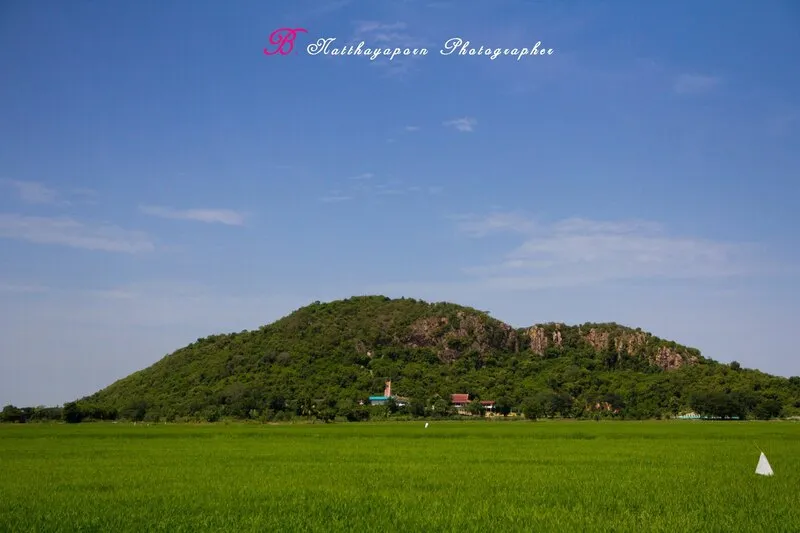
Khao Sapphaya is a solitary hill rising in the middle of the rice fields in Sapphaya Subdistrict, Sapphaya District, Chainat Province. It is also the site of Wat Khao Sapphaya Buranaram, an old temple that features an ordination hall, pagodas, a sermon hall, caves, and scenic viewpoints on the summit. This place stands out for its landscape, culture, and beliefs, as it is connected with legends from the Ramakien, especially the story of Hanuman and sacred medicinal herbs that local people have passed down for generations.
The uniqueness of Khao Sapphaya lies in the fact that it is a single hill standing prominently in the flat landscape of the Chao Phraya basin. From a distance, the hill can be clearly seen rising above the fields, making it both a landmark for the community and one of the defining images of Sapphaya District. Although Chainat is generally remembered as a river plain and agricultural province, Khao Sapphaya adds a distinctive geographical dimension to the surrounding area.
Khao Sapphaya is located in Village No. 1 of Sapphaya Subdistrict. The temple is situated about 3.5 kilometers southwest of the Sapphaya District Office, and if you travel from the Sing Buri–Chainat road, there is a junction leading conveniently to the foot of the hill. This makes the place fairly easy to reach for visitors traveling by private car, and once you arrive at the base, you can continue on foot by climbing the stairs to the sacred area above.
Historically, Wat Khao Sapphaya is an ancient temple. There is information indicating that it was established around 1767, and later restored under the name “Wat Khao Sapphaya Buranaram.” The age of the temple means that this place is not only a scenic viewpoint, but also a historical religious site reflecting the firm presence of Buddhism in the upper Chao Phraya basin. Important structures on the hill, such as the ordination hall, pagodas, and sermon hall, all affirm the hill’s long-standing role as a center of faith for the local community.
Khao Sapphaya is also associated with beliefs about medicinal herbs and stories from Thai literature. The name “Sapphaya” is often explained as being linked to a hill rich in medicinal plants, and local legend also connects it to an episode in the Ramakien. When Phra Lak was injured, Hanuman was said to have gone in search of healing herbs. This belief has led people to imagine Khao Sapphaya as part of a sacred mountain associated with miraculous medicine. The legend is not merely a tale for entertainment, but has become a cultural foundation that makes people regard this hill with reverence.
The most important symbol of Khao Sapphaya is the carved image of Hanuman on the summit. Many visitors make the climb specifically to see this highlight, because Hanuman is not only a major character in the Ramakien, but also a symbol of strength, courage, loyalty, and extraordinary ability. Once Hanuman’s image became linked with this hill, Khao Sapphaya gained a clear identity that sets it apart from other religious attractions in Central Thailand.
To reach the summit, visitors must climb around 200 steps. Along the way, the surrounding scenery gradually opens up. The climb is not excessively long, but it is enough to let visitors feel the shift in atmosphere from the community below to the calmness of the hill above. The higher you go, the more the bustle below is replaced by the breeze and sweeping views of the surrounding rice fields.
There are also several caves on the hill, adding both natural and spiritual dimensions to the site. Caves within the temple grounds often evoke a sense of age and tranquility, as such places are commonly associated with seclusion, meditation, or shelter in earlier times. The caves are therefore not just part of the hill’s physical form, but also contribute to the solemn and mysterious atmosphere of Khao Sapphaya.
Another frequently mentioned point is the area on the summit known as “Lan Takraw.” This broad open space functions like a breezy terrace and an excellent viewpoint. Its name itself carries local charm, suggesting a place where people gather, enjoy the scenery, rest, and spend time in nature. Standing on this terrace, you can fully appreciate the vast rice fields and the lines of the surrounding river basin landscape.
The appeal of Khao Sapphaya lies not only in its legends and sacred elements, but also in its overall atmosphere. Because the hill stands in the middle of agricultural land, the view from the top reveals a broad, open, and simple Central Thai rural landscape. In the morning, the air feels fresh, while in the late afternoon, soft light spreads across the fields and nearby villages. This makes Khao Sapphaya ideal for merit-making, sightseeing, and experiencing a sense of peace that is increasingly rare in large cities.
The importance of Khao Sapphaya in community life is especially visible during the Buddhist Lent season. At this time, monks from many areas come to spend the rains retreat at Wat Khao Sapphaya Buranaram. The atmosphere on the hill becomes livelier with the devotion of local residents, and on Buddhist holy days, people regularly make their way up the hill to make merit, pay respects, and join religious activities. This makes Khao Sapphaya more than just a tourist spot; it is also a living religious space that continues to play an active role in the present day.
For those interested in history and culture, Khao Sapphaya is a compelling example of a place where multiple layers come together: local geography, literary legend, beliefs about medicinal herbs, ancient religious structures, and the role of the temple as the center of community life. A visit here is therefore not simply a climb for beautiful photographs, but an opportunity to step into layers of meaning that have accumulated in this place over a long period of time.
In addition, Khao Sapphaya clearly plays a role in the identity of Sapphaya District, even appearing in the district motto and in the symbolic imagery of Chainat Province. The prominence of the hill, together with its Hanuman-related Ramakien legend, gives the site weight both in terms of local history and the cultural imagination of the people of Chainat. It can therefore be said that Khao Sapphaya is not merely one site in Sapphaya District, but one of the symbols of the area itself.
From a tourism perspective, Khao Sapphaya is especially suitable for travelers who prefer places with meaningful stories rather than simple check-in spots. Visitors will find nature, community life, religious architecture, and Thai literary legend all converging in one location. The beauty of the place therefore comes not only from the grandeur of its architecture, but from the relationship between the hill, the temple, the community, and the legends that continue to be told today.
If you plan to visit Khao Sapphaya, it is worth allowing time to explore the temple grounds and summit at a relaxed pace. Much of the site’s appeal lies in the small details around you: the stairway leading upward, the rice field views, the charm of the caves, the solemnity of the old structures, and the peaceful feeling that gradually emerges as you spend time on the hilltop. The more slowly you walk, the more you realize that this place offers far more than a photograph or a brief description can convey.
Getting There Khao Sapphaya is most conveniently reached by car. Follow the local roads in Sapphaya District and turn toward the entrance leading to Wat Khao Sapphaya Buranaram. From there, you can park at the foot of the hill and continue up the steps to the summit. Those who want the most comfortable conditions for walking and sightseeing should choose the morning or late afternoon to avoid the strongest heat. Visitors particularly interested in the religious atmosphere may wish to plan their visit during Buddhist Lent or on Buddhist holy days, when the site becomes especially lively with the activities of monks and local residents.
Khao Sapphaya may not be a large-scale tourist destination in the sense of a nationally famous attraction, but its charm lies in being a real place within a real community, with real stories, real faith, and a genuinely peaceful landscape. If you are looking for a destination in Chainat that brings together history, belief, literature, nature, and the atmosphere of the Thai countryside in one place, Khao Sapphaya is certainly one worth visiting.
| Summary | Khao Sapphaya is a solitary hill in the middle of rice fields in Sapphaya Subdistrict, Sapphaya District, Chainat Province, and it is the site of Wat Khao Sapphaya Buranaram. |
| Highlights | A solitary hill in the middle of rice fields, Wat Khao Sapphaya Buranaram, a carved Hanuman figure, around 200 steps to the summit, several caves, Lan Takraw, and panoramic countryside views of Sapphaya District. |
| History / Period | Wat Khao Sapphaya was established around 1767 and was later restored under the name Wat Khao Sapphaya Buranaram. |
| Current Abbot / Caretaker | Phra Khru Palad Aree Dhammavaro |
| Address | Sapphaya Subdistrict, Sapphaya District, Chainat Province 17150 |
| Getting There | About 3-4 kilometers from the Sapphaya District Office. Use the Sing Buri–Chainat road, then turn toward the base of the hill and continue on foot up the stairs to the temple and summit. |
| Facilities | Stairway to the summit, temple grounds, and viewpoints on the hilltop. |
| Zones | 1) Base of the hill and temple approach 2) Wat Khao Sapphaya Buranaram grounds 3) Stairway up the hill 4) Cave area 5) Lan Takraw and the summit |
| Main Contact Number | 056-415-658 |
| Nearby Attractions | 1) Old Sapphaya Police Station Market 2) Wat Luang Siriburanaram 3) Wat Sapphaya Watthanaram 4) Wat Photimongkhon |
| Nearby Restaurants | 1) Cafe near Sapphaya Hospital, Tel. 086-562-4193 2) 725 Street Coffee, Tel. 093-591-9765 3) Nalinthorn Suan Kaset, Tel. 099-298-7997 4) Ban Nher Cafe Ban Oi, Tel. 082-932-9836 |
| Nearby Accommodations | 1) Baanphak Bunga 199 Resort – about 0.4 km – Tel. 061-654-9264 2) Classic Car Caravan – about 3.5 km 3) Suwanna Riverside Chainat – Tel. 056-477-798, 090-561-4898 |
Frequently Asked Questions (FAQ)
Q: Where is Khao Sapphaya located?
A: Khao Sapphaya is located in Village No. 1, Sapphaya Subdistrict, Sapphaya District, Chainat Province, and it is the site of Wat Khao Sapphaya Buranaram.
Q: What makes Khao Sapphaya interesting?
A: Khao Sapphaya stands out as a solitary hill in the middle of rice fields, with legends connected to the Ramakien, a carved Hanuman image on the summit, caves, Lan Takraw, and viewpoints overlooking the wide open landscape of Sapphaya District.
Q: How old is Wat Khao Sapphaya Buranaram?
A: There is information indicating that Wat Khao Sapphaya was established around 1767 and was later restored under the name Wat Khao Sapphaya Buranaram, making it an old temple of the Sapphaya area.
Q: How is Khao Sapphaya connected to the Ramakien?
A: Local tradition says that Khao Sapphaya is connected to the episode in which Hanuman searched for medicinal herbs to heal Phra Lak. This is why the hill is associated with the belief in the San Kani Tri Chawa herb and why Hanuman has become the symbolic figure of the site.
Q: Is the climb difficult?
A: Reaching the summit of Khao Sapphaya requires climbing around 200 steps, so visitors should wear comfortable shoes and bring drinking water, especially on hot days.
Q: When is the best time to visit Khao Sapphaya?
A: If you want a comfortable walk and pleasant views, the morning or late afternoon is best. Those who want to experience the religious atmosphere of the local community may prefer to visit during Buddhist Lent or on Buddhist holy days, when more people come to make merit.
Q: What kind of travelers is Khao Sapphaya suitable for?
A: Khao Sapphaya is ideal for travelers interested in cultural tourism, places with stories rooted in Thai literature, temple visits, scenic views, and the peaceful countryside atmosphere of Chainat in a setting with a distinctive identity.
 Khao Sapphaya Map
 Category:
  Group:
  Last Update: 13 HourAgo
Comment
 Nearby Attractions
| Keyword (Advance) |
 Region
|
 Muang Chai Nat(