

 Home
Home Chiang Mai(




Rating: 4.3/5 (4 votes)
 |
|  Map
Map 
 Have Map
  No Map
Chai Nat attractions
Attractions in Thailand
Open Days: Every Day
Opening Hours: Open 24 Hours
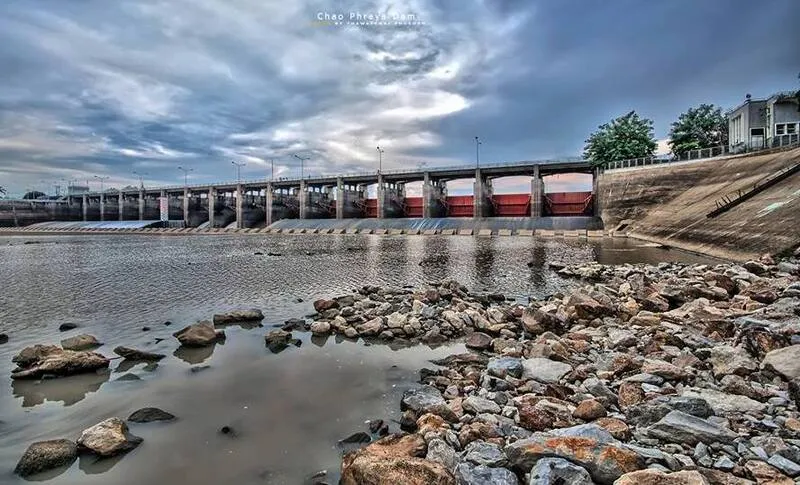
Chao Phraya Dam is one of the most important landmarks in Chainat Province and a highly significant irrigation structure in Thailand. It was the country’s first large-scale barrage dam built in a systematic way to control water levels in the Chao Phraya River, distribute water to vast agricultural areas in the Central Plains, and lay the foundation for Thailand’s modern nationwide water management system.
The dam is located at Khung Bang Krabian in Bang Luang Subdistrict, Sapphaya District, Chainat Province, in a strategically important position for regulating water flowing down from the North before it continues into the lower Central Plains. The structure stretches across the Chao Phraya River and is designed as a barrage dam. Unlike mountain dams built for massive water storage, its main function is to raise water levels so water can be diverted into irrigation canals and large-scale water distribution systems that sustain agricultural land throughout the Chao Phraya basin.
From an engineering perspective, Chao Phraya Dam is approximately 237.50 meters long and about 16.5 meters high, with 16 sluice gates. Each gate helps regulate the amount of water passing through according to seasonal conditions. In addition, there is a navigation lock on the right side of the dam, about 14 meters wide, allowing large vessels to pass through. This shows that the dam has not only served agriculture, but has also been linked to water transportation.
The construction of Chao Phraya Dam began during the period when Thailand was accelerating national development after World War II. At that time, the government recognized that one of the main problems in the Chao Phraya basin was the instability of water supply. During the rainy season, many areas suffered from flooding, while in the dry season there was not enough water for cultivation. The construction of Chao Phraya Dam therefore formed part of a broader plan to develop the Chao Phraya basin in order to strengthen food security and agricultural productivity across the country.
Construction started in 1952 and was completed in 1957, after which the dam became a core structure of the Chao Phraya irrigation project. Its meaning in Thai history goes far beyond being a tourist attraction or a riverside viewpoint. The dam marked a turning point in the systematic planning of national water management and became a model for later large-scale water development projects.
What makes Chao Phraya Dam different from ordinary places is that its role remains highly important today. It is not merely an engineering monument from the past. Every year, the dam continues to regulate water released from the North, especially during the flood season. Adjustments to water discharge through the dam directly affect downstream areas of the Chao Phraya basin. It is therefore regarded as a strategic water-control point influencing agriculture, riverside communities, and flood-risk management in many provinces.
In terms of irrigation, Chao Phraya Dam is the heart of the water distribution network in the Chao Phraya basin. Water raised by the dam is diverted into major irrigation canals that feed extensive agricultural areas in the Central Plains. This system enables farmers in many provinces to cultivate more consistently and with greater stability, especially rice, which is one of the country’s main economic crops. It can therefore be said that the fertility of many rice-growing areas in Central Thailand is directly linked to the role of Chao Phraya Dam.
Beyond agriculture, Chao Phraya Dam also plays a broader role in water management. It not only distributes water, but also helps maintain balance in the flow of the Chao Phraya River at different times of the year for agriculture, domestic use, ecosystems, and the reduction of severe water fluctuations. The presence of this dam allows the state to manage water more flexibly according to weather conditions and the annual volume of available water.
Although the primary role of Chao Phraya Dam is irrigation, it is also connected in part to electricity generation for local use and supports operations by government agencies in the surrounding area. Even so, its greatest importance remains its function as a water-control and water-distribution structure, which is what gives Chao Phraya Dam its special status in Thailand’s water-resource system.
Another interesting feature is the navigation lock built alongside the dam, confirming that the Chao Phraya River has long been more than just a natural waterway; it has also served as a transportation route for generations. The navigation lock allows boats to pass the dam safely and continuously. Chao Phraya Dam thus represents the convergence of engineering, irrigation, and transportation within a single location.
From a tourism perspective, Chao Phraya Dam offers an atmosphere quite different from ordinary natural attractions or historical sites. Visitors can experience the grandeur of the dam itself, the broad view of the Chao Phraya River, and the activities of people who come to stroll, enjoy the breeze, take photographs, or relax by the river. The area around the dam therefore has the charm of a place that is still actively in use, yet remains open for people to experience up close.
The atmosphere at Chao Phraya Dam in the late afternoon is considered one of the most beautiful times of day. The evening light stretching across the water, the sound of water rushing through the gates, and the breeze along the river turn the area into a very appealing place for local residents and travelers alike. Many people come to walk around, buy snacks from nearby stalls, or stop for coffee while enjoying the river view in a simple yet memorable setting.
One of the most distinctive images of Chao Phraya Dam for travelers is its role as a nature-viewing and birdwatching site during the cool season. In particular, around January, large flocks of ducks often migrate to feed in the river above the dam. The sight of so many birds floating and moving across the wide water surface makes Chao Phraya Dam an attractive destination for nature lovers and wildlife photographers seeking open landscapes in the Chao Phraya basin.
Beyond the dam itself, the surrounding area includes several attractions that can be combined into a single trip, such as Chao Phraya Land Market, Luang Pho Hin at Chao Phraya Dam, Wat Phra Borommathat Worawihan, Chainat Muni National Museum, and other cultural attractions in Sapphaya District and Mueang Chainat District. This means Chao Phraya Dam is not just a place to stop briefly for photos, but can serve as the centerpiece of a wider travel route in Chainat Province.
The importance of Chao Phraya Dam to Chainat Province is also clearly reflected in its image and identity. The dam is one of the places most widely recognized by people from outside the province when Chainat is mentioned, whether in terms of tourism, infrastructure, or symbolism. Many travelers come to Chainat specifically because they want to see the dam with their own eyes, and once there, they often continue on to other nearby attractions, giving the dam a direct economic role in local tourism as well.
Viewed on a national scale, Chao Phraya Dam is one of the key reasons why Central Thailand has been able to maintain its position as one of the country’s leading agricultural regions for so long. The dam improves the efficiency of water allocation in a region that is extremely important to the national economy, and it is directly connected to the stability of the country’s agricultural output. It is therefore a place of genuine national significance.
Visitors to Chao Phraya Dam today experience two sides of the place at once. On one side is the grandeur of an engineering structure that is still fully operational; on the other is the accessible and relaxed atmosphere of riverside tourism. What makes this place special is the way history, engineering, nature, and everyday life coexist here in such a balanced and harmonious way.
For photography enthusiasts, Chao Phraya Dam offers a wide variety of perspectives, including rows of sluice gates, the long stretch of the river, nearby markets and riverside shops, as well as the sky and evening light reflected on the water. For those interested in irrigation and water management, the site is also an important place for understanding the role of water in Thailand’s economy, agriculture, and society more clearly than reading about it in books alone.
Those who come to Chao Phraya Dam do not need to rush, because the charm of the place lies in taking time to enjoy it. A visit can begin with viewing the dam, strolling along the river, stopping by the market or a nearby café, and then continuing on to nearby temples or museums at a relaxed pace. If you visit during the cool season, you may also have the chance to see beautiful scenery and flocks of ducks, adding a different dimension to the experience compared with other times of year.
Getting There Chao Phraya Dam can be reached from downtown Chainat by taking Highway 304 and then turning left toward Sapphaya District for about 6 kilometers. If traveling by bus, the Bangkok–Wat Sing route passes in front of the dam. In addition, local bus route 1061 Chainat–Pho Nang Tam and route 110 Sing Buri–Chainat also pass the area, making Chao Phraya Dam relatively easy to access both by private car and public transport.
Although Chao Phraya Dam is nationally important as a piece of infrastructure, what people remember when they arrive is not only the engineering figures. They also remember the riverside atmosphere, the wide open feeling of the area, the gentle liveliness of people enjoying the place, and the realization that this site has helped drive Thai agriculture for decades. Chao Phraya Dam is therefore not only a tourist attraction, but also a learning site and one of the defining symbols of Chainat worth visiting.
| Summary | Chao Phraya Dam is Thailand’s first large-scale barrage dam, located on the Chao Phraya River in Sapphaya District, Chainat Province, and it is the core of the Chao Phraya irrigation system. |
| Highlights | Thailand’s first barrage dam, 16 sluice gates, a large navigation lock, views of the Chao Phraya River, a winter duck-watching spot, and nearby markets and cafés. |
| History / Period | Construction began in 1952 and was completed in 1957. It officially opened on 7 February 1957 and became Thailand’s first large-scale barrage dam. |
| Address | Khung Bang Krabian Area, Village No. 4, Bang Luang Subdistrict, Sapphaya District, Chainat Province 17150 |
| Coordinates | 15.159210, 100.179674 |
| Getting There | From downtown Chainat, take Highway 304 and turn left toward Sapphaya District for about 6 kilometers, or use bus routes Bangkok–Wat Sing, 1061 Chainat–Pho Nang Tam, or 110 Sing Buri–Chainat, all of which pass in front of the dam. |
| Open Days | Every Day |
| Opening Hours | Open 24 Hours |
| Admission Fee | No Admission Fee |
| Facilities | Parking, viewpoints, riverside walking area, nearby market and shops, cafés, and nearby guest accommodations |
| Nearby Attractions | 1) Chao Phraya Land Market – about 100 m 2) Luang Pho Hin, Chao Phraya Dam – about 500 m 3) Luang Pho Yai, Wat Pa Khok Kham – about 2.8 km 4) 1,500-Year Sacred Well, Wat Borommathat Woramahawihan – about 2.9 km 5) Wat Phra Borommathat Worawihan – about 2.9 km 6) Chainat Muni National Museum – about 2.9 km |
| Nearby Restaurants | 1) Chao Phraya Coffee, Chao Phraya Dam – about 300 m – Tel. 094-343-8019 2) Ton Takhob Restaurant – about 1.3 km – Tel. 056-405-150 3) Samrab Kub Khao Riverside Chainat – about 2.9 km – Tel. 086-969-9924, 056-410-919, 095-634-5303 4) Im Aroi Pla Mae Nam – about 3.8 km – Tel. 086-931-2448 5) Teak Coffee – about 3.9 km – Tel. 095-625-3928 |
| Nearby Accommodations | 1) Chainat Resort – about 6.4 km – Tel. 086-444-0708, 056-415-599 2) Bunga 199 Guesthouse – about 7 km – Tel. 064-878-8955, 094-684-3322 3) Rong Rak Resort – about 9 km – Tel. 089-194-2808 4) Nattanon Farm – about 9.6 km – Tel. 082-234-3976 5) Suwanna Riverside Resort – about 14 km – Tel. 056-477-798, 090-561-4898 |
| Main Contact Number | 056-405-012 to 056-405-016 |
Frequently Asked Questions (FAQ)
Q: Where is Chao Phraya Dam located?
A: Chao Phraya Dam is located in Bang Luang Subdistrict, Sapphaya District, Chainat Province, on the Chao Phraya River in the Khung Bang Krabian area.
Q: Why is Chao Phraya Dam important?
A: Chao Phraya Dam is Thailand’s first large-scale barrage dam and the key structure in the Chao Phraya irrigation system, helping distribute water to extensive agricultural areas in the Central Plains.
Q: In which year was Chao Phraya Dam completed?
A: Construction of Chao Phraya Dam began in 1952 and was completed in 1957, with official operation beginning that same year.
Q: What is interesting about Chao Phraya Dam for tourists?
A: Visitors can admire the large sluice-gate structure, enjoy the riverside breeze, watch the sunset, stop by nearby markets and cafés, and see flocks of ducks during the cool season.
Q: Is Chao Phraya Dam open to visitors at all times?
A: Tourist information indicates that Chao Phraya Dam is open every day and accessible 24 hours a day.
Q: Is there an entrance fee for Chao Phraya Dam?
A: No. There is no entrance fee, and visitors can stop to enjoy the scenery and the surrounding area free of charge.
Q: Is it easy to get to Chao Phraya Dam?
A: Yes. It is convenient both by private car and by bus. From downtown Chainat, you can drive along Highway 304 and turn toward Sapphaya District, or use bus services that pass directly in front of the dam.
 Chao Phraya Dam Map
 Category:
  Group:
  Last Update: 16 HourAgo
Comment
 Nearby Attractions
| Keyword (Advance) |
 Region
|
 Muang Chai Nat(