

 Home
Home Chiang Mai(

























Rating: 4.5/5 (4 votes)
 |
|  Map
Map 
 Have Map
  No Map
Ratchaburi attractions
Attractions in Thailand
Open Days: Daily
Opening Hours: 24 hours
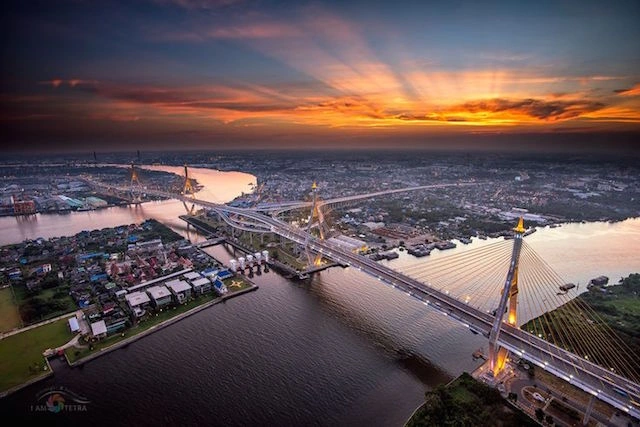
Mae Klong River is one of the important rivers of Thailand that has played a major role in the development of the western region of the country, especially in Ratchaburi, Samut Songkhram, and Kanchanaburi provinces. This river has long been significant in terms of history, economy, local lifestyles, and the ecological system of communities living along its banks for hundreds of years.
The Mae Klong River originates from the confluence of the Khwae Yai River and the Khwae Noi River at Ban Pak Phraek in Kanchanaburi Province. From there, the river flows through Ratchaburi Province for approximately 67 kilometers before continuing to Samut Songkhram Province and eventually emptying into the Gulf of Thailand. The river has long been an essential water source for agriculture, fisheries, domestic consumption, and transportation routes since ancient times.
The Mae Klong River has had a profound influence on the settlement of communities in western Thailand. The fertile land along the riverbanks has been highly suitable for agriculture, particularly fruit orchards, crop farming, and freshwater fishing. As a result, many communities developed along the river and gradually evolved into important towns in the region.
The origin of the Mae Klong River begins with the merging of two major rivers: the Khwae Yai River and the Khwae Noi River. These rivers meet at Ban Pak Phraek in Mueang District, Kanchanaburi Province. From that point, the combined waters form the Mae Klong River and flow southward toward the lower central plains.
The Khwae Yai River originates from mountainous areas in western Kanchanaburi Province and plays a vital role in Thailand’s energy system due to the presence of the Srinagarind Dam, which generates electricity and regulates water levels. Meanwhile, the Khwae Noi River also originates from mountainous terrain and is home to the Vajiralongkorn Dam, another large dam that plays an important role in national water resource management.
Once the two rivers converge, the Mae Klong River flows into Ratchaburi Province, an area known for its fertile land and diverse use of water resources. The river supports agricultural activities, aquaculture, and the daily lives of riverside communities.
Within Ratchaburi Province, the Mae Klong River flows through four major districts: Ban Pong District, Photharam District, Mueang Ratchaburi District, and Damnoen Saduak District. The river travels approximately 67 kilometers through the province before continuing toward Samut Songkhram and eventually reaching the Gulf of Thailand.
Along the banks of the Mae Klong River in Ratchaburi, many communities have been established. These communities maintain a lifestyle closely connected to the river, including fishing, river trade, and agricultural activities in the fertile floodplain areas.
The land surrounding the Mae Klong River is also an important agricultural zone in Thailand, especially for fruit orchards such as coconuts, pomelos, bananas, and various vegetables. These crops depend heavily on the river as a primary irrigation source. Additionally, irrigation systems have been developed to distribute water from the river to agricultural areas across several provinces.
The river also plays an important role in local fisheries. Various freshwater fish species inhabit the river, including silver barb, snakehead fish, and catfish, which have long served as a major food source for riverside communities.
Beyond its economic significance, the Mae Klong River also holds cultural importance for local communities. Many traditional riverside houses were built along the banks to allow convenient access to water transportation and daily activities related to the river.
In the past, the Mae Klong River served as a primary transportation route for local residents. Boats were the main mode of travel and trade because road infrastructure was not as developed as it is today.
Today, the Mae Klong River remains an important tourism attraction in Ratchaburi Province. Visitors can enjoy the natural scenery along the river, observe traditional riverside lifestyles, or visit famous floating markets such as Damnoen Saduak Floating Market, which is internationally known.
Several important attractions are also located along the Mae Klong River, including Wat Mahathat Worawihan, Wat Khanon, Khao Ngu Stone Park, and Photharam Old Market. These places reflect the rich history and cultural heritage of Ratchaburi Province.
The overall water quality of the Mae Klong River remains relatively good due to systematic water management and continued control of wastewater discharge from industries and communities.
For these reasons, the Mae Klong River is considered a highly valuable natural resource for Thailand. It plays an essential role in the country’s economy, environment, and cultural heritage, while continuing to support the livelihoods of people living in western Thailand today.
Getting There If you wish to visit the Mae Klong River in Ratchaburi Province, you can travel from Bangkok via Phetkasem Road (Highway No. 4), which takes approximately 1–2 hours. Alternatively, visitors can take the southern railway line to Ratchaburi Station or Photharam Station and continue to various locations along the river conveniently.
| Name | Mae Klong River |
| Location | Kanchanaburi, Ratchaburi, and Samut Songkhram Provinces, Thailand |
| Highlights | A major river in western Thailand formed by the Khwae Yai and Khwae Noi rivers, serving as an important source of agriculture, fisheries, and community livelihood. |
| Length in Ratchaburi | Approximately 67 kilometers |
| Nearby Attractions | 1 Damnoen Saduak Floating Market – 5 km Tel. 032-241233 2 Khao Ngu Stone Park – 8 km Tel. 032-919606 3 Wat Mahathat Worawihan – 2 km Tel. 032-337037 4 Photharam Old Market – 12 km Tel. 032-231001 5 Wat Khanon Shadow Puppet Museum – 15 km Tel. 032-231286 |
| Nearby Restaurants | 1 Khun Mam Egg Noodles – 3 km Tel. 032-314688 2 Lung Rong Kitchen – 6 km Tel. 032-323332 3 Rim Mae Klong Riverside Restaurant – 2 km Tel. 032-337555 4 Baan Mai Riverside Restaurant – 4 km Tel. 032-323226 5 Lung Juab Kitchen – 7 km Tel. 032-337875 |
| Nearby Accommodations | 1 Na Wela Ratchaburi – 6 km Tel. 032-919999 2 Rachabura Hotel – 4 km Tel. 032-919999 3 Western Grand Hotel Ratchaburi – 3 km Tel. 032-337888 4 Riverside Garden Resort – 8 km Tel. 032-323388 5 Baan Hom Tien Resort – 12 km Tel. 032-206109 |
| Related Offices | 1 Tourism Authority of Thailand Ratchaburi Office Tel. 032-919259 2 Ratchaburi Provincial Administrative Organization Tel. 032-338333 3 Ratchaburi Municipality Tel. 032-337333 4 Tourism Authority of Thailand Samut Songkhram Tel. 034-752847 5 Ratchaburi Provincial Hall Tel. 032-340000 |
Frequently Asked Questions (FAQ)
Q: What forms the Mae Klong River?
A: The Mae Klong River is formed by the confluence of the Khwae Yai River and the Khwae Noi River in Kanchanaburi Province.
Q: Which provinces does the Mae Klong River flow through?
A: The river flows through Kanchanaburi, Ratchaburi, and Samut Songkhram before reaching the Gulf of Thailand.
Q: How long is the Mae Klong River in Ratchaburi Province?
A: The river flows through Ratchaburi for approximately 67 kilometers.
Q: Why is the Mae Klong River important?
A: It is a crucial water source for agriculture, fisheries, domestic use, and has historically served as a transportation route for riverside communities.
Q: Where can visitors see the Mae Klong River?
A: Visitors can explore the river at several locations including Damnoen Saduak Floating Market, Khao Ngu Stone Park, and riverside areas in Ratchaburi city.
 Mae Klong River Map
 Category:
  Group:
  Last Update: 18 HourAgo
Comment
 Nearby Attractions
| Keyword (Advance) |
 Facebook Fanpage
 Region
 Art, Culture and Heritage
 Historical Sites and Monuments(
 Landmarks and Memorials(
 Art, Craft Centres, Tradition(
 Museums(
 Art Gallery(
 Educational Places
 Educational Gardens, Farm(
 University
 Places of Worship
 Temple(
 Other religious and spiritural sites(
 Research and Development
 Royal Project(
 Suburban Living
 Village, Community(
 Local Market(
 Floating Market(
 National Parks and Marine Reserves(
 Mountain (Doi)(
 Dam, Reservoir, Lake(
 Waterfalls(
 Hot Springs(
 Caves(
 Flower Field(
 Other natural attractions(
 Entertainment and Agricultural
 Zoos and Aquariums(
 Animal camps and shows(
 Farm, Parks, Gardens and Ecotourism(
 Waterpark(
 Outdoor and Adventure Activities(
 Shopping
 Shopping and Night Market(
 Spas and Wellness
 Spas and Wellness(
 Travel Articles, Recipes
 Travel Review, Food Review(