
 Home
Home North(
 Chiang Mai(


Rating: 3.8/5 (5 votes)
 |
|  Map
Map 
 Have Map
  No Map
Nakhon Pathom attractions
Attractions in Thailand
Open Days: Generally held around 1 week after April 13; for Wat Phrong Maduea in 2026, the event is scheduled for April 24–26
Opening Hours: According to each community’s program and each day’s event schedule
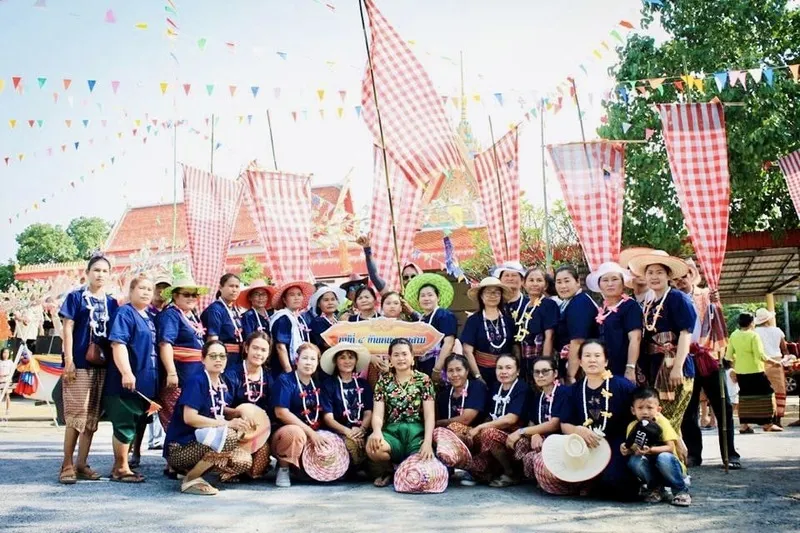
The Songkran Flag Parade Tradition is a Thai merit-making tradition of the Lao Khrang community in Nakhon Pathom Province that continues to be actively practiced to this day. The tradition is especially prominent in Phrong Maduea Subdistrict, Mueang Nakhon Pathom District, as well as in some Lao Khrang communities in Don Tum District. At the heart of the event is the gathering of villagers to organize a parade carrying large bamboo Songkran flags, along with pha pa offerings and necessary household items for the temple after the Songkran festival has passed. This is therefore not merely a festive celebration, but a merit-making event that clearly reflects faith, solidarity, and the community’s ethnic identity.
The roots of the Songkran Flag Parade Tradition are closely connected with the Lao Khrang community, an ethnic group that settled in Nakhon Pathom from the early Rattanakosin period onward, especially in the Phrong Maduea area. This community has preserved many of its beliefs, traditions, and ritual practices with remarkable continuity. One of them is the Songkran Flag Parade, which some sources also call “Lao Pha Pa.” That name reflects its nature as a pha pa merit-making ceremony combined with a flag procession, folk music, and distinctive community rituals.
This tradition is usually held in April, around 1 week after April 13, which is Songkran Day. The main reason for holding the event at that time is that villagers are free from rice farming duties and it is still the dry season, making it suitable for mobilizing people and resources to help the temple. This includes maintaining religious structures, repairing monks’ quarters, pavilions, and temple buildings, as well as supporting monks who may not have abundant food and supplies during that period. Villagers therefore regard the time after Songkran as an ideal moment to make a major communal merit offering and support the temple in a meaningful way.
The importance of the Songkran Flag Parade Tradition lies in strengthening the bond between households and the temple. The temple is not merely a place for religious ceremonies, but the center of the community itself. When villagers work together to organize the event, raise funds, create the flags, and parade them to the temple, it means the whole village is participating in making merit, creating public benefit, and reaffirming the temple’s role as the spiritual center of community life.
The most striking feature of the event is the “Songkran flag.” Villagers make it from a whole bamboo pole, usually around 10 meters long or more. The top of the flagpole often includes bamboo branches or a section for hanging offerings. The items attached to the flag are things the temple needs, such as cloth banners, curtains, mats, carpets, or other fabric-like household goods that can be tied securely to the top. Villagers work together to fold, arrange, and decorate the flag beautifully with fresh and dried flowers until it becomes a ceremonial merit flag that is both elegant and deeply meaningful.
In addition to the flag itself, another important element is the “tail of the flag,” which consists of pha pa offering clusters, monk robes, alms bowls, ceremonial fans, and prominently displayed cash donations. These elements make the Songkran Flag Parade both a cultural procession and an offering procession at the same time. In other words, every part of the parade is not only decorative, but directly connected to the practical needs of the temple.
Before the actual event day, the community begins with a merit announcement procession, inviting people to participate in the merit-making in advance. This is done by leading a long-drum procession or folk music ensemble through the village around 1–2 days before the main parade. This period creates excitement throughout the community because every household begins to take part, whether by donating items, preparing equipment, helping make pha pa clusters, or calling family members who work away from home to return and join the event. As a result, the Songkran Flag Parade becomes both a merit-making event and a family reunion occasion at the same time.
The actual parade day is usually not fixed as strictly as an official event, but is flexible according to the readiness and convenience of the villagers. Most communities prefer to hold it on a Saturday or Sunday, because that is when villagers are off work and children or relatives working in factories or outside the village can return home. This flexibility is one of the reasons the tradition can still survive in the modern world, because it respects the rhythm of people’s real lives instead of forcing culture to become detached from everyday life.
When the procession begins, villagers carry the flags out of the village, with the tall bamboo flagpole leading the parade. Several strong men are needed to carry it, followed by long drums, folk music, and groups of people carrying the flag tail, pha pa offerings, and household goods that will be presented to the temple. Each village tries to make its procession distinctive, whether through dress, dance styles, musical rhythm, or the way the flag is carried. Some processions include daring performances by young men, such as climbing onto the flagpole or performing risky balancing and passing techniques, which often become memorable highlights for spectators.
Even though the procession is full of joy and excitement, the true essence of the event remains faith and merit-making. When the parade reaches the temple, each flag is carried around the ordination hall 3 times before being planted into the ground within the temple compound. This step is considered the ritual climax of the procession, because it marks the completion of the journey from the village to the sacred space and the transition into the formal offering ceremony.
After the flag parade and planting ceremony, the atmosphere in the evening is often lively and celebratory, with entertainment or performances held as part of the festival. On the following morning, the ceremony continues with the formal offering of the flags at the temple hall, the offering of food to the monks, the pouring of water to dedicate merit to ancestors and benefactors, and finally the bathing of Buddha images. This sequence shows that the Songkran Flag Parade Tradition fully unites festivity, devotion, and the dedication of merit within one continuous event.
Another important value of this tradition is how it creates and reinforces community unity. The event could never take place without the combined efforts of men and women in the village, from finding bamboo and preparing flowers to gathering offerings, raising funds, organizing the musicians, and helping carry the flags to the temple. All of this is communal labor carried out without expectation of financial reward. Such cooperation makes the Songkran Flag Parade Tradition a clear example of how culture helps sustain the social structure of local communities.
In terms of belief, villagers see participation in the Songkran Flag Parade merit-making as something that brings happiness in both the present and the future. It is a way to accumulate merit for oneself, one’s family, and the wider community, while also helping create peace and well-being for everyone. This belief gives the event not only a public-benefit dimension, but also emotional and spiritual power that encourages people to return and participate every year.
For visitors, the Songkran Flag Parade Tradition is especially charming because it offers the atmosphere of a genuine community festival. Spectators can see the sound of long drums, dance rhythms, colorful local dress, the grandeur of the tall bamboo flags, and the energy of people truly working together. Unlike large festivals centered mainly on stages and performances, this event still preserves the relationship between people and temple, between ritual and enjoyment, and between ethnic identity and religion in one complete setting.
As a cultural tourism event, the Songkran Flag Parade Tradition is ideal for people who want to understand Nakhon Pathom more deeply than through ordinary sightseeing. The event reveals the history of Lao Khrang settlement, the value system of a rural Buddhist community, and the role of the temple as the center of village life. Its special quality lies in the fact that every element remains real and living, not separated out merely for display to tourists.
Getting There If you want to watch the Songkran Flag Parade in the clearest and most accessible location, Wat Phrong Maduea is the recommended main destination. The temple is located at 6 Moo 5, Phrong Maduea Subdistrict, Mueang Nakhon Pathom District, Nakhon Pathom Province, and is one of the key places where the Songkran Flag Parade has been continuously announced and organized. Visitors traveling from Nakhon Pathom city center can conveniently drive to Phrong Maduea Subdistrict, and it is advisable to check the temple’s or community’s announcements in advance each year, because the exact event date may vary depending on each village’s readiness.
In summary, the Songkran Flag Parade Tradition is a post-Songkran merit-making tradition of great importance to the Lao Khrang community in Nakhon Pathom. It reflects faith, village cooperation, support for the temple, and the continuation of ethnic identity all at once. This event is therefore not merely an annual ritual, but a cultural structure that continues to strengthen the community, and it deserves to be recorded, narrated, and passed on as a Thai tradition that remains genuinely alive today.
| Name of Tradition | Songkran Flag Parade Tradition |
| Place Summary | A merit-making and pha pa offering tradition of the Lao Khrang community in Nakhon Pathom, featuring a parade of large bamboo flags and offerings carried to the temple after Songkran. |
| Highlights | Tall bamboo flag procession, long drums, folk music, local dress, pha pa offering clusters, and the ritual of circling the ordination hall 3 times before planting the flags in the temple grounds. |
| History / Period | A long-standing tradition of the Lao Khrang communities in Nakhon Pathom. The Phrong Maduea community has roots dating back to the reign of King Rama II and has preserved this custom continuously. |
| Address | Recommended main viewing point: Wat Phrong Maduea, 6 Moo 5, Phrong Maduea Subdistrict, Mueang Nakhon Pathom District, Nakhon Pathom 73000 |
| Coordinates | 13.82174, 99.9890082 |
| Getting There | Use Wat Phrong Maduea as the main destination, then check annual announcements from the temple or local community in advance, as the exact event date may vary according to each village’s schedule. |
| Open Days / Opening Hours | Generally held around 1 week after April 13; for Wat Phrong Maduea in 2026, the event is scheduled for April 24–26 / The temple is open daily from 07:00–18:00 |
| Facilities | The main event area is within the temple compound and ceremonial grounds, including the parade area, temple courtyard, ordination hall surroundings, and temple pavilion for the flag and pha pa offering rites. |
| Zones | Village parade route zone, temple courtyard and ordination hall zone, flag-planting zone, and temple pavilion zone for pha pa and flag offering ceremonies |
| Main Contact Number | 034-387-084 |
Frequently Asked Questions (FAQ)
Q: What is the Songkran Flag Parade Tradition?
A: It is a merit-making and pha pa offering tradition of the Lao Khrang community in Nakhon Pathom, featuring a parade of large bamboo flags and offerings carried to the temple after Songkran.
Q: During what time of year is the Songkran Flag Parade held?
A: It is generally held around 1 week after April 13. For Wat Phrong Maduea in 2026, the event has been announced for April 24–26.
Q: What are the main highlights of this tradition?
A: The highlights include the tall bamboo flag procession, long drums, folk music, local dress, and the ritual of circling the ordination hall 3 times before planting the flags in the temple grounds.
Q: Which community is associated with this event?
A: It is a tradition of the Lao Khrang community in Nakhon Pathom, especially in Phrong Maduea Subdistrict, Mueang Nakhon Pathom District, and in some areas of Don Tum District.
Q: What happens after the procession arrives at the temple?
A: The procession circles the ordination hall 3 times, plants the flags in the temple grounds, and later includes entertainment, followed the next morning by the flag offering, food offering to monks, merit dedication, and Buddha bathing rituals.
Q: Where is the best place to see the event?
A: The recommended main location is Wat Phrong Maduea in Phrong Maduea Subdistrict, Mueang Nakhon Pathom District, which is one of the key sites where the tradition is still actively held today.
Q: Why is the Songkran Flag Parade Tradition important to the community?
A: This tradition helps the community make merit together, support the temple, preserve Lao Khrang identity, and strengthen solidarity among villagers year after year.
 Songkran Festival Flags Map
 Category:
  Group:
  Last Update: 15 HourAgo
Comment
 Nearby Attractions
| Keyword (Advance) |
 Facebook Fanpage
 Region
 Historical Sites and Monuments(
 Landmarks and Memorials(
 Royal Palace(
 Museums(
 Art Gallery(
 Educational Places
 Educational Gardens, Farm(
 University
 Places of Worship
 Temple(
 Other religious and spiritural sites(
 Research and Development
 Royal Project(
 Suburban Living
 Village, Community(
 Local Market(
 Floating Market(
 Nature and Wildlife
 River, Canal(
 Other natural attractions(
 Entertainment and Agricultural
 Animal camps and shows(
 Stadium(
 Farm, Parks, Gardens and Ecotourism(
 Waterpark(
 Theater(
 Outdoor and Adventure Activities(
 Spas and Wellness
 Spas and Wellness(