
 Home
Home North(
 Chiang Mai(


Rating: 4.6/5 (5 votes)
 |
|  Map
Map 
 Have Map
  No Map
Kanchanaburi attractions
Attractions in Thailand
Open Days: Open daily
Opening Hours: 08:00 – 17:00
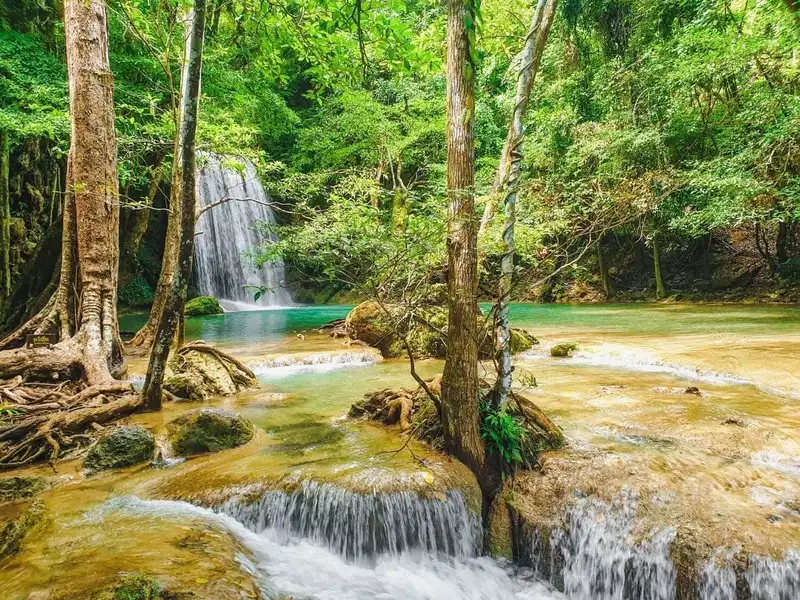
Niku Hu Waterfall in Kanchanaburi is best for travelers who want a genuine forest experience rather than a quick stop for photos. Its appeal is not only the water cascading over rock into a pool below, but also the cool dampness of the big forest, the earthy scent of soil and leaves, distant bird calls, and small natural details that gradually reveal themselves along the way. In certain seasons, the sight of orchids clinging to tree trunks makes the landscape feel alive and delicate, as if you are walking through a wild scene that has not yet been heavily commercialized.
To picture it clearly, Niku Hu Waterfall feels “quiet and deep” from the moment you leave the main road and enter the local community route. As soon as you pass the bustle of the highway, the surroundings shift into denser shades of green, the air becomes more humid, and city noise fades away, replaced by wind moving through leaves and a steady, natural soundscape. This atmosphere makes Niku Hu ideal for anyone who wants to rest their mind, slow their pace, and take a trip that feels worthwhile because of the experience itself, not because of how many photos they can post.
The waterfall is located near Nong Bang Village, Moo 5, Lin Thin Subdistrict, Thong Pha Phum District, Kanchanaburi. This zone remains relatively intact in terms of nature, with large forest cover that provides shade for most of the day. The area’s humidity supports moisture-loving plants such as mosses and ferns, as well as certain orchids that can be found growing on trunks or branches where the light is just right. The interesting part is that you do not need to be a botanist to feel the biodiversity here—you can sense it through multiple shades of green, different woodland scents, and the immediate drop in temperature as you approach thicker forest.
On trips like this, what impresses many visitors most is not only the moment they stand in front of the falling water, but the “in-between” time when your body slowly shifts from rushing to being present. You start noticing the damper ground, layers of fallen leaves from seasonal cycles, small traces of runoff along the roadside, and the sound of water that grows clearer until it becomes the dominant sound near the falls. These elements give Niku Hu a distinct character: you get a gentle forest walk plus the freshness of a waterfall as the destination.
In terms of beauty, Niku Hu leans toward raw nature rather than dramatic, towering cliff waterfalls. The water here feels soft and cool, more like a natural part of the forest than a separate centerpiece. When the forest is especially humid, you will see more detail in the rock surface and the plant growth shaped by moisture. If you visit in a suitable season, you may also spot orchids or other epiphytes that add a gentle touch to the overall scene, so photography does not need to rely only on wide shots—close-up frames of leaves, droplets, and flowers can be just as memorable.
The most suitable time for visiting a “forest waterfall” is often late rainy season into early cool season, because water levels tend to be better, the forest is greener, and the weather is more comfortable for walking. However, if safety is your top priority and you want a less slippery trail, the dry season has the advantage of firmer paths and easier footing, though the water may not be as abundant as after the rains. So the answer to “Which month is best?” depends on what you want most: for fuller water and vivid green, go soon after the rains; for easier walking and lower slipping risk, choose a drier period.
Another key to a smooth trip is the time of day. Morning usually offers fresher air, softer light, and enough time to walk back without rushing—important for waterfalls that involve walking on damp forest paths, because rushing often causes missteps and increases slipping risk. Afternoon visits are still possible, but you should manage your time carefully, allow time for breaks and photos, and avoid walking back as daylight fades. Forest trails become harder to see in late evening, and humidity often makes the ground more slippery.
Getting There To reach Niku Hu Waterfall, start on Highway 323 (Kanchanaburi – Thong Pha Phum) and head toward the Lin Thin police checkpoint intersection. From there, turn right onto the Lin Thin – Nong Bang road and drive about 5 kilometers along the community route until you are close to the waterfall area. Drive more cautiously than on the main road, as you may encounter narrow sections, curves, or road surfaces that change with the season. After rainfall, wet leaves and soil can appear on the road. Allowing extra time and maintaining a moderate speed will make the trip more comfortable and reduce pressure before you even arrive.
For those concerned about vehicle suitability, the most important factor is the real road condition on the day you go. In forest areas, community roads can change quickly after rain. If it has rained heavily, a vehicle with higher ground clearance or better traction can provide more confidence. If the weather is dry and the road is in good condition, a regular car may be able to reach some sections. In all cases, safety matters more than saving time, and not forcing your car beyond the road condition is the best way to keep the trip from going wrong before you reach the waterfall.
When you reach the point where walking is required, what makes a humid forest trail different from a park walkway is “slippery ground and accumulated moisture.” Even if the path is not steep the whole way, damp soil, fallen leaves, and algae-covered rocks can make slipping easy. That is why shoes with good grip are essential, not optional. Walking a little slower and accepting a small time loss in exchange for safety will help you enjoy observing the nature around you and avoid worrying about falling in places that do not look dangerous at first glance.
To stay comfortable on a Niku Hu trip, bring enough drinking water, a waterproof pouch for your phone or camera, insect repellent if you are sensitive, and quick-dry clothing in case you get hit by mist or unexpected rain. Some people also like carrying a small towel or buff to wipe sweat, because humidity can feel sticky, and having something simple to stay dry and comfortable often helps you spend longer at the waterfall without irritation.
If you want to swim or soak, forest waterfalls often have inviting spots to cool down, but the key rule is to “read the conditions on site” every time. Some areas look calm but have slippery footing, some flows are stronger than expected after rain, and some spots may have uneven rocks underwater. If visiting with family, choose shallow areas with gentle flow, supervise children closely, and avoid climbing high rocks just for photos. The risk is rarely worth a few pictures. The real joy of a natural waterfall is freshness and calm, not pushing your luck with uncontrollable hazards.
What many people highlight about Niku Hu is how natural it still feels—“not turned into a town” yet. This comes with both advantages and realities to understand. The advantage is quietness, a true forest atmosphere, and nature that does not feel staged. The reality is that convenience may not match fully developed tourist sites. That is why preparation and planning matter. The more ready you are from the start, the more deeply satisfying the trip becomes, because you can truly be with nature without worrying about what you are missing along the way.
Another perspective worth keeping is the beauty of orchids and other epiphytes in a big forest. This is something to admire with your eyes and your camera only, because many epiphytes are fragile and sensitive to touch or pulling. Responsible travel at Niku Hu means helping keep the forest healthy, so future visitors still have the chance to see the same scenes, and so our visit does not unintentionally contribute to nature’s decline.
If you want a full but not exhausting one-day plan, a practical approach is to leave early, arrive before late morning, walk slowly and spend enough time in the area, then head back out for local food around Lin Thin or Tha Khanun around midday to afternoon. After that, keep the rest of the day light—perhaps a cafe stop or a roadside viewpoint—and return to your accommodation before evening. If you have an extra night, staying in the Thong Pha Phum area can make the itinerary smoother, and you can continue to E-Tong Village or other nearby attractions the next day. This reduces long driving in a single day and helps the trip feel unhurried.
In summary, Niku Hu Waterfall is a destination for people who want “authentic nature”—a moderate forest walk, a long rest for the eyes in deep green, and a chance to see orchids clinging to trees, which is part of the charm of humid forests. If you are looking for a Kanchanaburi waterfall that still feels quiet, calm, and not overly arranged, this is one worth keeping on your list. With a good plan for timing, gear, and safety, you can have a trip that is both refreshing and meaningful without needing any extra activities at all.
| Place Name | Niku Hu Waterfall |
| Summary | A natural waterfall in a large forest area in Lin Thin Subdistrict, Thong Pha Phum. Cool and humid atmosphere, suitable for a light forest walk and quiet nature viewing, with a chance to see orchids clinging to trees depending on the season. |
| Location | Nong Bang Village, Moo 5, Lin Thin Subdistrict, Thong Pha Phum District, Kanchanaburi |
| Address | Nong Bang Village, Moo 5, Lin Thin Subdistrict, Thong Pha Phum District, Kanchanaburi (It is recommended to follow the meeting point/route advice from local officials or the community before entering the area.) |
| Highlights | Large, cool, humid forest; high level of naturalness; quiet atmosphere; suitable for forest walking and mental reset; possible sightings of orchids and epiphytes on trees. |
| Background/Origin (If Available) | A waterfall formed by natural headwaters in the Lin Thin forest zone, often described as part of the wider western forest conservation area. |
| Open Days | Open daily |
| Opening Hours | 08:00 – 17:00 |
| Getting There | Take Highway 323 (Kanchanaburi – Thong Pha Phum) to the Lin Thin police checkpoint intersection, turn right onto the Lin Thin – Nong Bang road, then continue about 5 kilometers. After that, walk according to actual trail conditions (allow extra time and wear non-slip shoes). |
| Current Status | Open to visitors (It is recommended to check trail conditions and any area notices before traveling, especially during the rainy season.) |
| Contact | Lin Thin Subdistrict Municipality: 034-684-286, 061-161-6177 |
| Nearby Attractions (Approx. Distance) | 1) Lin Thin Hot Spring (15 km) 2) Thong Pha Phum District / Tha Khanun Market (35 km) 3) Pha Tad Waterfall (45 km) 4) Pha Sawan Waterfall (65 km) 5) E-Tong Village – Pilok (85 km) |
| Nearby Restaurants (Approx. Distance + Phone) | 1) Lab Lin Thin (10 km) Tel. 092-565-7795 2) Tun Sabieng (15 km) Tel. 086-353-0055 3) Rose House Cafe (35 km) Tel. 098-561-9768 4) Thungyai Quality Coffee & Roastery (35 km) Tel. 097-949-6196 5) Krua Paet Riew Thong Pha Phum (35 km) Tel. 089-546-1079 6) 109 CAFE’ Thong Pha Phum (35 km) Tel. 062-345-4539 |
| Nearby Accommodations (Approx. Distance + Phone) | 1) First Raft & Resort (35 km) Tel. 087-926-1955 2) Kawarin River Exclusive (55 km) Tel. 089-330-5544 3) River Kwai Resotel (75 km) Tel. 02-642-5497 4) Pilok Hill House, E-Tong Village (85 km) Tel. 080-781-5702 5) Pilok Mining Homestay, E-Tong Village (85 km) Tel. 062-363-9128 |
Frequently Asked Questions (FAQ)
Q: When is the best time to visit Niku Hu Waterfall?
A: Late rainy season through early cool season is often the most rewarding, because the forest is green and water conditions are usually better. If you prefer easier walking with less slipperiness, a drier period may feel more comfortable.
Q: Do I need to hike far to reach Niku Hu Waterfall?
A: There is a walking section depending on real trail conditions. It is best to allow extra time and wear non-slip shoes, as distance and walking time can vary by season and the day’s trail condition.
Q: Can I reach the area with a sedan?
A: If the road is dry and in good condition, regular cars may be able to access some sections. After rain, however, the route can become slick, and a vehicle with higher ground clearance may be more suitable. Drive with extra caution.
Q: Is swimming allowed?
A: In principle, swimming may be possible in suitable spots, but you should assess conditions on site each time. Avoid strong currents and slippery rocks, and supervise children or weaker swimmers closely.
Q: What should I prepare before going?
A: Non-slip shoes, enough drinking water, a waterproof pouch for valuables, insect repellent, and quick-dry clothing are recommended. Starting early helps you walk in and out without rushing.
Q: If I want to see orchids on trees, when should I go?
A: Orchids and epiphytes tend to stand out when the forest is more humid, but sightings depend on the season and that year’s weather. Visiting after rains increases the chance, and they should be admired without touching or disturbing them.
Q: Is it better to go in the morning or afternoon?
A: Morning is generally better because the air is cooler, light is softer, and you have more time to walk back without rushing, which reduces the risk of returning near dusk.
 Niku Hu Waterfall Map
 Category:
  Group:
  Last Update: 2 MonthAgo
Comment
 Nearby Attractions
| Keyword (Advance) |
 Facebook Fanpage
 Region
 Art, Culture and Heritage
 Historical Sites and Monuments(
 Landmarks and Memorials(
 Art, Craft Centres, Tradition(
 Museums(
 Art Gallery(
 University
 Places of Worship
 Temple(
 Church(
 Other religious and spiritural sites(
 Research and Development
 Royal Project(
 Suburban Living
 Village, Community(
 Local Market(
 National Parks and Marine Reserves(
 Mountain (Doi)(
 Dam, Reservoir, Lake(
 Hot Springs(
 Caves(
 River, Canal(
 Other natural attractions(
 Entertainment and Agricultural
 Zoos and Aquariums(
 Animal camps and shows(
 Farm, Parks, Gardens and Ecotourism(
 Cinema(
 Outdoor and Adventure Activities(
 Travel Articles, Recipes
 Travel Review, Food Review(