
 Home
Home North(
 Chiang Mai(


Rating: 2.8/5 (6 votes)
 |
|  Map
Map 
 Have Map
  No Map
Kanchanaburi attractions
Attractions in Thailand
Open Days: Daily
Opening Hours: 08:00 – 17:00 (Recommended to visit during daylight hours)
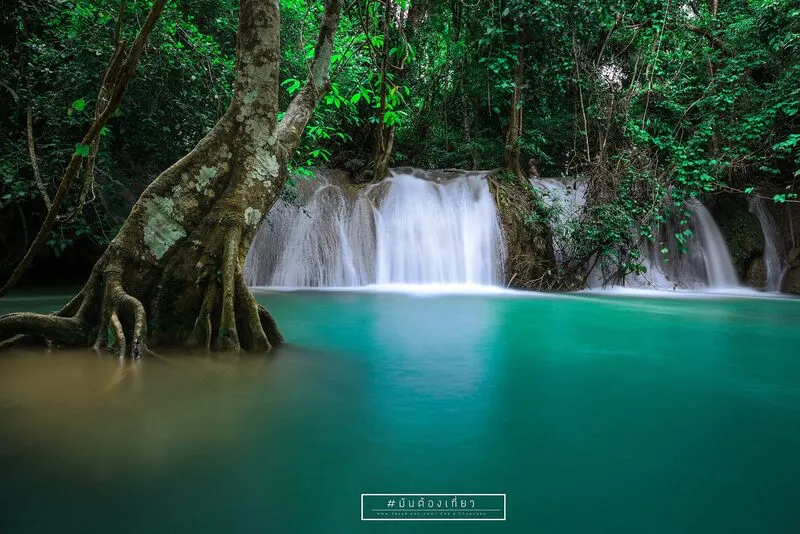
Saphan Lao Waterfall is a natural waterfall tucked away in Moo 2, Ban Saphan Lao, Sahakon Nikhom Subdistrict, Thong Pha Phum District, Kanchanaburi. It is often described as a “waterfall behind the temple” because the entrance lies behind Wat Saphan Lao Prachasarn. What makes this place stand out is how surprisingly accessible it is. You can drive in, park at the temple, and then walk down for a short distance. As you descend, the sound of water striking the rocks grows clearer until the waterfall face and cool mist appear naturally in front of you. This makes it ideal for both travelers who want a convenient stop along the way and those seeking a quiet, genuinely calming retreat surrounded by the lush greenery of Thong Pha Phum.
If you had to sum it up in one line, Saphan Lao Waterfall offers “simple happiness” without the hassle of a complicated journey. Its charm is not about towering height or dramatic scale, but rather the shaded riverside greenery, the gentle humidity that cools your skin, and the steady rhythm of water sliding over rock layers into the pool below. On quieter days, the natural soundscape becomes especially vivid—birds, rustling leaves, light footsteps of visitors walking carefully closer to the water, and the soothing flow that feels as if it gradually resets the noise and stress from outside.
For many travelers, Thong Pha Phum brings to mind mountains, forests, the dam, the road up to E-Tong Village, and greenery that shifts tone with the seasons. Yet within the finer details of the area, there are also “small spots” that deliver a uniquely worthwhile experience. Saphan Lao Waterfall is one of them. Located in Sahakon Nikhom Subdistrict, an area with multiple nature routes and scattered attractions, the journey here is not only about “arriving at a waterfall.” Along the way, you may pass mountain views, small streams, and vibrant roadside greenery—turning the drive itself into part of the travel experience.
In terms of setting, Saphan Lao Waterfall feels like a destination that is “close to the community, yet still truly natural”—a balance that is not easy to find. The Ban Saphan Lao area and the Sahakon Nikhom route carry layered stories of change over time. Some sources note that parts of the route were once dirt roads and were associated with mining activity in the Thong Pha Phum area, before gradual development made travel more convenient. It is therefore unsurprising that when you drive in, the road can feel like a “path leading into the forest,” still holding onto a sense of nature even though it is now paved.
Another notable feature of Saphan Lao Waterfall is its connection with Wat Saphan Lao Prachasarn, which serves as the “starting point” for access. Many visitors choose to park at the temple because it is a practical place to stop without disturbing the community. From there, you walk to the waterfall over a short distance. Several travel sources mention a walking distance of around 150 meters, meaning families, seniors, and travelers with young children can generally adjust their plan to match the weather and their comfort level more easily than at waterfalls that require longer forest treks.
Once you reach the waterfall area, you will see water cascading across multiple rock layers before gathering into a pool below. The rock face and formations create spots where the water breaks into mist, and during the rainy season or the late rainy season—when the flow is stronger—the refreshing feeling becomes even more pronounced. This atmosphere is a key reason many travelers enjoy visiting Thong Pha Phum in the rainy season: forests turn intensely green, humidity makes the riverside landscape feel alive, and photos often look softer with added depth from the fine spray.
That said, Saphan Lao Waterfall is not only appealing in the rainy season. Late rainy season into early winter is also popular because temperatures begin to cool while the route remains lush. The waterfall typically still has enough water to look beautiful and can be enjoyed carefully. On gentle sunny days, light filters through leaves and reflects off the water and rocks, giving the scene a brighter, warmer feel. By contrast, the rainy season often creates deeper greens and a distinctly “fresh and lush” mood. In the dry season, the water level may naturally decrease, but the advantage is that some walking surfaces can be drier and easier to navigate, making it a pleasant time to stroll, sit quietly, listen to lighter water sounds, or photograph thin streams sliding over stone.
It is helpful to understand that waterfalls in the western forest region often change noticeably with the seasons. Water volume depends on rainfall and moisture stored within smaller surrounding watersheds. As a result, the “beauty” of Saphan Lao Waterfall comes in different forms, and each suits different activities. The rainy season is ideal for full flow and dense greenery. Late rainy season is comfortable for relaxed sightseeing and lingering by the water. The dry season can be best for slow, peaceful nature time without concerns about heavy rain or unusually strong currents.
For this reason, planning your visit around weather conditions is important—especially during periods of continuous rainfall. Rocks can become extremely slippery, and some parts of the stream may rise or speed up quickly. It is recommended to wear footwear with good grip, avoid standing on algae-covered rocks or stones with constant water flow, and if you are traveling with children, keep a close hold and set clear boundaries for where they can play. Nature spots that look gentle can still hide slick surfaces and small slopes. A bit of extra caution will make your visit safer and more enjoyable.
Beyond safety, an equally important aspect of Saphan Lao Waterfall is “visitor etiquette” because the main parking area and access point are within temple grounds. This type of place is best enjoyed quietly: avoid loud noise, do not play music that disturbs others, and dress respectfully when you are within the temple area or nearby community spaces. All trash should be carried out, because even small natural areas show the impact of litter very clearly. When visitors help keep the area clean and respectful, this waterfall behind the temple can remain pleasant and welcoming for years to come.
If you enjoy trips with a sense of story, Saphan Lao Waterfall can also connect naturally with travel along the “Ban Saphan Lao – Sahakon Nikhom” route. Multiple sources mention that this route had ties to mining in the past, with memories of dirt roads once used by ore-transport vehicles before later improvements. The same route can lead to other attractions, such as Roi Chang Phueak Waterfall not far away, as well as adventure-style sites like the “3D Tunnel,” an old mine tunnel in the Thong Pha Phum area. Provincial-level information has noted that for a safer tunnel visit, travelers may contact the Sahakon Nikhom Subdistrict Municipality for vehicle arrangements and a guide.
From a “route value” perspective, Saphan Lao Waterfall works well as one stop in a single-day itinerary. You can begin early with a refreshing visit for swimming or photos, then drive out for a good meal in central Thong Pha Phum, and continue to nearby points of interest such as Vajiralongkorn Dam, a major landmark of the district. If you want something different, you can also plan a visit to the 3D Tunnel and additional viewpoints in the area, choosing based on your vehicle, weather, and time.
Getting There To reach Saphan Lao Waterfall, most travelers start from the main route toward Thong Pha Phum District. Watch for the turnoff into the Sahakon Nikhom area, then follow the paved road onward. Once you reach Ban Saphan Lao, head to Wat Saphan Lao Prachasarn, which is the main place visitors use for parking. From there, walk to the waterfall over a short distance. Several travel sources mention a walking distance of around 150 meters, and note that the driving route is paved throughout, making access easier than many people expect.
For a half-day plan, Saphan Lao Waterfall is best visited in the morning or late afternoon when the temperature is milder and the light is better for photography. If you plan to spend time near the water, a small mat, snacks, drinking water, and a trash bag to carry out waste can be helpful. For those continuing to other locations afterward, it is wise to allow extra driving time and be mindful of road conditions during the rainy season, as leaves, gravel, or muddy patches can appear on the pavement. Even on paved roads, careful driving is recommended.
Overall, Saphan Lao Waterfall offers the feeling of truly “escaping into nature” without requiring much travel time or heavy preparation like a long trek. Its simplicity suits many types of visitors—families seeking a gentle water spot, photographers chasing rainy-season forest scenery, and travelers who simply want to sit quietly, listen to flowing water, and slow down. If you are visiting Thong Pha Phum and want to add a “small but genuinely good” stop to your trip, this waterfall behind the temple is well worth experiencing. And when everyone helps protect the area, Saphan Lao Waterfall can remain effortlessly beautiful while continuing to deliver real happiness to those who visit.
| Place Summary | A natural waterfall in Ban Saphan Lao, Sahakon Nikhom Subdistrict, Thong Pha Phum District, Kanchanaburi. A key highlight is that it is a “waterfall behind the temple” and can be reached on foot from the parking area/temple over a short distance. |
| Address | Moo 2, Ban Saphan Lao, Sahakon Nikhom Subdistrict, Thong Pha Phum District, Kanchanaburi 71180 |
| Key Highlights | 1) Waterfall behind the temple with a peaceful atmosphere 2) Easy to reach (around 150 meters from the parking area/temple) 3) Fully paved access road 4) Especially beautiful in the rainy season and late rainy season 5) Suitable for a half-day trip or as a stop along the Sahakon Nikhom route |
| Getting There | Drive via the “Sahakon Nikhom” turnoff in the Thong Pha Phum area → continue to Ban Saphan Lao → park at Wat Saphan Lao Prachasarn → walk to the waterfall (short distance) |
| Fees | No official entrance fee announcement found (some travel sources state “no entry fee”). |
| Current Status | A natural attraction within a community area behind a temple. Check weather conditions before visiting, especially during periods of heavy or continuous rain. |
| Nearby Attractions (Approx. Distance) | 1) Roi Chang Phueak Waterfall (approx. 20 km) 2) 3D Tunnel (approx. 25 km) 3) Vajiralongkorn Dam (approx. 35 km) 4) Thong Pha Phum National Park (approx. 45 km) 5) E-Tong Village – Pilok (approx. 85 km) |
| Nearby Restaurants (Approx. Distance + Phone) | 1) ก๋วยเตี๋ยวเรือนายช่างxอาหาร (approx. 25 km) Tel. 096-915-5597 2) ร้านปลาเขื่อนทองผาภูมิ (approx. 25 km) Tel. 098-925-5909 3) ครัวพลอยริมธาร (approx. 28 km) Tel. 090-624-1753 4) ครัวแปดริ้ว (approx. 25 km) Tel. 089-546-1079 5) บ้านเนินหินดาด พิซซ่าคาเฟ่ (approx. 22 km) Tel. 063-614-1922 |
| Nearby Accommodations (Approx. Distance + Phone) | 1) Naka Kiri Resort & Spa (approx. 18 km) Tel. 034-531-008 2) ภูไอยรารีสอร์ท (approx. 25 km) Tel. 081-382-0359, 034-532-114 3) บ้านดิน รีสอร์ท (approx. 25 km) Tel. 034-510-945, 098-663-8682 4) ทองผาภูมิริเวอร์ (approx. 25 km) Tel. 083-227-4242 5) ทองผาภูมิทีค (approx. 25 km) Tel. 093-282-0880 |
Frequently Asked Questions (FAQ)
Q: Where is Saphan Lao Waterfall located?
A: It is in Moo 2, Ban Saphan Lao, Sahakon Nikhom Subdistrict, Thong Pha Phum District, Kanchanaburi, with the entrance located behind Wat Saphan Lao Prachasarn.
Q: Is the walk to the waterfall far?
A: You can generally park at the temple and walk a short distance. Several travel sources mention approximately 150 meters.
Q: When is the best time to visit?
A: The rainy season and late rainy season into early winter are often the most beautiful, with stronger flow and lush greenery. Use extra caution during periods of continuous rain because rocks can be slippery and currents may be stronger.
Q: Can you swim here, and what should you watch out for?
A: Many visitors swim in the lower pool depending on conditions, but you should avoid algae-covered rocks, watch for slippery surfaces, and avoid entering the water during heavy rain or unusually strong currents.
Q: Is driving access convenient?
A: The route is commonly accessed via the Sahakon Nikhom turnoff, and multiple sources note that the road is paved throughout. Drive carefully in the rainy season because leaves, gravel, or debris can appear on the road surface.
Q: How should visitors behave when the waterfall is behind a temple?
A: Dress respectfully around the temple and nearby community areas, keep noise low, do not play loud music, carry out all trash, and respect the local religious and community space.
 Saphan Lao Waterfall Map
 Category:
  Group:
  Last Update: 2 MonthAgo
Comment
 Nearby Attractions
| Keyword (Advance) |
 Region
|
 Muang Kanchanaburi(