

 Home
Home Chiang Mai(














Rating: 4.4/5 (7 votes)
 |
|  Map
Map 
 Have Map
  No Map
Bangkok attractions
Attractions in Thailand
Open Days: Generally open daily
Opening Hours: Generally around 06:00 – 18:00 (hours may vary by zone/building)
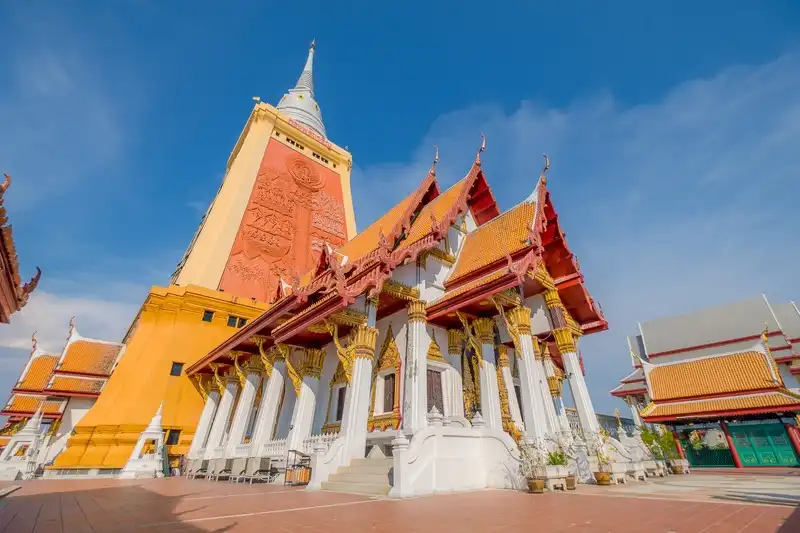
Wat Dhammamongkol Thea Boonyanon Vihara — commonly shortened by Bangkokians to “Wat Dhammamongkol” — is a major temple in the Sukhumvit 101 area (Bang Chak, Phra Khanong). It stands out both as a temple known for meditation practice and as a contemporary architectural landmark of the capital. Even from a distance, the massive chedi rises like a clear destination, gently inviting city people to slow the mind down a notch before stepping into a noticeably calmer space.
The temple began on land that was once a “sa-kae forest” — a place where senior monks on tudong (wandering practice) such as Luang Por Viriyang used to rest while traveling into Bangkok. Later, devoted lay supporters Mr. Thao and Mrs. Boonma You-Prathet donated the land, and the temple was formally established in 1963. This origin story gives Wat Dhammamongkol the character of a “temple for travelers”: it started as a temporary resting place, then gradually became a lasting refuge for the local community and for those seeking the Dhamma.
Over time, the temple expanded its role across religious duties, education, and meditation training. It grew into a large urban temple with many resident monks and novices, and with facilities that genuinely support lay activities at scale. Yet it still manages to preserve a serene atmosphere — especially in the garden and practice zones — where visitors often feel that, even in the middle of Sukhumvit, it is not difficult to find a corner where the mind can quiet down.
The architectural heart of the temple is the great chedi widely known as the “Phra Viriya Mongkol Maha Chedi.” It is often described as one of Thailand’s tallest chedis, standing about 94.78 meters high. Designed with a contemporary, square base, the interior is organized into a multi-story usable building with 14 floors. This means the chedi here is not only a “symbol on the skyline” but also a “learning space” that people can actually enter and use. That blend is very “Bangkok”: a sacred form integrated with public functions such as museum exhibits, a library, classrooms, practice rooms, and other activity areas — giving the word “chedi” a more modern meaning without abandoning its roots.
From a faith perspective, the top level of the chedi enshrines revered relics, such as sacred hair relics and holy relics including relics of the Buddha, which many devotees intend to pay respect to with composure. What is striking is how the space seems to guide an experience from the “busier energy below” toward the “stillness above,” as if the architecture itself is quietly leading people to calm down step by step — without needing a single spoken teaching, just through walking and being present with oneself.
Another highlight that draws many visitors is the “Green Jade Buddha” — a large green jade Buddha image enshrined in a glass-domed hall, named “Phra Phuttha Mongkol Thammasri Thai.” The glass dome creates a feeling of openness, brightness, and calm at once. Natural light catching the jade surface gives a distinctly cool, soothing atmosphere, often bringing visitors into a more reverent, composed state quickly. It suits both those who come specifically to pay homage and those who simply want to sit quietly for a moment to rest from the day’s noise.
In cultural terms, “jade” also suggests steadiness and coolness — a kind of stability that does not need to be harsh, and a coolness that is not distance but a balanced peace. Placing the Buddha image within a modern glass dome feels like a seamless connection between “age-old faith” and the “architectural language of the present” — without needing much explanation.
Beyond the towering architecture, Wat Dhammamongkol holds another world: serious practice. This is seen in the “Vipassana Cave,” located within the temple gardens and arranged to evoke a forest-and-cave environment. The aim is to let practitioners meditate and listen to Dhamma in surroundings that soften the city’s noise. The key idea is to help city people experience a calm, nature-like practice atmosphere without the safety concerns of a real wilderness. The cave entrance is organized for orderly use; inside can accommodate many practitioners, and the surrounding area is landscaped as a shady forest garden with plants, a pond, and small rises that create a relaxing, cool ambiance.
Another layer of the temple’s identity is its role as a center for lay meditation training through the “Palangjit Tanupap Institute,” which teaches meditation from basic levels up to a meditation teacher curriculum. The image of the temple as a learning venue is very clear here: there are large classrooms that can accommodate many learners, walking meditation rooms, sitting meditation halls, and multiple practice formats. This structured approach helps beginners train step-by-step, without guessing, and without needing to master difficult terminology from day one.
Practically speaking, for most people, “meditation” starts with the simplest things: settling the body into reasonable stillness, knowing the breath, and gently preventing the mind from drifting too far. With consistent repetition, one begins to notice one’s own patterns — what fuels restlessness, what creates fatigue, and what kind of calm can arise without force. Wat Dhammamongkol makes this kind of beginning feel normal and approachable, not mysterious — which is why many people see it as truly “beginner-friendly.”
For those who intend to join practice retreats, the temple also has the “Viriya Nuphap Meditation Center,” a residential facility for lay practitioners. Accommodation is arranged in a way that reduces crowding and minimizes disturbance, with several room types. Supportive practice facilities include meditation rooms, a Dhamma reading corner, walking paths, and dining services. The idea is not to create comfort that distracts from practice, but to let “physical readiness” support “mental intention,” so practitioners can continue for several days without stumbling over basic needs.
If you visit as a temple traveler rather than a retreat participant, the areas where people usually spend the most time are the chedi zone and the jade Buddha glass dome — because they hold both grandeur and stillness in the same place. It helps to walk slowly and observe: “Where is the space leading you?” Stairs, walkways, light angles, and the general sound level often become a quiet dialogue between architecture and one’s own mind. Mornings are comfortable and calm; late afternoons, when the light softens, the chedi feels gentler and photographs naturally look more beautiful.
Getting There is convenient by both BTS and private car. If using the BTS, get off at Punnawithi or Bang Chak, then take a motorcycle taxi or taxi into Soi Punnawithi 20 (Sukhumvit 101). The distance from the station to the temple is not far, making it a good choice for a city-temple visit without long travel time. If driving, head into the Sukhumvit 101 area and follow signs and navigation into the soi; allow extra time during rush hours, as this is a community and commercial area.
Etiquette at Wat Dhammamongkol is similar to other important Bangkok temples: dress modestly and keep your voice low, especially around practice zones and the jade Buddha dome. If you plan to take photos, observe posted guidance and avoid disturbing people who are praying or meditating. Silencing your phone and walking with quiet composure helps the atmosphere of the place work on you more fully.
In the bigger picture, Wat Dhammamongkol is a temple that “makes Dhamma accessible through structure” — via learning and practice spaces — and at the same time it is a temple that “uses architecture as a teacher,” letting people settle into calm through walking, seeing, and staying with the quiet between the city’s gaps. It suits both a short visit for paying respects and a more serious beginning to meditation in everyday life.
| Place Name | Wat Dhammamongkol Thea Boonyanon Vihara (Wat Dhammamongkol) |
| Location | Soi Punnawithi 20 (Sukhumvit 101), Bang Chak, Phra Khanong, Bangkok 10260 |
| Tradition | Dhammayuttika Nikaya |
| Established | 1963 |
| Key Figures | Luang Por Viriyang Sirintharo (meditation teaching and propagation), land donors Mr. Thao – Mrs. Boonma You-Prathet |
| Latest Abbot (Publicly Referenced) | Phra Khru Palat Samphipat Wiriyachan (Burom Techadhammo) |
| Highlights | Large contemporary great chedi (about 94.78 m, 14 floors), Phra Phuttha Mongkol Thammasri Thai (Green Jade Buddha), Vipassana cave and forest garden zone, Palangjit Tanupap Institute |
| Open Days | Generally open daily |
| Opening Hours | Generally around 06:00 – 18:00 (some sources may list different hours by zone) |
| Contact Number | 02-332-4145 |
| Current Status | Open for worship and temple activities (recommended to check announcements for major Buddhist days) |
| Nearby Attractions (Approx. Real-Route Distance) | True Digital Park (0.2 km) Tel. 02-009-1101 101 The Third Place (0.3 km) Tel. 02-074-3714 BTS Punnawithi Station (0.6 km) Tel. 02-617-7300 / 02-617-6000 BITEC Bangna (1.9 km) Tel. 02-749-3939 Suan Luang Rama IX (3.7 km) Tel. 02-106-2674 |
| Nearby Restaurants (Approx. Real-Route Distance) | Tangjai Yang (Lotus Eatery, True Digital Park) (0.5 km) Tel. 099-615-7945 PANDA MALA (True Digital Park) (0.5 km) Tel. 091-190-8222, 063-373-2362 Karun Thai Tea (True Digital Park) (0.5 km) Tel. 063-219-4562 Mikka Coffee Roasters (True Digital Park) (0.5 km) Tel. 099-629-9882 Khao Hom Wat Dhammamongkol (0.2 km) Tel. 063-591-4985 |
| Nearby Accommodations (Approx. Real-Route Distance) | Marsi Hotel (0.6 km) Tel. 02-331-3136 Olive Bangkok Hotel (0.6 km) Tel. 02-332-6464 The Quarter Onnut by UHG (near Bang Chak area) Tel. 02-040-2022 Lumen Bangkok Udomsuk Station (0.9 miles approx. 1.4 km) Tel. 02-331-9095 ibis Styles Bangkok Sukhumvit Phra Khanong (Phra Khanong area) Tel. 02-095-9888 |
| Facilities | Worship areas, meditation learning/practice zones, gardens and internal walkways, activity/classroom spaces (some areas are practice zones; please keep quiet) |
Frequently Asked Questions (FAQ)
Q: Where is Wat Dhammamongkol located in Bangkok?
A: The temple is in Sukhumvit 101, Bang Chak, Phra Khanong, near BTS Punnawithi/Bang Chak. It’s convenient by both BTS and private car.
Q: What are the must-see highlights?
A: The large contemporary great chedi and the glass dome enshrining Phra Phuttha Mongkol Thammasri Thai (the Green Jade Buddha), plus the Vipassana cave garden zone.
Q: Is the temple open every day, and what are the hours?
A: It is generally open daily, often referenced around 06:00 – 18:00, but hours may vary by building or activities. It’s best to check recent announcements before visiting.
Q: How should I visit the Green Jade Buddha respectfully?
A: Dress modestly, keep your voice low, follow the area’s order and guidance, and avoid disturbing people who are praying or meditating.
Q: What makes the great chedi special architecturally?
A: It is a contemporary chedi designed with multiple usable interior floors, serving both as a faith symbol and as a practical learning space for visitors and practitioners.
Q: Who is the Vipassana cave suitable for?
A: It suits those who want to meditate or listen to Dhamma in a quiet, forest-and-cave-like atmosphere without traveling far outside the city.
Q: Does the temple offer meditation teaching for beginners?
A: The temple plays a strong role in meditation teaching through the Palangjit Tanupap Institute, with a structured learning pathway from basics to teacher-level training.
Q: If I’m visiting with family, what should I prepare?
A: Dress modestly, bring drinking water, and help children keep their voices low — especially in practice zones and main worship areas — so everyone can enjoy the calm atmosphere.
Q: Are there nearby places to eat or visit afterward?
A: Yes — True Digital Park and 101 The Third Place are close by and are convenient for meals or a casual stroll after your visit.
Q: If I want to focus on practice rather than sightseeing, how should I start?
A: Start by sitting quietly in an appropriate area, then look into the temple’s training schedules/retreat options to plan a multi-day practice that fits your readiness.
 Wat Dhammamongkol Thea Boonyanon Vihara Map
 Category:
  Group:
  Last Update: 4 DayAgo
Comment
 Nearby Attractions
| Keyword (Advance) |
 Region
|
 Phra Nakhon(