

 Home
Home Chiang Mai(













Rating: 2.6/5 (10 votes)
 |
|  Map
Map 
 Have Map
  No Map
Bangkok attractions
Attractions in Thailand
Open Days: Generally open daily
Opening Hours: Generally around 06:30 – 18:30 (hours may vary by monastic areas/temple activities)
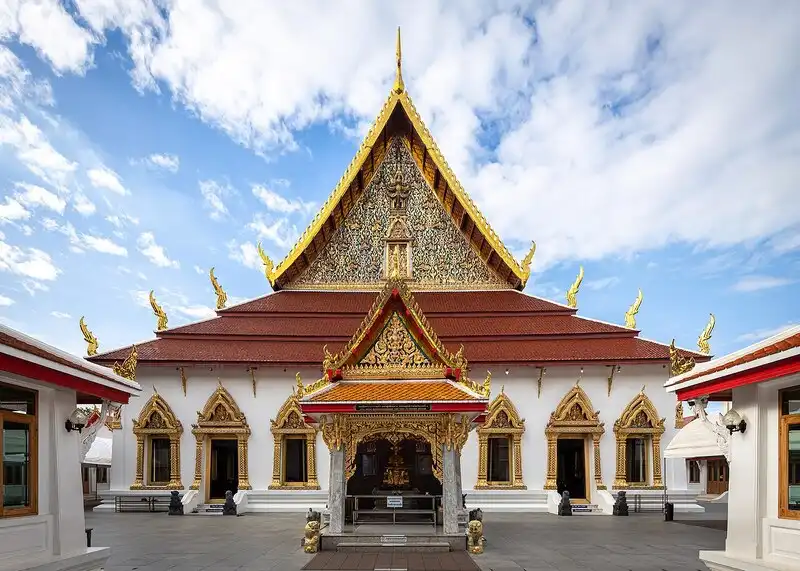
Wat Chana Songkhram Ratchaworamahawihan is an important temple in the Bang Lamphu area on Chakrabongse Road, close to Khaosan Road and Rambuttri Road. Many people recognize it as a “temple in Bangkok’s old town” — a place where you can step out of a lively tourist zone and, within minutes, enter a noticeably quieter space. But the temple’s real charm is not only its location. It lies in layers of history spanning multiple eras: from its earlier name that reflected a once-rural landscape, to its role as a temple associated with the Mon (Raman) Buddhist order, and finally the name “Chana Songkhram” (“Victory in War”) as a symbolic marker of Siam’s triumphs during the early Rattanakosin period.
Local tradition says the temple was once called “Wat Klang Na” (“the temple in the middle of the rice fields”), because the surrounding area was once dominated by farmland and gardens rather than roads and dense neighborhoods. As Rattanakosin was established, Somdet Phra Bawon Maha Surasinghanat (the Front Palace) played a major role in restoring and organizing the Bang Lamphu area into a more structured urban community. Over time, the temple was given renewed meaning closely tied to state power and the military context of the era, especially through the importance placed on armed forces and the Mon (Raman) community, which became a significant part of the kingdom’s social and political structure.
During the reign of King Rama I, the temple was designated for monks of the Mon (Raman) tradition as a way of honoring Mon soldiers who were an important force within the army. The temple was therefore also known as “Wat Tong Pu” (spelled and recorded in various forms across different sources), a name associated with Mon temples and place names remembered from the Mon–Burmese world at that time. Later, it received the name “Wat Chana Songkhram,” carrying a symbolic meaning of victory in war during the early Rattanakosin era.
If you look at Wat Chana Songkhram through the lens of “architecture that tells a story,” you will notice the planning and key structures typical of a royal temple in the old town. The ubosot (ordination hall), the heart of the sacred precinct, is especially significant. In overall form, it is traditional masonry construction (brick and stucco), rectangular in plan, with an interior arranged in a clear structural rhythm of columns and bays. The roof is tiered in the style of important buildings from the early-to-middle Rattanakosin period, giving an impression of restraint, dignity, and order — different from temples that emphasize heavy decorative density as their main statement.
Inside the ubosot, the principal Buddha image is enshrined under the name “Phra Phuttha Narasi Tri Lokachet.” Many visitors find themselves pausing longer than expected, because the interior light and the overall atmosphere naturally guide the mind toward quiet composure rather than a checklist-style “see everything.” Another layer that history lovers often find especially compelling is the space behind the principal Buddha image, where there is a chamber/area that houses the ashes of Front Palace royals. This makes the ubosot not only a place for monastic rites, but also a tangible historical link between the temple and the governing structure of the early kingdom.
Because the temple stands right beside a world-famous tourist area like Khaosan Road, a common concern is: “Will it feel chaotic?” In practice, Wat Chana Songkhram is quite well-organized as a city temple with clearly defined functional zones. So even if the streets outside are bustling, once you pass the wall line and follow the entry rhythm inward, the city noise softens noticeably. This makes the temple suitable both for a brief, respectful visit and for those who want to spend time reading architectural details, appreciating artistry, and observing how “old Bangkok” continues to live alongside modern daily life.
Getting There If you are using public transport, a convenient starting point is the Sanam Luang – Bang Lamphu area, then walk or take a short ride to Chakrabongse Road near Saphan Liao (the “turning bridge”) area. The temple is close to Khaosan Road and Rambuttri Road (walkable). If you are driving, it’s wise to allow extra time for parking, because the old town and Bang Lamphu have limited parking and traffic can vary by time — especially late afternoon to evening and on weekends. Many travelers plan this as part of an “old town temple walk” and continue on foot to nearby landmarks such as Phra Sumen Fort – Santi Chai Prakan Park or museums around Rattanakosin Island.
Temple etiquette matters even more in a heavy-tourist neighborhood: dress modestly, keep your voice low within the sacred areas, do not block pathways for worshippers, and if you take photos, avoid disturbing ceremonies or people who are praying or meditating. With that small care, Wat Chana Songkhram can remain a place that truly “wins over the mind’s noise” — living up to its name for both locals and travelers.
| Place Name | Wat Chana Songkhram Ratchaworamahawihan |
| Location | Chakrabongse Road, Chana Songkhram Subdistrict, Phra Nakhon District, Bangkok (Bang Lamphu area, near Khaosan Road) |
| Status | Royal temple (Ratchaworamahawihan) |
| Brief History | Formerly known as “Wat Klang Na,” later restored and supported in the early Rattanakosin era. Designated as a temple for the Mon (Raman) Buddhist order; also known as “Wat Tong Pu” before receiving the name “Wat Chana Songkhram.” |
| Key Highlights / Architecture | The ubosot (ordination hall) and the principal Buddha image “Phra Phuttha Narasi Tri Lokachet,” plus the historical chamber/area behind the principal image that houses the ashes of Front Palace royals |
| Latest Abbot | Phra Thep Suthi (Saichon Thanawuttho), Acting Abbot (based on public appointment information) |
| Open Days | Generally open daily |
| Opening Hours | Generally around 06:30 – 18:30 (may vary by activities) |
| Contact Number | +66 2 281 9396 |
| Current Status | Open for worship/visits (generally free admission) |
| Nearby Attractions (Approx. Real-Route Distance) | Khaosan Road (0.50 km) Tel. 02-629-5170 (Khaosan Road Business Association) Phra Sumen Fort (0.41 km) Tel. +66 2 281 0470 National Gallery (1.00 km) Tel. 02-281-2224 National Museum Bangkok (Phra Nakhon) (2.00 km) Tel. 02-224-1402, 02-224-1333 The Grand Palace (3.00 km) |
| Nearby Restaurants (Approx. Real-Route Distance) | Shoshana (0.09 km) Tel. 02-282-0654 TALES Khaosan (0.09 km) Tel. 090-880-3204 MYTH - Specialty Coffee (0.08 km) Tel. 081-940-4165 Ranee’s Velo Restaurant (0.20 km) Tel. 02-282-1888 Chilli Chilli (0.08 km) Tel. 081-827-3777 |
| Nearby Accommodations (Approx. Real-Route Distance) | Riva Surya Bangkok (0.32 km) Tel. +66 2 633 5000 The StandardX, Bangkok Phra Arthit (0.32 km) Tel. +66 2 043 1800 Siri Grand Bangkok Hotel (0.69 km) Tel. +66 2 282 0999 Ayathorn Bangkok (1.13 km) Tel. +66 2 126 7999 Baan Wanglang Riverside (1.13 km) Tel. +66 2 412 7232 |
| Facilities | Courtyard/worship areas, sacred precinct for prayer, visitor-friendly access near Bang Lamphu (please keep quiet and dress respectfully) |
Frequently Asked Questions (FAQ)
Q: Where is Wat Chana Songkhram located in Bangkok?
A: It is on Chakrabongse Road in Phra Nakhon District, near Khaosan Road and Rambuttri Road in the Bang Lamphu area.
Q: Why was it once called “Wat Klang Na”?
A: Because the surrounding area used to be dominated by rice fields and gardens, so the name reflected the landscape before the neighborhood became fully urbanized.
Q: How is the temple connected to the Mon (Raman) community?
A: During the reign of King Rama I, it was designated as a temple for Mon (Raman) monks to honor Mon soldiers who played an important role in the army at the time.
Q: What is important inside the ubosot?
A: The principal Buddha image is enshrined under the name “Phra Phuttha Narasi Tri Lokachet,” and a notable historical feature is the chamber/area behind the principal image that houses the ashes of Front Palace royals.
Q: Is the temple open every day, and what are the usual hours?
A: It is generally open daily, typically around 06:30 – 18:30, though times may shift depending on temple activities.
Q: Where can I visit nearby after the temple?
A: Khaosan Road and Phra Sumen Fort are very close. If you prefer museums, the National Gallery and the National Museum Bangkok (Phra Nakhon) are also within easy reach.
 Wat Chana Songkhram Ratchaworamahawihan Map
 Category:
  Group:
  Last Update: 3 DayAgo
Comment
 Nearby Attractions
| Keyword (Advance) |
 Facebook Fanpage
 Region
 Art, Culture and Heritage
 Historical Sites and Monuments(
 Landmarks and Memorials(
 Royal Palace(
 Art, Craft Centres, Tradition(
 Museums(
 Historical Houses and The Ancient City(
 Art Gallery(
 Educational Places
 Museum for Study(
 Library(
 University
 Church(
 Mosque(
 Other religious and spiritural sites(
 Research and Development
 Royal Project(
 Suburban Living
 Village, Community(
 Local Market(
 Floating Market(
 Nature and Wildlife
 River, Canal(
 Bays and Beaches(
 Other natural attractions(
 Entertainment and Agricultural
 Zoos and Aquariums(
 Animal camps and shows(
 Stadium(
 Farm, Parks, Gardens and Ecotourism(
 Amusement Park(
 Waterpark(
 Theater(
 Cinema(
 Shopping
 Shopping and Night Market(
 Department Store(
 Spas and Wellness
 Spas and Wellness(
 Restaurant
 Michelin Star(
 Accommodation
 Hotel(
 Call Customer Service in Tourism
 Call Customer Service in Tourism(
 Travel Articles, Recipes
 Travel Review, Food Review(
 Royal Thai Desserts, Traditional Dessert, Thai Dessert Recipes(