

 Home
Home Chiang Mai(















Rating: 3.5/5 (4 votes)
 |
|  Map
Map 
 Have Map
  No Map
Bangkok attractions
Attractions in Thailand
Open Days: Daily
Opening Hours: 06:00 – 18:00
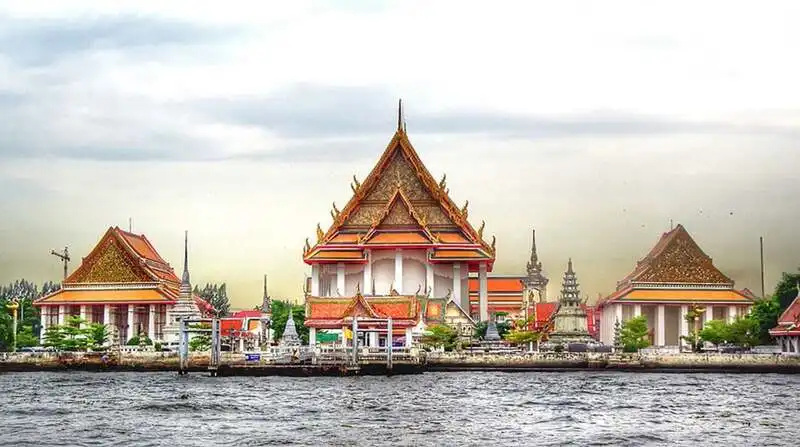
Wat Kalayanamitr Woramahawihan (Wat Kalaya) is a royal temple on the Thonburi side of the Chao Phraya River with a very clear “community rhythm.” It isn’t just a place to stop by, pay respects, and leave—it remains a living center of faith and everyday life around the mouth of Khlong Bangkok Yai. If you like exploring Bangkok through stories, craftsmanship, and a riverside atmosphere, this temple gives you a complete experience without trying too hard. Walk slowly and observe, and you’ll understand what people mean by a “city temple” that is still truly alive.
The temple’s beginning is directly tied to “people” and “intention.” Chao Phraya Nikarabatdin (To Kalayanamitr) dedicated his house and acquired additional nearby land, then established the temple in 1825 (B.E. 2368) and presented it to King Nangklao (Rama III), who graciously bestowed the name “Wat Kalayanamitr.” The name sounds warm, but it carries deep Buddhist meaning: a “kalayanamitr” is a good spiritual friend—someone who guides others toward wisdom. As the temple developed as a royal monastery by the river, it became an anchor for many groups, especially Thai–Chinese communities in Thonburi.
The heart of Wat Kalaya is the main royal viharn and its principal Buddha image, widely known as “Luang Pho To,” or Phra Phuttha Trai Rattana Nayok. Rama III ordered the creation of a large riverside Buddha in the same spirit as Wat Phanan Choeng in the old capital, so that it would be a major sacred image visible from the water—something that naturally draws the mind toward faith even while traveling on the river. Among Chinese devotees, Luang Pho To is especially revered and commonly called “Samphohutkong” or “Sampokong.” During important periods such as Chinese New Year or long holidays, the atmosphere becomes particularly lively, with people making merit, paying respects, praying for blessings, and returning to fulfill vows. If you come to worship Luang Pho To with sincerity, a simple and respectful approach is best: avoid excessive incense and focus on heartfelt merit-making rather than rituals that might disturb others.
Another layer that gives Wat Kalaya strong “cultural and social value” is the ubosot (ordination hall). Although smaller than the viharn, it contains mural paintings of the Buddha’s life that also weave in scenes of everyday people and city life from the reign of Rama III. This is what makes temple art here enjoyable even if you’re not a specialist—you can read the details: people’s clothing, tools, boats and waterways, and the rhythm of life captured by artisans of the time. If you stand and look long enough, the Buddha’s story gradually becomes a “window in time,” taking you back to early Rattanakosin Bangkok in a way that feels tangible.
Beyond the viharn and ubosot, Wat Kalaya has other important features that make for a pleasant walking route. One is the “Ho Monthiantham Thaloeng Phra Kiat,” a place that keeps the Tipitaka from the reign of Rama IV. In front of the main viharn is also a bell tower for a giant bell, often discussed as one of the country’s largest. When visiting this area, please be respectful—do not climb and avoid loud voices—because this is a sacred, actively used space. Near the entrance, you’ll also see a Chinese-style stone pagoda called “Tha,” a beautiful example of Chinese art that clearly reflects the cultural connections within the community during the reign of Rama III.
What makes Wat Kalaya different from a simple “check-in temple visit” is that it still serves as a real center of riverside community life. You’ll see people dropping by to make merit as part of daily routine—praying, offering alms, bringing donations, or simply sitting quietly by the river. If you visit at the right time, such as in the morning, the light is soft and the crowds are lighter, making it easier to appreciate craftsmanship and murals in detail. On holidays and festival periods, the atmosphere becomes much more energetic—ideal for those who want to feel the living faith of multiple generations and cultures in one place.
Getting There Wat Kalaya is accessible by both road and river. If you want the full “riverside temple” mood, arriving by boat and walking in from the pier area fits the atmosphere best. Coming by car or taxi is convenient—especially if you’re traveling with elderly family members—but it’s wise to allow time for traffic and parking, particularly on long weekends, because nearby riverside attractions can get busy. If you’re aiming for a calm visit to Luang Pho To, weekday mornings are usually the most comfortable.
If you want to extend your trip, Wat Kalaya pairs very well with nearby Thonburi landmarks such as Wat Prayurawongsawas, Santa Cruz Church, and the Kudi Chin community. It’s a route that reveals the “diversity of riverside Bangkok” within a short distance, and you can then cross over to Tha Tien or Wat Arun to end the day with beautiful river views. Overall, Wat Kalaya offers faith, knowledge, and the feeling that Bangkok still has corners where slowing down truly gives something back.
| Place Name | Wat Kalayanamitr Woramahawihan (Wat Kalaya) |
| Location | 371 Wat Kalayan Subdistrict, Thon Buri District, Bangkok (Chao Phraya riverside, near the mouth of Khlong Bangkok Yai) |
| Key Highlights | Main royal viharn housing Luang Pho To (Phra Phuttha Trai Rattana Nayok), ubosot murals featuring Rama III-era daily life, Ho Monthiantham Thaloeng Phra Kiat, bell tower and giant bell, Chinese stone pagoda “Tha” |
| Period | Established in 1825 (B.E. 2368), King Rama III era |
| Key Evidence / Notable Features | Luang Pho To (Phra Phuttha Trai Rattana Nayok), Rama III-era mural paintings, Ho Monthiantham Thaloeng Phra Kiat (Tipitaka from the Rama IV era) |
| Name Origin | Royal name “Wat Kalayanamitr” (Buddhist meaning: a good spiritual friend) |
| Travel | Accessible by road and river (allow extra time on holidays; check boat routes and crossing points before departure) |
| Current Status | Open to visitors (please observe temple etiquette; avoid ceremony times if you prefer a quiet visit) |
| Contact | 096-362-5354, +66 2 466 4643 |
| Nearby Attractions (With Distance) | Wat Prayurawongsawas Worawihan ~1.5 km Tel. 02-466-1693 Santa Cruz Church ~2.0 km Tel. 02-472-0154 Kudi Chin Community / Baan Kudichin Museum ~2.2 km Tel. 08-1772-5184 Wat Arun Ratchawararam ~3.0 km Tel. 02-891-2185 Museum Siam ~3.5 km Tel. 02-225-2777 |
| Nearby Restaurants (With Distance) | Rongros ~4.5 km Tel. 096-946-1785 The Deck by Arun Residence ~4.6 km Tel. 02-221-9158 Supanniga Eating Room (Tha Tien) ~4.4 km Tel. 092-253-9251 sala rattanakosin Eatery and Bar ~4.8 km Tel. 02-622-1388 Eat Sight Story Deck ~4.7 km Tel. 02-622-2163 |
| Nearby Accommodations (With Distance) | The Peninsula Bangkok ~5.5 km Tel. +66 2 020 2888 Millennium Hilton Bangkok ~6.0 km Tel. +66 2 442 2000 Avani+ Riverside Bangkok Hotel ~7.5 km Tel. 02-431-9100 Anantara Riverside Bangkok Resort ~9.0 km Tel. 02-476-0022 / +66 2 365 9110 Royal Orchid Sheraton Riverside Hotel Bangkok ~6.5 km Tel. 02-266-0123 |
| Facilities | Worship areas, courtyards/walkways, shaded resting spots around buildings (details may vary depending on time and temple management) |
| Admission Fee | Generally free (donations welcome) |
Frequently Asked Questions (FAQ)
Q: Is Wat Kalayanamitr Woramahawihan open every day?
A: It is generally open daily, and the usual visiting hours are 06:00 – 18:00. If you plan to come during ceremonies or important holidays, it’s wise to check ahead.
Q: What do Chinese devotees call Luang Pho To (Phra Phuttha Trai Rattana Nayok)?
A: It is commonly called “Samphohutkong” or “Sampokong,” and it is especially revered among Chinese devotees.
Q: What are the unmissable highlights at Wat Kalaya?
A: The main viharn and Luang Pho To, the ubosot murals that include Rama III-era daily life scenes, Ho Monthiantham Thaloeng Phra Kiat, and the Chinese stone pagoda “Tha” near the entrance.
Q: Is visiting Wat Kalaya by boat convenient?
A: Yes. It’s a great option if you want the full riverside vibe, and it makes it easy to continue to nearby temples and riverside communities. Check routes and piers before you go.
Q: When is the best time for fewer crowds and a slower art-focused visit?
A: Weekday mornings are usually quieter and are ideal if you want to take your time with murals and craftsmanship.
 Wat Kalayanamitr Woramahawihan (Wat Kalaya) Map
 Category:
  Group:
  Last Update: 4 DayAgo
Comment
 Nearby Attractions
| Keyword (Advance) |
 Region
|
 Phra Nakhon(