
 Home
Home North(
 Chiang Mai(


Rating: 4.3/5 (4 votes)
 |
|  Map
Map 
 Have Map
  No Map
Phranakhon Si Ayutthaya attractions
Attractions in Thailand
Open Days: Open Daily
Opening Hours: 06.00 – 18.00
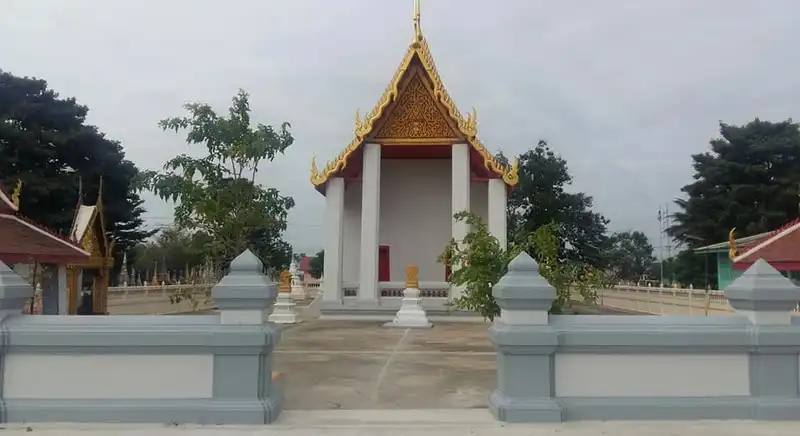
Wat Bandai Chang in Hua Wiang Subdistrict, Sena District, Phra Nakhon Si Ayutthaya is a local community temple that has grown alongside the riverside settlements of the Noi River basin for generations, truly embodying the idea of a “temple of the people.” In this context, a temple is not only a place for Buddhist rites, but also the emotional anchor of the community—a space that helps people feel they still have something to rely on in everyday life as well as in difficult times. It is also a repository of shared memories, whether through annual merit-making ceremonies, ordinations, funerals, Kathin and Pha Pa offerings, or acts of mutual support among residents of Hua Wiang and nearby areas.
Wat Bandai Chang stands out for its calm, simple atmosphere and its lived reality as a riverside community temple. Many visitors notice the sense of friendliness and stillness in the space because the temple is not on the heavily trafficked tourist routes associated with the historic island area of Ayutthaya. This makes it well suited to those who want to make merit intentionally, pay respects without rushing, and see another side of Ayutthaya—one grounded in real community life rather than a crowded travel backdrop. Walking quietly through the grounds in the morning or late afternoon often feels like a true pause for the mind, a gentle release, and an easy return to oneself.
Geographically, the temple sits in the flat floodplain of Central Thailand and near the Noi River, a vital lifeline for riverside communities in Sena District. The defining character of this landscape is its deep relationship with water, shaping traditional transportation, agriculture, and settlement patterns. As a result, temples in the river basin naturally become social hubs at the same time. Wat Bandai Chang reflects this clearly: it is a place where community life continues in an unbroken flow—from small children accompanying elders to the temple on Buddhist holy days, to young people growing up through temple activities, and to seniors who stop by to rest, talk, or make merit according to their faith.
Based on recorded historical notes, Wat Bandai Chang has been described as having roots dating back to the Ayutthaya period, with an approximate reference around 2250 BE. This suggests that the community and its religious site have taken shape over many generations. One of the most compelling aspects is the local narrative connected to the waterfront and older patterns of movement. The area was once an important crossing point or a key place for getting on and off boats along the riverside community routes. The landing area featured steps—a “stairway” used for moving between the bank and the waterway. The name “Wat Bandai Chang” is therefore often explained through the image of this riverside stairway as a local landmark, later becoming widely used as the temple’s name in the Rattanakosin era. In this sense, the name itself reflects the deep river-based heritage of the community, formed before roads became as accessible as they are today.
In terms of monastic affiliation and development, Wat Bandai Chang belongs to the Mahanikaya order. Early accounts also mention the granting of Wisungkhamsima, which indicates recognition of the temple as a formal religious site with an ubosot and the appropriate space for important rites under the monastic discipline. Many community temples in Central Thailand have also long played an educational role, and Wat Bandai Chang is similarly associated with community education—both in the form of Dhamma and Pali studies for monks and, during certain periods, through connections with primary education for local residents. This reflects the temple’s broader function as the community’s school in times when educational resources in rural areas were not as widely accessible as they are today.
The temple’s physical setting further clarifies its identity as a lived community temple. In the Noi River floodplain, seasonal flooding is a natural reality, requiring adaptation in both building design and day-to-day maintenance. Wat Bandai Chang contains key structures that reflect practical community use, such as the ubosot, sermon hall, chanting hall, monks’ quarters, and multipurpose buildings—spaces that genuinely support merit-making ceremonies and community gatherings. From this perspective, the temple’s beauty is not only in grandeur, but also in orderliness, cleanliness, and the availability of a space where faith can continue naturally through changing seasons and social conditions.
When speaking of the temple’s “heart of faith,” Wat Bandai Chang is closely associated with revered figures and narratives that local people hold in deep respect, especially Luang Pho Lap and Luang Pho Thiep. Both are remembered as spiritual pillars of the community across different periods of the temple’s history. The name of Luang Pho Lap appears in temple-history records alongside an ecclesiastical title as “Phra Khru Khema Phirom (Lap),” reflecting his standing and role in a particular era. Luang Pho Thiep is likewise remembered as a highly revered figure, often described in local telling as embodying compassion, steadiness of mind, and being a refuge in times of hardship for people in the area.
Paying respects to Luang Pho Lap and Luang Pho Thiep in the context of a community temple does not require elaborate ceremonies. What matters most is sincerity and composure. Many people come to bow and pray for peace, health, work, and stability for their families. At times, visiting a community temple also feels like returning to one’s roots, because many residents grew up with the temple, made merit here since childhood, or share memories tied to elders who once came to worship here. In this way, the act of prayer is not only about seeking blessings, but also about reconnecting with memory and community heritage.
Another layer of value is the temple’s role during crises, especially periodic flooding in Thailand’s central plains. In many communities, temples become temporary shelters, distribution points for relief, or coordination hubs for local assistance. Wat Bandai Chang has been referenced in public-sector communications as a site visited during flood monitoring and relief support missions, reinforcing that the temple continues to fulfill the full role of a community temple—not only in religious terms, but also in social care and community support.
In governance and monastic leadership, Wat Bandai Chang’s abbot is Phra Khru Phibun Rattanakon. The temple’s continuity as a community activity center typically comes from collaboration among monks, the temple committee, and local residents. A strong community temple is therefore not sustained by the monastic side alone, but by the shared commitment of the entire community to protect and maintain the temple as a living place of faith.
For visitors who wish to come with intention, choosing the right time can improve the experience. Morning visits are ideal for merit-making and a quiet walk, with cooler air and fewer people. Late afternoon often offers softer light, suitable for a respectful stroll and calm reflection in the courtyard. As this is a community temple, visitors should observe temple etiquette strictly: dress modestly, keep voices low, avoid disturbing monks or local worshippers, and refrain from actions that could disrupt the sanctity and stillness of the space.
Getting There is convenient by car or motorcycle. Starting from Hua Wiang Municipality, turn right onto the Sena–Phak Hai Road and continue for approximately 500 meters. The temple will be on your right. The final stretch passes through a community road, so drive at an appropriate speed and with care. Upon arrival, park neatly, do not block entrances or exits, and respect the surrounding community’s everyday use of the area.
If you wish to plan a half-day or full-day trip, Wat Bandai Chang can be a meaningful starting point or a restorative stop on an “Ayutthaya beyond the historic island” route. It offers a perspective that Phra Nakhon Si Ayutthaya still holds many quiet, natural faith spaces outside the main tourist corridor. Visiting a community temple and then continuing to local dining in Sena District, or driving onward to major heritage sites elsewhere in the province, is a straightforward plan that does not require rushing. What matters most is bringing a respectful mindset, because a community temple is not a staged attraction but a place where people live their lives. Visiting with consideration ensures a good experience for the visitor and avoids causing disruption for the community.
Ultimately, the charm of Wat Bandai Chang lies in its sincerity and the continuity of living faith. It may not be widely recognized as a tourist landmark, but it carries deep importance at the local level as a spiritual anchor for Hua Wiang and nearby communities. Paying respects to Luang Pho Lap and Luang Pho Thiep, walking through the riverside community atmosphere, and experiencing the quiet of a living temple helps reveal that Ayutthaya is not only about ruins on the historic island. There is also an Ayutthaya of people who continue to breathe life into their communities every day—and Wat Bandai Chang is one place that reflects that depth, honesty, and warmth with graceful clarity.
| Place Summary | A community temple in Hua Wiang Subdistrict, Sena District, with a calm, simple atmosphere near the Noi River, suitable for merit-making and quiet reflection. |
| Address | No. 1, Ban Hua Wiang, Moo 8, Hua Wiang Subdistrict, Sena District, Phra Nakhon Si Ayutthaya 13110, Thailand |
| Highlights | Riverside community temple ambience; quiet and shaded grounds; pay respects to Luang Pho Lap and Luang Pho Thiep (revered figures in the community); ideal for an unhurried “Ayutthaya beyond the historic island” visit. |
| Period | Recorded as originating around the Ayutthaya period (approximately 2250 BE). |
| Key Evidence | Temple history and abbot listings referenced in compiled provincial temple-history materials, along with publicly available temple and community-activity information. |
| Name Origin | Often explained through the old riverside landing area, where steps were used for boarding and disembarking boats, later becoming remembered as “Bandai Chang” and adopted as the temple name. |
| Abbot (Latest) | Phra Khru Phibun Rattanakon |
| Temple Phone | 081-948-6516, 035-396-253 |
| Travel | From Hua Wiang Municipality, turn right onto the Sena–Phak Hai Road, continue about 500 meters; the temple is on the right. Drive slowly on community roads and park neatly. |
| Current Status | Open for worship and merit-making; functions as an active community temple and has supported local residents during flood situations. |
| Facilities | On-site parking area (subject to space), sermon hall/multipurpose buildings for merit-making activities, restrooms (typical of a community temple). |
| Fees | No admission fee noted (donations welcome according to faith). |
| Nearby Tourist Attractions | 1) Wat Chao Prap (Ayutthaya) ~23 km 2) Japanese Village (Ayutthaya) ~23 km 3) Ayutthaya Historical Park ~26 km 4) Wat Lokayasutha ~25 km 5) Wat Chaiwatthanaram ~28 km |
| Popular Restaurants Nearby | 1) Baan Ton Mai Restaurant (Sena) ~7 km Tel. 080-585-9429 2) Ann Kung Phao (Sena) ~9 km Tel. 063-624-2635 3) Waan Ping..Pang ~10 km Tel. 080-596-9195 4) .Sena ~11 km Tel. 082-483-3655 5) Baan Khun Ying Restaurant ~12 km Tel. 081-250-5099 |
| Popular Accommodations Nearby | 1) Sukai Home ~10 km Tel. 084-122-2680 2) Mee Na Resort (Sena) ~12 km Tel. 082-235-3563 3) Moomsabai Resort (Ayutthaya) ~14 km Tel. 094-286-6687 4) Ayutthaya Retreat ~27 km Tel. 035-795-885 5) Baan Khung Thara Ayutthaya ~29 km Tel. 098-273-2700 |
Frequently Asked Questions (FAQ)
Q: Where is Wat Bandai Chang located?
A: The temple is in Hua Wiang Subdistrict, Sena District, Phra Nakhon Si Ayutthaya, in a community area near the Noi River basin.
Q: Is Wat Bandai Chang open daily, and what are the opening hours?
A: It is generally open daily from 06.00 – 18.00. If there are special merit-making events, it is advisable to call the temple before visiting.
Q: Who are Luang Pho Lap and Luang Pho Thiep?
A: They are revered figures associated with the temple and remembered by the local community as important spiritual anchors, referenced in temple-history notes and community narratives.
Q: Who is the current abbot of Wat Bandai Chang?
A: Publicly available sources list the abbot as Phra Khru Phibun Rattanakon.
Q: What is the easiest way to get to Wat Bandai Chang?
A: From Hua Wiang Municipality, turn right onto the Sena–Phak Hai Road and continue for about 500 meters; the temple will be on the right. Using an online map search for “Wat Bandai Chang, Sena” can help with accuracy.
Q: What type of visit is Wat Bandai Chang best suited for?
A: It is best for visitors who want a quiet merit-making experience at a riverside community temple and prefer an off-the-main-route side of Ayutthaya.
 Wat Bandai Chang Map
 Category:
  Group:
  Last Update: 2 MonthAgo
Comment
 Nearby Attractions
| Keyword (Advance) |
 Facebook Fanpage
 Region
 Art, Culture and Heritage
 Historical Sites and Monuments(
 Landmarks and Memorials(
 Royal Palace(
 Art, Craft Centres, Tradition(
 Museums(
 Educational Places
 Museum for Study(
 Educational Gardens, Farm(
 Training Center(
 University
 Church(
 Mosque(
 Other religious and spiritural sites(
 Research and Development
 Royal Project(
 Suburban Living
 Village, Community(
 Local Market(
 Floating Market(
 Nature and Wildlife
 Dam, Reservoir, Lake(
 River, Canal(
 Islands(
 Other natural attractions(
 Entertainment and Agricultural
 Animal camps and shows(
 Farm, Parks, Gardens and Ecotourism(
 Travel Articles, Recipes
 Travel Review, Food Review(