

 Home
Home Chiang Mai(


























Rating: 3.5/5 (15 votes)
 |
|  Map
Map 
 Have Map
  No Map
Ratchaburi attractions
Attractions in Thailand
Open Days: Open daily
Opening Hours: 08:00 – 17:00
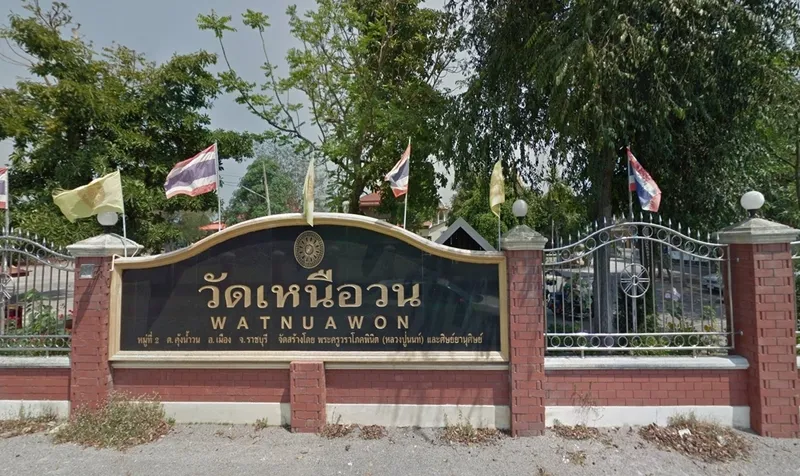
Wat Nuea Won, Ratchaburi is an old Dhammayut temple in Khung Nam Won Subdistrict, Mueang Ratchaburi District. Formerly known as Wat Yat Pritda Sattha Udom, the temple began through the faith of local villagers who joined together to donate land and clear forested ground to establish a temple in earnest from 1907 onward. This temple holds significance in terms of local history, religion, and riverside community life along the Mae Klong River, and it has remained closely connected with the local community for a long time. For those who wish to visit a peaceful temple with a pleasant atmosphere, a clearly documented history, and a deeper side of Ratchaburi beyond a casual stop, Wat Nuea Won is one destination worth including in the itinerary.
Wat Nuea Won, Ratchaburi is located in Village No. 2, Khung Nam Won Subdistrict, Mueang Ratchaburi District, Ratchaburi Province. It is a Dhammayut temple with a long history and a deep bond with the local community dating back to its earliest stage of construction. The temple is not merely a place for monks and Buddhists to perform religious activities, but also an important piece of evidence reflecting the spiritual strength of the people of Khung Nam Won. The temple did not come into being through the effort of just one person, but through the united cooperation of the whole community, who wished to ensure that Buddhism would remain firmly rooted in their area.
The charm of Wat Nuea Won lies in the fact that it truly arose from shared local faith. Its story did not begin with patronage from the elite or with a large-scale construction project from the center. Instead, it began with villagers willingly giving up their own land, some donating, others acquiring additional plots, until the land was combined into a single tract to beถวาย as monastic land. This determination reflects that the people of Khung Nam Won at that time did not see a temple merely as a place for rituals, but as a long-term center of emotional security, education, and social order for the community.
Geographically, Wat Nuea Won stands in an area that clearly retains the character of a riverside community in Ratchaburi. Khung Nam Won has long been tied to the Mae Klong River and to an agricultural community system, which gives this temple a personality distinct from urban temples filled with haste and noise. Wat Nuea Won feels calm, simple, and natural. Visitors can sense the charm of an area that still preserves the traces of its local community in its landscape, daily life, and the close relationship between the temple and the villagers.
According to the historical record, Wat Nuea Won was originally called “Wat Yat Pritda Sattha Udom,” a name that reflects an atmosphere of cooperation, affection, and deep communal faith. In time, the temple gradually became widely known as “Wat Nuea Won,” the name used in later years. This transition in the temple’s name illustrates a broader pattern in Thai temple history, where an early formal name may carry a ceremonial or moral tone, while the name used by villagers over the long term tends to align more closely with the landscape and local perception. The name “Wat Nuea Won” therefore carries weight both as the name in actual use and as an identity closely tied to the Khung Nam Won area itself.
The beginning of Wat Nuea Won came when villagers in the area joined together to assemble a single tract of land, totaling roughly 7 rai in the early stage, toถวาย as monastic land. At that time, the area was not an open site ready for construction, but was instead filled with bamboo groves and dense mixed woodland of various sizes. The people of Khung Nam Won therefore had to use their free time outside their livelihoods to clear the land by hand, digging, cutting, trimming, and burning until the area became open. This process took nearly a full year, showing clearly that Wat Nuea Won arose from the actual labor of the community, not merely from an idealistic plan without action.
The clearing of land for the temple in 1907 took place during the reign of King Chulalongkorn, Rama V, a period when Thai society was undergoing major transitions in administration, state structure, and the adjustment of provincial communities to modern forms of governance. In such a context, the fact that villagers organized themselves to build a temple at the local level carried great significance. Temples still served as the main institutions connecting people with morality, basic education, and communal unity. Wat Nuea Won therefore came into being at a time when society was changing, yet it remained firmly grounded in the traditional faith and conviction of ordinary people.
After the land had been cleared as intended, the villagers began by constructing the first monk’s residence so that monks would have a place to stay. This was a major step in transforming forest land into a true religious site, because once there was a residence, the temple could begin functioning as a place for monastic living and community merit-making. Later, in 1909, construction of a permanent ordination hall began, using a plastered brick structure. This method of construction reflected not only serious intention, but also the enormous effort and commitment invested by local people at the time.
What is especially interesting is that the ordination hall was not built mainly through hired craftsmen or ready-made outside materials. Instead, monks, novices, temple supporters, and villagers were encouraged to work together to fire bricks, plane timber, and prepare construction materials themselves. This form of collective labor is a vivid reflection of rural Thai society in the past. A temple did not arise from money alone, but from physical effort, heartfelt dedication, cooperation, and a shared feeling that the place belonged to everyone as a religious treasure.
During the construction of the ordination hall, an event occurred that local people regarded as an auspicious sign for Wat Nuea Won. It happened around the same period when King Chulalongkorn was visiting the area of Wat Sattanat Pariwat. When Kamnan Rod learned of this, he sought an audience to respectfully request royal permission for a wisungkhamasima boundary. On 17 August 1909, royal approval was granted swiftly within only 14 days. This event is highly significant in the temple’s history, because the granting of wisungkhamasima gave the temple full religious legitimacy under Buddhist monastic law, allowing ordinations and other formal religious acts to be carried out properly according to tradition.
Viewed from the perspective of local history, this royal grant of wisungkhamasima carries great importance because it shows that although Wat Nuea Won was built by the community itself, it was also officially recognized by the central authority of the kingdom. This further emphasizes the temple’s importance as an institution linking the locality with the state, and linking village faith with the formal structure of Buddhism at the national level.
Wat Nuea Won stands on a total land area of 10 rai, 3 ngan, and 73 square wah, and it also has several plots of monastic land totaling approximately 100 rai. This shows that the temple continued to develop and expand its resources from its original foundation. The main buildings within the temple include the ordination hall, sermon hall, chanting hall, monks’ quarters, multipurpose pavilion, and funeral pavilion. These elements show that Wat Nuea Won did not remain merely a small community temple from its founding era, but grew systematically in accordance with its role in serving both monks and laypeople.
The ordination hall of Wat Nuea Won, which began construction in the early phase of the temple’s history, is the architectural and ritual heart of the temple because it is the primary space for monastic ceremonies. The presence of a permanent ordination hall from the outset shows that villagers did not intend to create only a temporary monastic residence or a small religious shelter. They intended to build a fully functioning temple capable of sustaining Buddhism in the long term. This seriousness is one of the reasons why the history of Wat Nuea Won carries more weight than that of many smaller temples that began only as simple shelters and developed much later.
In terms of atmosphere, Wat Nuea Won has a character distinct from the more popular tourist temples in central Ratchaburi. It does not emphasize grand scale or flashy modern structures, but stands out through peace, shade, and the unmistakable feeling of being a real community temple. Those who visit can feel the stillness of the space, the simplicity of its surroundings, and the charm of a riverside temple untouched by haste. In tourism terms, Wat Nuea Won is ideal for those who prefer places with real stories and a genuine atmosphere over surface-level spectacle.
Another reason Wat Nuea Won is especially interesting is that it is a Dhammayut temple, which gives it a particular character in terms of monastic discipline and culture. Many Dhammayut temples carry a natural sense of order, calmness, and adherence to tradition, and Wat Nuea Won reflects that character quite clearly. Visitors can feel a sense of orderliness, dignity, and quiet respect in the overall atmosphere, making the temple suitable both for those coming seriously to make merit and for those interested in Thai temple history in a deeper sense.
Among the important figures associated with Wat Nuea Won, the name of “Luang Pu Non Varapho” carries great weight in the memory of the people of Ratchaburi. He was a highly revered monk whose reputation spread widely, making Wat Nuea Won better known among devotees and among those interested in the history of revered monks in Ratchaburi. Today, references to Wat Nuea Won are often connected with Luang Pu Non, because he is one of the senior monks who helped strengthen the temple’s standing in the spiritual devotion of the public.
Although this article focuses mainly on the history of the place itself, the association of Luang Pu Non with Wat Nuea Won remains an important element in explaining why people continue to come here to worship, make merit, and remember the temple. Many temples possess value in terms of architecture or history, but what keeps a temple truly alive is the emotional bond people maintain with it. In the case of Wat Nuea Won, that bond has been sustained both by the temple’s founding history and by the lineage of faith connected with the monks associated with it.
Historical administrative records of the temple also show a succession of abbots, beginning with Phra Chueai Punnasiri, Phra Mabodika Wong Janthawiso, Phra Baidika On Sumitto, and others in later periods. The continuity of abbots shows that Wat Nuea Won has never been a stagnant place, but rather a religious institution that has been administered, maintained, developed, and carried forward through many generations. Looking at the temple through its line of abbots allows us to understand its social and religious structure more deeply than by considering the buildings alone.
According to the most recently verified information, the current abbot of Wat Nuea Won is Phra Khru Suwat Wihankhun. This name is important to include from the perspective of current information, because it helps readers understand that the temple continues to be actively administered and still plays a real role in the community. Including the latest abbot is therefore a key element in meeting the standard of a complete and reliable temple article.
In community life, Wat Nuea Won serves as much more than a place for rituals. It is a shared space for merit-making ceremonies, annual traditions, communal gatherings on important occasions, and emotional support in times of uncertainty. For a rural or semi-rural riverside community like Khung Nam Won, the temple remains a clear center of shared belonging. Wat Nuea Won should therefore be understood as a public religious space deeply tied to local people, not merely as a tourist destination.
From the perspective of cultural tourism, Wat Nuea Won is highly interesting for those who want to explore Ratchaburi beyond the usual check-in spots. The temple offers a chance to see another side of Ratchaburi: the side of riverside communities, old temples, and living local faith. Those who enjoy studying local history will find that Wat Nuea Won offers substantial material for a serious reading of place, from its founding context and the participation of villagers to its link with King Rama V, its institutional growth, and the role of important monks associated with it.
In addition, the temple itself offers an atmosphere especially suitable for quiet reflection. Its peacefulness and relative lack of crowds allow visitors to spend time walking around, paying respect, sitting quietly, or observing the way of life around the temple without excessive disturbance. Unlike well-known tourist temples that remain crowded throughout the day, Wat Nuea Won suits both those who truly wish to make merit and those who want to find a place offering emotional stillness during travel.
Another interesting point is that Wat Nuea Won is not far from other attractions in Ratchaburi. Although it is not located directly in the city center, it can still be connected into a half-day or full-day Ratchaburi route, such as visiting temples in the Khung Nam Won and Khung Krathin zones before continuing into the city to see the Ratchaburi National Museum, Wat Sattanat Pariwat, or local restaurants in town. This makes Wat Nuea Won not an isolated destination, but one of the places that enrich a fuller understanding of Ratchaburi.
For those who enjoy photography, Wat Nuea Won offers a beauty that is understated rather than dramatic. Its charm comes from the composition of an old temple, a riverside community, and a natural atmosphere. Photographs taken at a temple like this often feel authentic, warm, and full of context, unlike temples that have been newly decorated to the point of losing visible traces of time. Photography at Wat Nuea Won therefore suits those who like to tell stories through atmosphere rather than simply searching for spectacular backdrops or famous photo points.
From the perspective of historical value, Wat Nuea Won is clear evidence of a religious institution created by a local community in the early 20th century. The fact that villagers gathered land, cleared forest, built monks’ quarters, constructed an ordination hall, and successfully requested a wisungkhamasima boundary reflects both the strength of their faith and their ability to organize themselves. The lesson of Wat Nuea Won therefore lies not only in the temple itself, but also in what it reveals about the history of rural Thai society during a period of transition toward modernity.
At a deeper emotional level, Wat Nuea Won reminds us that religious faith does not always need to appear grand in outward image. The sacredness and value of a temple may instead rest in the long-term relationship between people and that place. A temple that arose through the effort of a community and continues to serve that community to this day naturally carries a meaning that goes deeper than that of an ordinary tourist attraction.
Getting There Wat Nuea Won is located at 67, Village No. 2, Khung Nam Won Subdistrict, Mueang Ratchaburi District, Ratchaburi Province. If traveling from Ratchaburi city center by car, the journey takes around 20–25 minutes depending on traffic and the route chosen. The main route leads out of the city toward the Khung Nam Won area along local roads connecting riverside communities on the Mae Klong River. Those traveling from Bangkok can take Phetkasem Road into Ratchaburi Province, then continue through Mueang District before heading toward Khung Nam Won Subdistrict. If not using a private car, it is more convenient to use local hired transport or a ride-hailing app from central Ratchaburi rather than waiting for local public transport in the community area.
Visitors planning to go to Wat Nuea Won should dress respectfully according to the standards of Thai religious sites, avoiding sleeveless tops and shorts or skirts that are too short, and should behave appropriately in the ordination hall and other religious areas. Since this temple is still a living temple used by monks and local people in real life, showing respect for the place is especially important.
The most suitable times to visit Wat Nuea Won are from early morning to late morning and again in the late afternoon, when the weather is more comfortable and the natural light is softer, making it ideal for paying respect, walking around, and taking photographs. Those seeking the most peaceful atmosphere should avoid major merit-making days or public holidays when many villagers gather at the temple. However, for travelers who want to observe community life in motion, visiting on a temple festival day can reveal another very interesting side of the place.
To summarize clearly, Wat Nuea Won, Ratchaburi, is a temple of value in every major dimension: community history, local faith, and cultural tourism atmosphere. It may not be as widely known in mainstream tourism as some larger temples in the province, but it possesses strengths that are deeper and more enduring, namely the real story of local people, the power of faith that built the temple from the ground up, and the continuity of the temple’s role up to the present day. For anyone who wants to understand Ratchaburi beyond a passing glance, Wat Nuea Won is a place very much worth visiting.
Once standing within Wat Nuea Won, it becomes easy to understand why this place still holds meaning for people in the area. The temple has endured not because of reputation alone, but because of faith handed down from one generation to the next, and because the community still regards the temple as part of everyday life. If the aim of travel is to experience the true roots of a place rather than merely collect screen-ready images, Wat Nuea Won is one destination that offers exactly that kind of experience.
| Place Name | Wat Nuea Won, Ratchaburi |
| Address | 67 Village No. 2, Khung Nam Won Subdistrict, Mueang Ratchaburi District, Ratchaburi 70000 |
| Place Summary | An old Dhammayut temple of the Khung Nam Won community, founded through the united effort of local villagers who donated land and cleared the area to establish the temple in 1907. It holds importance in both community history and local faith. |
| Highlights | Community-founded history, Dhammayut affiliation, riverside setting along the Mae Klong River, old ordination hall, peaceful atmosphere, association with Luang Pu Non Varapho, and the charm of the Khung Nam Won community |
| History | Established in 1907, originally known as Wat Yat Pritda or Wat Yat Pritda Sattha Udom. It received its royal wisungkhamasima boundary on 31 August 1909, and the ordination hall was built in 1910. |
| Main Features Within the Temple | Ordination hall, sermon hall, chanting hall, monks’ quarters, multipurpose pavilion, funeral pavilion, principal Buddha image in the ordination hall, and temple grounds by the Mae Klong River |
| Name Origin | Originally known as Wat Yat Pritda or Wat Yat Pritda Sattha Udom, reflecting communal unity and shared faith, before becoming widely known as Wat Nuea Won after the Khung Nam Won area |
| Current Abbot / Temple Caretaker | Phra Khru Suwat Wihankhun |
| Open Days | Open daily |
| Opening Hours | 08:00 – 17:00 |
| Fees | No admission fee |
| Facilities | Temple courtyard, religious activity areas, pavilions, parking in the surrounding community area, and a peaceful atmosphere suitable for merit-making and quiet reflection |
| Getting There | From Ratchaburi city center, the journey takes around 20–25 minutes. Traveling by private car is the most convenient option. From Bangkok, take Phetkasem Road into Ratchaburi city, then continue to Khung Nam Won Subdistrict. |
| Current Status | The temple remains active and continues to hold regular activities. |
| Temple Contact Number | 032-374-074 |
| Zone | Khung Nam Won Zone / Mae Klong Riverside / Mueang Ratchaburi District |
| Nearby Attractions with Distance | 1. Wat Khung Krathin – approximately 3 km – Khung Nam Won / Mae Klong Riverside Zone 2. Wat Tha Suwan – approximately 4 km – Khung Nam Won / Old Community Zone 3. Wat Sala Chao – approximately 6 km – Khung Krathin / Riverside Zone 4. Ratchaburi National Museum – approximately 13 km – Ratchaburi City Center / Historical Zone 5. Wat Sattanat Pariwat Worawihan – approximately 13 km – Ratchaburi City Center / Important Temple Zone |
| Popular Restaurants Nearby with Distance | 1. The Mae Klong Cafe and Restaurant – approximately 5 km – Khung Krathin / Riverside Zone – Tel. 062-924-6632, 095-359-9463 2. Khrua Khung Nam – approximately 8 km – Chet Samian / Thai Food Zone – Tel. 062-889-3297 3. Ratchaburi Dairy Farm Café Flagship Store – approximately 12 km – Na Mueang / Café Zone – Tel. 088-899-2652 4. Nuea Tun Sam Ruean – approximately 11 km – Sam Ruean / Local Food Zone – Tel. 083-309-3216 5. Por Pla Phao Ratchaburi – approximately 14 km – City Entrance / Thai-Isan Food Zone – Tel. 089-882-6886, 089-172-9501, 032-737-256 |
| Popular Accommodations Nearby with Distance | 1. Rachabhura Hotel – approximately 11 km – Ban Rai / Riverside Zone – Tel. 032-919-999 2. HOP INN Ratchaburi – approximately 13 km – City Center / Easy Access Zone – Tel. 02-080-2222 3. Centara Life Wisma Hotel Ratchaburi – approximately 13 km – City Center / Central City Zone – Tel. 032-326-555 4. Space 59 Hotel – approximately 13 km – City Center / Modern Loft Zone – Tel. 085-263-4848, 081-638-1909, 082-242-2092 5. Ban Lamun Ratchaburi – approximately 14 km – City Center / Quiet Stay Zone – Tel. 032-337-111 |
Frequently Asked Questions (FAQ)
Q: What is the history of Wat Nuea Won, Ratchaburi?
A: Wat Nuea Won is a Dhammayut temple established in 1907. It was originally known as Wat Yat Pritda or Wat Yat Pritda Sattha Udom, and it was created through the faith of villagers in Khung Nam Won who joined together to donate land and clear forested ground to establish the temple as a Buddhist center for the community.
Q: When did Wat Nuea Won receive its royal wisungkhamasima boundary?
A: Wat Nuea Won received its royal wisungkhamasima boundary on 31 August 1909. This was an important event that gave the temple formal religious legitimacy and allowed it to conduct monastic ceremonies properly according to Buddhist tradition.
Q: Where is Wat Nuea Won located in Ratchaburi?
A: Wat Nuea Won is located at 67, Village No. 2, Khung Nam Won Subdistrict, Mueang Ratchaburi District, Ratchaburi Province. It lies in a Mae Klong riverside community zone, has a relatively peaceful atmosphere, and is around 20–25 minutes from Ratchaburi city center by car.
Q: What are the highlights of Wat Nuea Won?
A: The highlights of Wat Nuea Won include its history as a temple founded through community cooperation, its identity as an old Dhammayut temple, its peaceful setting by the Mae Klong River, and its association with Luang Pu Non Varapho, a revered monk highly respected by the people of Ratchaburi.
Q: Who is the current abbot of Wat Nuea Won?
A: According to the latest verified information, the current abbot of Wat Nuea Won is Phra Khru Suwat Wihankhun.
Q: What time is Wat Nuea Won open to visitors?
A: Based on the information provided here, Wat Nuea Won is open daily from 08:00 to 17:00.
Q: What places can I visit after Wat Nuea Won?
A: Visitors can continue their trip to nearby places such as Wat Khung Krathin, Wat Tha Suwan, and Wat Sala Chao. If they wish to enter the city, they can also continue to the Ratchaburi National Museum and Wat Sattanat Pariwat Worawihan with relative ease.
 Wat Nuea Won Map
 Category:
  Group:
  Last Update: 12 HourAgo
Comment
 Nearby Attractions
| Keyword (Advance) |
 Region
|
 Muang Ratchaburi(