

 Home
Home Chiang Mai(


























Rating: 3.2/5 (6 votes)
 |
|  Map
Map 
 Have Map
  No Map
Ratchaburi attractions
Attractions in Thailand
Open Days: Open Daily
Opening Hours: 08.00 – 17.00, with some activities held on Saturdays, Sundays, and public holidays according to the temple’s announcements
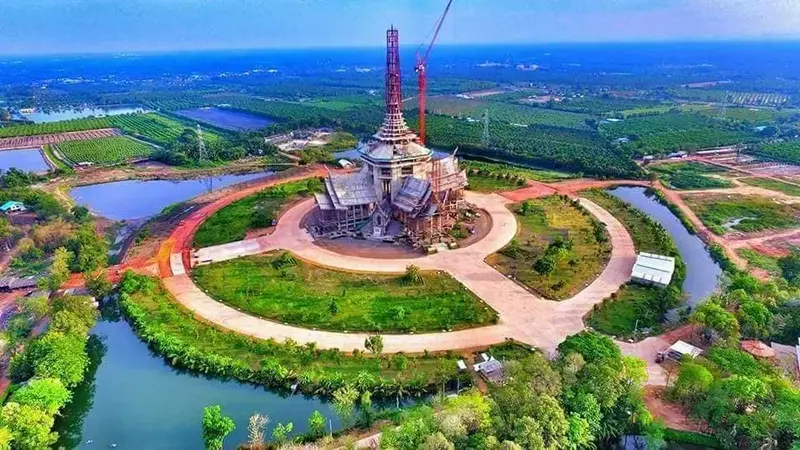
Wat Luang Phor Sodh Dhammakayaram in Ratchaburi Province is one of the most important temples in Damnoen Saduak District, recognized for its religious significance, historical value, artistic heritage, and meditation activities. Within the temple grounds are a late Ayutthaya-period ordination hall, jade Buddha images in various postures, the Somdet Great Chedi, sacred Buddha relics, a Pali studies school, meditation halls, and a permanent commemorative forest park covering more than 200 rai. It is therefore well suited to visitors who wish to pay respect to sacred Buddhist sites, explore a cultural landmark, or practice mindfulness in a genuinely peaceful environment.
When the name of this temple is mentioned, many people immediately think of a serene meditation destination in Ratchaburi. Yet when viewed more closely, the temple offers far more than a simple stop for merit-making or a temporary escape from busy daily life. It is a place where history, art, Buddhist education, religious propagation, and environmental conservation exist together in a remarkable and balanced way. Visitors who arrive here do not come only to worship or take photographs. They also encounter the atmosphere of a sacred space that has been carefully developed into a center of Buddhist learning and contemplative practice.
The temple is located in Phaeng Phuai Subdistrict, Damnoen Saduak District, Ratchaburi Province, along the Bang Phae–Damnoen Saduak road. This route is convenient from Ratchaburi, Nakhon Pathom, and Bangkok. If you begin in Bang Phae District and drive straight along the main road, the temple will appear on the right-hand side before reaching the Damnoen Saduak intersection. This makes the temple easy to access for travelers arriving by private car. At the same time, its location is not far from several well-known attractions in the Damnoen Saduak area, allowing visitors to combine it with nearby destinations in a single-day trip.
One of the most interesting aspects of the temple begins with its name. The phrase “Luang Phor Sodh” naturally connects many people to Phramongkolthepmuni, widely known as Luang Phor Sodh of Wat Paknam Phasi Charoen, a highly influential monk in the spread of Dhammakaya meditation in Thailand. Wat Luang Phor Sodh Dhammakayaram is therefore not simply a temple named to honor a revered teacher. It also reflects a spiritual lineage and a practical tradition that continues the ideals of meditation, education, and the earnest propagation of Buddhist teachings.
Upon entering the temple, many visitors immediately notice the sense of openness and calm. Unlike a small neighborhood temple, this site has the atmosphere of a major Buddhist center with a carefully planned layout. Its buildings are not tightly packed together but arranged into zones that support different functions, including worship areas, meditation spaces, educational sections, reception areas for practitioners, and a vast forest zone that creates a cool and shaded atmosphere throughout the year.
The ordination hall is one of the most important highlights of the temple. It is described as a structure of late Ayutthaya-period art, giving the temple not only the character of a modern meditation center but also the weight of artistic heritage connected to the past. The old ordination hall shows that this place has had a long-standing foundation of devotion and was not shaped only by recent development. Its age gives the temple a distinctly historical dimension.
The character of the ordination hall immediately attracts those interested in Thai architecture. Even visitors without a formal background in art history can still sense the charm of the old structure, the stillness of the sacred space, and the classical mood that has not been overshadowed by newer construction around it. The preservation of the old ordination hall within a temple that continues to grow and function actively today creates a compelling balance between historical dignity and present-day relevance.
Inside the ordination hall are jade Buddha images in various postures, another feature that distinguishes Wat Luang Phor Sodh Dhammakayaram from many other temples. Jade Buddha images often create a feeling of coolness, serenity, and elegance that differs from Buddha images made of metal or plaster. The surface and tone of the jade give worshippers a sense of refinement and sacredness while also strengthening the temple’s identity as a destination for cultural tourism.
However, to truly understand this temple, it is necessary to look beyond the beauty of buildings and sacred objects, because its deeper value lies in its mission of systematically propagating Buddhism. The temple serves as a provincial meditation center and also plays important roles as a Buddhist studies school, a Sunday Buddhist learning center, a provincial Pali school, and a venue for exhibitions and activities related to sacred Buddha relics. In this way, the temple functions on two levels at once: inwardly, by cultivating the mind, and outwardly, by creating knowledge and understanding for devotees and interested visitors.
The description of the temple as a center for the propagation of Buddhism is therefore entirely justified. Its activities are designed for a wide range of people, including monks and novices studying Buddhist scriptures, students and young people participating in religious programs, members of the public interested in meditation, short-term practitioners who come on Sundays, and those who join intensive 14-day retreats. The temple therefore operates as a place of lifelong learning rather than simply a temple where people come to make merit and leave immediately.
One of the most widely discussed aspects of the temple is its educational park and permanent commemorative forest area of more than 200 rai. Green spaces of this scale are uncommon for temples located near communities and still easily accessible from Bangkok. The forest area contributes not only to the atmosphere but also to the suitability of the temple as a place for contemplative practice. Inner calm is often influenced by the surrounding environment, and a temple with generous tree cover naturally supports meditation more effectively than one surrounded by congestion or constant commercial activity.
The forest area was also recognized with an Outstanding Forest Park Award from the Royal Forest Department in 1996. This recognition shows that environmental care is not just an ornamental feature but a genuine part of the temple’s mission. The abundance of natural space also increases the temple’s appeal as a travel destination because many modern travelers are not merely looking for places to worship quickly. They are also looking for places that offer emotional calm and the experience of genuine rest for the mind.
From a visitor’s perspective, Wat Luang Phor Sodh Dhammakayaram suits several types of travelers. Devotional visitors can come to pay respect to Buddha images, sacred Buddha relics, and the Great Chedi. Cultural travelers can appreciate the old ordination hall and the religious story connected to the temple. Those looking for quiet relaxation can walk through the forested landscape, enjoy the scenery, and spend time in silence without feeling that the visit is limited to a brief stop or a casual check-in.
Another important point of interest is the temple’s exhibition relating to sacred Buddha relics and the devotional area dedicated to them. The presence of Buddha relics on the temple grounds attracts many visitors who come with sincere faith rather than as general tourists. For many Buddhists, paying respect to the Buddha relics is an especially meaningful act, one that renews spiritual strength and deepens their bond with Buddhism in a way that goes beyond an ordinary temple visit.
In addition, the temple offers meditation practice every Sunday from 09.30 to 14.30 in line with the Four Foundations of Mindfulness in the tradition associated with Luang Phor of Wat Paknam. This is especially valuable for people who wish to explore meditation but are not yet ready for a longer retreat. Such activities make it easier for newcomers to begin. They can come, try meditation, learn the fundamentals, listen to Dhamma teachings, and absorb the temple atmosphere. If they find that this path suits them, they can later continue to more intensive retreats.
For those who wish to commit more seriously, the temple also organizes annual Dhamma practice retreats twice a year, from 1–14 May and from 1–14 December. These retreats allow participants to live with discipline and remain in a contemplative environment for long enough to notice changes within themselves. A retreat format of this kind makes Wat Luang Phor Sodh Dhammakayaram more than just a religious attraction. It becomes a destination for genuine inner training.
When speaking of the relationship between this temple and Luang Phor Sodh of Wat Paknam Phasi Charoen, it is necessary to look back at the role of Phramongkolthepmuni, or Luang Phor Sodh, in the history of Thai Buddhism. He was widely respected as a meditation master, a key teacher of Dhammakaya practice, and a monk who revived interest in meditation among Thai Buddhists on a broad scale. His influence did not remain limited to Wat Paknam itself but extended into the thinking, practice, and structure of many temples and meditation centers across the country.
The Life of Luang Phor Sodh of Wat Paknam Phasi Charoen and His Connection to This Temple Luang Phor Sodh Candasaro, also known by his ecclesiastical title Phramongkolthepmuni, is one of the most highly respected monks in Thailand’s meditation tradition. He was born in Suphan Buri Province and later entered the monastic life, where he flourished as a monk and became widely known for teaching meditation and the Dhammakaya approach. Luang Phor Sodh became a major figure in making the idea of reaching the Dhamma through stilling the mind accessible to a wide range of people in everyday life.
His role at Wat Paknam Phasi Charoen extended far beyond that of an abbot who simply developed the temple physically. He also created a culture in which learning and practice went hand in hand. He did not teach people merely to understand the Dhamma in theory. He urged them to practice consistently and directly. This emphasis became a foundation for many temples that seriously follow the Dhammakaya approach, and Wat Luang Phor Sodh Dhammakayaram is one of the temples that clearly reflects this spiritual influence and practical model.
The use of the name “Wat Luang Phor Sodh Dhammakayaram” therefore carries more meaning than an act of commemoration alone. It clearly shows that the temple is committed to continuing the teachings, meditation practice, and mission of Buddhist propagation associated with Luang Phor Sodh in a concrete way. This is visible in the temple’s regular meditation sessions, its development of facilities for practitioners, its educational spaces, and its ability to function as both a place for doctrinal learning and a place for direct spiritual practice.
At the same time, this connection also gives the temple a distinctive identity in the public imagination. Many people who already have faith in Luang Phor Sodh feel, when they come here, that they are entering a living continuation of that spiritual lineage. It is not simply a temple with a similar name. It is a place that continues to operate according to the same core ideal: uplifting people’s inner lives through systematic and continuous meditation practice.
From a tourism perspective, the story of Luang Phor Sodh also adds depth to the visitor experience. Many travelers may have heard his name without fully understanding why he is important. When they visit Wat Luang Phor Sodh Dhammakayaram and learn about him alongside the temple itself, the journey becomes more meaningful. The visit is no longer only about seeing a place, but about understanding a living spiritual heritage passed down from an influential teacher into a real and active setting today.
Beyond meditation practice, the temple is also highly significant as a center of Pali studies and Buddhist scriptural education. This should not be overlooked, because the study of Pali is the foundation for deep understanding of the Tipitaka. The presence of a provincial Pali school within the temple gives it an important role for the Sangha and for maintaining standards of Buddhist scholarship in the region. In this sense, the temple preserves devotion among laypeople while also sustaining formal religious knowledge among monks.
This combination gives the temple a particularly admirable completeness. Many temples may stand out in only one way, perhaps through beauty, amulets, or a major annual festival. Wat Luang Phor Sodh Dhammakayaram, by contrast, stands out because of its many dimensions working together: the antiquity of the ordination hall, devotion to the sacred Buddha relics, the seriousness of its meditation programs, its importance as an educational center, and the calming effect of its extensive forest grounds. Together, these qualities support one another and give the temple an unusual degree of wholeness.
The atmosphere of the temple changes attractively over the course of the day. In the morning, visitors encounter fresh air and a particularly quiet mood. The morning light falling on the trees and temple buildings gives the entire grounds a gentle and dignified appearance, ideal for slow walking or for finding a quiet place to sit in meditation before the day fully begins. Later in the day, the atmosphere becomes slightly livelier as more people arrive to make merit, join activities, or explore the temple grounds.
If the intention is to come for inner rest, allowing at least half a day is highly recommended. The temple has several elements that deserve unhurried time, including worship in the ordination hall, paying respect at important sacred points, walking through the forest park, and simply sitting quietly for a while. One of the greatest advantages of a temple with spacious grounds is that visitors can shape their own pace without feeling rushed, crowded, or pressured. This makes it possible to feel that one has truly spent time with the temple rather than merely passing through it.
For photographers, the temple also offers many appealing scenes, from elegant religious buildings to large shade trees, paths running through green space, and the tranquil mood of the forest area. The overall visual tone is calm, clean, and composed. Even so, photography in the temple should always be done with respect, especially near areas used for religious ceremonies or where people are actively meditating.
Another aspect that gives the temple special charm is that it is accessible to both Thai and international visitors. The temple is not limited to a strictly local community but welcomes people from different backgrounds who are interested in Buddhism. The presence of foreign meditation practitioners suggests that the temple’s communication and activity structure are welcoming to a wide range of people. It represents a Thai temple that does not close itself within older boundaries but maintains Buddhist principles while opening space for broader learning.
Historically, public information indicates that the temple was established as a royal-supported public temple under the Mahanikaya order and later developed continuously until becoming a provincial meditation center. This kind of growth suggests that the temple did not remain only a local religious site for basic ceremonies. Instead, it expanded with a vision that embraced education, social service, and the creation of contemplative space suitable for younger generations and visitors from outside the local area.
The publicly available information regarding the current abbot, Phra Ratchawachiranusit, also suggests that the temple retains significant standing within the ecclesiastical structure of Ratchaburi Province. It is not a small temple operating only within a narrow local context, but one with weight in religious administration, Buddhist propagation, and the hosting of broader Buddhist activities. This helps explain why the temple is regarded as credible and important by people seriously seeking a place for meditation and practice.
From the perspective of travel writing, Wat Luang Phor Sodh Dhammakayaram is also a strong subject because it answers many search intentions at once. It can be relevant to queries about famous temples in Ratchaburi, meditation temples in Ratchaburi, things to do in Damnoen Saduak, temple visits in Ratchaburi, Wat Luang Phor Sodh Dhammakayaram itself, and even broader knowledge-based searches such as the life of Luang Phor Sodh of Wat Paknam or Dhammakaya meditation. An article about this temple should therefore do more than say where it is and what can be found there. It should help readers understand why the place matters.
If one asks who would appreciate this temple most, the answer is almost anyone drawn to meaningful travel. Older visitors may come with faith and a desire for peace in merit-making. Working adults may come to step away from fast-paced routines and find a quiet place for the mind. Students may come to learn about history and culture. Foreign visitors may wish to experience Thai Buddhism through meditation. Families may bring older relatives and children together to spend time in a place that offers both knowledge and peace.
For this reason, a visit to the temple should not be rushed or seen only as a brief stop on the way to the floating market. When given proper time, the place reveals enough depth to become the main destination of a trip in itself, especially for those who appreciate destinations that are calm, meaningful, and not overly commercial. A well-balanced day might begin at the temple in the morning, continue to Damnoen Saduak Floating Market later in the day, and then include a café or restaurant nearby, creating a journey that combines merit, culture, and relaxation.
Another advantage is that the temple lies in an area with a number of nearby places to eat, stay, and continue exploring. Visitors wishing to spend the night can plan comfortably, whether they choose accommodations in Damnoen Saduak, Bang Phae, or farther out in Amphawa and Samut Songkhram. Those seeking an atmosphere of old canal communities may choose lodging near the floating markets, while those wanting a resort setting can find suitable options within an easy driving distance of the temple.
At a deeper level, the temple is also interesting because it makes “Dhamma” something tangible rather than leaving it only in abstract religious language. Visitors can see that meditation practice is organized with clear timing, designated places, experienced guidance, and a structured system. At the same time, the temple does not neglect education or environmental care. Altogether, this makes Wat Luang Phor Sodh Dhammakayaram a strong example of a temple working in a comprehensive way for both Buddhism and contemporary society.
At a time when many people are looking for places that help restore inner balance, this temple becomes especially meaningful. Not everyone seeks grandeur or spectacle. Some people simply want a place that is easy to reach, quiet enough to breathe deeply, and grounded in authentic Buddhist practice. Wat Luang Phor Sodh Dhammakayaram responds very well to that need through its environment, activities, and history.
From the perspective of memory after travel, this is the kind of place people often remember through feeling as much as through visual impressions. Some remember the quiet of the forest park. Some remember the devotion they felt while paying respect to the Buddha relics. Some remember the impact of hearing Dhamma teachings. Others may simply remember it as the place where they sat still for the first time in many months. This quality is what makes the temple more than a tourist attraction. It has the potential to become a deeply personal spiritual place for many visitors.
In overall terms, Wat Luang Phor Sodh Dhammakayaram is therefore a temple highly worthy of visiting for anyone traveling in Ratchaburi or the Damnoen Saduak area. With its combination of history, art, devotion, meditation, education, and nature, it reflects not only the beauty of Thai Buddhism but also the way a single temple can become both a center of inner life and a center of learning at the same time.
Getting There If you are driving from Bangkok, you can take Phet Kasem Road and then connect to the Bang Phae–Damnoen Saduak route toward Phaeng Phuai Subdistrict. The journey usually takes about 1.5 to 2 hours depending on traffic. If you are coming from Bang Phae District itself, drive straight along the main road for about 10 kilometers and the temple will appear on the right before the Damnoen Saduak intersection. Visitors planning to continue their trip can easily go on to Damnoen Saduak Floating Market, Lao Tak Lak Floating Market, or even Amphawa.
For first-time visitors, the morning is especially recommended because the weather is cooler, the atmosphere is peaceful, and the temple grounds can be enjoyed more fully. Those planning to join Sunday meditation should allow enough time to arrive before the activity begins. For travelers hoping for beautiful photographs and a gentle atmosphere, both morning and late afternoon offer particularly attractive light and mood.
Wat Luang Phor Sodh Dhammakayaram is therefore suitable both for those who come with a serious spiritual intention and for those who prefer to get to know the temple gradually. Whatever the reason for visiting, many people leave with one shared impression: this is not a temple meant only to be glanced at and forgotten. It is a place with substance, meaning, and an atmosphere strong enough to draw people back again when the mind seeks clarity, stillness, and peace.
| Place Name | Wat Luang Phor Sodh Dhammakayaram |
| Type Of Place | Temple / Meditation Center / Religious And Cultural Attraction |
| Address | Phaeng Phuai Subdistrict, Damnoen Saduak District, Ratchaburi 70130, Thailand |
| Main Characteristics | A temple that serves as a meditation center, Buddhist education center, and Pali studies school, with a large forest park, a late Ayutthaya-style ordination hall, jade Buddha images, sacred Buddha relics, and the Somdet Great Chedi |
| Period / Era | The ordination hall is associated with the late Ayutthaya period, while public information identifies the temple as having been established in 1991 as a public temple |
| Highlights | 1) Old ordination hall 2) Jade Buddha images in various postures 3) Somdet Great Chedi and sacred Buddha relics 4) Sunday meditation practice 5) Provincial Pali studies school 6) Permanent commemorative forest park of more than 200 rai |
| Important Evidence / Information | Late Ayutthaya-style ordination hall, meditation retreat programs, Pali school, Buddha relic exhibition, and a forest park that received an Outstanding Forest Park Award from the Royal Forest Department in 1996 |
| Name Origin | The temple name is linked to Phramongkolthepmuni, or Luang Phor Sodh of Wat Paknam Phasi Charoen, reflecting the continuation of Dhammakaya meditation and Buddhist practice in his lineage |
| Religious Order | Theravada / Mahanikaya |
| Current Abbot / Administrator | Phra Ratchawachiranusit (Pramot Pamotito), Pali Scholar Grade 9, Assistant Professor, Dr., according to public information from religious and public-reference sources |
| Main Zones Inside The Temple | 1. Old Ordination Hall 2. Vihara For Meditation And Sacred Buddha Relic Worship Area 3. Somdet Great Chedi 4. Somdet Hall / Sunday Meditation Area 5. Pali Studies School And Educational Area 6. Educational Park And Permanent Commemorative Forest Zone |
| Open Days | Open Daily, with some worship and meditation activities following specific temple schedules |
| Opening Hours | Approximately 08.00 – 17.00 for general visits; Sunday meditation begins at 09.30 |
| Fees | No public entry fee announcement was found in checked public sources, and earlier public information describes general admission as free |
| Getting There | Use the Bang Phae – Damnoen Saduak road. If coming from Bang Phae, the temple is on the right about 10 km before the Damnoen Saduak intersection. From Bangkok, take Phet Kasem Road and connect to the Bang Phae – Damnoen Saduak route. Travel time is usually about 1.5 – 2 hours |
| Current Status | Open and active for religious activities and meditation practice, with no public indication of permanent closure found in checked sources |
| Temple Contact Numbers | 090-595-5162, 090-595-9562, 090-595-5164, 032-745-180 ext. 191 / 220, 086-306-0920 |
| Nearby Attractions With Distance | 1. Damnoen Saduak Floating Market — Approx. 10 km — 087-003-3885 2. Lao Tak Lak Floating Market — Approx. 11 km — 081-921-7030 3. Wat Choti Thayakaram — Approx. 13 km — 032-241-003 4. Thai Human Imagery Museum — Approx. 26 km — 034-332-607, 034-966-839, 034-332-109, 090-404-0304 5. Amphawa Floating Market — Approx. 24 km — 083-433-5613 |
| Popular Restaurants Nearby With Distance | 1. De Rest Garden — Approx. 0.5 km — 081-347-9130 2. Baan Tiew Son The Pinery — Approx. 1.5 km — 091-087-1519, 095-497-9989, 092-832-5979 3. Khum Damnoen Restaurant — Approx. 8 km — 032-241-444 4. Na Tree Tara Restaurant — Approx. 18 km — 034-751-335, 093-592-5635 5. Café / Restaurant Inside The Temple Area — Inside The Temple — 090-595-5162, 090-595-5164 |
| Popular Accommodations Nearby With Distance | 1. Khum Damnoen Resort — Approx. 8 km — 032-241-444 2. Reuan Vilawan Cafe & Homestay — Approx. 10 km — 080-999-9958 3. Damnernpawa Resort — Approx. 18 km — 065-069-0152 4. Nopparat Garden Resort Amphawa — Approx. 22 km — 094-102-2464 5. Asita Eco Resort — Approx. 27 km — 084-289-6264, 061-289-6264 |
| Facilities | Worship Areas, Meditation Halls, Educational Spaces, Forest Walking Areas, Parking, Temple Activity Areas |
| Note On Contact Information | Only phone numbers that appeared in public sources were included. These should be rechecked before final publication if the article will remain online long-term |
Frequently Asked Questions (FAQ)
Q: Where is Wat Luang Phor Sodh Dhammakayaram located?
A: The temple is located in Phaeng Phuai Subdistrict, Damnoen Saduak District, Ratchaburi Province, on the Bang Phae – Damnoen Saduak route, making it easy to reach from Bang Phae, Damnoen Saduak, and Bangkok.
Q: What is special about Wat Luang Phor Sodh Dhammakayaram?
A: Its main highlights include a late Ayutthaya-period ordination hall, jade Buddha images, sacred Buddha relics, the Somdet Great Chedi, a provincial Pali studies school, and a permanent commemorative forest area covering more than 200 rai.
Q: How is this temple connected to Luang Phor Sodh of Wat Paknam Phasi Charoen?
A: Wat Luang Phor Sodh Dhammakayaram continues the meditation and Buddhist propagation tradition associated with Phramongkolthepmuni, or Luang Phor Sodh of Wat Paknam Phasi Charoen, especially through meditation practice and the Dhammakaya lineage.
Q: Can visitors join meditation practice at Wat Luang Phor Sodh Dhammakayaram?
A: Yes. The temple offers meditation practice every Sunday from 09.30 to 14.30 and also organizes annual Dhamma retreats twice a year, usually in May and December according to the temple schedule.
Q: What kind of travelers is this temple suitable for?
A: The temple is suitable for merit-makers, cultural travelers, history lovers, and anyone looking for a peaceful place to rest the mind or practice meditation, because it combines sacred worship areas, learning spaces, and a very calm natural setting.
Q: Does the temple really have a forest park?
A: Yes. The temple includes an educational park and a permanent commemorative forest area of more than 200 rai, which once received an Outstanding Forest Park Award from the Royal Forest Department.
Q: How much time should I allow for visiting Wat Luang Phor Sodh Dhammakayaram?
A: If you want enough time to worship, explore the important areas, and enjoy the forest atmosphere without rushing, allowing at least 2 – 4 hours is recommended. If you plan to join meditation practice, you should allow half a day or a full day depending on the activity.
Q: What other places can be included in the same trip?
A: The temple is close to Damnoen Saduak Floating Market, Lao Tak Lak Floating Market, and Wat Choti Thayakaram, and it is also convenient to continue onward to Amphawa or other nearby attractions in Samut Songkhram.
 Tel: 032745180 # 220/191
 Mobile: 0863060920
 Fax: 032745170
 Wat Luang Phor Sod Thamkayaram Map
 Category:
  Group:
  Last Update: 8 HourAgo
Comment
 Nearby Attractions
| Keyword (Advance) |
 Facebook Fanpage
 Region
 Art, Culture and Heritage
 Historical Sites and Monuments(
 Landmarks and Memorials(
 Art, Craft Centres, Tradition(
 Museums(
 Art Gallery(
 Educational Places
 Educational Gardens, Farm(
 University
 Other religious and spiritural sites(
 Research and Development
 Royal Project(
 Suburban Living
 Village, Community(
 Local Market(
 Floating Market(
 Nature and Wildlife
 National Parks and Marine Reserves(
 Mountain (Doi)(
 Dam, Reservoir, Lake(
 Waterfalls(
 Hot Springs(
 Caves(
 Flower Field(
 River, Canal(
 Other natural attractions(
 Entertainment and Agricultural
 Zoos and Aquariums(
 Animal camps and shows(
 Farm, Parks, Gardens and Ecotourism(
 Waterpark(
 Outdoor and Adventure Activities(
 Shopping
 Shopping and Night Market(
 Spas and Wellness
 Spas and Wellness(
 Travel Articles, Recipes
 Travel Review, Food Review(