

 Home
Home Chiang Mai(










Rating: 4/5 (6 votes)
 |
|  Map
Map 
 Have Map
  No Map
Kanchanaburi attractions
Attractions in Thailand
Open Days: daily
Opening Hours: 08:00 – 16:30
Sai Yok National Park in Kanchanaburi is a nature destination that brings together limestone mountains, the Khwae Noi River, World War II history, and globally rare wildlife in one place. Many visitors associate Sai Yok with a waterfall that drops directly into the river, but once you arrive, you will see a vast forested landscape with multiple layers of meaning: mixed deciduous forest and dry evergreen forest, limestone formations that create cliffs, caves, and distinctive soils, and traces of human presence from different eras, from Paleolithic evidence to wartime remnants that can still be found in parts of the area.
Sai Yok National Park covers approximately 598,750 rai and was officially designated as a national park on October 27, 1980. The terrain is largely limestone mountains interspersed with forested valleys, creating a landscape of rocky escarpments, lush riverside vegetation, and nature trails sustained by the moisture and flow of the Khwae Noi River. Here, the river is not just a scenic backdrop for photos; it is a central artery of the local ecosystem, supporting aquatic life, reptiles, and countless small organisms that depend on seasonal cycles of water and humidity.
One reason Sai Yok is frequently discussed among nature enthusiasts is its association with rare wildlife. The park is known for the presence of Kitti’s hog-nosed bat, widely recognized as one of the smallest bats in the world, as well as the Queen Crab, a freshwater crab described as a newly identified species found in the area. These facts are not simply travel trivia; they indicate that Sai Yok hosts highly specific habitats that require care. Because such small species are extremely sensitive to changes in their environment, basic visitor behavior matters: excessive noise, littering, feeding animals, or walking off-trail can disrupt the delicate balance that helps the park remain healthy.
From a historical perspective, Sai Yok also reflects the memory of World War II. During that period, parts of the Sai Yok area served as camping grounds for Japanese troops, and traces such as old cooking stoves and fire pits have been found within the park. These quiet remnants add depth to the experience: the forests and rivers that feel purely natural today were once tied to military movement and human hardship. In that sense, Sai Yok offers not only scenery but also a reminder of how landscapes can carry multiple histories, and how conservation allows places to recover and be appreciated in a very different era.
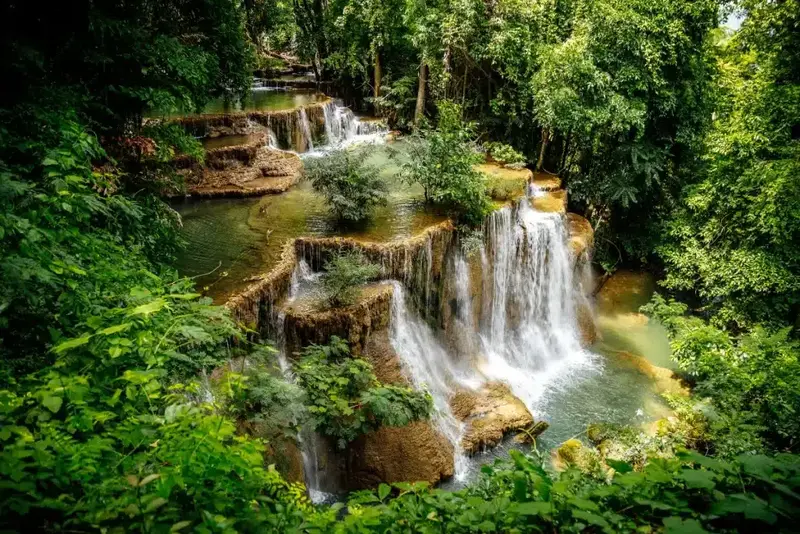
The park’s most widely recognized highlight is Sai Yok Yai Waterfall, also known by many as Khao Chon Waterfall. Located within the national park, this waterfall is distinctive because it flows straight from a cliff into the Khwae Noi River. The way the water seems to “leap” into the river gives it a character unlike waterfalls that drop into inland pools. Sai Yok Yai has water year-round, and it becomes especially impressive in the rainy season when the flow is stronger and the sound of water hitting the rock face is at its most powerful.
Sai Yok Yai Waterfall also carries cultural significance. In the past, King Chulalongkorn (Rama V) visited the waterfall during his travels. Knowing this often changes how people experience the site: instead of taking a quick photo and moving on, many choose to stay longer, watching the water and reflecting on the generations who stood in the same place under very different circumstances.
Within the park, there are several nature study trails for visitors who want to understand the forest beyond the surface. The appeal of these trails lies in observing how the environment shifts between riverside forest and higher slopes, noticing plant communities shaped by moisture, and learning why limestone areas naturally form caves and rock shelters in certain zones. For a safe and meaningful walk, the basic principles remain simple: stay on marked paths, do not remove plants or animals, and keep noise at a level that does not disturb wildlife. What makes a forest walk valuable is encountering nature in conditions close to its original state.
Another spot that helps visitors appreciate Sai Yok Yai Waterfall from a clearer viewpoint is the Sai Yok Suspension Bridge. This viewpoint provides a strong perspective of the river, the cliff, and the waterfall’s overall form, especially when water volume is high. From the bridge, the connection between the waterfall and the Khwae Noi River is often more visually complete than from close-up angles where only part of the flow may be visible. It is also a good place to enjoy the riverside breeze that moves through the area throughout the day.
Beyond waterfalls, caves add another dimension to a Sai Yok trip. One notable example is Dao Dung Cave (Tham Dao Dung), located in Sai Yok District. It is roughly 110 kilometers from Kanchanaburi town, and the cave entrance sits about one kilometer uphill from the Khwae Noi riverbank area. Inside, visitors can see stalactites and stalagmites that have been likened to chandeliers, spires, and stupas. The cave feels airy but is very dark, so a flashlight or other light source is essential, and it is best to have a guide if you are unfamiliar with the route. Moving slowly is important because some sections can be slippery, and darkness makes it easier to misjudge footing.
Many travelers also love Sai Yok for its riverside overnight experience. The area offers accommodation options such as bungalows, camping areas, and raft-style lodging in certain zones. This makes Sai Yok ideal for slowing down rather than rushing through a checklist of attractions. Staying overnight often allows you to feel the temperature drop in the evening, hear the river more clearly, and sometimes see a thin layer of morning mist drifting above the water in cooler seasons. This calm, natural atmosphere is why many people return to Sai Yok repeatedly, even without any high-adrenaline activities.
Seasons shape Sai Yok in a very noticeable way. The rainy season is when the waterfall is at its most dramatic and the forest is at its greenest, but visitors should be mindful of slippery paths and water levels that can rise quickly on certain days. The period from late rainy season into early winter and through winter is often considered the most comfortable time to visit, with cooler temperatures and a particularly relaxing riverside mood. Summer is hotter, but it can suit travelers who prefer riverside activities or nature trails without heavy rainfall. In any season, a simple way to improve the trip is to start early, allow extra time, and avoid packing the schedule too tightly, because Sai Yok tends to feel most rewarding when you pause and absorb the sound of water and forest life.
Getting There If you are driving from Kanchanaburi town, the overall distance is about 104 kilometers via Highway 323 (Kanchanaburi – Sai Yok – Thong Pha Phum). The park entrance area is around kilometer marker 82. The main route is generally easy to drive, but during holidays traffic can become heavy, so it is wise to leave early and plan extra time. Travelers who want to go by train can take the Thonburi railway line to Nam Tok Station (the end-of-line station) and then continue by local transport or a hired vehicle to Sai Yok-area sites. Public bus travel is also possible: start from Bangkok’s Southern Bus Terminal to Kanchanaburi Bus Terminal, then take a bus toward Thong Pha Phum, get off near the park entrance, and continue by local motorcycle taxi or hired transport to reach the attractions inside. This option can be convenient for travelers who do not want to drive, but it requires careful time planning because waiting times and bus schedules may lengthen the day.
If you want a well-paced itinerary that does not feel overly tiring, it helps to choose a clear main focus first. If your goal is Sai Yok Yai Waterfall, allow unhurried time at the viewpoint and the suspension bridge, then add a short nature trail when the sunlight is softer. If you want to include Dao Dung Cave, plan it as a separate segment of the day and prepare proper lighting. Most importantly, leave room for rest. Sai Yok is not at its best when you rush; it often feels most beautiful when you stop, listen to the river, and let the forest set the rhythm.
Overall, Sai Yok National Park suits many types of travelers: those seeking an accessible nature trip, those who want a waterfall that flows year-round, those interested in caves and limestone formations, those curious about World War II history, and those who want a calm overnight riverside stay. The key to enjoying the park well is respecting park rules, respecting nature, and choosing activities that match the day’s weather and conditions. When you adjust your pace to the landscape, Sai Yok delivers a fresh, meaningful, and memorable experience without requiring you to push beyond what is safe or comfortable.
| Name | Sai Yok National Park – Sai Yok District, Kanchanaburi |
| Address | Moo 7, Sai Yok Subdistrict, Sai Yok District, Kanchanaburi 71150 |
| Place Summary | A limestone mountain park along the Khwae Noi River, best known for Sai Yok Yai Waterfall, nature trails, caves, World War II traces, and biodiversity linked to rare species in the area. |
| Highlights | Sai Yok Yai Waterfall flowing directly into the river, Sai Yok Suspension Bridge viewpoint, nature study trails, Dao Dung Cave, limestone landscapes with mixed deciduous and dry evergreen forest, historical layers including WWII-era traces and earlier human evidence. |
| Open Days | Daily |
| Opening Hours | 08:00 – 16:30 |
| Fees | Thai: Adult 60 THB, Child 30 THB; Foreigners: Adult 300 THB, Child 150 THB (fees may change by official notice) |
| Travel | Drive about 104 km from Kanchanaburi via Highway 323; park entrance around km 82. Train to Nam Tok Station then continue by local transport is also possible. |
| Current Status | Open during official hours; some areas may close temporarily due to weather or safety conditions. Check the latest notice before travel. |
| Contact Number | 034-686-024, 034-516-163 |
| Nearby Tourist Attractions With Distance | 1) Sai Yok Yai Waterfall (0 km) 2) Sai Yok Suspension Bridge (1 km) 3) Dao Dung Cave (6 km) 4) Hellfire Pass (20 km) 5) Tham Krasae Cave & Tham Krasae Bridge (30 km) 6) Sai Yok Noi Waterfall (35 km) |
| Popular Restaurants Nearby With Distance + Phone | 1) Baan Tang Rim Kwae (6 km) Tel. 081-839-3689 2) Rim Nam Cafe (6 km) Tel. 086-532-7812 3) Sommai Restaurant (9 km) Tel. 083-902-0131 4) 1795 Cafe & Restaurant (16 km) Tel. 092-887-4959 5) Krua Phak Wan Baan Rai (29 km) Tel. 083-241-6561 |
| Popular Accommodations Nearby With Distance + Phone | 1) River Kwai Resotel (11 km) Tel. 081-734-5238 2) The Float House River Kwai (15 km) Tel. 084-725-8686 3) River Kwai Jungle Rafts (18 km) Tel. 081-734-0667 4) Home Phutoey River Kwai Resort (19 km) Tel. 081-817-5182 5) Saiyok View Raft Resort (10 km) Tel. 089-199-0615 |
Frequently Asked Questions (FAQ)
Q: Is Sai Yok National Park open every day?
A: In general, the park is open daily and typical hours are 08:00 – 16:30. However, certain areas may close temporarily for safety during heavy rain or other conditions, so it is best to check the latest notice before you go.
Q: How much is the entrance fee for Sai Yok National Park?
A: The standard fees are usually Thai visitors: adult 60 THB, child 30 THB; foreign visitors: adult 300 THB, child 150 THB. Fees may change by official notice.
Q: Does Sai Yok Yai Waterfall have water all year?
A: Yes, it generally flows year-round and becomes especially dramatic in the rainy season when the water volume is higher.
Q: Where is a good viewpoint to see Sai Yok Yai Waterfall clearly?
A: The Sai Yok Suspension Bridge viewpoint is a popular spot that helps you see the overall relationship between the waterfall, cliff, and the Khwae Noi River.
Q: Can you visit Dao Dung Cave, and what should you prepare?
A: Yes. The cave is very dark, so bring a flashlight or reliable light source. If you are unfamiliar with the route, going with a guide is recommended for safety.
Q: How can I reach Sai Yok National Park by train?
A: You can take the train to Nam Tok Station (end of the line) and then continue by local transport or a hired vehicle to Sai Yok-area attractions based on your plan.
Q: What is the best season to visit Sai Yok?
A: The rainy season is best for a powerful waterfall and lush greenery, but paths may be slippery. Late rainy season through winter is generally more comfortable for walking, with cooler air and a relaxing riverside atmosphere.
 Sai Yok National Park Map
 Category:
  Group:
  Last Update: 1 DayAgo
Comment
 Nearby Attractions
| Keyword (Advance) |
 Facebook Fanpage
 Region
 Art, Culture and Heritage
 Historical Sites and Monuments(
 Landmarks and Memorials(
 Art, Craft Centres, Tradition(
 Museums(
 Art Gallery(
 University
 Places of Worship
 Temple(
 Church(
 Other religious and spiritural sites(
 Research and Development
 Royal Project(
 Suburban Living
 Village, Community(
 Local Market(
 Mountain (Doi)(
 Dam, Reservoir, Lake(
 Waterfalls(
 Hot Springs(
 Caves(
 River, Canal(
 Other natural attractions(
 Entertainment and Agricultural
 Zoos and Aquariums(
 Animal camps and shows(
 Farm, Parks, Gardens and Ecotourism(
 Cinema(
 Outdoor and Adventure Activities(
 Travel Articles, Recipes
 Travel Review, Food Review(