

 Home
Home Chiang Mai(







Rating: 4.6/5 (5 votes)
 |
|  Map
Map 
 Have Map
  No Map
Kanchanaburi attractions
Attractions in Thailand
Open Days: Daily
Opening Hours: 09.00 – 16.00
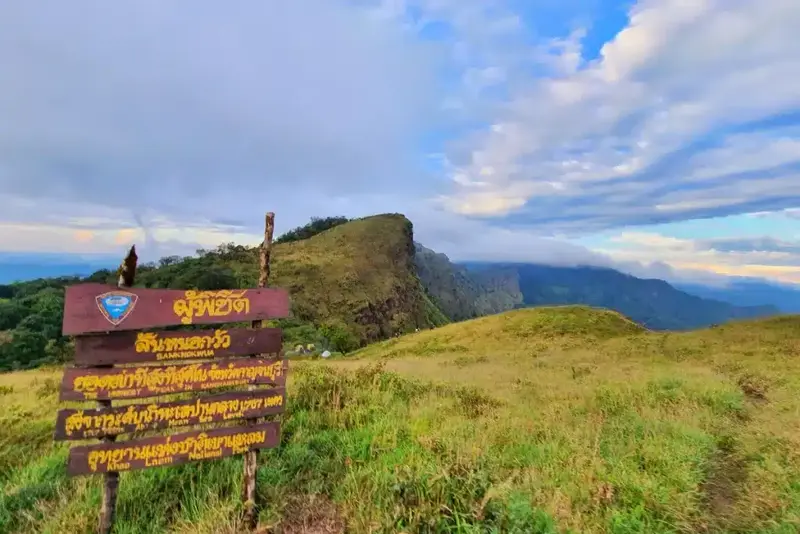
Khao Laem National Park is an ideal destination for travelers who want to “step into real forest” while still enjoying a laid-back lakeside atmosphere in the same trip. The park covers both mountainous forest and the vast reservoir of Vajiralongkorn Dam (Khao Laem), creating a landscape where deep green jungle meets wide-open water that reflects seasonal light beautifully. What makes this place special is how flexible it is: you can spend an easy day watching sunset by the reservoir at Pom Pi Viewpoint, or choose a more demanding adventure by trekking along a stream to Kro Teng Jeng Waterfall, a medium-sized waterfall with up to 23 tiers. The latter is a full-nature day that requires careful planning and serious attention to safety.
Khao Laem National Park sits along Highway 323 on the Thong Pha Phum–Sangkhla Buri route. Based on long-used on-the-ground travel references, the key marker is around kilometer 39–40, about 30 km before reaching Sangkhla Buri District, and roughly 180 km from Kanchanaburi town. The charm of this route is the gradual transition: once you leave the urban zone, you enter increasingly rugged mountain terrain along the Tanintharyi range. The roadside greenery grows denser, and when the reservoir begins to appear, the view opens wide. It becomes immediately clear you are entering a genuinely natural area that feels quieter than many of the more crowded attractions in the same province.
Getting There If you drive from Kanchanaburi town, take Highway 323 toward Thong Pha Phum District, then continue on the same highway toward Sangkhla Buri. Around kilometer 39–40 you will reach the park entrance and administrative area. The road is generally convenient to drive, but you should allow extra time and drive carefully, especially at night when visibility is limited and there are mountain curves. If you do not have a private vehicle, you can travel to the Thong Pha Phum or Sangkhla Buri area by intercity bus or van, then use local hired transport to enter the park depending on your group size and luggage.
The park’s natural setting can be described as “mountains + streams + water expanse” woven together as one system. Beyond the shade and calm of the forest, the Kro Teng Jeng stream flows through the park and becomes the lifeline of the nature trail leading to Kro Teng Jeng Waterfall. Because the route includes both wet ground and slopes, you can clearly observe shifts in forest types along the way: sections of banana forest that feel airy and humid, bamboo groves with their distinctive rustling sound, denser evergreen forest that is naturally cooler, and mixed deciduous forest with more variety of trees and undergrowth. This is why trekking here is not only about reaching the waterfall, but also about steadily learning the environment as you move deeper into the landscape.
In terms of history and significance, Khao Laem National Park is often cited as an important conservation area in Kanchanaburi because it forms part of the fertile Tanintharyi mountain ecosystem. The park also includes several well-known natural sites, such as Pom Pi Viewpoint, Kro Teng Jeng Waterfall, Kroeng Krawia Waterfall, and the Khao Chang Phueak ridge route, which is recognized as one of the long-distance treks many hikers dream of completing. With both forest and reservoir, the park offers broad scenery and supports multiple travel styles, from calm viewpoint visits to more serious adventure travel that demands experience and preparation.
For many visitors, Pom Pi Viewpoint becomes the first memorable highlight. The reservoir edge feels peaceful and open, unlike deeper forest areas where you are often under thick canopy. The appeal of Pom Pi is its simplicity: you do not need a dramatic activity to enjoy it. Sitting quietly and letting your eyes follow the long waterline toward layered mountain silhouettes can be enough to reset your mood. In the late afternoon, when sunlight softens and warm tones drift across the water surface, the atmosphere becomes especially suitable for camping. After sunset, the silence and cooler temperature make natural sounds feel clearer, from wind to water to small wildlife in the night.
Camping inside the park is worth doing at least once if you enjoy authentic nature but also want the order and safety of an area managed by park staff. The key is bringing gear suited for humid conditions: a reliable groundsheet, moisture-proof bags for valuables, and shoes with strong grip because soil near streams can be slippery at times. You should also follow responsible protected-area etiquette: pack out all trash, keep noise low at night, and avoid feeding wildlife so animals do not change their behavior in ways that harm the ecosystem.
Another side of Khao Laem National Park is the “depth” of its forest and the nature trail that takes you beyond viewpoints into truly wild terrain. Kro Teng Jeng Waterfall represents that depth clearly. Although considered a medium-sized waterfall, it has up to 23 tiers, and the distance from the first tier to the uppermost section is about 2 km. The challenge is not only the number but the terrain: wading, scrambling, and constantly adjusting your pace to the landscape. Many visitors realize quickly that this is not a casual stroll, but a route that demands respect for nature and close attention to staff guidance, especially on days when weather changes quickly or rain has fallen earlier.
From the park headquarters, travelers commonly allow about 2–3 hours on foot to reach the first tier of Kro Teng Jeng Waterfall. Even though the overall distance is around 2 km, it takes longer because the route is not flat. Along the way, you will pass through several forest types in sequence, including banana forest, bamboo forest, evergreen forest, and mixed deciduous forest. Part of the enjoyment is noticing small details people often overlook, such as the ground shifting from dry soil to damp earth, moss textures on rocks beside the stream, or the sound of water gradually growing louder as you approach the falls. One frequently mentioned feature is a giant tree that reportedly takes about 13 people to encircle, reflecting the route’s healthy forest and the presence of old-growth trees.
Once you reach the waterfall, moving up from one tier to the next requires caution. You will scramble through flowing water and over rock steps to gain elevation. Each tier has a different kind of beauty: some form thin curtains perfect for photos, while others create clear pools that invite a longer rest, though you should always assess safety before entering the water. A major highlight is often described as tier 16, known for its size and striking appearance. Higher up, there is also a viewpoint where you can see the Vajiralongkorn Dam reservoir, which feels like a reward after a demanding climb because it reveals forest and water in a single panoramic scene.
After reaching the upper area, some travelers return the same way for certainty, but another charm of Kro Teng Jeng is choosing an alternative forest trail on the way back. This route is said to remain richly evergreen, passing through a wide and impressive fern field, sections of thorny rattan-like vegetation, and wild fruit trees such as wild lychee and wild mafai. These details keep the return hike engaging and highlight biodiversity beyond the waterfall itself. Throughout the walk, the sound of water striking rock often echoes through the forest, a constant reminder that nature here continues its work uninterrupted.
However, Kro Teng Jeng Waterfall is not suitable for travel during the rainy season, and you should contact park staff for guidance or a lead before hiking. The key reason is that stream levels can rise quickly, rocks become extremely slippery, and some sections may require wading where risks increase if conditions are misjudged. Planning with discipline is important not only for your own safety but also to avoid placing unnecessary burden on staff and rescue teams. If you intend to climb multiple tiers, start early, bring sufficient drinking water and high-energy food, use footwear with strong traction, keep your pack as light as possible, and place all critical items in waterproof bags.
If you want a “full but balanced” Khao Laem trip, one practical approach is to separate the roles of each day. On day 1, focus on travel and adjusting your body, spend time at Pom Pi Viewpoint, walk around the camping area, rest your eyes on the water, take photos in the evening, and stay overnight to experience the park’s true nighttime quiet. On day 2, make Kro Teng Jeng your main hike, because you will start with better rest and can evaluate real-time weather before committing to a demanding route.
After exploring the park, continuing on to Sangkhla Buri can make the trip feel even more worthwhile. Sangkhla Buri offers cultural atmosphere and local life, especially around the Mon Bridge and the riverside communities along the Songkaria River. You can enjoy local food and small, distinctive shops. This continuation lets you experience the contrast between “deep forest” and “borderland community” in the same journey, balancing trekking fatigue with lighter activities such as finding a good café to rest, or tasting local dishes with flavors you will not easily find elsewhere.
As for practical access information, the park is generally described as open daily from 09.00–16.00, with entrance fees for Thai and foreign visitors (summarized in the table below), as well as contact channels you should call before traveling, especially if you plan to hike Kro Teng Jeng or want to confirm trail conditions during the rainy season. Checking before departure reduces risk and helps you manage time more effectively, because trekking conditions can change due to variables such as localized rain or upstream flow that affects stream levels.
What distinguishes Khao Laem National Park from many other natural destinations is the sense of “space” created by the reservoir embedded within the forest. The memory you take home is not only dense green canopy, but also open water that gives your eyes room to rest and allows you to sit with nature’s quiet without rushing. If you are looking for a trip that combines genuine relaxation with a reasonably serious adventure, this is one option that often feels worth the time and effort, especially when you plan around the season and choose activities that match real weather conditions on the day you go.
| Place Summary | Khao Laem National Park is a conservation area in the Tanintharyi range, connecting mountains, streams, and the Vajiralongkorn Dam reservoir. It suits both relaxed lakeside camping at Pom Pi and nature trekking to Kro Teng Jeng Waterfall. |
| Highlights | 1) Peaceful lakeside scenery at Pom Pi Viewpoint 2) Trekking route to Kro Teng Jeng Waterfall with 23 tiers 3) Diverse forest types along the trail 4) Works for both slow-travel and adventure styles |
| Approximate Location | Along Highway 323 (Thong Pha Phum–Sangkhla Buri), about 30 km before Sangkhla Buri District, Kanchanaburi Province |
| Opening Hours | Daily, 09.00 – 16.00 |
| Entrance Fees | Thai: Adult 40 THB, Child/Student 20 THB; Foreigner: Adult 200 THB, Child 100 THB (recommended to confirm before travel) |
| Facilities | Camping area, accommodation, viewpoint areas, nature trail (service details and rules should be confirmed with the park) |
| Contact Numbers | 034-510431, 034-546819, 085-879-9047 |
| Nearby Attractions (Approx. Distance) | 1) Pom Pi Viewpoint – 0 km 2) Kro Teng Jeng Waterfall – 2 km (on-foot nature trail) 3) Kroeng Krawia Waterfall – 25 km 4) Mon Bridge (Sangkhla Buri) – 30 km 5) Three Pagodas Pass – 55 km |
| Nearby Restaurants (Approx. Distance + Phone) | 1) Kawea Coffee – 10 km – 090-787-3465 2) Faya Cafe (Sangkhla Buri) – 33 km – 083-926-9245 3) Jok Nang Yong – 34 km – 085-702-2152 4) Pa Yin Mon Rice Noodles (Khanom Jeen Mon) – 34 km – 081-792-4244 5) Krua Pom Pi (Food Order) – 0 km – 092-419-0368 |
| Nearby Accommodations (Approx. Distance + Phone) | 1) P. Guest House and Country Resort – 33 km – 081-450-2783, 098-777-2478 2) Songkaria River Hut & Resort – 33 km – 092-994-2492 3) Haiku Guesthouse – 33 km – 087-519-9150 4) The Nature Club Resort – 33 km – 089-510-8444 5) Porpailin Riverside Resort – 33 km – 034-595355, 034-595322 |
Frequently Asked Questions (FAQ)
Q: When is the best season to visit Khao Laem National Park?
A: Late rainy season into early winter through the cool season is generally comfortable for camping and enjoying Pom Pi Viewpoint. For waterfall trekking, it is safer to avoid days of heavy rain or consecutive rain due to slippery terrain and rising water levels.
Q: Is Kro Teng Jeng Waterfall difficult to hike, and how many hours should I plan?
A: The trail includes wading and scrambling sections, so you should plan at least half a day to a full day depending on how many tiers you aim to reach. Starting early is recommended to ensure enough daylight for the return.
Q: Do I need a park guide to hike to Kro Teng Jeng Waterfall?
A: It is strongly recommended, especially in or near the rainy season or if you plan to climb to higher tiers. A guide helps reduce risk and provides more reliable assessment of real-time trail conditions.
Q: What activities are best at Pom Pi Viewpoint?
A: Pom Pi is ideal for reservoir views, sunset photography, camping, and quiet relaxation. Visitors should keep noise low and pack out all trash to protect the park environment.
Q: What should I prepare if I plan to trek to the waterfall?
A: Bring high-traction footwear, quick-dry clothing, a headlamp/flashlight, enough drinking water, high-energy snacks, waterproof bags for valuables, and personal medication. It is also best to inform park staff of your hiking plan before you start.
Q: Which phone number should I use to contact the park?
A: The park is listed with 034-510431, and additional numbers often shown include 034-546819 and 085-879-9047. Calling during office hours is recommended, and you should allow for the possibility of weaker signal coverage in mountainous areas.
 Website: www.dnp.go.th
 Tel: 025620760
 Khao Laem National Park Map
 Category:
  Group:
  Last Update: 2 DayAgo
Comment
 Nearby Attractions
| Keyword (Advance) |
 Facebook Fanpage
 Region
 Art, Culture and Heritage
 Historical Sites and Monuments(
 Landmarks and Memorials(
 Art, Craft Centres, Tradition(
 Museums(
 Art Gallery(
 University
 Places of Worship
 Temple(
 Church(
 Other religious and spiritural sites(
 Research and Development
 Royal Project(
 Suburban Living
 Village, Community(
 Local Market(
 Mountain (Doi)(
 Dam, Reservoir, Lake(
 Waterfalls(
 Hot Springs(
 Caves(
 River, Canal(
 Other natural attractions(
 Entertainment and Agricultural
 Zoos and Aquariums(
 Animal camps and shows(
 Farm, Parks, Gardens and Ecotourism(
 Cinema(
 Outdoor and Adventure Activities(
 Travel Articles, Recipes
 Travel Review, Food Review(