

 Home
Home Chiang Mai(







Rating: 4.4/5 (5 votes)
 |
|  Map
Map 
 Have Map
  No Map
Kanchanaburi attractions
Attractions in Thailand
Open Days: Daily
Opening Hours: Generally 08:00 – 16:00 (outer areas and viewpoints can be visited during suitable times)
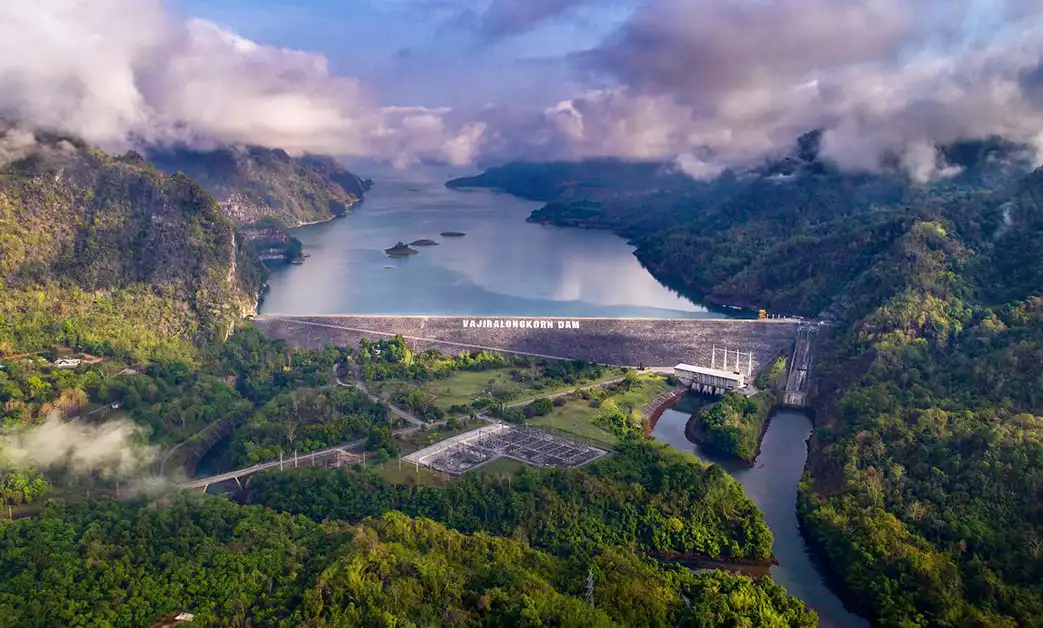
Vajiralongkorn Dam in Kanchanaburi Province, formerly known as “Khao Laem Dam,” is a large multipurpose hydroelectric dam that plays a vital role in electricity generation, water resource management, and nature-based tourism in western Thailand. The dam is located in Tha Khanun Subdistrict, Thong Pha Phum District, approximately 153 kilometers from Kanchanaburi town. It is one of the country’s key energy infrastructure assets. Surrounded by complex mountain ranges and lush forests, the area above the dam has formed a vast reservoir with a serene and scenic landscape.
Historically, the dam was originally named “Khao Laem Dam,” reflecting the area’s original geographical features. It was later renamed “Vajiralongkorn Dam” in honor of His Majesty King Vajiralongkorn. The construction of the dam was part of the Khwae Noi River Basin Development Plan, with primary objectives including hydroelectric power generation, water storage and regulation for domestic use and agriculture, as well as flood mitigation for downstream areas of the basin.
From an engineering perspective, Vajiralongkorn Dam is a rockfill dam with a reinforced concrete face. It has a height of approximately 92 meters from its foundation, a crest width of about 10 meters, and a total crest length of approximately 1,019 meters. The dam blocks the Khwae Noi River, one of Kanchanaburi Province’s major waterways. This structural design provides high stability and strength, enabling the dam to safely withstand significant water pressure and making it well suited to the region’s mountainous terrain.
A frequently searched question is “How does Vajiralongkorn Dam generate electricity?” The operating principle of this hydroelectric dam involves storing water in the reservoir above the dam. When electricity generation is required, water is released through penstocks into turbines. The pressure and flow of the water rotate the turbines, and the turbine shafts then drive generators to produce alternating current electricity, which is transmitted into the national power grid. A key advantage of Vajiralongkorn Dam is its multipurpose design, allowing flexible water release that balances electricity demand with other water-use requirements.
Above Vajiralongkorn Dam lies a large reservoir resembling a mountain lake, surrounded by forested hills and rugged terrain. This setting creates a highly tranquil and natural atmosphere. The area has become a major tourist attraction, especially for boat and raft cruises. Visitors can rent sightseeing rafts or floating accommodation rafts to experience the expansive waters and surrounding nature. Certain cruise routes lead to a coconut plantation on a small island in the reservoir, which requires approximately one hour of boat travel and advance arrangements with service providers or relevant authorities.
Approximately 3 kilometers beyond the dam entrance, there is a cluster of floating rafts and raft accommodations, forming another highlight of Vajiralongkorn Dam tourism. Visitors can choose to stay overnight on rafts, cruise through natural scenery, or simply relax in a slow-paced environment. These activities are ideal for travelers seeking to escape urban life and immerse themselves in nature. However, details and conditions should be confirmed in advance, as some services require group bookings and are subject to time and safety restrictions.
For leisure tourism, Vajiralongkorn Dam offers viewpoints along the dam crest and surrounding areas, providing clear views of the reservoir and mountain ranges. Early morning and late afternoon are ideal times for photography and leisurely walks, as the light is soft and the weather pleasant. During the winter season, cooler temperatures and clear skies further enhance the calm and refreshing atmosphere.
Getting There From Bangkok, the most convenient way to reach Vajiralongkorn Dam is by private car. Travelers can take Phetkasem Road or the Phutthamonthon route into Kanchanaburi Province, then continue along Highway No. 323 toward Thong Pha Phum District for approximately 130 kilometers. From Thong Pha Phum town, the dam is about 20 kilometers further. The total distance from Bangkok is approximately 278 kilometers, with an estimated travel time of 3–4 hours depending on traffic conditions. Alternatively, visitors can take a bus or train from Bangkok to Kanchanaburi town, then transfer to a bus heading to Thong Pha Phum before hiring local transport to the dam.
| Overview | Vajiralongkorn Dam is a large multipurpose hydroelectric dam in Thong Pha Phum District, Kanchanaburi Province. Formerly known as Khao Laem Dam, it is distinguished by its scenic reservoir above the dam and its importance for both energy production and nature-based tourism. |
| Highlights | 1) A large rockfill dam blocking the Khwae Noi River 2) A scenic mountain-view reservoir above the dam 3) Raft cruises and floating accommodations amid nature 4) Peaceful viewpoints along the dam crest 5) A key energy infrastructure for western Thailand |
| Location | Tha Khanun Subdistrict, Thong Pha Phum District, Kanchanaburi Province |
| Coordinates | Latitude 14.7109, Longitude 98.9876 |
| Managing Authority | Electricity Generating Authority of Thailand (EGAT) Tel. +66 3459 8030, +66 3459 9077 ext. 2502, 2506 |
| Nearby Attractions | 1) Khao Laem National Park – 25 km 2) Thong Pha Phum town – 20 km 3) E-Tong Village – 55 km 4) Jok Kradin Waterfall – 45 km 5) Noen Sao Thong Viewpoint – 30 km |
| Nearby Restaurants | 1) Krua Thong Pha Phum – 20 km – 034-599-321 2) Vajiralongkorn Dam Raft Restaurant – 3 km – 081-234-5678 3) Krua Rim Khwae – 22 km – 089-456-7890 4) Ban Pa Su Restaurant – 21 km – 086-987-6543 5) Krua Lam Khwae Noi – 18 km – 082-345-6789 |
| Nearby Accommodations | 1) Vajiralongkorn Dam Guesthouse – 1 km – 0-3459-8030 2) Thong Pha Phum Riverside – 20 km – 034-599-888 3) Thong Pha Phum Homestay – 22 km – 081-777-8899 4) Rim Khwae Noi Riverside Resort – 25 km – 089-999-1122 5) Ban Suan Khao Laem – 28 km – 086-222-3344 |
Frequently Asked Questions (FAQ)
Q: What was Vajiralongkorn Dam formerly called?
A: It was formerly known as Khao Laem Dam before being renamed Vajiralongkorn Dam.
Q: How does Vajiralongkorn Dam generate electricity?
A: It uses the force of flowing water to spin turbines, which drive generators to produce electricity that is supplied to the national grid.
Q: Can visitors take raft cruises on the reservoir?
A: Yes, but advance arrangements are required, and some services may require group bookings.
Q: When is the best time to visit the dam?
A: The winter season and the late rainy season are ideal, as the weather is pleasant and the scenery is at its best.
Q: How can I contact the dam for more information?
A: You can contact the Electricity Generating Authority of Thailand (EGAT), Vajiralongkorn Dam, at +66 3459 8030.
 Vajiralongkorn Dam Map
 Category:
  Group:
  Last Update: 1 DayAgo
Comment
 Nearby Attractions
| Keyword (Advance) |
 Region
|
 Muang Kanchanaburi(