

 Home
Home Chiang Mai(










Rating: 4/5 (6 votes)
 |
|  Map
Map 
 Have Map
  No Map
Kanchanaburi attractions
Attractions in Thailand
Open Days: Daily
Opening Hours: 08:30 – 16:30 (general service area hours may change depending on official announcements)
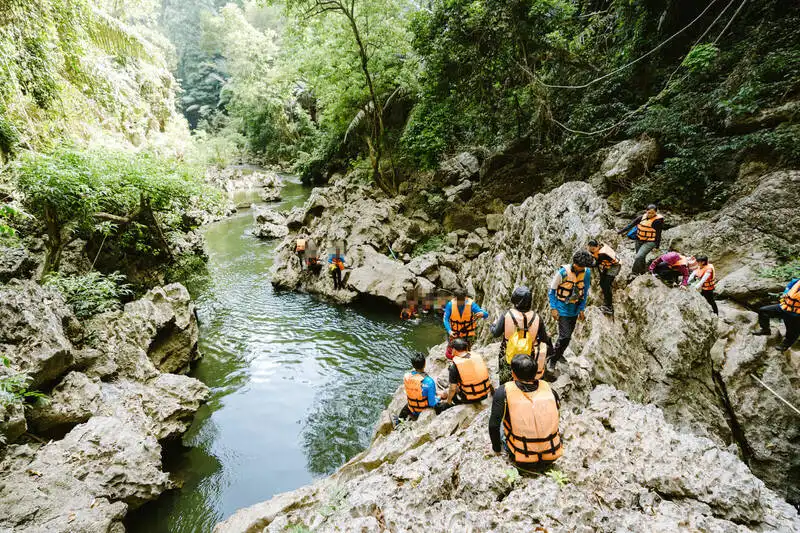
Lam Khlong Ngu National Park in Kanchanaburi is a destination that changes the meaning of the phrase “beautiful caves” from a relaxed stroll into a real adventure that requires proper planning. “Lam Khlong Ngu” refers to a stream that meanders and twists through the western forest, where flowing water gradually erodes limestone cliffs and mountain faces into large cave chambers. Over immense time, limestone sediments accumulate and form stalactites and stalagmites — natural sculptures that are intricate, dramatic, and fragile at the same time. Inside the park, there is not just one cave, but an underground world with multiple chambers, water routes, difficulty levels, and conditions that demand respect for both rules and nature as the top priority.
The charm of Lam Khlong Ngu lies in being a “water cave” as much as it is a “limestone cave.” The limestone landscape allows water to seep underground, disappear, and re-emerge as a stream inside the caves. Some caves are “through caves” with entrances and exits on different sides. Others are “river caves” where underground water flows along the entire route. Some hide even more extraordinary features, such as underground waterfalls cascading in tiers within cave passages that stretch for kilometers. These wonders can be explained by limestone geology and the movement of water over hundreds of thousands to millions of years, but what you feel on site is immediate: the area is humid, slippery, dark, and changes quickly. The deeper you go, the less it resembles typical sightseeing. This is why visiting caves here requires “planning” rather than “luck,” and why you must accept that, at certain times, nature may not allow access.
Historically, Lam Khlong Ngu National Park was established in 2009 (B.E. 2552) and protects a vast mountainous forest area in Thong Pha Phum District. The purpose of protected status is not simply to “open it for tourism,” but to conserve the ecosystem and limestone terrain — resources that are difficult to restore once damaged. In particular, stalactites and stalagmites form slowly through calcite deposition. Even a single touch can leave oils that disrupt their growth. Tourism must therefore stay on a careful line: allowing visitors to witness the beauty while ensuring the beauty does not diminish over time. This is why Lam Khlong Ngu is a park with more “systems” and controls than many travelers expect before they arrive.
When people speak about the park’s signature cave, the first name most recognize is Sao Hin Cave. This cave is about 6 kilometers from the mouth of Lam Khlong Ngu stream and is a through cave with the stream flowing through it continuously. Its most astonishing feature is a massive limestone pillar standing in the middle of the cave. The height from the floor to the top has been measured at 62.5 meters, and it is widely regarded as one of the tallest cave pillars ever recorded. But Sao Hin Cave is not only about the “pillar.” The route inside is filled with stalactites, stalagmites, and rock formations shaped by nature like sculpture — from cave walls patterned like frozen waves to chambers where dripping water echoes as if the cave is breathing. Many travelers want to see it with their own eyes, yet this is also a cave where safety must come first, because water is directly involved and water levels can change in ways that make certain sections risky.
Visiting Sao Hin Cave is therefore best suited to travelers who genuinely enjoy adventure and are physically fit — not because it is a competition, but because the route requires strength, time, and discipline as a team. The core principle is to contact park staff and follow official conditions, including reservations, visitor limits, and having a guide or staff member lead the trip. The period often considered most suitable for Sao Hin Cave is the dry season, roughly February to April. In the rainy season, water levels inside the cave rise significantly and it is not suitable for visitation. Understanding this matters because it is not a rule designed to create inconvenience, but an acceptance of how a cave that belongs to a water system behaves. When water levels rise, the risk is not merely “getting wet” — it includes currents, slipping, low visibility, and the fact that rescue operations inside caves are far more limited than on open ground.
Another cave with a distinctly different character is Swallow Cave (Tham Nok Nang Aen), located in the middle section of Lam Khlong Ngu stream in Moo 5, Ban Khao Phra In, Chalae Subdistrict. It is a very large through cave with the stream flowing through it, similar to Sao Hin Cave, and has a length of about 3 kilometers. A memorable point often mentioned is that it formed through ground subsidence in a way likened to a volcanic vent, which creates three consecutive sections, like train carriages connected together — each one enormous beyond imagination. As you go deeper, darkness makes the sound of water and the flutter of swallows more distinct, reinforcing that you are a guest in both a tourism site and a wildlife habitat. Appropriate etiquette includes keeping noise low, avoiding flash that disturbs wildlife, and never leaving food scraps that could alter animal behavior inside the cave.
Another wonder frequently associated with Lam Khlong Ngu is Waterfall Cave (Tham Nam Tok). This is also a river cave like Sao Hin Cave and Swallow Cave, but it is especially remarkable because the underground stream cascades into multiple tiers, forming underground waterfalls. Some information describes up to 17 tiers, with the highest tier reaching about 20 meters. The total cave length is approximately 2,710 meters. The idea of a “waterfall inside a cave” feels like a window into another world, because we are used to waterfalls in open forest but not to the roar of falling water echoing in darkness against limestone walls lined with formations. Visiting Waterfall Cave must be arranged with park staff leading the trip and planned in advance, particularly because the rainy season brings high water levels that make entry unsafe.
Nearby is also Tham Yai (Big Cave), a very large cave with an entrance about 50 meters wide. The interior is spacious enough to accommodate a large crowd, and it is often described as one of the largest caves in Kanchanaburi. It is located about 1 kilometer from Waterfall Cave. The presence of Tham Yai further clarifies the overall picture of Lam Khlong Ngu: this is not an area with a single standout cave, but a group of caves shaped by limestone and water together. Visiting any of the caves within the park should follow the same principles: plan ahead, prepare physically, bring suitable equipment, and rely on a knowledgeable guide — because what makes these caves beautiful is their natural condition, and that same reality demands greater care than typical sightseeing.
There are multiple ways to reach Lam Khlong Ngu National Park, and choosing a route should start with one question: “What are you here to do?” If your goal is adventure caving, routes commonly connect to Ban Phu Toei and Ban Khao Phra In in Chalae Subdistrict, which serve as starting points for hiking or for using 4WD on certain dirt sections. One widely described approach to Sao Hin Cave is by boat: travel from the Srinagarind Dam reservoir northward to the mouth of Lam Khlong Ngu stream, then hike about 6 kilometers upstream. The hike takes roughly 2 hours to reach the cave entrance. Along the way, you will pass small waterfalls formed by the stream cascading down in stages, making the route both tiring and rewarding. However, this approach requires serious assessment of seasonality and water levels, because water is both the park’s charm and its primary risk.
For travel by car, a route often described as convenient begins near Erawan Waterfall and continues via Phra That Cave toward Huai Mae Khamin Waterfall, then onward to Ban Phu Toei in about 1.5 hours. From Ban Phu Toei, you continue on foot for about 3 hours to reach the cave zone. The hiking route passes valleys and limestone shelters with striking scenery, but the beauty comes with sustained exertion. Preparation improves the experience: wear shoes with strong grip for slippery ground, bring a headlamp (do not rely only on a phone light), carry water and electrolyte drinks, protect essential items in waterproof bags, and choose quick-drying clothing, because in humid areas even light dampness can become discomfort for the entire day.
For Swallow Cave, the driving route is often similar to Sao Hin Cave. From Ban Phu Toei, continue about 6 kilometers to Ban Khao Phra In. A junction then leads onto a dirt road for about 3 kilometers. For this dirt section, 4WD is commonly recommended, or you may use local options such as renting a modified farm tractor (rot e-tak) from villagers, then hike about 30 minutes to the cave entrance. Another approach is to use Highway 323 (Thong Pha Phum–Sangkhla Buri), turn right at kilometer marker 26 (Phuttho Junction), pass Thung Nang Kruan Waterfall, and continue toward Ban Huai Suea, connecting to Ban Phu Toei via Ban Khao Phra In before turning onto the final dirt road segment. Regardless of route, the key is to contact park staff or local guides for safety and to plan clearly: what vehicle type is required, how much time the route takes, and what time you should start hiking to avoid traveling in darkness.
What makes Lam Khlong Ngu different from “day-trip nature tourism” is that most activities are tied to time and weather. The most spectacular caves often require the longest access, and the longest access requires the most time. A consistently useful rule is not to overpack your itinerary. If you aim to enter a cave, dedicate a full day to it, or at least allow generous time for the journey in and out, including breaks that match your physical pace. Rushing increases the chance of slipping in humid terrain. Traveling as a team and checking in regularly reduces risk substantially, especially when crossing streams or walking on rocks coated with algae.
Many travelers consider the most suitable period for cave trips in Lam Khlong Ngu to be late cool season through late hot season, such as February to April, sometimes extending into May. Water levels in the stream and caves are often lower, making travel safer. In the rainy season, water levels can rise high enough that certain caves become effectively closed because safety cannot be guaranteed. Importantly, even within a generally “suitable” month, you should still check the latest announcements before you go. Rainfall patterns and actual water levels differ year to year, and the park may adjust conditions to protect both visitors and staff.
For travelers who want a worthwhile experience without taking on excessive risk, it helps to separate “adventure cave zones” from “general nature zones” and choose according to readiness. If you are prepared for caves, focus on reservations, preparation, and disciplined travel in and out. If you prefer to understand the area first, start with more accessible nature spots nearby, such as waterfalls on the main routes or Thung Nang Kruan Waterfall / Nang Kruan Waterfall (along access routes), then plan a dedicated cave trip later when you are fully prepared. This approach improves the experience because Lam Khlong Ngu is not a destination for casual “let’s see what happens” travel, but for intentional trips that end with clear, memorable, and safe outcomes.
Getting There for Lam Khlong Ngu National Park generally begins by reaching the Thong Pha Phum area in Kanchanaburi, then heading toward Chalae Subdistrict and the vicinity of Ban Phu Toei / Ban Khao Phra In, which serve as starting points for several cave routes. If traveling by private car, inspect your vehicle in advance, especially tires, brakes, and lighting, because there may be mountainous sections and dirt roads that require an appropriate vehicle depending on the season. If your plan involves connecting by boat from Srinagarind Dam or using local transport services, coordinate in advance to control timing and avoid hiking late in the day. Also allow extra time for hiking in humid and slippery terrain, where walking speed is typically slower than normal.
Ultimately, what makes Lam Khlong Ngu National Park a place people keep talking about is not only the grandeur of the caves, but the feeling that “you are stepping into a landscape still owned by nature.” Darkness in the cave, the sound of water in the stream, limestone walls sculpted over vast time, and formations that grow unimaginably slowly turn this trip into more than collecting beautiful photos. It becomes a practice of respecting nature’s rules. If you are ready to move carefully, take your time, and follow staff guidance, Lam Khlong Ngu can deliver a sharp, unforgettable experience — without the need to rush into unnecessary risk.
| Place Name | Lam Khlong Ngu National Park – Thong Pha Phum District, Kanchanaburi |
| Address | Chalae Subdistrict, Thong Pha Phum District, Kanchanaburi 71180 (limestone mountains and Lam Khlong Ngu stream area) |
| Place Summary | An adventure-focused national park famous for limestone caves and a stream flowing through cave passages, creating stunning stalactites and stalagmites. Key highlights include Sao Hin Cave, Swallow Cave, Waterfall Cave, and Big Cave. Visits require planning and strict safety awareness. |
| Highlights | Sao Hin Cave features a 62.5 m limestone pillar; through caves and river caves with flowing streams; Waterfall Cave has multi-tier underground waterfalls; a rugged, biodiverse western forest limestone landscape ideal for nature lovers and adventure travelers. |
| Open Days | Daily (general service area) |
| Opening Hours | 08:30 – 16:30 (may change depending on announcements/season) |
| Facilities | Information/contact point, selected nature routes in certain areas, rest/parking points where available, waterfall-type attractions on main routes (service readiness depends on season and announcements) |
| Fees | Entrance fees and/or activity conditions may apply (check the latest rates before travel) |
| Getting There | Reach the Thong Pha Phum area, then head to Chalae Subdistrict / Ban Phu Toei / Ban Khao Phra In depending on the cave route. Some sections may require 4WD or local transport, and it is recommended to contact park staff in advance for access conditions. |
| Current Status | General service areas are open during operating hours, but adventure cave access (e.g., Sao Hin Cave/other caves) may require reservations, a guide, and may close at times due to water levels and safety. Check the latest announcements before travel. |
| Contact Numbers | Cave/activity reservations: 081-108-9780 General inquiries: 084-913-2381 |
| Nearby Tourist Attractions With Distance | 1) Nang Kruan Waterfall (12 km) 2) Thung Nang Kruan Waterfall (18 km) 3) Ban Khao Phra In (25 km) 4) Ban Phu Toei (30 km) 5) Huai Mae Khamin Waterfall (65 km) 6) Srinagarind Dam (75 km) |
| Popular Restaurants Nearby With Distance + Phone Number | 1) Krua Paet Rio (55 km) Tel. 089-546-1079 2) Ban Tha Khanun Cultural Restaurant (55 km) Tel. 084-720-1409 3) Rong Na Coffee, Thong Pha Phum (60 km) Tel. 081-828-3748 4) Pla Khuean Thong Pha Phum Restaurant (62 km) Tel. 098-925-5909 5) Thung Yai Quality Coffee & Roaster (56 km) Tel. 097-949-6196 6) Ruen Khru Thai Restaurant, Thong Pha Phum (55 km) Tel. 065-628-8791 |
| Popular Accommodations Nearby With Distance + Phone Number | 1) Thong Pha Phum River (55 km) Tel. 083-227-4242 2) Phu Phrai Than Nam Resort (58 km) Tel. 034-598-041 3) Thong Pha Phum River Hill (55 km) Tel. 034-599-692 4) The Rabbit House (55 km) Tel. 034-910-190 5) Kiree River Hotel (55 km) Tel. 098-252-0359 |
Frequently Asked Questions (FAQ)
Q: What type of travelers is Lam Khlong Ngu National Park best suited for?
A: It is best for nature lovers and adventure travelers, especially those interested in cave exploration and hiking, because many routes require physical effort, time, and preparation beyond typical sightseeing.
Q: Which months are best for visiting Sao Hin Cave?
A: In general, adventure caves are most suitable in the dry season, such as February–April, because rainy-season water levels rise and conditions become risky. Actual opening periods may change depending on announcements and real water levels, so check before travel.
Q: Do I need to book in advance to enter the caves?
A: It is recommended to plan and contact the park in advance, especially for Sao Hin Cave and routes that require a guide or have limited quotas, for both safety and management inside the cave.
Q: How can I reach Sao Hin Cave by boat?
A: One approach is to travel by boat from the Srinagarind Dam reservoir to the mouth of Lam Khlong Ngu stream, then hike about 6 km upstream. The hike typically takes around 2 hours. Coordination and water-level checks in advance are advised.
Q: Can I visit Lam Khlong Ngu during the rainy season?
A: General service areas may remain open, but adventure cave access is often not suitable during the rainy season due to high water levels and slippery conditions, and caves may close for safety.
Q: What equipment should I prepare for cave visits?
A: Wear non-slip footwear with strong grip, bring a headlamp, waterproof bags for essentials, drinking water and electrolytes, and quick-drying clothing, and follow staff instructions strictly.
Q: If I am not ready for intense adventure, can I still enjoy this area?
A: Yes. You can start with more accessible nature spots nearby, such as waterfalls along main routes, and plan a dedicated cave trip later when you are fully prepared.
 Lam Khlong Ngu National Park Map
 Category:
  Group:
  Last Update: 1 DayAgo
Comment
 Nearby Attractions
| Keyword (Advance) |
 Region
|
 Muang Kanchanaburi(