

 Home
Home Chiang Mai(










Rating: 4.3/5 (4 votes)
 |
|  Map
Map 
 Have Map
  No Map
Kanchanaburi attractions
Attractions in Thailand
Open Days: Daily
Opening Hours: 07:30 – 18:30
Wat Wang Wiwekaram is regarded as the “spiritual heart” of Sangkhlaburi, a single place where you can read the whole town at once: the history of resettlement among Mon–Karen–Thai communities, the profound landscape shift triggered by the Vajiralongkorn Dam (Khao Laem Dam), and the role of Luang Pho Uttama, whose influence made the temple a shared cultural space along the Sam Prasob River. Within the temple, the riverside viharn enshrines “Luang Pho Khao,” a white marble Buddha image revered deeply by locals, and not far away stands the Phutthakhaya Pagoda, believed to house sacred relics of the Buddha. Visiting here is therefore more than paying respects—it is a way of “walking through layers of history” of Thailand’s western border through a single religious site.
Wat Wang Wiwekaram is located in Nong Lu Subdistrict, Sangkhlaburi District, Kanchanaburi Province—an area many people recognize from images of a long wooden bridge over the water, soft morning mist, long-tail boats, and alms-giving that has become Sangkhlaburi’s signature scene in tourism culture. But if you look deeper, this is not a “one-stop” destination. It is a border town with dense historical layers: mountains and waterways shaping everyday life, multi-ethnic community networks, and real cross-border relationships woven into ordinary routines. To understand Wat Wang Wiwekaram fully, you need to understand Sangkhlaburi as a multicultural space where Thai, Mon, and Karen communities have lived side by side for a long time—and where the temple functions as one of the town’s key “social structures” that helps diversity endure peacefully.
Sangkhlaburi’s distinctiveness lies in the fact that identity here is not only “told” for tourism, but lived in everyday reality. The Mon community maintains its own language, dress, food, and rituals. The Karen community holds beliefs and settlement patterns closely tied to mountains and forests. Meanwhile, Thai governance systems and Siamese Buddhist practice form another pillar sustaining shared life. When a town has multiple languages and customs, what makes people “understand each other” does not always have to be a single shared language; it can be shared rituals such as merit-making, alms-giving, listening to teachings, and using sacred spaces together. Wat Wang Wiwekaram therefore plays a role like a cultural “common language,” allowing differences to coexist without turning into conflict.
If you set aside Sangkhlaburi’s beautiful imagery and look at its underlying structure, you see a place shaped by water and mountains—and shaken profoundly by the construction of the Vajiralongkorn Dam (Khao Laem Dam). The dam changed not only water levels or transport routes, but the community’s entire “map of memory.” Homes, livelihoods, footpaths, boat routes, and even parts of religious sites had to move or adapt. Some structures in the original area became what people now call the “sunken city” or the “underwater temple” (a submerged temple area), which later turned into a contemporary historical symbol of Sangkhlaburi. It helps visitors immediately grasp that this town has a clear “before” and “after” marked by a major transformation.
In that turning point, Luang Pho Uttama is always mentioned as a spiritual leader and a community bridge. He is widely revered by Thai, Mon, Karen people, and also by those on the Myanmar side who have longstanding ties to the border. His name is often explained as a “bridge of faith” that enabled people of different languages, ethnicities, and cultures to share common ground peacefully. Wat Wang Wiwekaram therefore is not only meaningful to Buddhists; it also functions as a public cultural space where diverse groups sustain daily life through merit-making, rituals, and relationships.
As you step into the temple area, the first feeling is the sense of being by the water, giving the temple a gentler, more open atmosphere than many temples in big cities. The river is more than scenery; it is part of the meaning. Sangkhlaburi is a town where people “read the seasons” through water levels and wind direction and arrange life around the river. Having a temple close to the water is like placing faith as close as possible to everyday life. The riverside viharn is the heart of worship, enshrining a beautiful white marble Buddha image that locals call “Luang Pho Khao.” Devotion to Luang Pho Khao is not only about artistic beauty; it is tied to meanings of purity, calm, and protection—especially in a border town where life often involves uncertainties of water seasons, travel, and a border economy. In such a context, a sacred presence that becomes an emotional “anchor” matters deeply.
Another reason people feel attached to this temple is the sense that it is not merely a place for worship, but a space that helps sustain relationships among diverse communities. In a border town of multiple languages, customs, and lifestyles, the temple serves as a meeting point of faith through merit-making, annual religious events, and mutual support at the community level. If you observe carefully while walking through the grounds, you will notice that faith is not only in ceremonies; it is spread through small details of greetings, sharing, and polite coexistence.
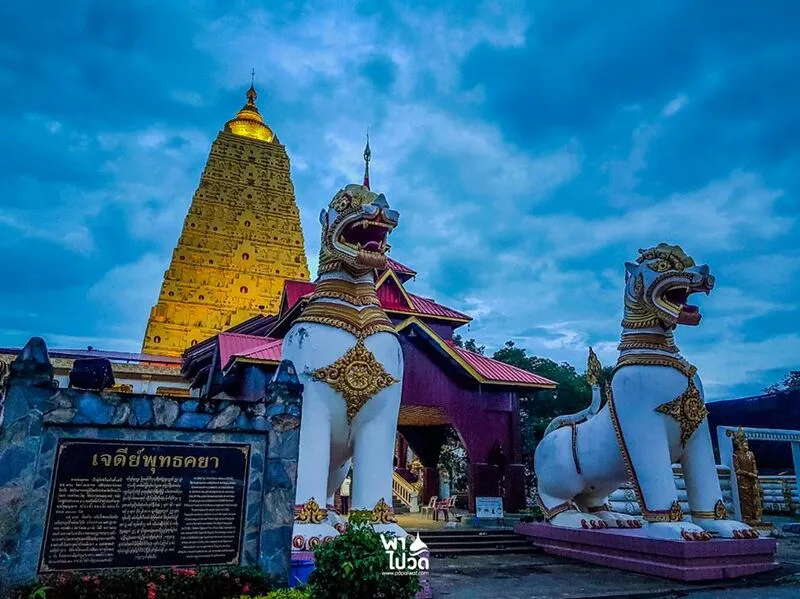
Another landmark that keeps Wat Wang Wiwekaram in public conversation is the “Phutthakhaya Pagoda,” located not far away. Its design is inspired by Bodh Gaya in India, with a square base and a tall spire that stands out clearly in Sangkhlaburi’s landscape. It is often said to house sacred relics of the Buddha, making it a major destination for devotees. Visiting the pagoda in the morning versus the late afternoon tends to feel different: mornings are cool and quiet, ideal for slow walking and focused worship, while late afternoons bring softer light and distant mountain silhouettes, creating a particularly tranquil atmosphere. Many people feel that walking from the temple to the pagoda is like “switching modes” from sightseeing into a quieter, more contemplative rhythm.
Near the Phutthakhaya Pagoda, you often find small stalls selling Myanmar-style goods or products that circulate across the border area, such as textiles, thanaka powder, wooden crafts, small household items, and local border-style snacks. Community shops beside sacred spaces reflect the nature of a border town where faith and everyday livelihoods move together. People come to make merit and pay respects, then buy souvenirs to take home—a cycle that supports local income while giving visitors a tangible glimpse of cross-border culture.
One angle that clarifies Wat Wang Wiwekaram further is the story of “migration and settlement,” because Sangkhlaburi as a whole has experienced multiple waves of population movement—driven by border security, livelihoods, natural change, and large-scale development. When the dam was built, riverside life had to change: homes, transport routes, and livelihood areas were reshaped. Rebuilding the temple and turning the new area into a community center required strong social capital. Devotion to Luang Pho Uttama therefore is not only devotion to a person, but devotion to the community’s ability to “set a new foundation” and carry on.
Another aspect visitors can easily notice is the “cultural language” of daily life. Especially in the early morning or during festivals, traditional Mon attire still appears in real, everyday use—not merely as costume for performance. Seeing local people dressed in traditional clothing and moving in and out of the temple naturally helps visitors understand that Sangkhlaburi is not a town where culture is frozen for tourism. Culture here still has “functions” in daily life: as a marker of identity and as a form of social etiquette, such as dressing modestly for temple visits, covering shoulders, keeping voices low in sacred areas, or offering alms and donations according to longstanding tradition.
One period that reflects Sangkhlaburi’s multicultural character most clearly is the celebration of Luang Pho Uttama’s birthday, usually held in February each year. The event combines religious ceremonies with community activities. A memorable scene is the wearing of Mon-style dress and the preparation of food offerings for monks. This atmosphere shows that faith is not only personal; it is also a force that binds the whole town together in shared effort.
If visitors want to experience Sangkhlaburi more deeply, it is effective to make Wat Wang Wiwekaram the central anchor, then expand outward to nearby places along the themes of “history–multiculturalism–water landscape,” such as visiting the Phutthakhaya Pagoda to connect with the devotional dimension, the Uttamanusorn Wooden Bridge (Mon Bridge) to see community life, and the sunken city/underwater temple to understand the historical layers of “before–after” the town’s landscape was transformed by dam construction.
In terms of experience, Wat Wang Wiwekaram naturally sets a slow travel rhythm. The grounds are spacious enough for strolling, quietly observing people, listening to wind and water, and noticing how sacred space and community life connect. Photography is possible from almost every angle, but if you want the visit to mean more than collecting pictures, try sitting quietly in the viharn and observing how locals pay respects. You may see that this space of faith truly functions as a living center of relationships for the entire town.
Basic temple etiquette includes dressing modestly, avoiding sleeveless tops and shorts/skirts above the knee, and removing shoes before entering the viharn according to Thai temple custom. Visitors should also respect monks’ areas, avoid climbing on architectural elements for photos, and refrain from using flash near Buddha images or near those who are meditating. If traveling with young children, it helps to keep noise and running to a minimum within the sacred zones.
Getting There Travel to Wat Wang Wiwekaram typically starts from Sangkhlaburi District center, then continues toward Nong Lu Subdistrict via the district’s main road. Driving a private vehicle is convenient and offers the most flexibility, especially if you plan to visit multiple sites in one day, such as the Phutthakhaya Pagoda, the sunken city/underwater temple area, the Uttamanusorn Wooden Bridge, and the Three Pagodas Pass. If you do not have a private car, Sangkhlaburi usually has local hired vehicles, songthaews, and motorcycle taxis available around key points, especially during peak travel seasons. Asking your accommodation to help arrange transport is another way to reduce timing uncertainty, particularly at dawn or in the evening.
For travelers coming from Bangkok or other major cities in central Thailand, it is wise to allow extra travel time because the final stretch before reaching Sangkhlaburi is mountainous with continuous curves. Driving without rushing is safer and more comfortable, and there are scenic viewpoints and rest stops along the way. Planning to arrive before evening helps you settle into your accommodation first, then visit the temple in the late afternoon, when crowds are lighter and the light is beautiful.
The best time to visit depends on what you want. For a quiet atmosphere, choose weekdays and come early in the morning or in the late afternoon before closing. For lively merit-making energy and community festivities, aim for February when the Luang Pho Uttama birthday celebrations take place, and allow extra time because the district becomes busier and travel within town can be slower than usual.
| Name | Wat Wang Wiwekaram (Wat Wang Wiwekaram) |
| Address | Moo 2, Nong Lu Subdistrict, Sangkhlaburi District, Kanchanaburi 71240 |
| Place Summary | A central faith landmark of Sangkhlaburi linking the town’s resettlement history after the dam’s impact with multicultural Mon–Karen–Thai life and the Myanmar border context. It features the riverside viharn enshrining “Luang Pho Khao” and the nearby Phutthakhaya Pagoda as a key devotional destination. |
| Highlights | 1) Luang Pho Khao – a white marble Buddha image in the riverside viharn 2) Phutthakhaya Pagoda – inspired by Bodh Gaya; a key destination for devotees 3) Multicultural hub – Thai, Mon, Karen, and border communities share the space through rituals and merit-making 4) Dam-era history reflection – connects memory of the town’s “before–after” landscape transformation 5) Luang Pho Uttama birthday celebration (Feb) – religious ceremonies alongside community activities |
| Abbot/Temple Administrator (Latest) | Phra Maha Suchat Siripanyo (P.Th.9) |
| Fees | Generally free of charge |
| Facilities | Parking area, worship/merit-making spaces, riverside photo spots, nearby community shops |
| Current Status | Open for worship and visits |
| Contact Number (Verified) | 034-595-422 |
| Nearby Attractions (Approx. Distance) | 1) Phutthakhaya Pagoda – 1 km 2) Uttamanusorn Wooden Bridge (Mon Bridge) – 2 km 3) Sunken City/Underwater Temple (Old Wat Wang Wiwekaram) – 7 km 4) Three Pagodas Pass – 25 km 5) Kroeng Krawia Waterfall – 28 km 6) Pom Pi Viewpoint (Khao Laem National Park) – 35 km |
| Popular Restaurants Nearby (Approx. Distance + Phone) | 1) Phae Mit Samphan – 3 km – 034-595-261 2) Rung Arun Restaurant – 2 km – 034-595-175 3) Cafe Green By Forget Me Not – 2 km – 034-595-015 4) Lee’s Kitchen Korean Restaurant – 2 km – 085-875-4641 5) Guangzhou Braised Pork Leg (Traditional Recipe) – 2 km – 082-741-3039 6) Krua Je Lee Shabu, Mookata & Made-to-Order Dishes – 3 km – 098-267-0948 |
| Popular Accommodations Nearby (Approx. Distance + Phone) | 1) Samprasob Resort – 2 km – 085-811-8711 2) P. Guest House and Country Resort – 2 km – 081-450-2783 3) Suanmagmai Resort – 2 km – 034-595-111 4) Sweetville Home – 7 km – 063-232-9101 5) Sangkla Resort – 7 km – 089-916-4242 |
Frequently Asked Questions (FAQ)
Q: Is Wat Wang Wiwekaram open every day, and what time does it close?
A: The temple is generally open daily. The 07:30 – 18:30 window works well for an early visit for a calmer atmosphere, or late afternoon before closing for softer light and fewer people.
Q: How far is Wat Wang Wiwekaram from the Mon Bridge?
A: It is generally not far from the Uttamanusorn Wooden Bridge (Mon Bridge), and it is easy to plan a single route that includes Phutthakhaya Pagoda and the sunken city/underwater temple area.
Q: How is Luang Pho Uttama connected to the temple?
A: Luang Pho Uttama is a central figure of devotion for diverse ethnic communities in Sangkhlaburi. His role helped the temple become a shared cultural space for Thai, Mon, and Karen communities, especially during the town’s major transition after dam construction.
Q: What is Luang Pho Khao, and where is it located within the temple?
A: Luang Pho Khao is a white marble Buddha image enshrined inside the riverside viharn. It is a major worship point that many visitors pay respects to before exploring other areas.
Q: Is the Phutthakhaya Pagoda far from the temple?
A: It is generally located nearby and is easy to reach. Many visitors go there next after worship at the temple because it is a significant devotional landmark and its calm atmosphere suits slow walking and quiet reflection.
Q: Which month is best to visit to experience Sangkhlaburi’s multicultural atmosphere?
A: If you want lively merit-making and a strong community atmosphere, February (when the Luang Pho Uttama birthday celebrations are usually held) is a popular time. For a quieter experience, weekdays and early mornings or late afternoons before closing are recommended.
 Wat Wang Wiwekaram Map
 Category:
  Group:
  Last Update: 3 DayAgo
Comment
 Nearby Attractions
| Keyword (Advance) |
 Region
|
 Muang Kanchanaburi(